REVIEW · DUBAI
Dubai Evening Heritage Safari by Vintage G Class Al Marmoom Oasis
Book on Viator →Operated by Al Marmoom Bedouin Experience · Bookable on Viator
Swap the jeep for a classic G-Wagen ride. This Dubai evening heritage safari takes you into the Al Marmoom Conservation Reserve and out again on a vintage Mercedes-Benz from the 1980s, with Bedouin-style food, campfire stories, falcons, and stargazing. I love that the experience mixes comfort (air-conditioned pickup) with the kind of desert authenticity you actually feel in the details—camel caravan time, Arabic coffee rituals, and a real village night.
The main consideration is timing and limits: it’s about 6 hours from pickup to drop-off, and participation rules include no camel ride for kids under 5 and no participation for pregnant women. It also depends on good weather, so if skies don’t cooperate, they’ll offer another date or a refund.
In This Review
- Key things that make this safari worth your time
- Hotel Pickup and the Vintage G-Class Factor
- Al Marmoom Desert Reserve: Photo Stops, Wildlife, and Real Desert Timing
- The Bedouin Village Welcome: Gahwa, Sweets, and the Camel Caravan
- Arabic Coffee-Making, Flatbreads, and Luqaimat: The Food Stops That Actually Teach
- Bedouin Dinner Plus Makeovers: What the 6-Course Meal Feels Like
- Campfire Folktales and Telescope Stargazing at Night
- Price and Value: Is $189 Worth It for the Time You Spend?
- Who This Safari Fits Best (and Who Might Prefer Another Option)
- Quick Tips to Make Your Evening Smoother
- Should You Book the Dubai Evening Heritage Safari with Vintage G Class?
- FAQ
- How long is the Dubai Evening Heritage Safari?
- What vehicle do you ride in on this safari?
- Is hotel pickup included?
- Do you get a camel ride?
- What cultural experiences and shows are included?
- What dinner is included?
- Are there age or pregnancy restrictions?
- What is the cancellation and weather rule?
Key things that make this safari worth your time
- A vintage 1980s Mercedes-Benz ride instead of the usual desert jeep
- Wildlife chances in an unfenced reserve at Al Marmoom Desert Reserve
- Arabic gahwa and sweets plus flatbread and luqaimat cooking at the village
- Camel caravan ride (10–12 minutes, repeatable) with a proper Bedouin welcome
- Falcon photos and traditional entertainment paired with a set-menu Bedouin dinner
- Night sky stargazing with a telescope after camp lights go out
Hotel Pickup and the Vintage G-Class Factor
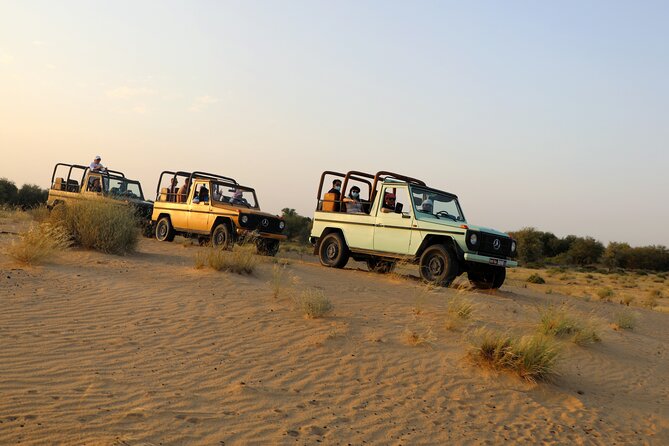
Your evening starts with pickup in an air-conditioned modern vehicle from your Dubai hotel. That matters because you’re not doing that awkward thing where you arrive hot, dusty, and already tired before you’ve even reached the dunes.
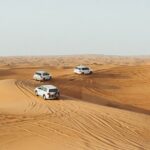
Then comes the big twist: you switch to an open-air Vintage G Class Mercedes-Benz from the 1980s. If you’ve done a desert safari before, you know the formula—music, sudden dune hits, photos, repeat. Here, the vehicle alone changes the mood. The older Mercedes style feels more like a moving piece of the region’s story, and the open-air setup gives you that “you’re really out there” feeling during the drive, photo stops, and sunset moments.
The group size is kept small, with a maximum of 24 travelers. That usually means less standing around, faster transitions between activities, and more chance to actually ask questions as the desert scenes change.
You can also read our reviews of more tours and experiences in Dubai.

Al Marmoom Desert Reserve: Photo Stops, Wildlife, and Real Desert Timing
Once you’ve left Dubai, the route heads toward the Dubai Desert Conservation Reserve, specifically Al Marmoom. The transfer to the desert area is roughly 50 minutes, and then the drive into the reserve continues with another chunk of time for scenic stops.
A key part is the halt in the desert for a photo stop—this is where the evening starts to feel calm instead of frantic. You’ll get time to step out, look around, and listen to the guide talk about Bedouin lifestyle and the history of the area. This isn’t just background talk. It helps you read the desert visually: where animals tend to move, why the reserve is protected, and what the environment looks like when you’re not looking at it from a city highway.
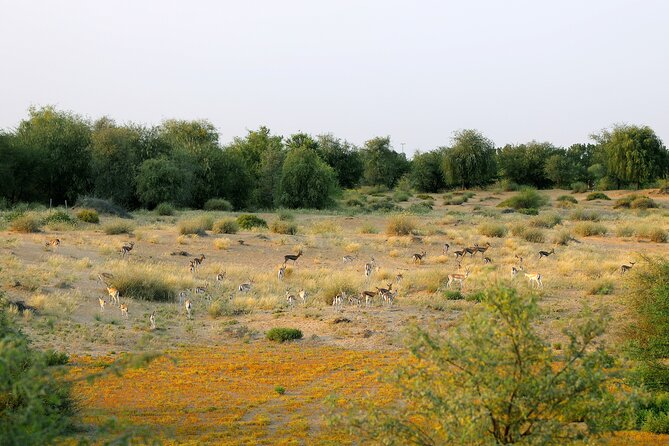
Wildlife is the big promise here. The safari goes through a reserve setting where you may spot desert animals (guides and past groups have talked about sightings like gazelles and oryx). You shouldn’t count on a specific animal every night, but you should count on the route being designed for wildlife opportunities—not just a quick dune loop for photos.
One practical tip: bring a layer. Desert air can cool fast once you’re past sunset, especially when you’re outside for the photo stop and village walking.
The Bedouin Village Welcome: Gahwa, Sweets, and the Camel Caravan
Eventually, you reach the Bedouin village area inside the Al Marmoom setting. Before anything “touristy” happens, you’re welcomed with Arabic gahwa and sweets. It’s a simple moment, but it sets expectations. You’re not just being passed through stages; you’re being introduced to customs and foods that locals have practiced for a long time.
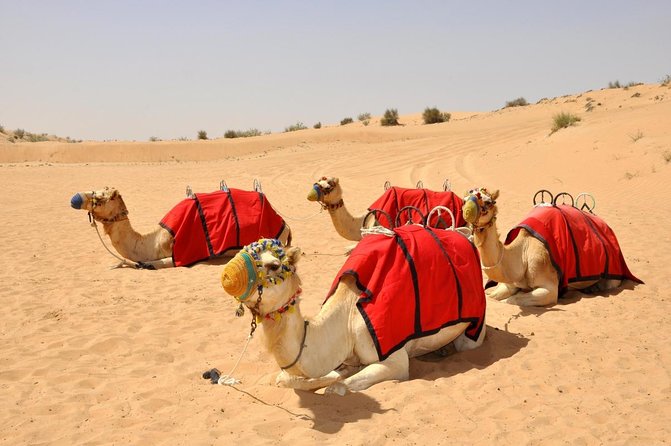
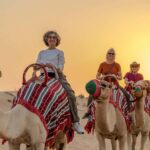
Then comes the camel caravan ride, about 10–12 minutes. The ride is repeatable, which is a nice touch if you want one calm round for the photos and one second round just to enjoy the slower pace. You’ll be in the village area with farm animals, cooking stations, Bedouin tents, and even a restored well—so the village isn’t just a stage set. It feels like a functioning heritage-style setting.
Two important rules for planning:
- Children under 5 can join at the child rate, but they’re not permitted on the camel ride, so they’ll need to stay with an adult at the village or follow the caravan.
- Pregnant women cannot participate in this activity.
If you’re traveling with mixed ages, it’s worth thinking through who will want the camel ride ahead of time. The better you plan that, the smoother the whole evening will feel.
Arabic Coffee-Making, Flatbreads, and Luqaimat: The Food Stops That Actually Teach
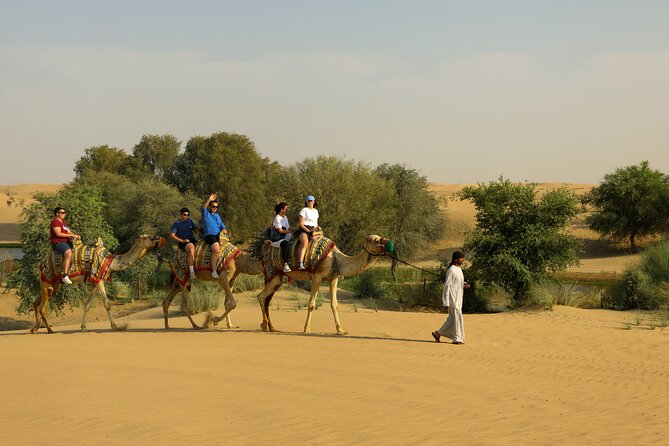
After the camel time, you return to the village for live demonstrations and tastings. This is where I like this safari more than the typical “dinner + show” model. It gives you a few cultural anchors you can remember the next day.
You’ll watch a live Arabic coffee-making session (gahwa). Then you’ll sip the Emirati coffee, which is part ritual, part flavor, part storytelling. It’s not just a drink stop—it’s a way to see how hospitality is expressed.
Food also shows up in a more hands-on way. In the village, you’ll see an Emirati lady making flatbreads and luqaimat (those small, sweet dumplings). For me, these moments are great because they help you understand what’s going on at dinner. Instead of arriving at the table with no context, you’ve already seen the basics of how the ingredients move from kitchen to plate.
The timing is built for evening light and relaxed pace. You’ll also have a chance to enjoy the desert sunset while you’re in the right part of the route—so the visuals and the food both hit around the same emotional peak.
Bedouin Dinner Plus Makeovers: What the 6-Course Meal Feels Like
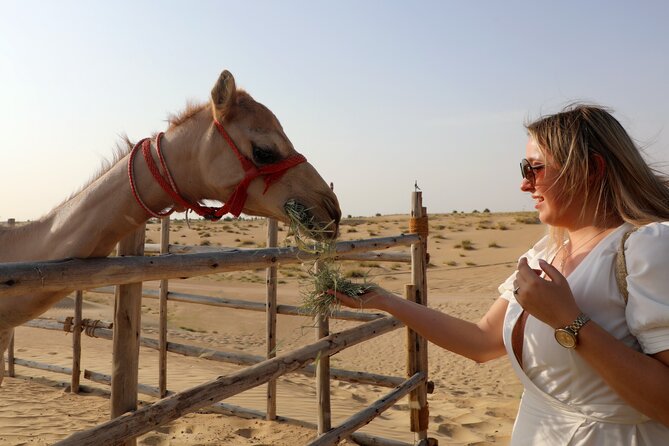
Dinner is a set menu, described as a 6-course Emirati/Bedouin-style meal. You’re not trying to order, and you’re not waiting around for your table while the group changes lanes. That’s a real value for a 6-hour experience: fewer logistics, more time spent on what you came for.
Expect Bedouin entertainment as part of the dinner flow. In other words, this isn’t a silent meal where you just eat and then wander. You’ll get performances and storytelling pacing that matches the camp atmosphere later.
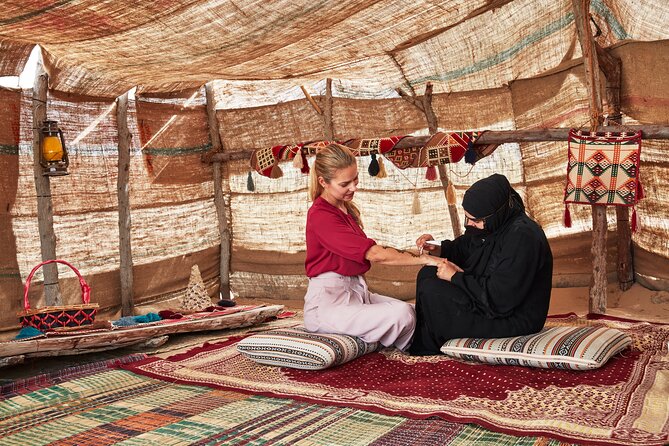
Then there’s the “makeover” moment: you dress in Arabic attire for photos, typically kandura for men and abaya for women, with the items returned after use. This is one of those activities that can go either way depending on the operator, but here it’s handled as a short, guided photo moment—so it doesn’t eat your whole evening.
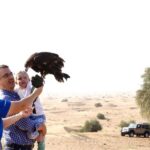
You’ll also have a falcon experience: a falcon show and photo opportunity. It’s one of the easier ways to get a memorable animal moment in the desert setting without needing extra activities.
If you care about photos: do the falcon and outfit photo time before you’re fully “food-buzzy.” After dinner, people tend to move slower, and the lighting can shift quickly once camp lights change.


Campfire Folktales and Telescope Stargazing at Night
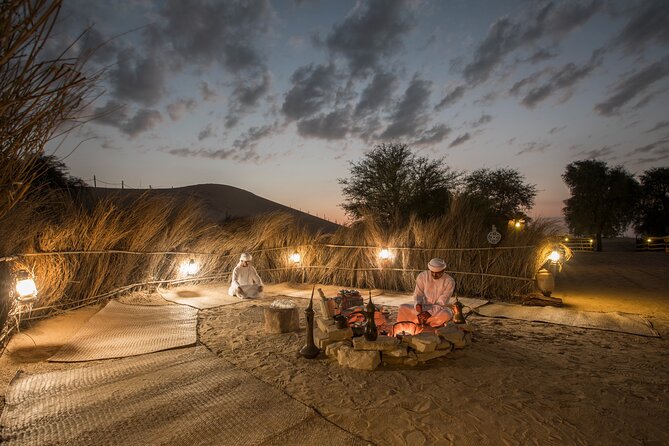
Once the dinner and entertainment are done, the evening turns quieter. Camp lights go down, and you get that classic desert-feeling contrast: warm social energy earlier, then calm night air and stars.
One standout part is the guide narration of typical Bedouin folktales over a campfire. That storytelling is where the safari becomes more than a checklist. It gives the night structure, and it helps you connect the earlier village experiences—gahwa, village life, and heritage dress—with the emotions people associate with the desert.
Then comes stargazing with a telescope. If you’ve ever wished you could “read” the night sky instead of just seeing it, this is the practical version of that wish. It gives you something to look at and learn from, right when the desert dark is at its best.
I also like that the experience supports a peaceful atmosphere. Multiple guides have been praised in past groups for guiding wildlife spotting and making the stories feel natural rather than rehearsed. Names that come up often include Imran, Mustafa, Muhammad, Usman, and Waqar Ahmad—so if you’re lucky enough to have one of them, you can expect confident explanations and a friendly tone.
Price and Value: Is $189 Worth It for the Time You Spend?
At $189 per person, this isn’t the cheapest desert outing you’ll find. But when I look at value here, I see a clear reason for the price: the safari bundles transport, wildlife-focused reserve time, a rare vintage vehicle experience, multiple live cultural moments (coffee, cooking demonstrations, outfit dressing), animal interaction (camel ride and falcon), and a multi-course dinner with entertainment.
A lot of desert safaris sell you dune driving and a generic buffet. This one adds things that cost time and labor—like the live gahwa session, cooking station demonstrations, set-menu dinner structure, and the campfire story pacing, plus telescope stargazing.
If you’re the type of traveler who wants your desert night to feel different from the standard jeep-and-dance package, the value gets stronger. If you’re purely chasing the most intense dune bashing and don’t care about village heritage or storytelling, you may decide it’s more “experience variety” than “thrill max.”
Either way, it’s a solid choice for first-timers to Dubai’s desert tradition and a good second safari if you’ve already done the classic version.
Who This Safari Fits Best (and Who Might Prefer Another Option)
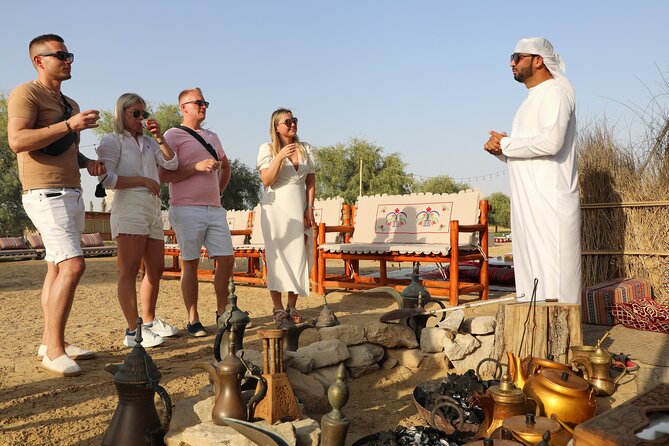
This Dubai evening heritage safari fits you best if you want:
- A more cultural desert evening than just riding dunes and eating
- A vintage Mercedes experience (not the typical jeep)
- Time for photos: sunset, outfit makeover, falcon moment, and stargazing
- A structured dinner with entertainment and guided stories
You might reconsider if:
- You’re traveling with a child under 5 who wants to ride camels (they can join, but not on the ride)
- You’re traveling and pregnancy makes the camel/ride portion a no-go
- You hate fixed schedules and prefer free time to wander
- You’re visiting in weather that’s borderline—this experience needs good weather
Quick Tips to Make Your Evening Smoother
- Wear comfortable shoes you can handle on uneven ground around the village and camp areas.
- Bring a light layer for night sky viewing; desert cooling is real once the sun drops.
- If you’re a photographer, plan your outfit and falcon photos earlier so the dinner timeline doesn’t rush you.
- Don’t stress about exact animal sightings; enjoy the reserve route and let the wildlife chances stay “possible,” not “promised.”
Should You Book the Dubai Evening Heritage Safari with Vintage G Class?
Book it if you want a desert night that feels like heritage, not just activity. The combination of a vintage 1980s Mercedes-Benz, a wildlife-focused reserve setting at Al Marmoom, and live cultural moments like gahwa and cooking demonstrations makes this a memorable way to see Dubai’s desert side.
Skip it if your priority is extreme thrills only, or if your travel group includes someone who can’t participate in the camel ride portion. Also keep weather in mind: if skies are poor, your plan depends on them rescheduling or refunding.
If you’re aiming for an evening that mixes food, animals, stories, and real night sky time, this is the kind of safari that leaves you with details you’ll still talk about after the trip ends.
FAQ
How long is the Dubai Evening Heritage Safari?
The tour runs for about 6 hours including hotel pickup and drop-off.
What vehicle do you ride in on this safari?
You ride in an open-air Vintage G Class Mercedes-Benz from the 1980s during the desert portion.
Is hotel pickup included?
Yes, pickup and drop-off are included from Dubai hotels in an air-conditioned modern vehicle. Pickup may not be available from Rove Dubai Marina and Wyndham Dubai Marina; you can meet at Stella Di Mare, about 750 meters away.
Do you get a camel ride?
Yes. You’ll have a camel caravan ride lasting about 10–12 minutes, and it can be repeated.
What cultural experiences and shows are included?
You get a live Arabic coffee-making session, an Arabian makeover in traditional attire for photos, an Arabian falcon show/photo opportunity, Bedouin entertainment, and a campfire storytelling segment.
What dinner is included?
Dinner is described as an authentic set-menu 3-course Bedouin dinner in the summary, and additional detail lists a 6-course Emirati dinner at the village.
Are there age or pregnancy restrictions?
Children below 5 years are accepted at the child rate and a child seat is provided, but they are not permitted for the camel ride. Pregnant women cannot participate.
What is the cancellation and weather rule?
You can cancel for a full refund up to 24 hours in advance. The experience requires good weather; if canceled due to poor weather, you’ll be offered a different date or a full refund.