REVIEW · DUBAI
Dubai: Red Dune Desert Safari, Quad Bike, Camels, and BBQ
Book on GetYourGuide →Operated by ToursGuys.com · Bookable on GetYourGuide
Sand dunes beat the city heat. This Dubai red-dune safari stacks real adventure (think dune bashing) with classic camp time and dinner, run by guides like Arslan and Zeeshan for a smooth day from pickup to drop-off.
I especially like the mix of action plus calm: sandboarding off the steep dunes and then that sunset camel ride with big photo moments. One consideration: this tour is physical, and dune bashing is not a good fit if you have back or heart issues or if you are pregnant.
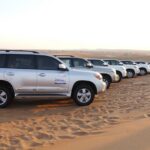
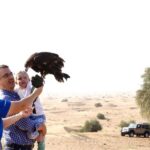
You get picked up from your hotel in an air-conditioned 4×4 and head out with an English-speaking driver. There’s a quick stop to adjust tire pressure before the ride, and you can also use the restroom and grab photos with falcons along the way.
If you add quad biking, treat it as a self-driving activity. The safety and insurance notes are clear, so you’ll want to feel comfortable riding before you sign up, especially if you’re traveling with kids under 3 or you want a totally relaxed day.
In This Review
- Key things that make this safari worth your time
- Dubai pickup to red-dune desert: how the day starts
- Dune bashing and sandboarding: the red dunes deliver the thrill
- Quad biking: the fun add-on with real responsibility
- Camel ride at sunset: the part that slows the adrenaline
- Camp tent to full desert camp: what changes on the 7-hour option
- Camp culture: falcons, henna, shisha, and the show schedule
- BBQ dinner and entertainment: what you eat and how the evening flows
- Price and value: why $27 can still feel like a win
- Who should book this safari, and who should skip parts
- Should you book the Red Dune Safari with quad biking and BBQ?
- FAQ
- How long is dune bashing?
- Is quad biking included in the safari?
- Does the tour include sandboarding and camel riding?
- What food and drinks are included?
- What entertainment is offered at the camp?
- Are there luggage limits?
Key things that make this safari worth your time
- Dune drive plus sandboarding: you get two different kinds of thrill, not just one
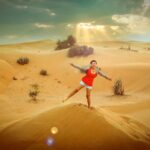
- Red dunes with a sunset camel ride: the color and light are made for photos
- Optional quad biking: go faster in the sand if you pick the right add-on
- A real desert camp setup: soft drinks, tea/coffee with dates, then BBQ and entertainment
- Guides matter: lots of praise for drivers who keep things safe, fun, and on schedule (examples: Mohammed Bakhtiar, Azeem, Faraz, Abid Wahid)
Dubai pickup to red-dune desert: how the day starts
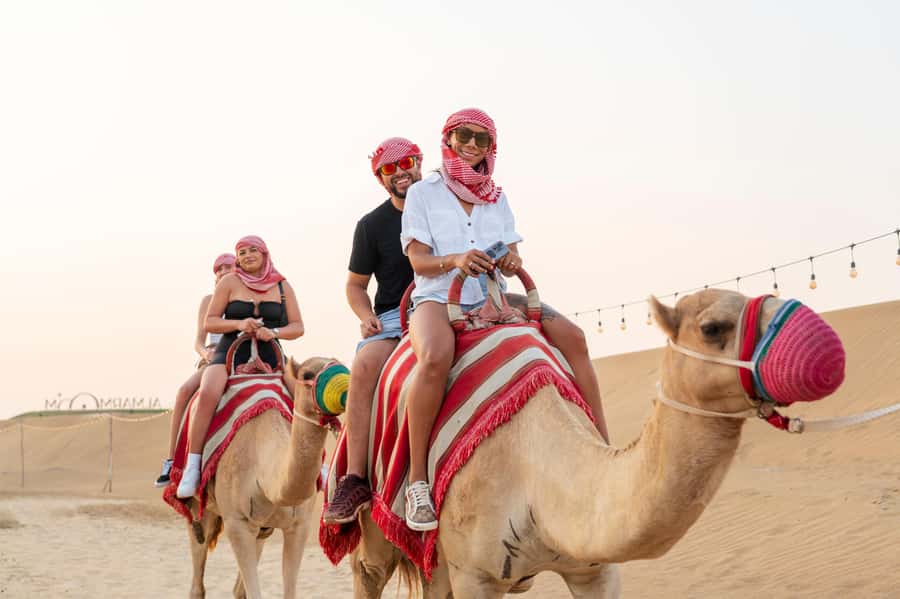
The day begins the way you hope a tour day will: you’re collected from your hotel in an air-conditioned 4×4. Expect an English-speaking driver, and a pace that lets you get moving without feeling rushed. This kind of setup matters in Dubai because traffic can turn a simple outing into a long day. Here, you’re already in the right vehicle for the sand approach.
Before the dune driving kicks in, there’s a short stop for tire pressure adjustments. That sounds minor, but it changes how the vehicle moves on sand. Lower tire pressure helps traction and ride feel, which is exactly what you want for a safer, more controlled dune drive.
Right after that, the tour is built around options. You can keep it easy (restroom, photos, relaxing in the vehicle), or you can lean into the action. If you’re doing quad biking, you’re usually given a chance to settle in first so you’re not panicking with the helmet on.
Also keep in mind the luggage rule: only small bags are accepted. If you show up with a giant suitcase, you may have to rethink what you bring, so pack light and plan to keep essentials with you.
You can also read our reviews of more tours and experiences in Dubai.
Dune bashing and sandboarding: the red dunes deliver the thrill
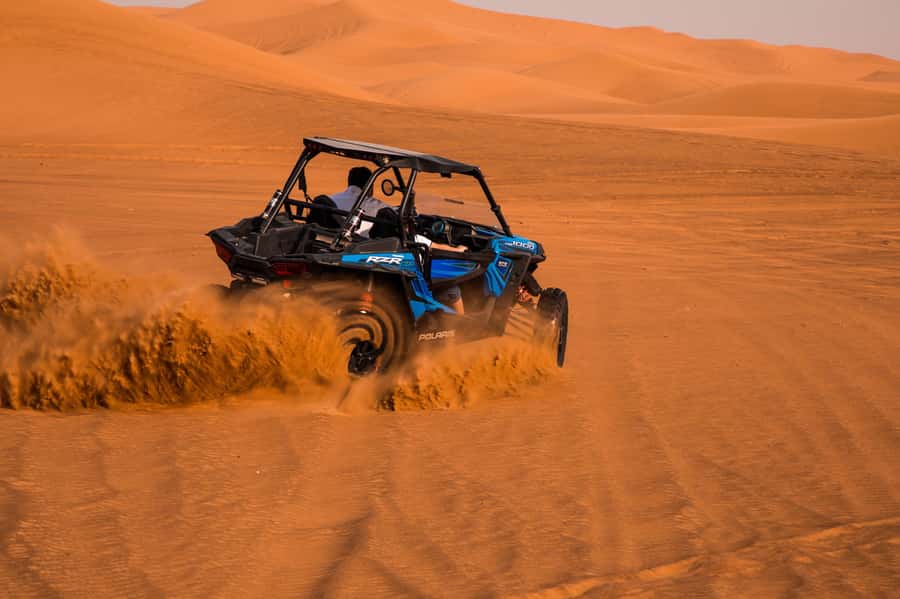
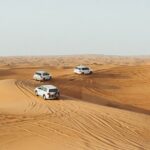
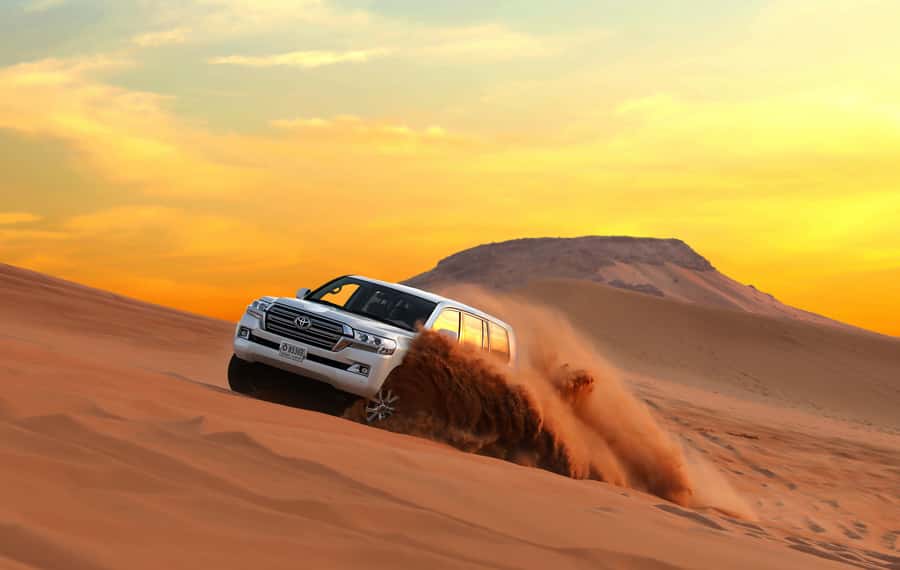
This is the signature part: dune bashing for about 30 to 45 minutes, driven by someone trained to handle steep sand and fast changes in terrain. The goal isn’t just speed. It’s getting you the full roller-coaster effect while keeping the ride controlled enough that most people can enjoy it without feeling like they’re being thrown around.
If you like a physical thrill, dune bashing is the main event. If you don’t, don’t ignore the health info. Pregnant women and people with back or heart problems are not recommended for this part. One tip: if you’re on the fence, decide based on how your body handles sudden movement, not just your courage level.
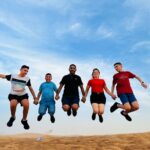
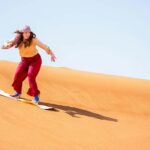
After the drive, sandboarding is where you get to slow down and control the fun. You’ll slide down the dunes on a board, usually with a chance to take photos at the top before you go. Sandboarding is less about fear and more about timing and balance. Even if you watch others first, it’s easy to see why it’s popular: the dunes look huge, then you realize you’re actually moving.
A practical strategy: bring something you can hold onto. Your hands will do the work when you shift your weight during the slope. And if your group is splitting up between board tries, you’ll want to pick a clear moment to line up so you aren’t waiting in the wrong spot.
Quad biking: the fun add-on with real responsibility
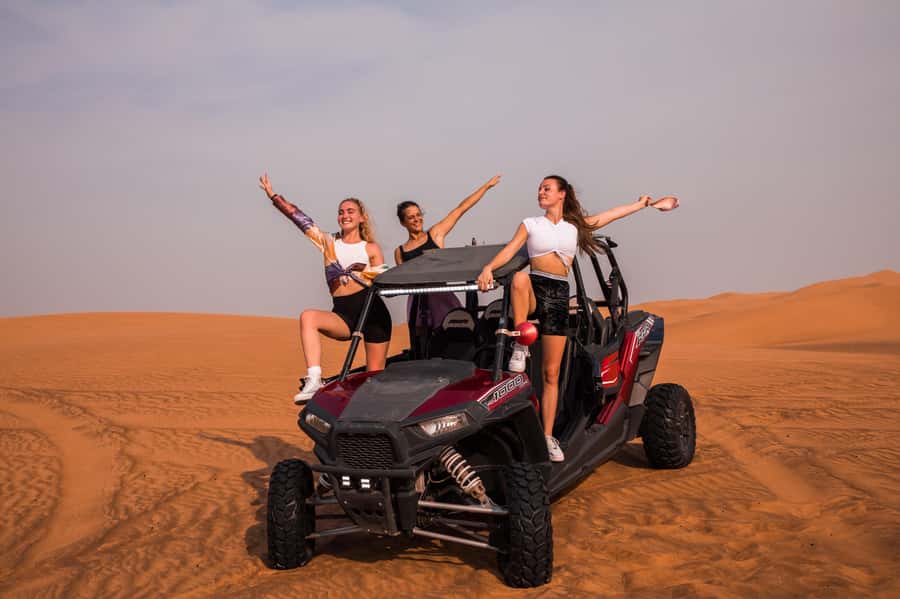
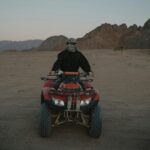
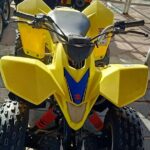
Quad biking is optional, but it’s one of the highest-impact add-ons because it changes you from passenger to driver. If you select it, you’ll self-drive the quad. That’s important: the experience is not just riding along. You’re steering through the sand, so you’ll feel every turn and bump.
The operator’s safety and responsibility rules are also very direct. Any accidents or damages are the rider and passenger’s responsibility, and the provider’s insurance does not cover it. That doesn’t mean it’s unsafe. It means you should go in with full awareness, and if quad biking is a big part of your plan, consider travel insurance that covers adventure activities.
Before you ride, do a quick mental checklist:
- Can you comfortably follow instructions fast when you’re on the quad?
- Are you ready for sand to behave differently than pavement?
- Do you have the right expectations for speed and control?
And if you’re traveling with children, pay close attention: children under three can only participate on a private tour with parents’ full responsibility. If you’re bringing kids, don’t assume all tour slots work the same way.
One more value note: some people end up spending extra money on upgrades like faster quad options or add-ons. If you want the base experience, keep your budget in mind early so you’re not surprised later.
Camel ride at sunset: the part that slows the adrenaline
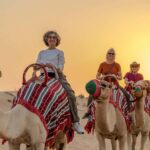
After the action, the tour shifts into that classic desert rhythm: calmer movement, better light, and time to breathe. You’ll stop in the red dunes desert for a camel ride, with sunset timing that makes the sand look even richer in color.
This is also where the tour becomes more than a ride. You’re getting an introduction to a different pace of travel, one that suits photos and storytelling. Many people remember this section because it feels like you’re stepping out of the vehicle routine. You’re higher up, moving slower, and surrounded by red sand in every direction.
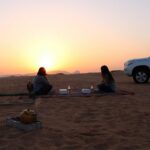
The tour then provides a cool-down break in a camp tent. You’ll find soft drinks, water, and tea or coffee with dates. This is more than a snack stop. It helps you reset after the heat and the adrenaline so the dinner and shows don’t feel like an endurance test.
If you’re a photo-focused traveler, this part is a gift. The light at sunset is when the dunes look most dramatic, and the camel ride gives you a natural frame for those wide desert shots without needing fancy gear.
Camp tent to full desert camp: what changes on the 7-hour option
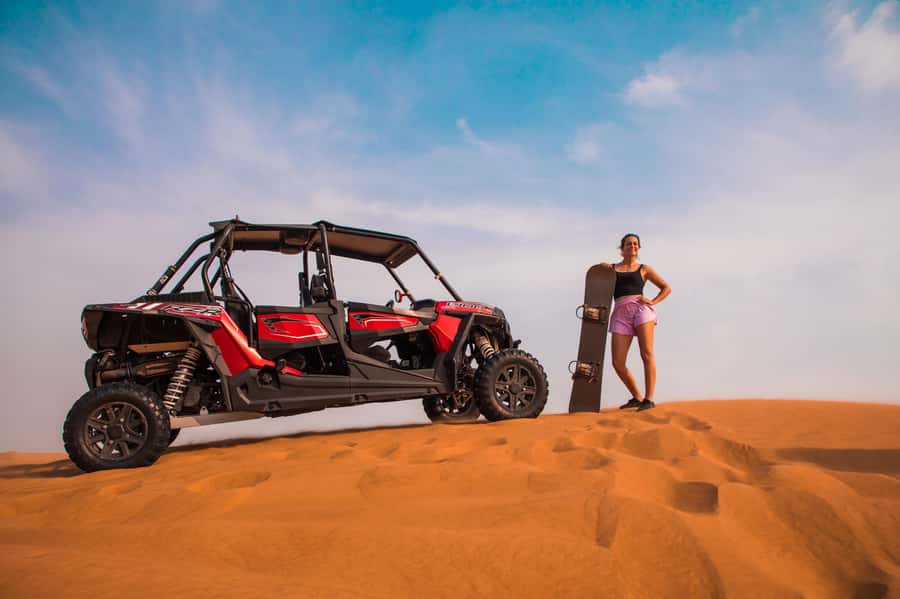
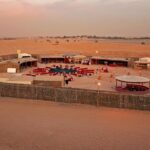
There’s a key fork in the day: the longer 7-hour option adds more time at the camp, which means more activities and a fuller schedule. If you book the longer format, you’ll head to the desert camp for a warmer welcome, typically including rose water and Arabic coffee, plus local sweets and dates.
This is where the tour becomes hands-on. You’ll have opportunities to interact with camels—visit them, ride them, and feed them. Camel feeding is the kind of activity that sounds small until you’re standing there and realizing you’re doing it, not just watching.
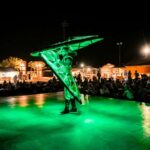
Depending on your selected activities (and the evening slot), you may also run into falcon experiences, henna painting, and shisha. There are also cultural and animal show elements, like an Arabian horse show and a camel show, plus performance moments such as traditional Yola dance and falconry show.
Even if you don’t do every single add-on, the camp time is still valuable because it gives you a real break. Short tours can feel like you’re constantly moving. The longer camp option gives you space to take photos, talk with staff, and actually enjoy the atmosphere.
One more practical note: if you’re planning to attend fire-related shows, the timing matters. Evening slots are where that show element typically happens, and during Ramadan, fire shows are only available at desert camps.

Camp culture: falcons, henna, shisha, and the show schedule
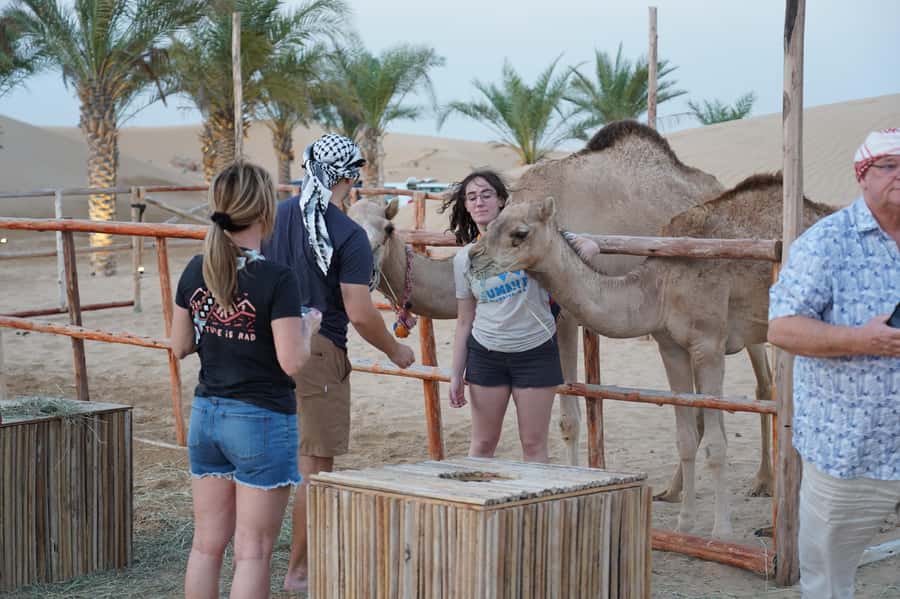
What I like about the camp programming is that it’s not one single performance. It’s a sequence of small experiences that you can pace based on your energy level.
Falcons are usually a big draw. You may see falcon interactions set up in the camp area, and even earlier you can get photos with falcons during the morning-to-desert transition. If you’re the type who likes animal encounters that feel close, this is a strong reason to book.
Henna painting is another popular stop. It’s usually hands-on, and it’s a simple souvenir that feels connected to the culture you’re seeing rather than just another store item.
Shisha is offered as an option at the camp. If you want it, plan for it as part of the camp vibe, not as something you rush through. If you don’t, you can still enjoy the performances and BBQ without needing to take part.
On the show side, some evenings include multiple performance formats—like Yola dance and falconry segments, plus animal shows (Arabic horse and camel show). If you’re in a group with mixed preferences, this helps. One person can focus on animal moments, another can watch the stage performance, and everyone still feels like they got something.
And yes, there’s often a fire show element in the evening. If your slot is right, it can become a high point of the whole day because it changes the mood. After dinner, the energy lifts, and the desert setting makes it feel more dramatic than the same show might in a city venue.
BBQ dinner and entertainment: what you eat and how the evening flows
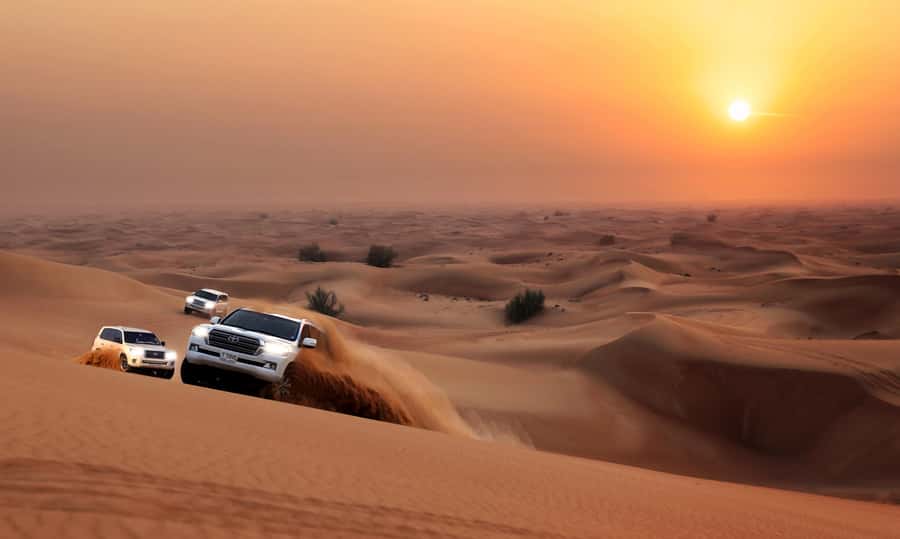
Dinner is built around a traditional barbecue meal with snacks. If you choose the 7-hour option, you typically get a BBQ dinner with vegetarian and non-vegetarian choices. You’ll also have dates, plus Gahwa (coffee) and Gaymat (sweets) in the camp experience.
In practical terms, this matters because BBQ can be hit-or-miss on safari style tours. Here, the menu is set up as a buffet-style meal with a mix of options, and staff are usually described as attentive and organized. I’d treat dinner as one of the key reasons to pick the longer format, because it turns the outing into an evening plan instead of just a daytime adrenaline session.
The entertainment wraps the meal. Expect live performances in the camp setting, with the specific show lineup depending on your time slot (for example, some show elements like the Mega Fire show are tied to evening slots). If you’re going at dusk, you’ll likely feel the day transition from action to cultural stage moments.
If you care about comfort, know the day can be intense. Even if the tour is organized well, you’re moving from sand activity to seating to dinner, and it’s hot. Pace yourself during the camel ride and snack time so you’re not running on empty by the time BBQ arrives.
Also, bring a small mindset adjustment: this isn’t a fine-dining meal. It’s a social desert dinner. The best way to enjoy it is to treat it like part of the experience, not a restaurant substitute.
Price and value: why $27 can still feel like a win
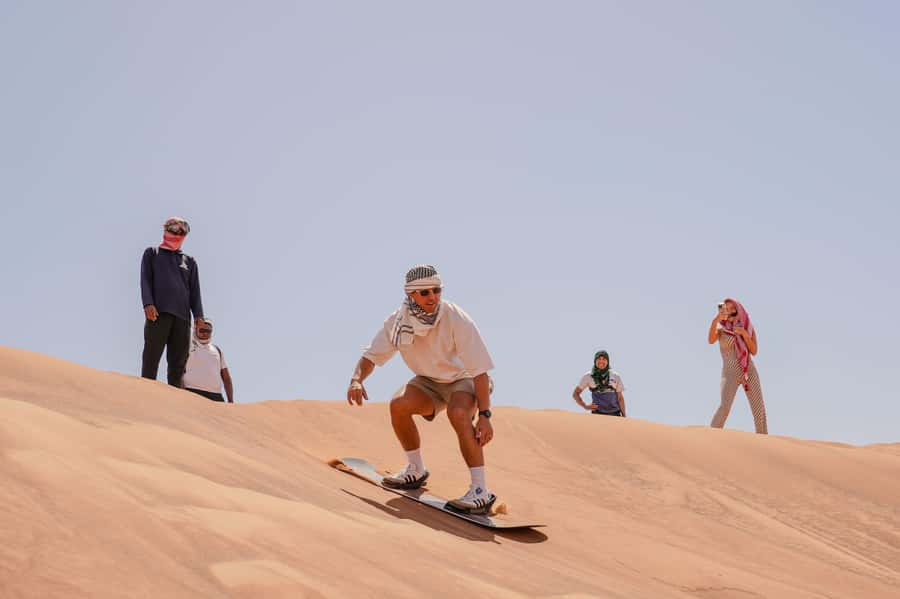
At around $27 per person, the value is the big story. For this price, you’re not just buying entry to a camp. You’re getting pickup and drop-off from Dubai, air-conditioned transport in a 4×4, dune bashing, sandboarding, and camel riding, plus refreshments like unlimited soft drinks and tea or coffee with dates.
Then, if you choose the 7-hour option, the value stacks further with a full camp welcome, added animal interactions, cultural activities, and BBQ dinner with both vegetarian and non-vegetarian options.
What makes it feel like good value isn’t only the list of inclusions. It’s the flow. You’re not paying to do one activity and leaving. The day is structured so the ride, camp, food, and shows blend into one outing. That’s why people often rate this style of safari so highly: it’s hard to find another Dubai experience where you pack so much into one window.
That said, the lower price can come with the reality that add-ons may appear. Scarf deals, quad upgrades, or similar extras might come up. If you’re budget-conscious, decide in advance what you want to pay for and what you’ll skip.
Who should book this safari, and who should skip parts
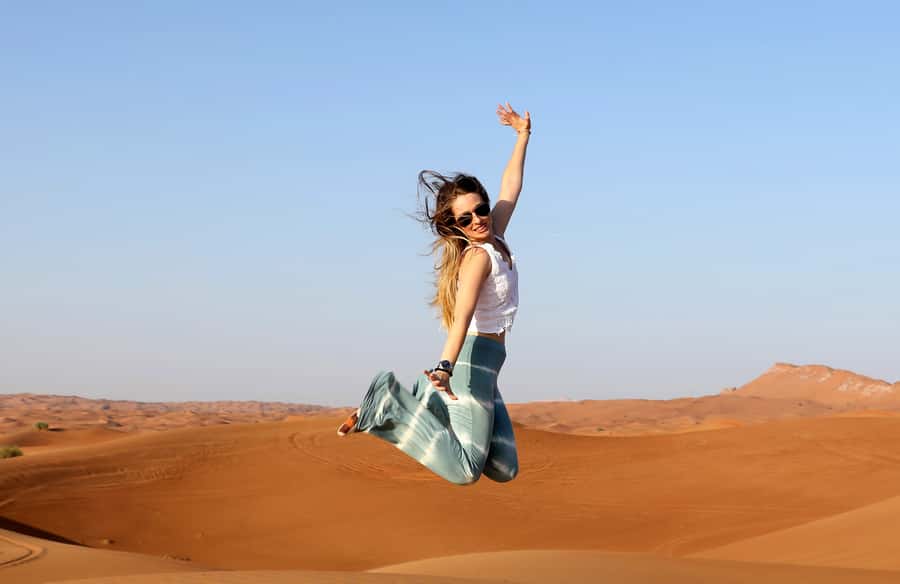
This is a strong pick for:
- People who want a full desert day with action plus camp time
- Families with kids old enough to enjoy sand activities (quad biking has age rules)
- Travelers who want photos: dune rides, sunset camel moments, and camp interactions
- Anyone who likes guided, structured entertainment rather than self-planning sand activities
It’s not a good pick for:
- Pregnant women (explicitly not recommended)
- People with back or heart problems (explicitly not recommended)
- Very young children: the quad biking participation rules exclude under-3s from standard tours
- People who refuse motion-based thrills: dune bashing is part of the core experience
If you’re worried about whether dune bashing will feel too intense, you can still enjoy plenty of the day even if you’re not keen on that portion. But you should be honest about your comfort level from the start.
One more “real life” tip: the day is action-heavy. If you schedule it at the wrong time in your trip, you might feel sore or tired afterward. If you have flexibility, I’d place this earlier in your stay so you’re not planning something big the next day.
Should you book the Red Dune Safari with quad biking and BBQ?
Yes, you should book if you want a classic Dubai desert day that moves. This tour has a clear rhythm: dune bashing and sandboarding for thrills, camel ride at sunset for beauty, then camp activities and BBQ for the human side of the experience. It also tends to score highly for drivers who keep things safe and fun, with standouts like Mohammed Bakhtiar, Azeem, Faraz, Rashid, Abid Wahid, and Captain Ali named again and again.
Skip or be cautious if you’re sensitive to sudden movement, have medical constraints, or you know quad biking is not your thing. In that case, focus on the non-quad parts and the camp dinner and shows.
If you book, go in with one goal: enjoy the whole day, not just one highlight. The value comes from the mix.
FAQ
How long is dune bashing?
Dune bashing runs for about 30 to 45 minutes.
Is quad biking included in the safari?
Quad biking is included only if you select the quad biking option. It’s self-driving, and accidents or damages are the rider and passenger’s responsibility.
Does the tour include sandboarding and camel riding?
Yes. Sandboarding is included, and a camel ride is included as well. The camel ride can be repeated as per requirement.
What food and drinks are included?
You’ll get tea or coffee with dates and unlimited soft drinks. If you choose the 7-hour option, you also get a barbecue dinner with vegetarian and non-vegetarian options, plus local sweets and dates.
What entertainment is offered at the camp?
Depending on your time slot and selected option, you may see performances such as Arabian Horse Show and Camel Show, traditional Yola dance and falconry show, and a Mega Fire show for evening slots.
Are there luggage limits?
Yes. Only handbags or small backpacks are permitted, and large luggage is not accepted. Baby strollers are not accepted.