REVIEW · SOLHEIMASANDUR
Mýrdalsjökull: South Coast ATV Quad Bike Safari
Book on GetYourGuide →Operated by ICELANDIA · Bookable on GetYourGuide
Black sand plus a quad bike equals Iceland magic. At the foot of Mýrdalsjökull, you’ll roll across Sólheimasandur’s otherworldly plains, then stop at the DC3 wreck site on the way to big coastal viewpoints.
I love the mix of fast, fun riding with a couple of real “wow” stops built in—especially time spent at the plane wreck for photos. I also like the variety: beach riding, wide-open desert tracks, and a return route that brings you past rivers and into mountain-valley scenery.
One drawback to consider: weather here can change the plan. If it’s wet and windy, you may not get as close to the glacier as you’d hoped, so dress for cold, wet riding even if the forecast looks fine.
In This Review
- Key things to know before you go
- Mýrdalsjökull Quad Bike Safari: what makes this south coast ride special
- Gear, license, and the reality check on cold and wet riding
- Meeting point: Mýrdalsjökull Base Camp and how to find it fast
- Safety briefing, ATV basics, and getting comfortable before the fun
- Ride across Sólheimasandur black sand plains: the part you’ll remember
- The DC3 plane wreck at Sólheimasandur: photo stop with real atmosphere
- Coastline cruising toward Dyrhólaey: southern tip views from the ATV
- Seeing Mýrdalsjökull up close: glacier views, not just a name
- Return over sands, the Jökulsá River, and the mountain-valley finish
- How long is enough: choosing the 1–2 hour safari
- Price and value: what $144 per person really buys
- Guides and service: the people who make it flow
- Who should book this ATV safari (and who should skip it)
- If weather shuts part of the plan: how to stay flexible
- Should you book the Mýrdalsjökull South Coast ATV safari?
- FAQ
- Where is the meeting point for the Mýrdalsjökull ATV safari?
- Do I need a driver’s license to drive an ATV?
- What happens if I’m a single rider or my group has an odd number of people?
- How long is the tour?
- What gear does the tour include?
- What should I bring with me?
- Are children allowed?
- Is the tour suitable for pregnant women?
- What’s included and not included for transport?
- Is free cancellation available?
Key things to know before you go
- Sólheimasandur black sand time: the ride is a big part of the fun, not just a transfer
- DC3 plane wreck stop: a real historical landmark with time to take photos
- Dyrhólaey peninsula views: coastline drama and the southernmost tip of Iceland
- River crossings: expect water crossings and a route that moves you between environments
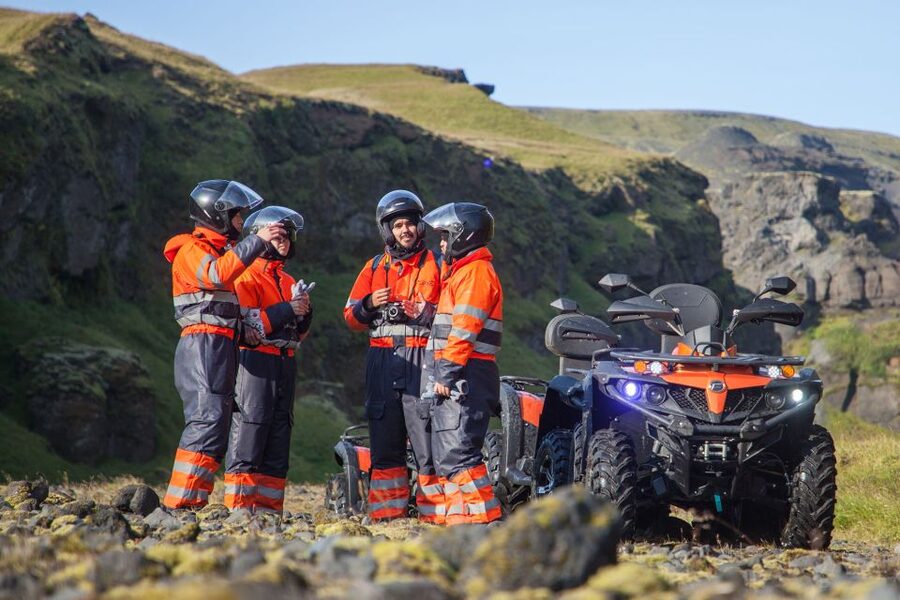
- Gear is handled: insulated cover-alls plus helmet and balaclava face mask keep you comfortable
Mýrdalsjökull Quad Bike Safari: what makes this south coast ride special
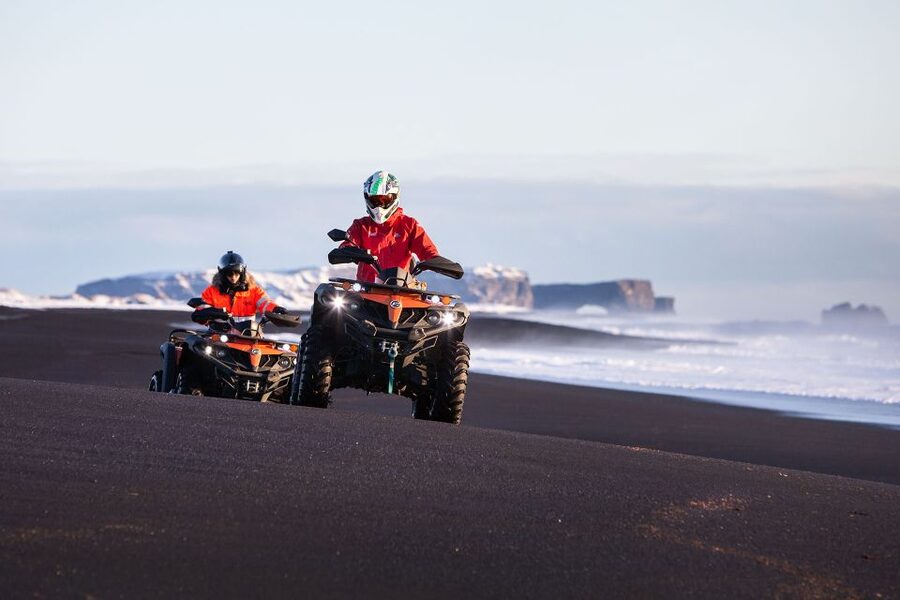
This ATV quad bike safari hits a sweet spot on Iceland’s South Coast. You’re not just sightseeing from a bus window. You’re driving yourself through dramatic terrain with the glacier looming in the distance, the Atlantic nearby, and enough “track time” that it feels like you actually explored.
What I like most about this specific route is the rhythm. You start with an easy setup, then move into the signature black sand area at Sólheimasandur. After that comes the DC3 plane wreck—famous enough that you’ll recognize it from photos online, but still strange in real life. Then you shift back toward the coast for views toward Dyrhólaey and finish with a return that includes river and valley riding.
If you want Iceland that feels hands-on—cold air in your face, sand under your tires, and a guide calling out what to look for—this is built for that.
Gear, license, and the reality check on cold and wet riding
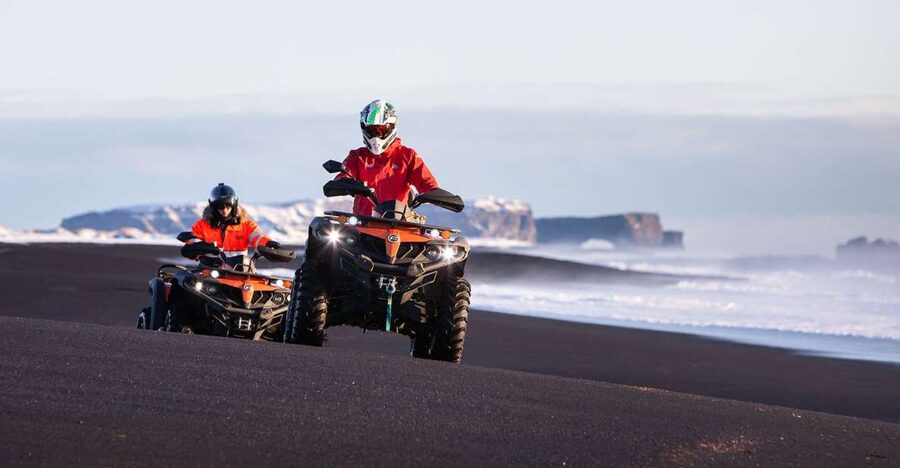
This tour includes a lot of the “make it survivable” gear: insulated cover-alls, a helmet, and a balaclava face mask. That’s a major value point in Iceland, where a single wet hour can drain your trip energy fast.
You’ll still want to bring the basics:
- a driver’s license (required to drive)
- warm clothing layered underneath
- waterproof shoes (you’ll be glad you chose the waterproof ones)
Boots are optional depending on conditions, so plan for the weather you’ll actually meet. People doing this in windy months often report that gloves matter a lot. If you can, wear wool gloves under thicker mittens or gloves so your fingers stay warm through the ride.
Also note the tour rules: no intoxication, no alcohol, no drugs. It’s not about being strict—it’s about keeping the group moving safely across uneven terrain and through water.
Meeting point: Mýrdalsjökull Base Camp and how to find it fast
You meet at Mýrdalsjökull Base Camp at Ytri Sólheimar road 222. Look for Icelandic Mountain Guides by Icelandia at the Mýrdalsjökull Base.
Here’s a practical tip that saves time: some people found the meeting spot slightly different than what their maps showed at first. If you’re there early, do a quick loop, then ask on site. Once you see the base camp area, check in is straightforward and geared toward getting you riding quickly.
No hotel pickup or drop-off is included, so plan your own drive to the base camp from nearby South Coast stops.
Safety briefing, ATV basics, and getting comfortable before the fun
Before you take off, you get a short safety briefing. The point is simple: Iceland’s terrain isn’t hard technically, but it’s unpredictable—sand, rocks, wind, and river edges all change how your ATV handles.
The good news is that this tour tends to work well for first-time ATV riders. The included gear reduces discomfort, and the guides manage the group so you’re not placed into chaos right away. You’ll learn how to handle speed, turning, and spacing so you can focus on the views once the route opens up.
One thing I appreciate is that groups get paced. If you’re confident, you may be encouraged to go faster on safe straight stretches. If you’re still learning, the guide keeps you in control and keeps the group together. That makes the experience feel like a guided adventure rather than a loose free-for-all.
Ride across Sólheimasandur black sand plains: the part you’ll remember
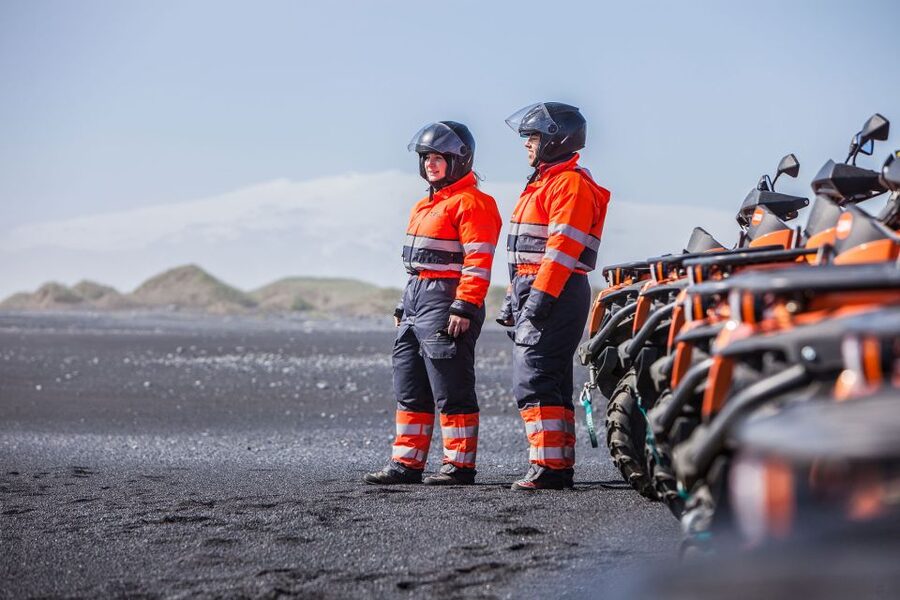
After the briefing, the route takes you out to Sólheimasandur, known for its black sand plains. This is the signature riding surface for the safari. It’s flat in stretches, wide open, and often feels surreal—like you’re in a movie set made of sand and sky.
During this phase, you’ll get a taste of why quad biking is so popular here. You can feel the ATV working as it rolls over sand instead of solid roads. It’s bouncy in places, smooth in others, and it gives you that full-sensory feeling: dust or wet spray depending on the day, wind hitting your face, and constant changes in how traction behaves.
This part also matters because it sets up the rest of the tour. You’re warmed up, you know where your balance sits, and then the stops ahead feel like deliberate pauses rather than distractions.
The DC3 plane wreck at Sólheimasandur: photo stop with real atmosphere
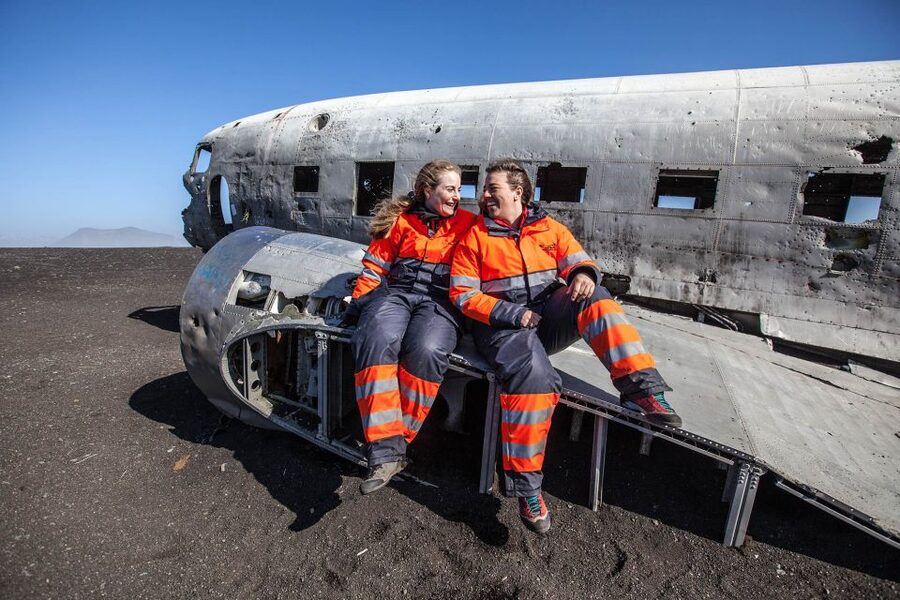
One of the biggest reasons people book this safari is the chance to visit the DC3 plane wreck site on the sands of Sólheimasandur.
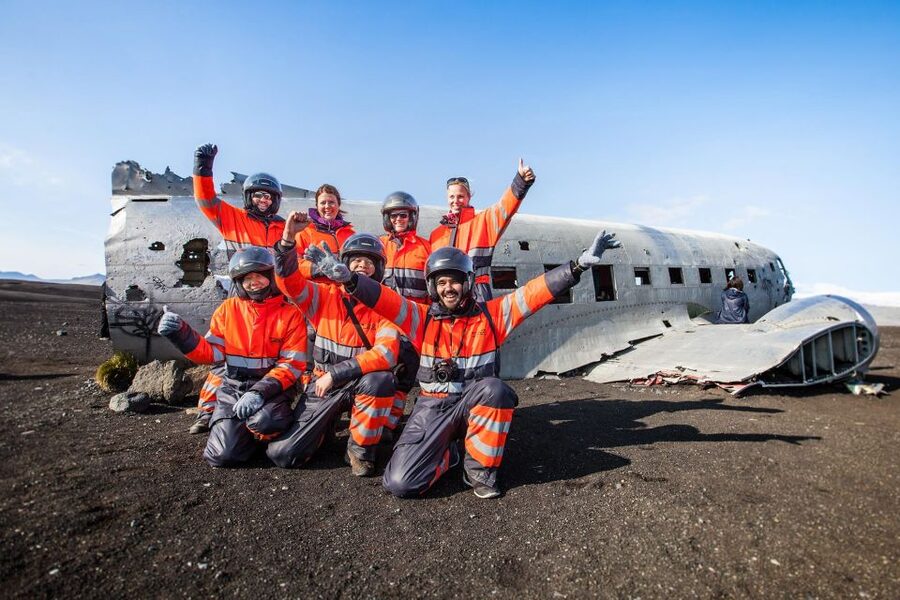
You’ll drive to the area, then stop to see the wreck where it crashed in 1973. In photos, it can look like a random landmark. In person, it’s more eerie and more interesting than you expect—because it’s sitting in a place that feels too empty to be real.
Practical photo tip: dress for wind. Even if it’s not freezing, coastal wind can make it hard to stay steady with camera settings. The time on site is one of those moments where the ride pays off. You’re not rushing; you’re there long enough to take pictures and absorb the story.
This stop is also a nice reset. After sand speed, the wreck gives you a different kind of Iceland experience: history in a landscape that looks untouched by time.
Coastline cruising toward Dyrhólaey: southern tip views from the ATV
After the plane wreck stop, the route shifts toward the spectacular coastline. One of the highlight viewpoints is Dyrhólaey peninsula, including the southernmost tip of Iceland.
This isn’t just a “point and look” moment. When you arrive from the ATV route, the coastline feels more dramatic because you’ve already been moving through rougher terrain. You see the ocean with a sense of scale that’s hard to get from inland roads.
Expect the guide to point out what you’re looking at, and you’ll likely get little bits of local context about the area’s geography and what makes this coast so distinctive. People often come away remembering how the coast looked in motion—not only from a viewpoint, but as part of the route.
Seeing Mýrdalsjökull up close: glacier views, not just a name
Even though your ride is on the ground (not on ice), you’ll get glacier context. Mýrdalsjökull shows up in the distance during the adventure, so the glacier isn’t just a label on the tour name.
That said, weather can affect how much of the route remains possible. Some days are perfect and some days are wet and windy enough that the tour may shorten certain segments. One of the real strengths of this operator is that they keep the experience going even when conditions shift. You’ll still ride the signature parts and hit the key stops when possible.
So go in with the right expectation: you’re here to experience the south coast on ATVs, with glacier scenery as part of the bigger picture.
Return over sands, the Jökulsá River, and the mountain-valley finish
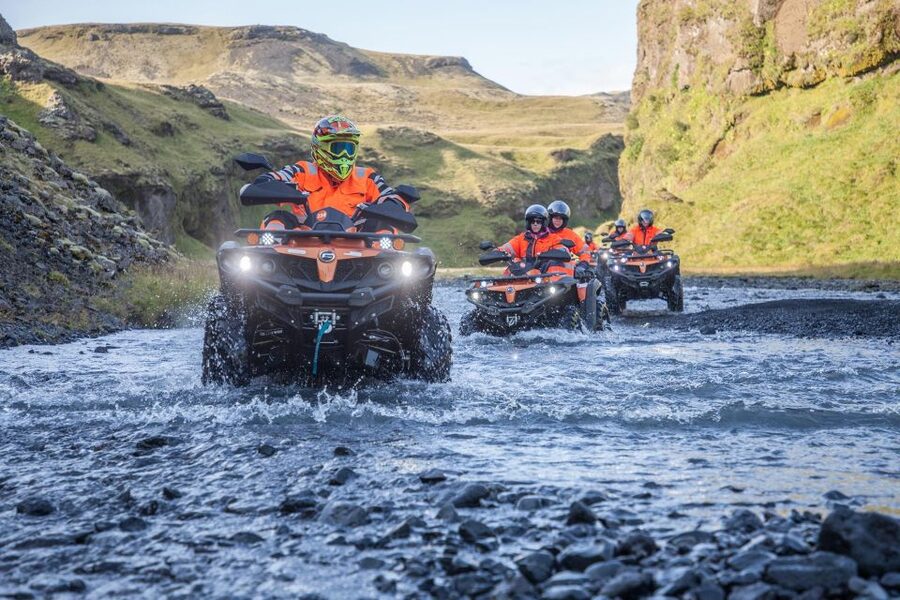
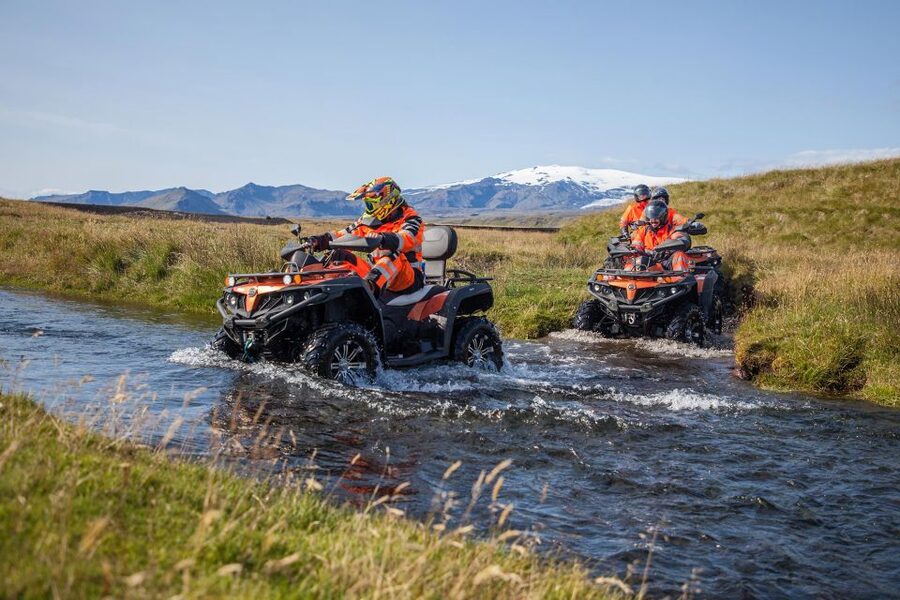
Heading back, you ride over the sands again and follow the Jökulsá River area. The tour includes crossing a river to enter a mountain valley at the end.
This part is often the “last wow” because it feels like you’re moving between environments, not looping around the same spot. Water crossings can be exciting, but they also add a safety-focused element. The guide keeps the group paced, so you can focus on your line instead of worrying about staying close.
By the end, you’ll feel the contrast: black sand driving in wide-open space, then coast viewpoints, then river crossings and valley riding. It’s a full loop of Iceland’s south coast energy in a short time.
How long is enough: choosing the 1–2 hour safari
The tour duration runs from 1–2 hours, and the longer option tends to be the sweet spot.
From a value perspective, a shorter ride can feel like an appetizer—fun, but you might wish you had more time for the sand and the riding between stops. Many people recommend the 2-hour option because it gives you enough time to enjoy the ATV segments without feeling rushed through the scenery.
Still, if you’re short on time or riding for the first time, the shorter duration may be enough to get the key elements: safety briefing, black sand riding, plane wreck viewing, and coastline/valley segments.
If you’re deciding between durations, I’d use one rule: if you’re the type who likes to savor, choose 2 hours.
Price and value: what $144 per person really buys
At around $144 per person for 1–2 hours, you’re paying for more than a ride. You’re paying for:
- guide-led routing across multiple terrain types
- included cold-weather riding gear
- access to specific south coast stops like the DC3 wreck area and Dyrhólaey viewpoints
- time to actually see the landmarks, not just pass by them
You’re also getting a setup that reduces your hassle. With insulated cover-alls, helmet, and balaclava provided, you don’t need to show up with a full ATV winter kit. The optional boots detail matters too; it means you’re not paying for extras you might not use.
The only “cost” isn’t money—it’s effort. You’ll be wearing gear and riding in real conditions, so the best value comes when you dress properly and enjoy the ride as much as the stops.
Guides and service: the people who make it flow
The guide experience seems to be a big part of why people rate this tour so highly. Names that come up include Bjarki, Paul, Magni, Anthony, Pawel, Oskar, and Hinrick—and they share a similar theme in how they run the ride: clear guidance, patience, and quick storytelling tied to what you’re seeing.
You may also get small touches that make the day feel easier. One detail that stood out is that some riders mention free tea and coffee available on site.
A good guide matters here because conditions can change. If weather affects routes, you want someone who can keep the experience moving while still hitting the important parts. The best guides also help you feel safe when traction changes—especially on sand and around river edges.
Who should book this ATV safari (and who should skip it)
This tour is a great fit if you want action and variety in one outing. It’s especially good for:
- people who like off-road driving and want more time on the ATV, not just looking
- visitors who want both iconic sights (DC3 wreck) and rugged south coast riding
- groups where at least some people are comfortable following a guide’s pace
It’s not suitable for:
- children under 8
- pregnant women
- anyone who can’t meet the driver’s license requirement (and if you’re driving, you’ll need it)
Also consider your comfort with cold and wind. With proper clothing and gloves, it’s manageable, but it’s still outside riding in Iceland’s conditions.
If weather shuts part of the plan: how to stay flexible
Iceland weather doesn’t ask your permission. If it’s wet, windy, or otherwise rough, the route can be adjusted. For example, some people reported they couldn’t reach the glacier as planned, but still rode and saw key points like the plane wreck.
That’s why I recommend packing with the mindset that the experience will be real-weather Iceland. Even on bad days, the ATV route keeps you active and the guide keeps the adventure on-track.
Should you book the Mýrdalsjökull South Coast ATV safari?
Book it if you want a short Iceland day that mixes black sand driving, the DC3 plane wreck, and south coast viewpoints all in one. It’s also a strong choice if you value included cold-weather gear and want a guided experience that helps you ride confidently.
Skip it if you’re traveling for a quiet, low-motion sightseeing day. This is a “ride first” tour, and the best version of it happens when you’re ready to enjoy the ATV time as much as the landmarks.
If you’re on the fence, my practical advice is simple: choose the 2-hour option if your schedule allows, and bring gloves you trust in wind. That combination is how you turn a cold day into a standout one.
FAQ
Where is the meeting point for the Mýrdalsjökull ATV safari?
Meet at Mýrdalsjökull Base Camp at Ytri Sólheimar road 222. Look for Icelandic Mountain Guides by Icelandia at the Mýrdalsjökull Base.
Do I need a driver’s license to drive an ATV?
Yes. A valid driver’s license is required to drive a quad bike.
What happens if I’m a single rider or my group has an odd number of people?
Single riders and groups with odd numbers are required to book a single ride ATV, payable on location.
How long is the tour?
The duration is 1–2 hours. Starting times depend on availability.
What gear does the tour include?
Included gear: guide, ATV per two persons, insulated cover-all, helmet and balaclava face mask. Boots are optional depending on weather conditions.
What should I bring with me?
Bring your driver’s license, warm clothing, and waterproof shoes.
Are children allowed?
No. The tour is not suitable for children under 8.
Is the tour suitable for pregnant women?
No. It is not suitable for pregnant women.
What’s included and not included for transport?
A guide and ATV ride setup are included, but hotel pickup and drop-off are not included.
Is free cancellation available?
Yes. You can cancel up to 24 hours in advance for a full refund.