REVIEW · AUCKLAND
Auckland Dolphin and Whale Watching Eco-Safari Cruise
Book on Viator →Operated by Auckland Whale and Dolphin Safari · Bookable on Viator
If sea life could pick a backdrop, it would be this. This 4.5-hour eco-safari rolls out from Viaduct Harbour into the Hauraki Gulf Marine Park, with onboard commentary from marine research scientists and a real focus on how wildlife and research meet in the wild. You’re not just looking; you’re learning how the crew tracks what they’re likely to find, and how marine reserves shape what shows up.
I love the practical, hands-on way this trip treats viewing. They’ll point out likely targets like bottlenose dolphins and Bryde’s whales, and you also get help spotting smaller stars like blue penguins and multiple seabird species. I also like that the ticket is tied directly to conservation, since every purchase contributes to Marine Mammal Conservation, not just a general operating budget.
One consideration: wildlife sightings are never guaranteed. You’ll often see dolphins, but whales can be elusive, and if you go out without marine mammals you can go again another day at no extra charge.
In This Review
- Key things I’d plan around
- Price and what you’re actually getting for it
- The Viaduct Harbour start and the 65-foot catamaran vibe
- Route highlights: from maritime history to island passes
- Marine mammals: dolphins, Bryde’s whales, seals, and why timing is everything
- Dolphins and the most likely wins
- Whales: possible, not guaranteed
- Seals and what it means when you see them
- Birds and penguins: the wildlife day doesn’t end with whales
- Seabirds you’ll train your eyes on
- Blue penguins: small, adorable, and easy to miss
- Deck strategy and photo timing when it matters most
- Comfort, timing, and how to not get wrecked by Auckland weather
- Conservation and marine science: why this feels more meaningful than a sightseeing loop
- Who should book this cruise (and who might want a different plan)
- Should you book this Auckland dolphin and whale eco-safari?
- FAQ
- Where does the cruise depart from?
- How long is the cruise?
- What wildlife can you expect to see?
- Is wildlife viewing guaranteed?
- What’s included in the ticket price?
- Are food and drinks provided?
- What should I bring?
- Is there any pickup from hotels?
- What if weather is bad on the day?
Key things I’d plan around
- Marine research scientists onboard with expert commentary tied to real tracking and field observations
- Hauraki Gulf Marine Park route with constant scenery changes and multiple island passes
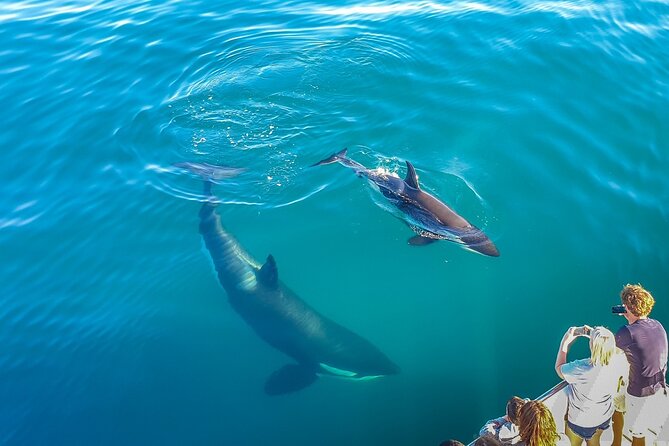
- Dolphins are the most reliable bet, with whales possible but never promised
- Up to six types of whales listed as viewing targets (plus dolphins, seals, penguins, and seabirds)
- Bring layers and weatherproof gear because Auckland wind can hit even on sunny days
Price and what you’re actually getting for it
At $135.91 per person for about 4.5 hours, you’re paying for three things: time on the water, a boat built for viewing, and a crew that treats the trip like more than a simple sightseeing loop. The value is strongest if you care about spotting multiple species and want the science context while you’re out there.
If you mainly want a quick, cheap “look for whales” cruise, this may feel like a lot. If you want a serious wildlife outing with marine research commentary, it starts to make more sense fast. You also have some safety net built in: if you don’t see any marine mammals on your trip, you can go again another day with no extra charge.
The Viaduct Harbour start and the 65-foot catamaran vibe
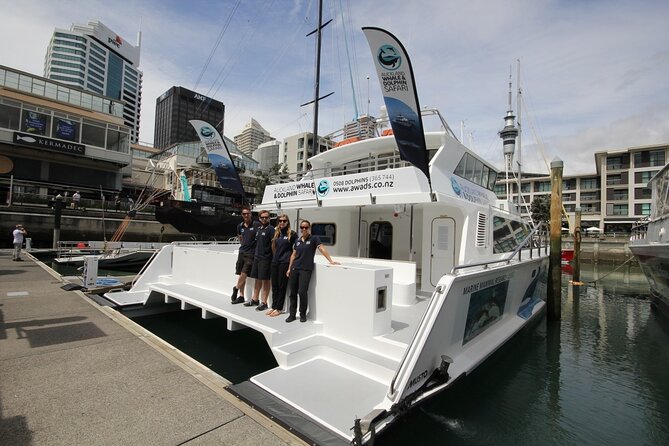
You meet the crew at the New Zealand Maritime Museum at Viaduct Harbour, which is a great starting point because it’s central and easy to get to. From there, you head out on a custom-built 65-foot (20-meter) catamaran. The big advantage of a catamaran on a whale-and-dolphin day is stability for viewing and space for spotting from more than one angle.
This boat also matters because viewing opportunities are time-sensitive. When an animal shows up, you want people able to stand, look, and photograph without a full bottleneck. The maximum group size is 99 travelers, and that’s big enough to feel lively, especially during peak seasons when the boat fills up close to capacity. Plan to rotate your viewing spots so you’re not stuck behind someone holding a camera all day.
Route highlights: from maritime history to island passes
Even if you came for whales and dolphins, the drive-by scenery is part of the payoff. This cruise threads through some of the most recognizable Auckland water routes and island areas, so you get a mix of harbor views and more open gulf time.
New Zealand Maritime Museum area and Viaduct Harbour
You start right in the city’s waterfront zone, which keeps the first part of the day stress-free. It’s also a good moment to get your bearings: camera ready, binoculars in hand, and your seasickness plan sorted before the boat fully gets moving.
Auckland Harbour Bridge and Waitematā Harbour
Passing under and around the bridge area gives you big, urban-to-water transitions. It’s also a useful period for the crew to set expectations and explain what they’re tracking so you know where to focus your eyes when wildlife appears.
Rangitoto Island
Rangitoto is the volcanic island that frames a lot of Auckland’s views, and it gives the trip a clear sense of geography. You’ll feel like you’re moving between distinct pockets of water rather than doing one long stretch with the same view the whole time.
Hauraki Gulf and island passes
Once you’re out in the Hauraki Gulf Marine Park, the cruise shifts into wildlife country. The route includes Motuihe, Motutapu, and then Tiritiri Matangi Island, plus North Head Historic Reserve. That combination matters because island-and-peninsula waters often create feeding and resting zones for different marine species, and seabirds take advantage of that too.
Practical takeaway: the route is set up so you’re never waiting in total sameness. Even if you don’t spot something immediately, you’ll have new sight lines and fresh angles to scan.
Marine mammals: dolphins, Bryde’s whales, seals, and why timing is everything
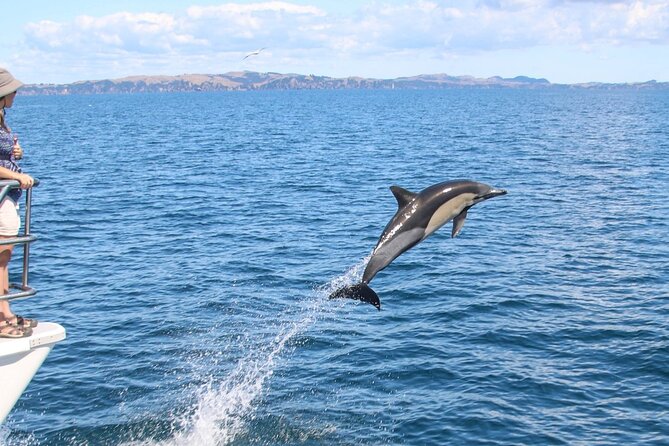
Here’s the truth you should plan around: you’re in the ocean, not a zoo. Even with a strong crew, whales might not show themselves when you’re looking. The upside is that this trip is structured to keep searching actively and to interpret what they’re finding as they go.
Dolphins and the most likely wins
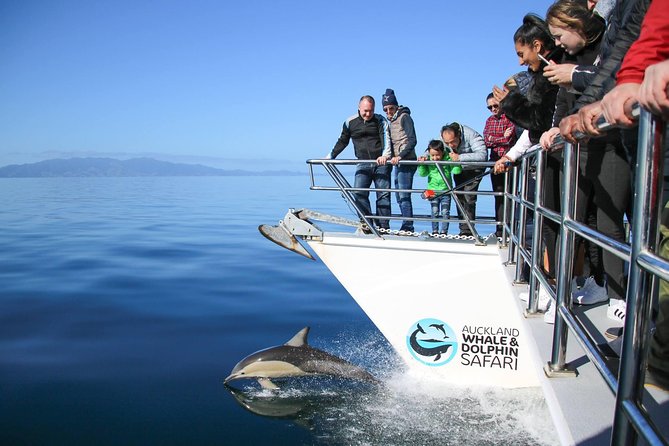
The trip specifically calls out pods of bottlenose dolphins and Bryde’s whales as targets. In practice, dolphins are the animals that tend to give you the most consistent sightings. Some days they swim near the boat enough for close viewing, and you can often spend long stretches watching them travel and interact.
Whales: possible, not guaranteed
They’ll aim for whales and show you what they’re tracking, but whales are unpredictable. If you’re hoping for a once-in-a-lifetime whale blow-spout moment, it’s worth choosing this cruise anyway, just go in with realistic expectations. The company offers a no-extra-charge follow-up if your trip produces no marine mammals, which helps soften the risk.
Seals and what it means when you see them
The experience also includes the possibility of seals. When you spot seals, it’s a clue you’re in active waters with food sources nearby, and that tends to make seabird action more likely too.
One more practical note from real-world experience patterns: rougher water can make viewing harder. On calmer days, you’ll scan more comfortably, take steadier photos, and feel less tossed around while waiting for that first sign of movement.
Birds and penguins: the wildlife day doesn’t end with whales
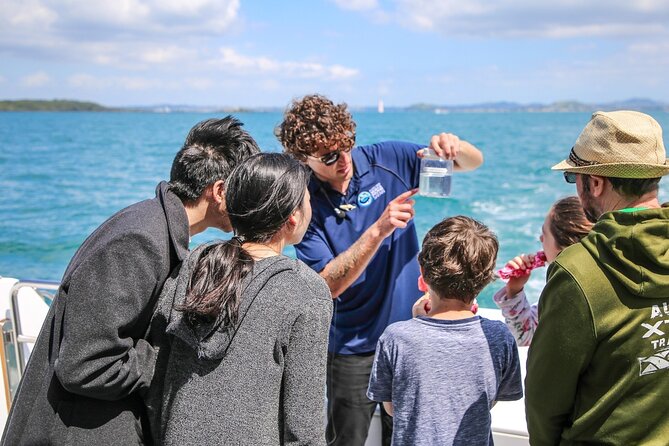
A lot of whale cruises focus on the “big two” and ignore everything else. This one doesn’t. You’re set up for mixed wildlife viewing, and that’s a big part of why the day can still feel like a win even without whales.
Seabirds you’ll train your eyes on
You’re likely to see and learn about seabirds such as Australasian gannets, petrels, shearwaters, and white-fronted terns. What I like here is that the crew isn’t just naming birds. They help you watch how these seabirds behave, which makes it easier for you to spot them yourself.
Blue penguins: small, adorable, and easy to miss
The trip encourages you to be ready for blue penguins. Penguins are not always the first thing you notice because they’re small and might appear near shore or in specific pockets. Treat them like a bonus: watch closely when the crew points out likely areas rather than scanning only for the biggest splashes.
Deck strategy and photo timing when it matters most
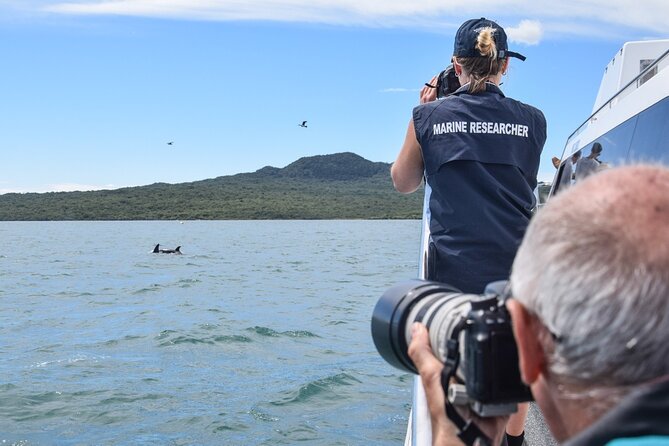
If you care about photos, this is where you can turn a good trip into a great one. With wildlife viewing, the action often happens fast: a pod appears, then moves, then vanishes again. Your job is to be positioned where you can react quickly.
One common tip: the front deck can be the best viewing zone while underway. It’s also the spot where you may feel more motion when the boat is cutting through water. If you’re sensitive to spray or motion, you can still enjoy wildlife from other viewing areas, but keep the front deck in mind when you know dolphins are active.
Also, expect crowding during peak times. On a full day, you can end up with people clustered where the best angles are. The crew may ask for rotation, and you’ll enjoy it more if you’re willing to share space and move when you spot the next opportunity.
For gear:
- bring binoculars if you have them
- wear sunscreen and bring a camera
- use flat-soled shoes for stability
- dress for wind; it can cool you fast even if the city looks warm
Comfort, timing, and how to not get wrecked by Auckland weather
Auckland weather can change quickly, so plan like it’s a moving target. You’ll be on the water for about 4.5 hours, so you’ll feel wind and spray over time even when the morning starts pleasant.
I recommend warm layers plus weatherproof gear. Many people underestimate wind at harbor level, especially on open sections of the gulf. A sun hat with a chin strap is genuinely useful because gusts can steal lighter hats. Bring sunglasses too; glare off the water is real.
Also, check in closes 15 minutes prior to departure. If you’re late, you risk losing your allocated seat. This is one of those practical rules that saves your day from turning chaotic.
Food and drinks are available to purchase, so you’re not stuck hungry if you get caught in the scanning rhythm. If you tend to run cold, snacks can help more than you’d think.
Conservation and marine science: why this feels more meaningful than a sightseeing loop
This eco-safari isn’t only about spotting. It’s also about respecting wildlife and supporting ongoing work. Your ticket includes a direct conservation component: every ticket purchased contributes directly to Marine Mammal Conservation.
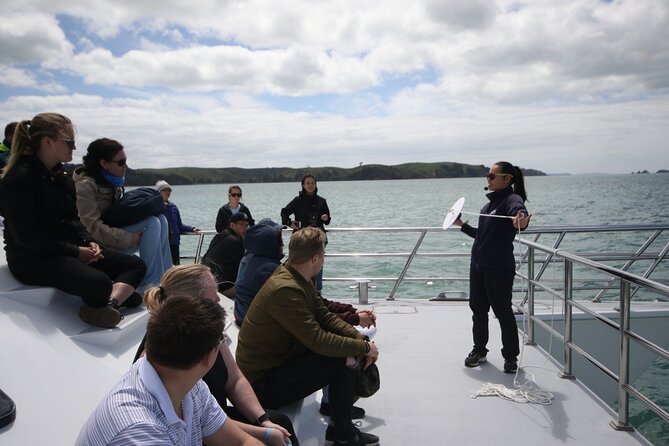
On top of that, you have marine research scientists onboard who provide expert commentary and share how research partnerships work in the real world. The crew talks about the Hauraki Gulf Marine Park as a set of protected areas, including five marine preserves, and frames it as one of the world’s more biologically diverse marine parks.
If you care about how wildlife viewing intersects with science, you’ll likely appreciate the tone of the trip. It encourages you to look closely, follow the crew’s guidance, and understand that animals choose what they do—not you.
Who should book this cruise (and who might want a different plan)
This is a strong fit if you want:
- a marine wildlife day that includes dolphins, whales, seals, and birds
- a route with lots of scenery changes rather than one long straight stretch
- a trip where your ticket supports marine mammal conservation
- the added confidence of an expert science commentary approach
It may be less ideal if:
- you only want guaranteed whales
- you hate crowds on busy summer days
- you get motion sick easily (rougher water can happen, and this is an ocean cruise)
If you’re traveling with kids, this can be a great choice because the day includes multiple “wow” moments beyond whales, like dolphins up close and penguins.
Should you book this Auckland dolphin and whale eco-safari?
I’d book it if you want the best odds of dolphins and the chance of whales, with science commentary and a conservation angle that doesn’t feel like a marketing afterthought. The biggest reason to choose it is that it treats the day as a full wildlife experience, not a single-species gamble.
My only pushback is the obvious one: whales are not guaranteed, and crowding can happen when the boat is full. If you go in with flexible expectations, pack for Auckland weather, and plan to scan actively, you’re set up for a memorable outing on the Hauraki Gulf.
If you’re the type who would rather see multiple species and learn as you go, this is the kind of cruise that earns its place on an Auckland list.
FAQ
Where does the cruise depart from?
It departs from Viaduct Harbour at the New Zealand Maritime Museum. The tour ends back at the meeting point.
How long is the cruise?
It runs for about 4 hours 30 minutes.
What wildlife can you expect to see?
The cruise focuses on whales, dolphins, and seals, plus seabirds and the chance to see blue penguins.
Is wildlife viewing guaranteed?
No. Whales and dolphins can’t be guaranteed, but dolphins are often seen in these waters. If you don’t see any marine mammals during your trip, you can go again another day at no extra charge.
What’s included in the ticket price?
You get a local guide, expert commentary from onboard marine research scientists, and your ticket contributes directly to marine mammal conservation.
Are food and drinks provided?
Food and drinks are not included, but you can purchase them on board.
What should I bring?
Dress in warm layers and weatherproof gear, and bring sunscreen, sunglasses, a sun hat (with chin strap), a camera, binoculars, and flat-soled shoes.
Is there any pickup from hotels?
No. There is no hotel pickup and drop-off.
What if weather is bad on the day?
The experience requires good weather. If it’s canceled due to poor weather, you’ll be offered another date or a full refund.