REVIEW · MARRAKESH
From Marrakech: Zagora 2-Day Desert Safari with Food & Camp
Book on GetYourGuide →Operated by Ando Travel Ltd · Bookable on GetYourGuide
Camel sunsets start with a long drive. This Marrakech to Zagora safari is the rare trip where the long hours pay off fast, thanks to camel rides at sunset and sunrise and Berber campfire music under the stars. One heads-up: you’ll start at 7 AM, and day one is mostly travel with a few serious stops built in.
I like how the route mixes famous scenery with real desert rhythm: High Atlas mountain roads, UNESCO-listed Ait Ben Haddou, the palm-heavy Draa Valley, then sand dunes and a private Berber-style camp tent. If you get a guide like Said at Ait Ben Haddou, or Youssef and Muhammad in Zagora, you’ll get more than check-the-box sightseeing.
In This Review
- Key reasons this Zagora safari works
- Marrakech to Zagora: what you’re really buying for $113
- Day 1: High Atlas roads, Ait Ben Haddou, then down to Agdez
- Ait Ben Haddou: UNESCO kasbah time you can actually enjoy
- Lunch: plan for it, don’t assume it’s included
- Why I think Ait Ben Haddou is better with a strategy
- The Draa Valley drive: Agdez palms and fortified kasbahs
- Day 1 to Zagora: sunset camel ride over the dunes
- Camel comfort tips (so you enjoy the ride, not survive it)
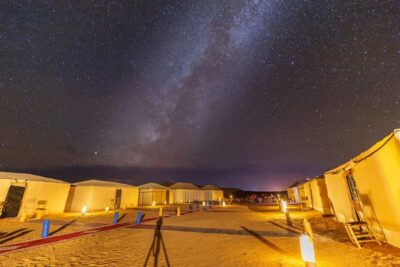
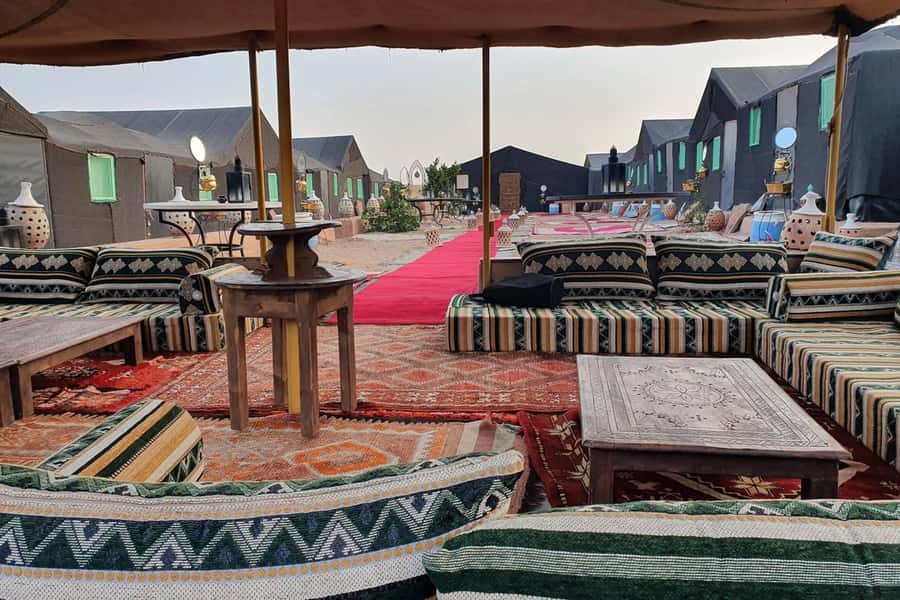
- Your Berber desert camp: private tent, showers, and real night sky
- Standard vs luxury tents: what changes
- Dinner and campfire entertainment
- Optional sunrise magic: when you wake up early and it actually pays
- Day 2: breakfast, camel back to the road, then return to Marrakech
- Price and logistics: is this worth it?
- Practical tips I’d use before you go
- Who this Zagora safari fits best
- Should you book this Zagora 2-day safari with camp?
- FAQ
- What time does the tour start and when does it end?
- What’s included with the desert camp night?
- Are sunrise and sunset camel rides included?
- Is lunch included?
- Is Wi-Fi included?
- What are the differences between standard and luxury desert tents?
Key reasons this Zagora safari works
- Sunset and sunrise camel rides over Zagora dunes (not just one photo moment)
- Berber camp dinner and tamtam drums around the fire, in a real village-style setting
- Ait Ben Haddou UNESCO kasbah with famous movie backdrops and great wandering time
- Draa Valley via Agdez for date palms, a big palm oasis feel, and fortified kasbahs
- High Atlas crossing over Tizi n’Tichka pass for big mountain views before the desert
- Private tent options (standard vs luxury, both still private tents)
Marrakech to Zagora: what you’re really buying for $113
At $113 per person for 2 days, the best value here is not the desert itself. It’s the transport bundle that gets you from Marrakech to a proper Sahara-style night without you needing to plan anything.
You’re paying for:
- A full day of guided driving through the High Atlas to the UNESCO kasbah
- A night in a private desert camp tent
- Camel rides at both sunset and sunrise
- Dinner and breakfast (vegetarian options available)
- Camp facilities like toilets and showers, plus onboard Wi-Fi and luggage storage during the ride
The trade-off is simple: you move fast, with lots of driving. This is ideal if you want a complete hit of Morocco in a short window.
If you hate early starts or long car hours, you might feel it by the time the minibus leaves Marrakech.
You can also read our reviews of more tours and experiences in Marrakesh.
Day 1: High Atlas roads, Ait Ben Haddou, then down to Agdez
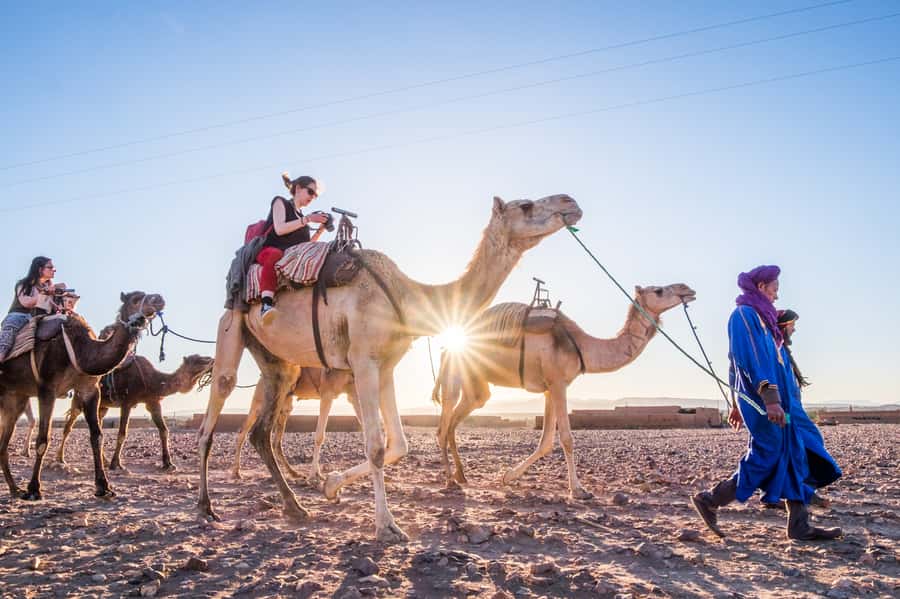
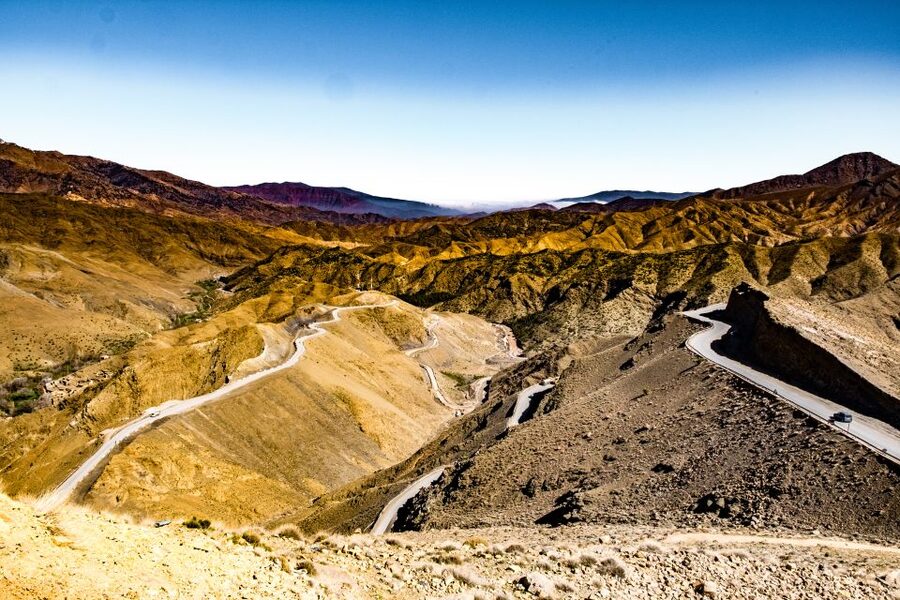
You’ll be picked up from your hotel or riad early (the tour starts at 7 AM on day one). The drive heads toward the High Atlas Mountains, and you’ll cross via the Tizi n’Tichka pass. This is where the scenery does most of the talking—mountain viewpoints, small stops to stretch, and frequent chances to get photos without rushing.
Along the way, you’ll have break stops for toilets, refreshments, and water. In practice, this matters because you’re in a vehicle for a long stretch, and Morocco roads don’t run on your schedule.
Ait Ben Haddou: UNESCO kasbah time you can actually enjoy
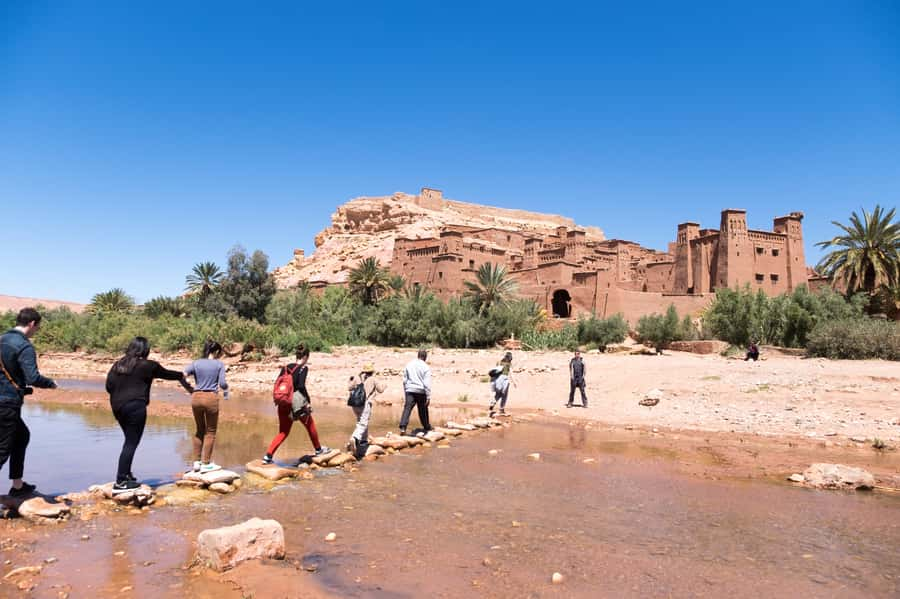
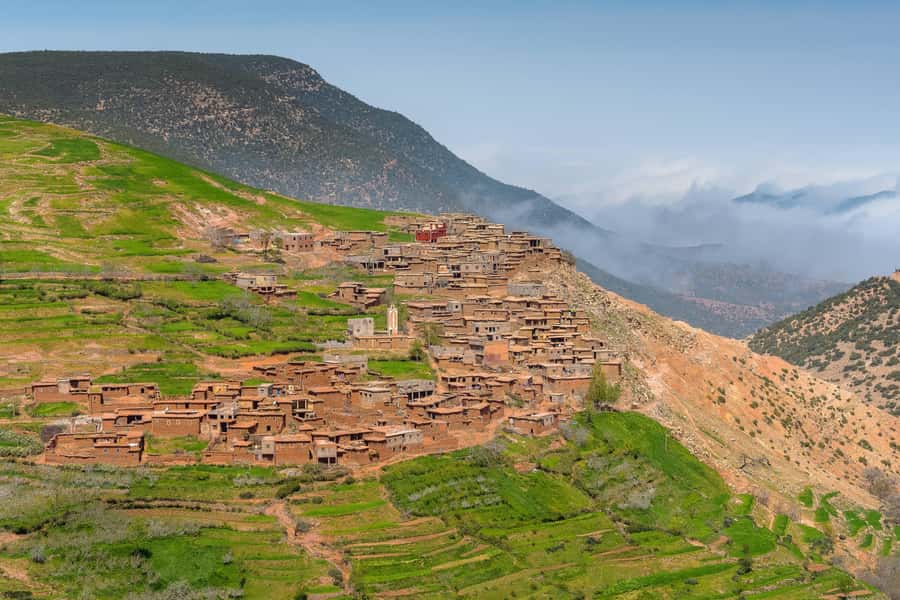
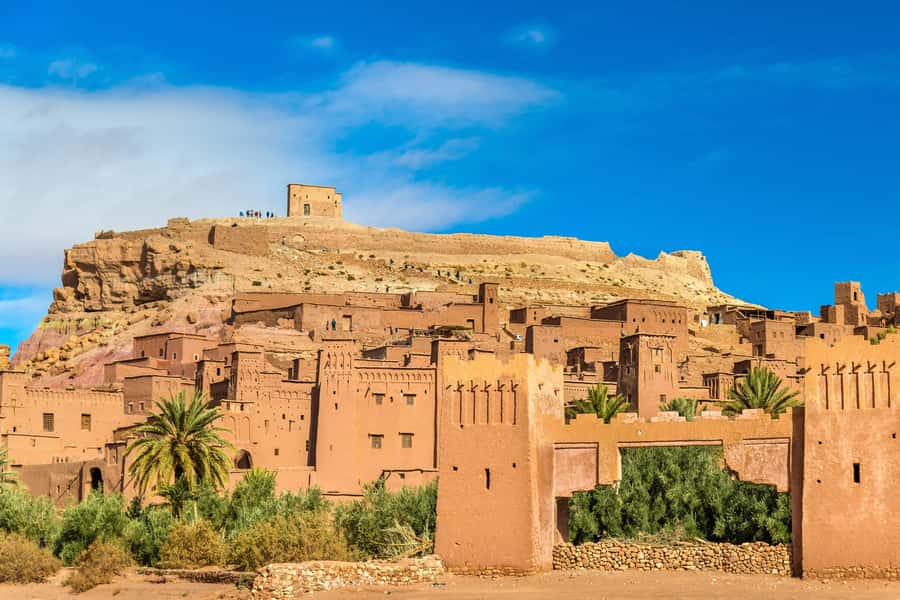
Then you’ll reach Ait Ben Haddou, the famous fortified village that shows up in major film productions. It’s instantly recognizable, even if you don’t follow the movie details. What’s great is that you get time to explore at your own pace, not just a quick pass-by.
You’ll often see locals doing photo and craft-related work around the kasbah area. If you want a deeper walkthrough, there’s also the option of an extra local guide (listed as an optional add-on of about €2–3 per person).
My practical tip: wear comfortable shoes you can walk in for 1 to 2 hours. The streets inside the kasbah are not smooth, and you’ll want your feet to feel good when you’re chasing those classic angles.
Lunch: plan for it, don’t assume it’s included
Lunch is not included. You’ll have time for it while you’re at Ait Ben Haddou, but it’s on you. The helpful part: the tour keeps the pacing reasonable so you’re not stuck waiting forever.
Why I think Ait Ben Haddou is better with a strategy
Ait Ben Haddou is one of those stops where it can be either magical or tiring depending on how you handle it.
Here’s the approach that works best:
- Start by walking the main viewpoints first, so you’re not stuck going back later.
- Give yourself time to look at the kasbah’s architecture and defensive layout, not only the movie-face photos.
- If you’re tempted by souvenir shopping, treat it like bargaining-with-a-plan. Prices can shift a lot in the immediate kasbah area.
Some people notice the kasbah can feel like one long stop-and-shop zone. That’s not wrong. The fix is to spend your attention on the stonework and the village structure. If you want a movie-set vibe, you’ll get it. If you want authentic texture, you’ll still find it.
Also, bring sun protection. The kasbah can bake your face, especially between midday and late afternoon.
The Draa Valley drive: Agdez palms and fortified kasbahs
After Ait Ben Haddou, you continue toward Agdez and the Draa Valley. This is where the trip gets more “real Morocco” and less “iconic postcard.”
The Draa Valley is known for its date and palm trees and the wider palm oasis feel. You’ll also see fortified kasbahs along the route—some still guarding old routes the way they did for centuries.
It’s a good section of the journey because the scenery changes in a way you feel: mountain terrain gives way to warmer, drier valley character. You’ll also get additional stop opportunities for views and photos, and that helps the driving feel less long.
Day 1 to Zagora: sunset camel ride over the dunes
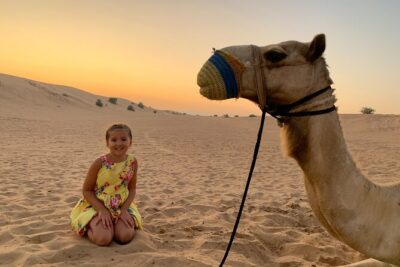
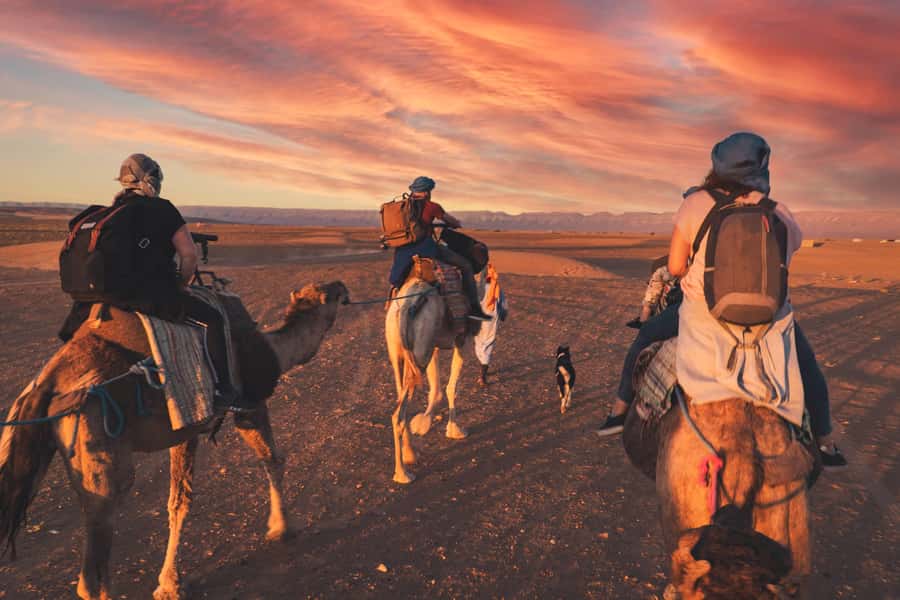
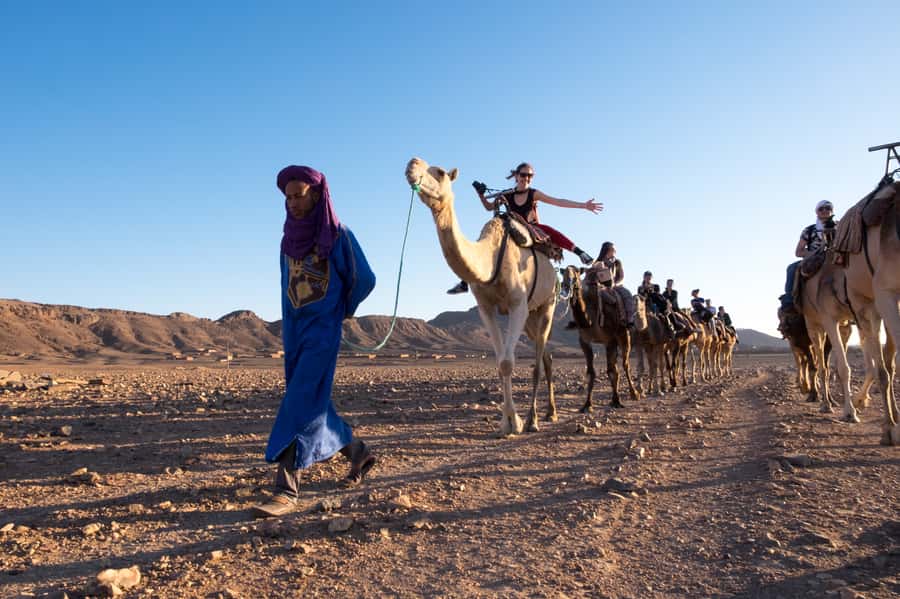
Eventually you reach Zagora and meet your camel caravan. The highlight is the camel ride timed for sunset, when the light turns the desert sands into copper and gold.
Expect the camel ride to take about an hour. Camels are surprisingly calm, but comfort varies. If you’re someone who gets sore easily, it helps to know you can sometimes walk alongside the camel while others ride, or you can choose an alternative transfer option with a vehicle.
Camel comfort tips (so you enjoy the ride, not survive it)
- Wear long pants if you can. They help with rubbing and keep you warmer in cooler months.
- Wear shoes you don’t mind getting dusty.
- If you find the camel saddle uncomfortable, ask about walking alongside or adjusting how your group rides.
A lot of people love this segment most because it feels like the desert shifts from scenery to experience. You’re not just looking. You’re moving with the day turning.
Your Berber desert camp: private tent, showers, and real night sky
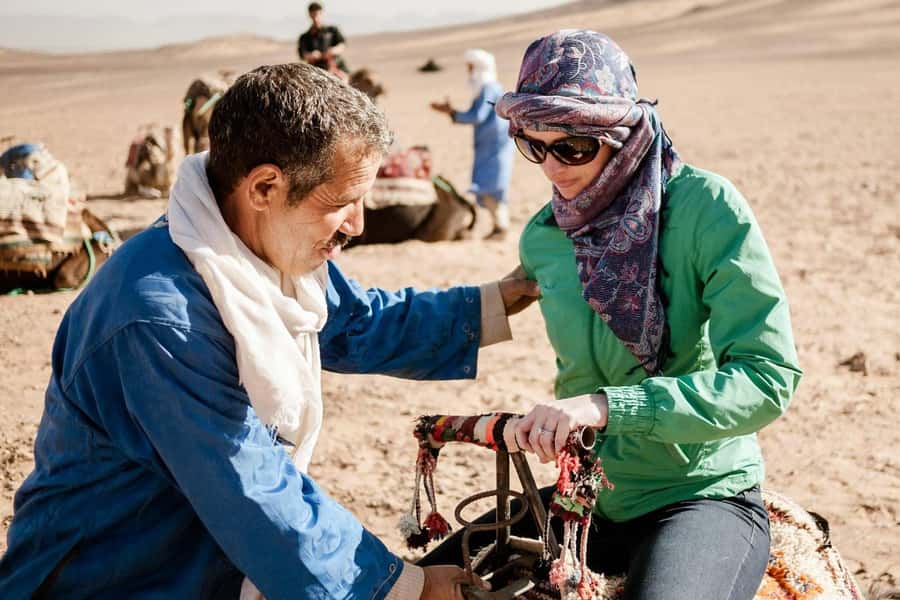
Before full dark, you transfer from the caravan area to your Sahara Desert camp in Zagora. You check in, then you’ll have time to settle.
Standard vs luxury tents: what changes
Both options are private tents, which is a big deal for comfort compared to open dorm-style camping.
- Luxury tents: private in-tent bathrooms
- Standard tents: shared facilities nearby (showers/toilets are available at camp)
In either case, plan on bringing a small overnight bag, because your main luggage stays in the vehicle.
Some camps provide blankets, and the nights can get cold in the Nov–Feb window, so bring layers if you’re traveling outside summer.
Dinner and campfire entertainment
Dinner is served under the stars, typically with Moroccan food like tagine. Then you’ll get Berber drumming and campfire music with tamtam-style rhythms. This is the part that turns “tour” into “memory.”
If the sky is clear, you may also catch an insane amount of stars. Some guides get groups to look up and stay quiet for a moment. It’s simple, but it hits.
Also note: showers and toilets are included, but towels are not guaranteed, and bringing a small microfibre towel is a smart move.
Optional sunrise magic: when you wake up early and it actually pays
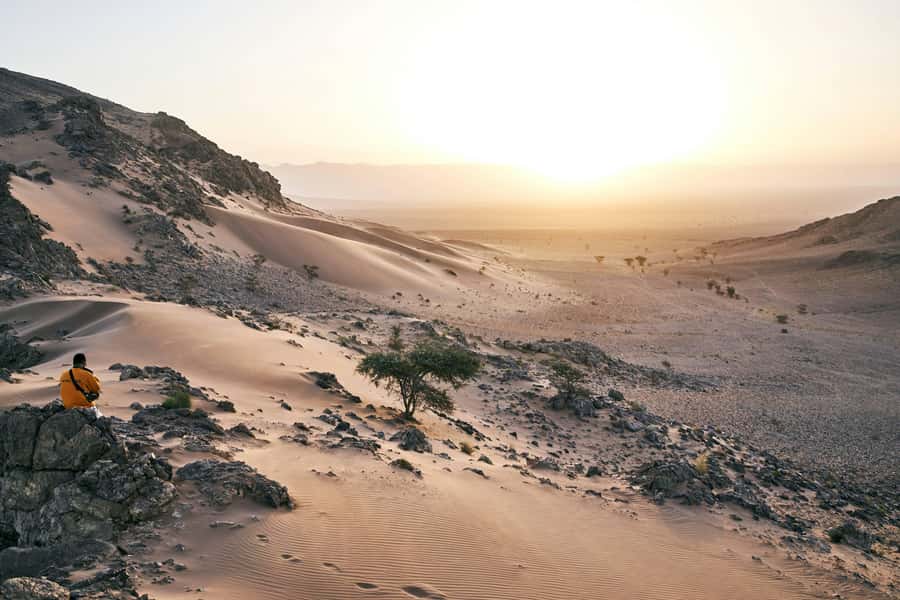
You can wake early for sunrise in the desert. Sunrise is often optional on paper, but it’s the kind of moment that’s hard to regret if you’re able to do it.
The rhythm is usually:
- wake-up call early
- a quick walk or dune climb to get the best view spot
- sunrise camel ride timed with the light
Sunrise isn’t loud. It’s quiet. The desert feels bigger when the day is still new, and that’s the point.
Day 2: breakfast, camel back to the road, then return to Marrakech
After sunrise and any included camel ride segment, you’ll return to camp. Then comes breakfast.
Next, you’ll climb back into the camel for the ride out toward the main road. After that, the minibus transfer begins back to Marrakech, and you’ll arrive around 6 PM on day two.
This is one reason the tour feels like a complete loop: you don’t end day two on a random timeline. The schedule aims to get you back with enough time to reset for dinner in Marrakech.
Price and logistics: is this worth it?
For most people, yes—because this trip bundles the expensive parts: distance, transport, and the overnight desert experience.
Here’s how I’d judge value:
- You get two camel rides (sunset plus sunrise), which is where many other desert trips cut corners.
- You get one night in a private tent with dinner and breakfast.
- You also get a meaningful cultural stop at Ait Ben Haddou and a scenic drive through Draa Valley.
What’s not included:
- Lunch and drinks
- Any optional local guide add-on at Ait Ben Haddou
- Optional extras like quad biking or 4×4 transfers if you want them
So the real cost question is: are you okay paying for convenience and a timed itinerary? If yes, $113 can feel fair. If you’d rather wander at your own pace and avoid early driving, you may want to build your own route instead.
Practical tips I’d use before you go
Pack like you’re doing three climates in two days: city morning, Atlas sun, desert night.
Bring:
- Comfortable shoes (you’ll walk)
- Sunglasses and sunscreen
- A sun hat
- Comfortable clothes, plus layers for cold nights (Nov–Feb especially)
- Passport or a copy accepted
- A small overnight bag (your main luggage stays with the vehicle)
On the camel ride side:
- Long pants help
- Plan for a slightly bumpy ride, even with docile camels
- If you’re very uncomfortable, use the walking-along option when available
On timing:
- Start is 7 AM from Marrakech and you’ll be back around 6 PM on day two.
- You’ll have regular breaks for water and toilets, but you’re still in a vehicle a lot.
On optional extras:
- Quad biking is listed at about €50 per person for a 1-hour session, with a minimum group size of 2.
- There’s also an alternative 4×4 transfer option for €50 per vehicle per way if you don’t want to do a camel segment.
One more helpful habit: carry some cash for tipping your camel guide and the driver if you feel they earned it. Many groups do, and it’s part of how the experience keeps running smoothly.
Who this Zagora safari fits best
This is a strong match if you:
- want desert night + camel rides without planning logistics
- like structured days with a clear arc: city → kasbah → oasis → dunes
- enjoy cultural stops that are more than a quick photo
- are okay with early mornings and long car hours
It’s less of a match if:
- you dislike driving for most of two days
- you’re looking for lots of free time to wander independently
- you’re pregnant (not suitable for pregnant women, per the tour notes)
Should you book this Zagora 2-day safari with camp?
If you’re visiting Marrakech and you want the classic Morocco “story”—Atlas mountains, UNESCO kasbah, palm oasis, desert night—this tour is one of the cleanest ways to do it in a tight window.
Book it if you can handle the 7 AM start and you’re excited by camel rides at both sunset and sunrise. Skip it if you want a slower pace or you’re expecting a vacation that feels light on logistics.
If you do book, choose luxury tents if you value private bathroom comfort. Choose standard if you’re focused on the core experience and you’re fine with shared facilities nearby. Either way, bring layers and a small towel, and you’ll be set for an unforgettable night under the stars.
FAQ
What time does the tour start and when does it end?
The tour starts at 7 AM on day one and ends around 6 PM on day two.
What’s included with the desert camp night?
You get 1 night in a private desert camp tent (standard or luxury), plus dinner and campfire entertainment, and access to toilets and showers.
Are sunrise and sunset camel rides included?
Yes. Camel rides at both sunset and sunrise in the Zagora Desert are included.
Is lunch included?
No. Lunch is not included, though stops are arranged during the day.
Is Wi-Fi included?
Yes. There is onboard Wi-Fi included.
What are the differences between standard and luxury desert tents?
Luxury tents have private in-tent bathrooms. Standard tents have shared bathroom facilities nearby (showers/toilets at the camp).