REVIEW · MARRAKESH
From Marrakech: Merzouga 3-Day Desert Safari with Food
Book on GetYourGuide →Operated by Ando Travel Ltd · Bookable on GetYourGuide
Three days, one giant Sahara wow. You’ll cross the High Atlas passes, ride camels through Erg Chebbi at sunrise and sunset, and end up sleeping under real dark skies. I love that the trip mixes famous sights with hands-on desert time, even if the biggest gotcha is how cold it can get in winter nights at camp.
What makes this experience click is the pacing. You’re not just driving for hours on end; the route is broken up with photo stops, toilet breaks, lunch breaks, and short guided moments at places like Ait Ben Haddou and Todgha Gorges, where the canyon walls make you stop talking and start taking photos. One practical consideration: you’ll be in a vehicle most of the day, so bring patience (and a power bank).
Value is strong because the basics are handled for you. You get pickup/drop-off, an air-conditioned minibus or minivan, a multilingual driver-guide, onboard Wi‑Fi, two dinners plus breakfasts, and both camel rides. Lunches and drinks along the way cost extra, but that’s also how you keep flexibility at roadside stops.
In This Review
- Key things to know before you go
- Marrakech to Merzouga: what this 3-day run feels like
- High Atlas to Ait Ben Haddou: kasbah walls and mountain air
- Ouarzazate, Dades Valley, and the “Road of 1001 Kasbahs” vibe
- Tinghir and Todgha Gorges: where photos become walking
- Erg Chebbi at golden hour: the camel ride that sells the dream
- Bedouin camp night: dinner, drums, and the cold you must plan for
- Sunrise camel ride and the long road back to Marrakech
- Price and logistics: does $122 feel fair?
- Who should book this Merzouga safari (and who should skip it)
- Should you book this desert safari?
- FAQ
- What’s included in the tour price?
- Are meals like lunch included?
- Is the Ait Ben Haddou guided, or just free time?
- What’s the difference between standard and luxury desert camps?
- Are quad biking or sandboarding included?
- When does the tour start and end?
- What should I bring for the desert night?
- How do pickup points work in Marrakech?
- Is the tour suitable for everyone?
Key things to know before you go
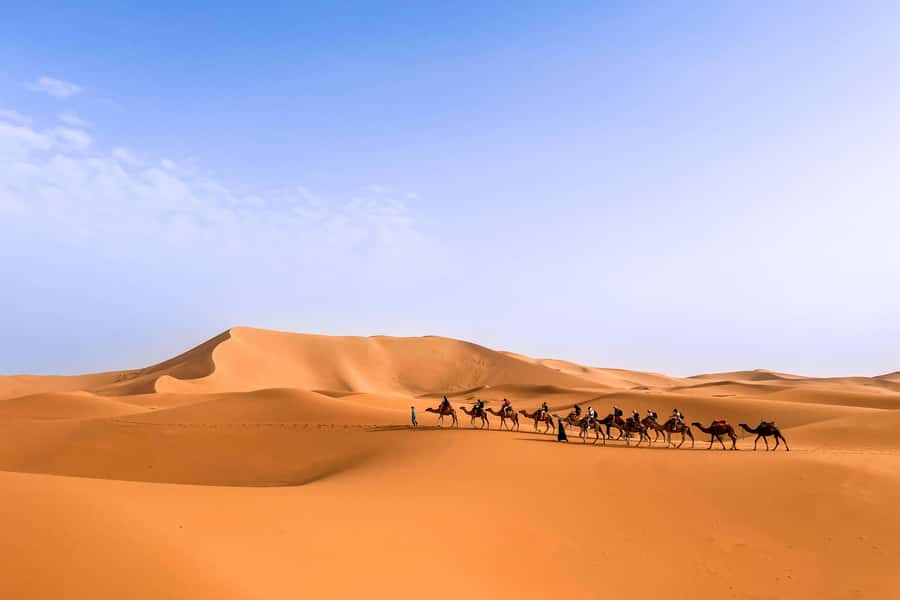
- Erg Chebbi camel rides twice: golden hour at nightfall plus another ride for sunrise views
- Ait Ben Haddou time built in: UNESCO kasbah landscapes tied to big-screen fame
- Todgha Gorges walk: a real canyon moment, not just a photo stop
- Camp choice matters: standard can mean shared bathrooms; luxury can mean private bathrooms
- Cold desert planning is non-negotiable: winter evenings can be freezing in tents
- Guides and drivers make the difference: names people commonly praise include ADIL, Bajo Muhamad, and Mohamed Bakhouz
Marrakech to Merzouga: what this 3-day run feels like
This is a “see Morocco by crossing it” kind of trip. Day 1 and Day 2 are about momentum: mountains, valleys, kasbah towns, then the long pull toward the desert. Day 3 slows down in the best way—Todgha Gorges, then Erg Chebbi, then one unforgettable night that feels like it belongs to a different planet.
I like that the experience is structured around the big visual payoff moments. You get the Atlas Mountains crossing, then the UNESCO stop at Ait Ben Haddou, then the dramatic rock shapes of Todgha. By the time you reach Merzouga, you’re not just arriving—you’re ready for it.
The one thing to respect is the travel time. You’ll be on the road enough that motion sickness or lower-back stiffness could show up if you’re not prepared. The good news is that the ride is typically broken up with stops so you’re not trapped the whole day.
You can also read our reviews of more tours and experiences in Marrakesh.
High Atlas to Ait Ben Haddou: kasbah walls and mountain air
Day 1 starts with that classic Morocco move: leaving Marrakech and climbing into the High Atlas Mountains. Expect views of Berber villages along the way, plus lots of roadside scenery that changes by the minute. It’s the kind of drive that feels like “getting your bearings fast,” because you start seeing how Morocco’s geography drives everything from homes to roads.
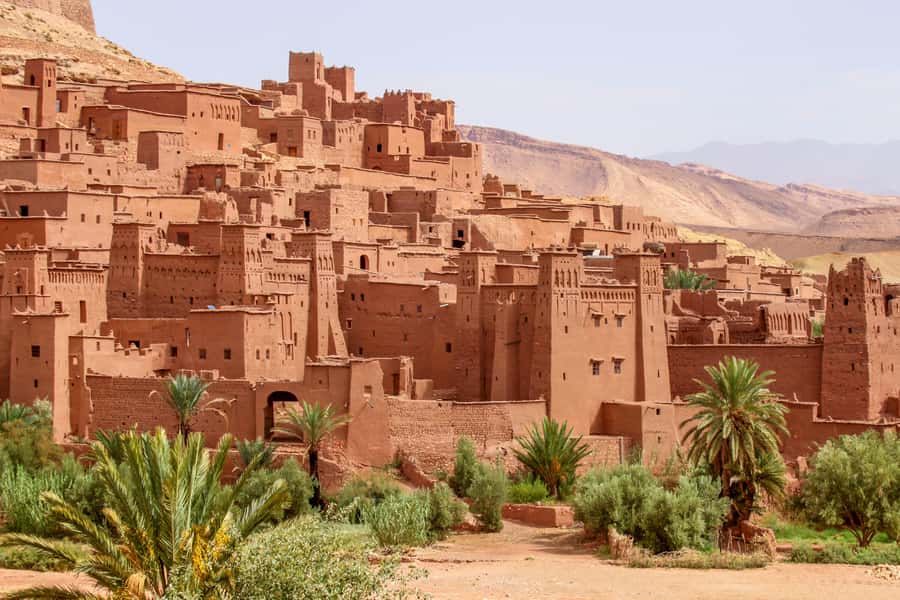
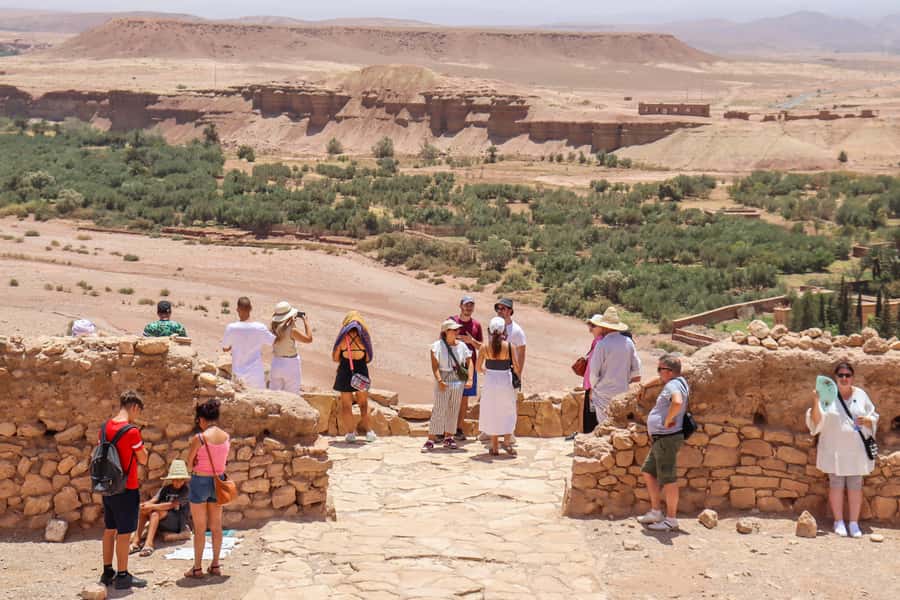
Then you hit Ait Ben Haddou, the famous fortified village that’s been a film set (including for Gladiator and Game of Thrones). What’s great here is that you’re not rushed through a single “look and leave” stop. You get time to walk, take photos, and enjoy the kasbah’s layered earth-tones and cliffside structure.
Lunch happens in the area, but it’s not part of the core included meals—so budget for lunch and drinks separately. If you’re prone to getting hungry at odd hours, plan on carrying a snack for the car.
Ouarzazate, Dades Valley, and the “Road of 1001 Kasbahs” vibe
As the drive continues, you pass through Ouarzazate, often called the Gate of the Sahara. This is a turning point day: you leave greener-feeling mountain scenery and start moving into landscapes that look more dramatic, more spacious, and less “settled.”
From there, you head toward Boumalne Dades and the Dades Valley. The roads here are where the trip earns its keep. Even when you’re not getting out to walk, you’re gaining scale—wide valleys, rock formations, and towns that sit like they were placed by hand.
You’ll usually end the day with dinner and an overnight stay at Kasbah in Dades or Kelaat Mgouna. This first night is your reset button before the desert. Also, this is where the camp vibe starts to make sense: Morocco doesn’t just do sights—it does atmosphere.
A small heads-up: some stops can be slightly shop-heavy. That’s normal for tours across this region. If you hate being herded, keep your focus on the scenic breaks and the major stops like Ait Ben Haddou and Todgha.
Tinghir and Todgha Gorges: where photos become walking
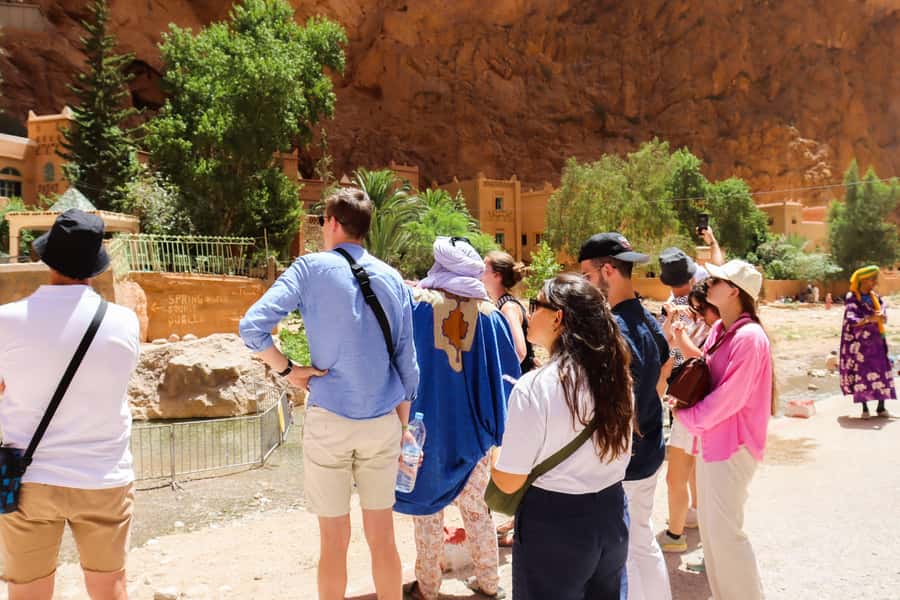
Day 2 continues with the shift from kasbah towns to canyon drama. You’ll drive toward Tinghir and then into the Todgha Gorges area, where the canyon walls rise dramatically above the walkway.
This stop is different from the kasbah. At Ait Ben Haddou, you’re reading the landscape like architecture. At Todgha, you walk into it—so you feel the height and narrowness. It’s a great time for photos, but also for simply pausing and looking up.
Lunch occurs in the Todgha area (typically at a local café), and again, lunches aren’t part of the included package. Bring cash, because card payment isn’t guaranteed at small places.
By late day, you roll on toward Merzouga and meet your camel caravan. This is the hinge moment: the tour turns from roads to sand.
Erg Chebbi at golden hour: the camel ride that sells the dream
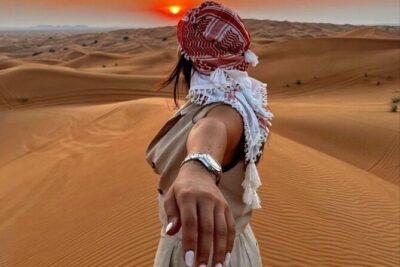
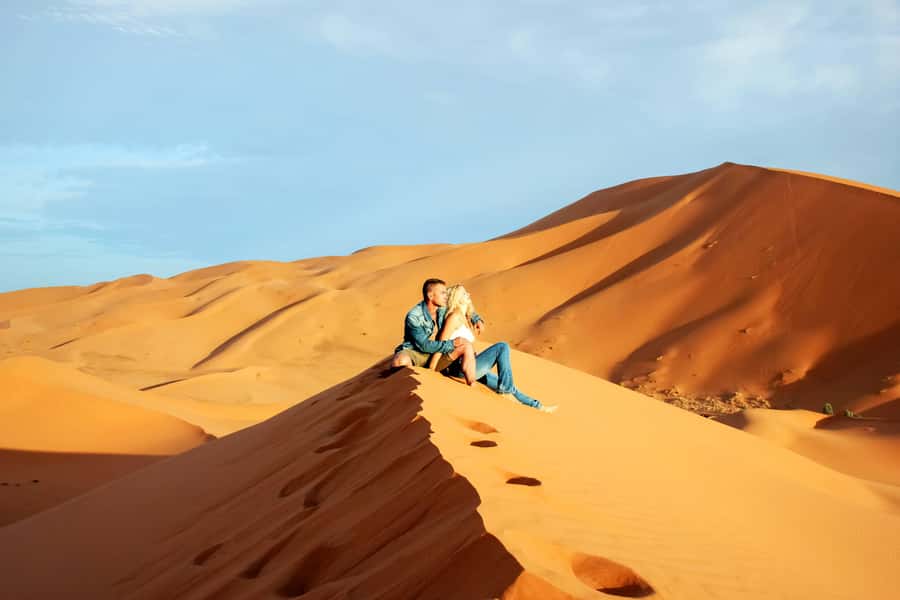
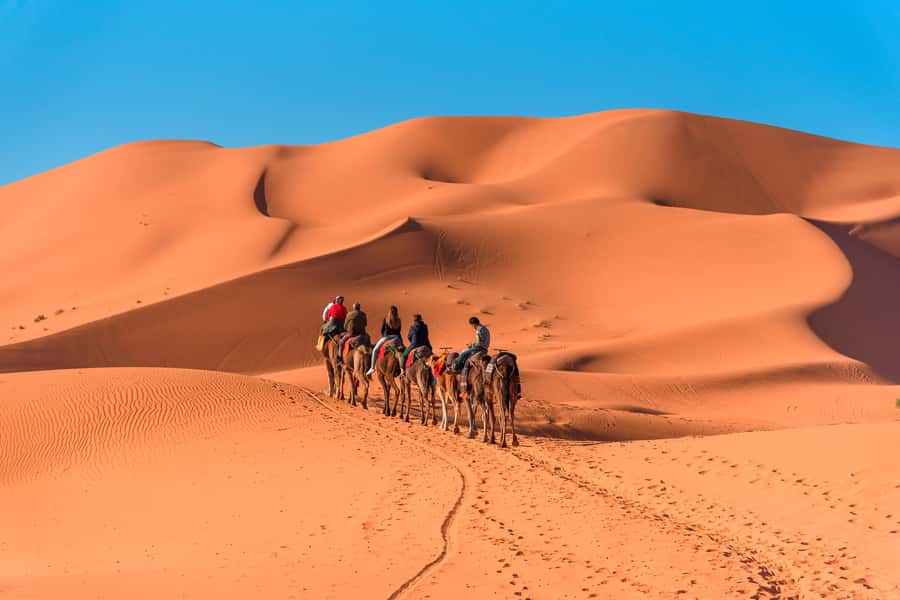
Erg Chebbi is the reason people book this route, and the timing is the trick. You’ll ride camelback at golden hour—when the dunes go warm and the shadows stretch. Then there’s a second camel ride for sunrise later, which is what turns a “desert photo” into an actual memory.
Here’s what I’d advise: treat the camel ride like a slow, physical experience. Wear comfortable shoes for getting on and off, and dress in layers. Your body heats up while walking around and then chills quickly once you stop.
If camelback doesn’t work for you, there are alternatives. The standard option may allow you to walk to the camp, and you can request a 4×4 transfer for an extra €50 per car (for both standard and luxury camps). That’s one of those decisions you make based on comfort level, not on toughness.
Bedouin camp night: dinner, drums, and the cold you must plan for
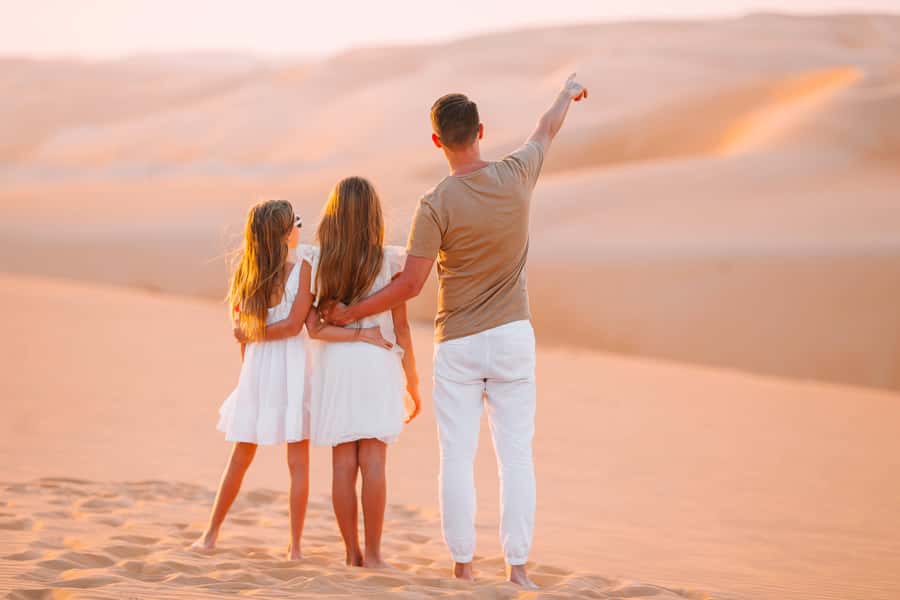
Your desert camp is the highlight for many people, and it’s also where the details matter most.
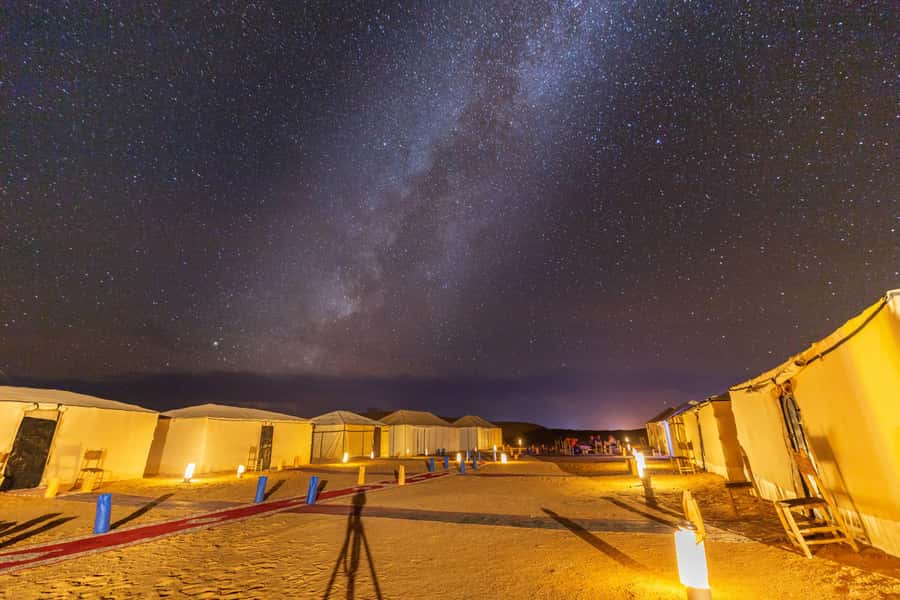
You’ll arrive before nightfall, settle in, and enjoy an authentic Moroccan dinner under the stars. Music and entertainment are part of the evening, including Berber drumming and campfire-style vibes. This is also where the camp atmosphere can differ depending on your chosen setup.
- Standard camp: you may have a private tent but shared bathrooms nearby.
- Luxury camp: private tent plus private bathroom inside.
Either way, the food is included as dinners and breakfasts are part of the package, with vegetarian options available. That’s helpful if you’re picky about planning ahead.
Now the practical reality: desert nights can be very cold in winter. Reviews mention this clearly—one big piece of advice is to pack warm layers because tents may not have heating. I’d also bring a portable charger for the evening, since you’ll want phone battery for photos and videos.
Optional add-ons may be available, like quad biking (listed as about 50€ per person) and sandboarding. Sandboarding is treated as higher-risk and not covered by insurance, so you’re making that call knowing you’re responsible.
Sunrise camel ride and the long road back to Marrakech
The early wake-up for sunrise is optional, but it’s also the part that makes the desert feel like a whole scene, not a single night stop. A driver picks you up to start the transfer, and you get to experience the dunes again in morning light before breakfast.
After that, it’s the drive back. You’ll stop halfway for lunch at a local restaurant, then continue toward Marrakech. The drop-off is typically around 8 PM, either at your original departure point or around Djemaa El Fna.
This is a day to keep expectations realistic. You’ll see a lot quickly, but you won’t be “camping in comfort” the entire way. Plan for a relaxed end to your Morocco trip—because your brain will still be stuck on desert stars.
Price and logistics: does $122 feel fair?
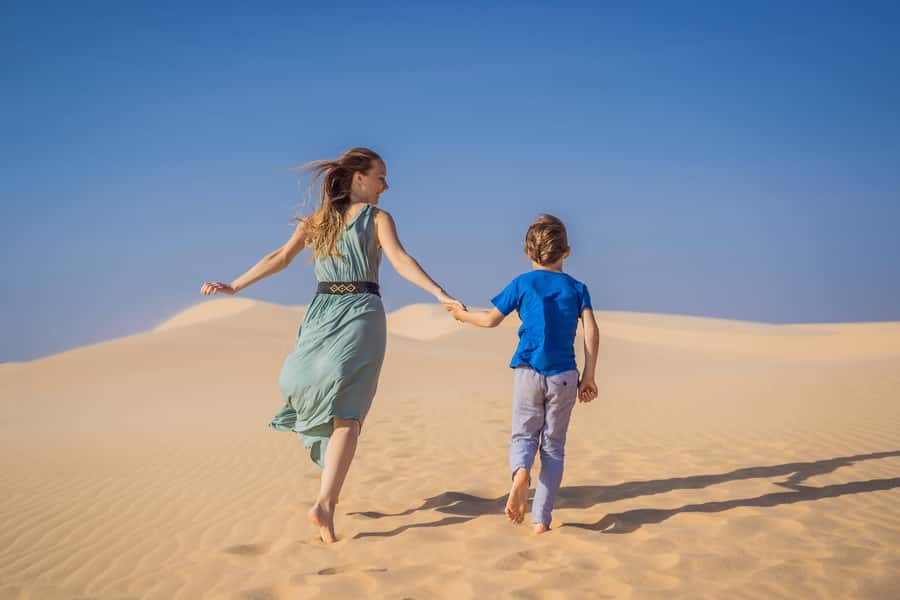
At $122 per person for a 3-day experience, the value comes from what’s actually included. You’re getting:
- Pickup and drop-off in Marrakech
- Air-conditioned transport
- A multilingual driver-guide
- One night in an AC private hotel room with private bathroom
- One night in a private desert tent (standard or luxury)
- Sunset and sunrise camel rides
- Moroccan dinners and breakfasts
- Onboard Wi‑Fi and luggage handling
That’s a lot wrapped into one price. Where costs can add up is what isn’t included: beverages and lunches on the way, plus optional activities like quad biking.
In practice, this is the kind of price that makes sense if you want a structured desert trip without juggling guides, transport, and meal planning. It might feel less attractive if you’re the type who hates group timing, because the schedule includes set stops and set durations.
One more logistics note: pickup details are sent the day before by 6 PM via the GYG app and WhatsApp. If you’re easy to reach, you’ll have fewer headaches on the morning of departure.
Who should book this Merzouga safari (and who should skip it)
This works best for you if:
- You want a guided “big scenery” route with minimal planning stress
- You’re excited about camel rides twice and want the real desert night experience
- You like seeing Morocco in layers: mountains, kasbahs, gorges, dunes
It’s less ideal if:
- You hate long drives
- You’re sensitive to cold nights (especially in winter)
- You need wheelchair access or you’re pregnant (the tour lists both as not suitable)
If you want a more private feel, ask about the private group option. And if your riad/hotel pickup isn’t accessible by car, you’ll be directed to a nearby meeting point just a short walk away.
Also, if you’re unsure about comfort level in the desert, choosing luxury camp is a simple upgrade. People commonly praise the added comfort of private bathrooms for making the night feel smoother.
Should you book this desert safari?
Yes, if you’re ready for a compact Morocco highlight reel and you want the desert done in a real, sleep-under-the-stars way. The trip earns its worth through the pairing of mountain culture stops (Ait Ben Haddou, Todgha Gorges) with the two-part desert ritual (camel ride at sunset, then sunrise).
Skip it only if you know you’ll be miserable with long travel days or if you don’t want to handle winter desert cold. If you do book, pack like the desert will surprise you—because it will. Bring warm layers, sunglasses, sunscreen, and a hat, plus cash for lunches and any optional activities.
FAQ
What’s included in the tour price?
You get hotel pickup and drop-off, air-conditioned transport, a multilingual driver-guide, one night in an AC private hotel room with private bathroom, one night in a private desert camp tent, sunset and sunrise camel rides, Moroccan dinners and breakfasts (vegetarian options available), Berber drumming/campfire music, onboard Wi‑Fi, and secure luggage storage.
Are meals like lunch included?
Dinner and breakfasts are included. Lunches and beverages along the way are not included, so you’ll pay for those during stopovers.
Is the Ait Ben Haddou guided, or just free time?
You’ll have time in the Ait Ben Haddou area. An optional local guide is available for a small fee if you want more depth.
What’s the difference between standard and luxury desert camps?
Standard camps typically mean private tents with shared bathroom facilities nearby. Luxury camps offer private tents with private bathrooms inside.
Are quad biking or sandboarding included?
Quad biking is optional and listed as an extra cost. Sandboarding is treated as an optional, higher-risk activity and is not covered by insurance, so you participate at your own responsibility.
When does the tour start and end?
It starts at 7 AM on Day 1 and ends around 8 PM on Day 3.
What should I bring for the desert night?
Bring comfortable shoes, sunglasses, a sun hat, sunscreen, and comfortable clothes. For winter especially, bring warm layers for the evening at camp. A portable charger can also be helpful.
How do pickup points work in Marrakech?
Pickup is included from your hotel or riad. If your location isn’t accessible by car, you’ll meet at a nearby spot that’s a short walk away. Pickup details are sent the day before via the GYG app and WhatsApp by 6 PM.
Is the tour suitable for everyone?
No. The tour is listed as not suitable for pregnant women and wheelchair users.