REVIEW · CORAL BAY
Marine Eco Safari – Swim with Manta Rays
Book on Viator →Operated by Coral Bay Ecotours · Bookable on Viator
That manta-ray moment is the main event. This full-day snorkel sets you up for it with real-time searching and several chances to meet reef wildlife around Ningaloo Reef.
I like that the day runs on a clear rhythm: morning reef time, a sea turtle sanctuary visit, then the manta-ray section powered by a spotter plane. You also get a buffered full-day food plan (morning tea, hot drinks, buffet lunch, snacks, and afternoon tea) that keeps you from getting cranky at sea.
One drawback to plan for: the water and wind can turn cool, especially at the start. Even with wetsuits, I’d pack warm layers and be ready for the cold when you’re getting in and out.
In This Review
- Key things that make this manta-ray day work
- Price and what you’re really paying for (at $466)
- Coral Bay start at 8:00 and the smooth logistics that keep the day moving
- Bills Bay snorkel: your first wildlife fix on coral gardens
- Sea turtle sanctuary stop: a gentler wildlife moment between swims
- Bateman’s Bay and the spotter plane manta-ray search
- Afternoon snorkel: one more shot at the reef before heading back
- Safety and comfort in the water: what to ask your crew
- What’s included on board: the food and drinks keep the day enjoyable
- Souvenir photos: nice add-on, not the core value
- Who this Ningaloo Reef day fits best
- Weather, wind, and the one thing you should pack for sure
- Should you book Marine Eco Safari – Swim with Manta Rays?
- FAQ
- What time does the tour start in Coral Bay?
- How long is the Marine Eco Safari?
- What’s included in the price?
- Are souvenir photos included?
- Can I expect to see manta rays?
- What happens if weather conditions are poor?
Key things that make this manta-ray day work
- Spotter plane searching boosts your odds by helping the team find manta rays during the key snorkel window
- Multiple snorkel stops mean you’re not only waiting around for one animal
- Sea turtle sanctuary time gives you a calmer, more watch-and-learn moment between reef swims
- Small-group feel with a max of 30 people, plus crew support in the water
- Food is handled with morning tea, buffet lunch, snacks, and afternoon tea included
- Souvenir photos are extra if you want professional shots from the day
Price and what you’re really paying for (at $466)
For $466, you’re paying for more than a boat ride. You’re funding a full, structured reef day: staff and guides, transport to the jetty, multiple snorkel periods, all your included drinks and snacks, and—most importantly—the effort to locate manta rays with a spotter plane.
That plane part matters. Manta rays don’t show up on a schedule, so this isn’t a meet-at-a-point-and-hope plan. It’s a search-and-position approach that’s designed to maximize your time in the water where it counts.
Photos cost extra (you can purchase souvenir images), so if you want that keepsake, factor it into your budget. Still, when you compare the total package—food + wildlife searching + guided snorkeling support—the value tends to land well for people doing Ningaloo Reef for the first time.
You can also read our reviews of more tours and experiences in Coral Bay.
Coral Bay start at 8:00 and the smooth logistics that keep the day moving
Your day typically kicks off at 8:00 am at Coral Bay EcoTours in Peoples Shopping Village (4 Robinson St, Coral Bay WA 6701). From there, you’ll do a short bus transfer to the jetty and board the vessel.
This matters more than it sounds. You lose energy when a tour burns time on confusion. Here, the focus is on a straightforward flow so you can get wet sooner and settle into the snorkeling rhythm by late morning.
The day also ends back at the meeting point, which keeps you from dealing with a return puzzle. And the tour caps at 30 people, so the crew can actually manage the group in the water when conditions change.
Bills Bay snorkel: your first wildlife fix on coral gardens
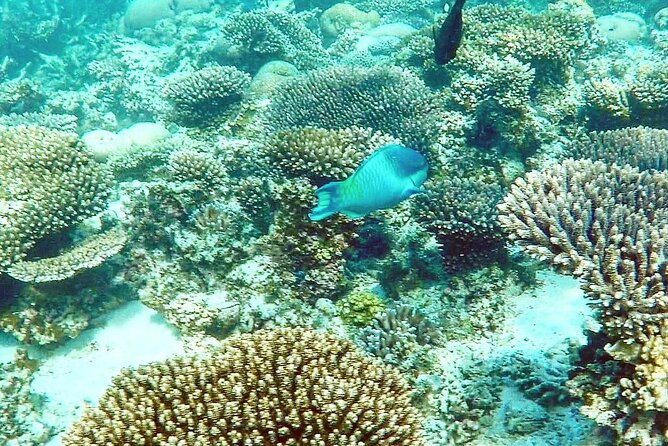
The first real water time is at Bills Bay. Expect beautiful coral gardens and lots of fish, with a chance of seeing reef sharks and other marine life. If you’re going to be nervous, this is the part of the day that helps you warm up—literally and mentally.
A key practical point: this isn’t a one-size-fits-all swimming experience. The better you can move comfortably in open water and snorkel without panicking, the more you’ll get out of each stop. If you’re a confident swimmer, you’ll likely feel more free to follow the crew’s instructions and stay with the group.
Also, the water can start cooler than you expect. One of the most consistent pieces of advice from people is to pack warm layers for when you’re out of the water.
Sea turtle sanctuary stop: a gentler wildlife moment between swims
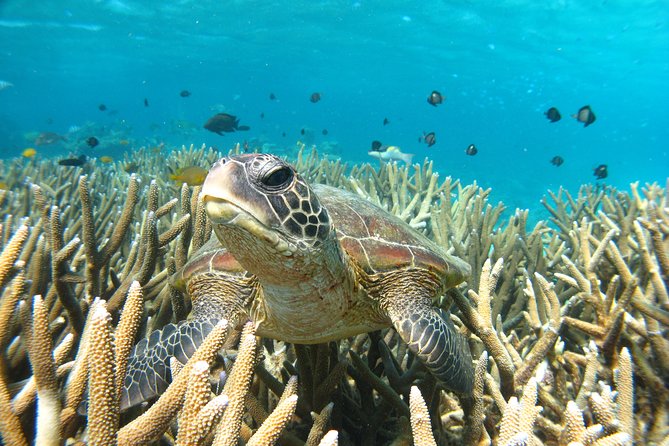
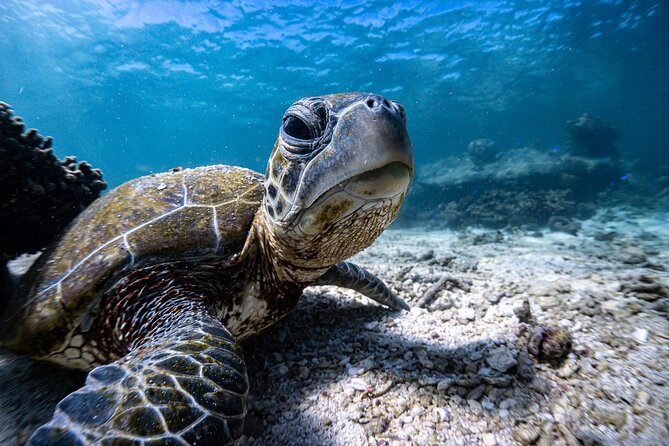
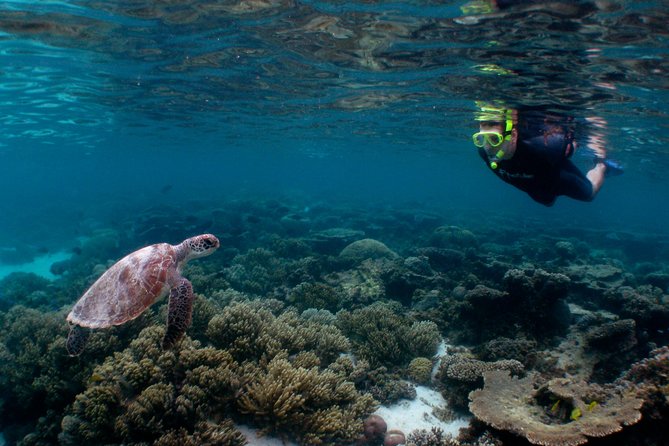
After morning tea, you’ll visit a sea turtle sanctuary area where you can observe turtles feeding and surfacing for air.
This section is valuable because it breaks up the physical effort of snorkeling. It’s a watch-and-learn pause where you can slow your breathing and focus on behavior, not just speed.
If you care about marine life beyond manta rays, this is where you’ll feel like the day is about more than one species. Turtles tend to be a steady draw here, while manta rays can be more about timing and conditions.
Bateman’s Bay and the spotter plane manta-ray search
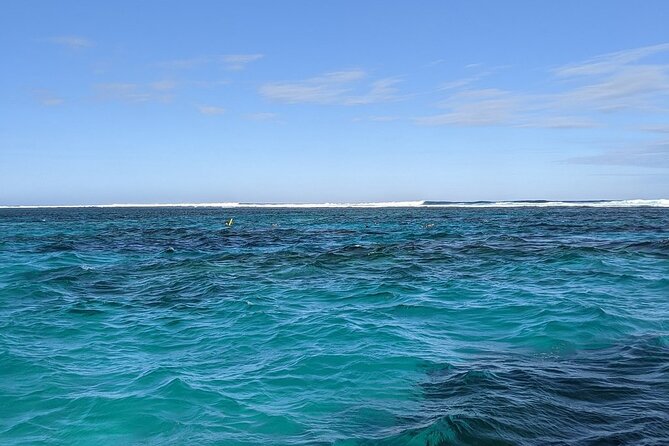
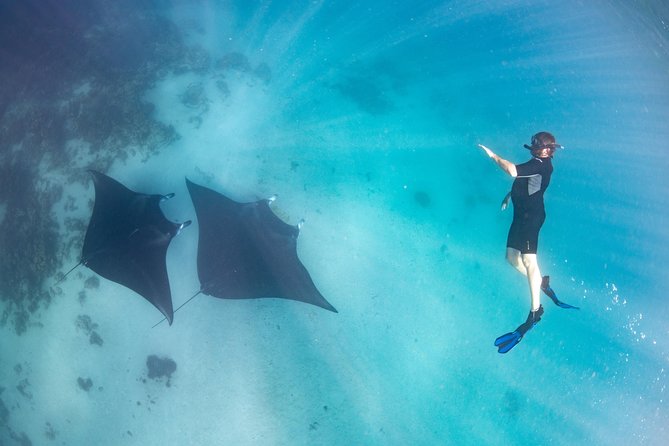
Now for the main act: Bateman’s Bay, with assistance from a spotter plane so you can have the chance to snorkel with manta rays.
This is where the tour’s design shows. You’re not just hoping manta rays pass by. The operator uses aerial spotting to improve the odds and help position you for those close-up swims.
In the best conditions, people can see multiple manta rays, sometimes in impressive group patterns. But nature doesn’t guarantee anything, so treat it as a strong chance—not a promise. The upside is that even if mantas take a while to show, the day isn’t built around a single dead-end moment.
You may also encounter other wildlife while snorkeling around the reef system—people have reported reef sharks and a range of rays. Again, you’re planning for possibilities, not a scripted animal lineup.
Afternoon snorkel: one more shot at the reef before heading back
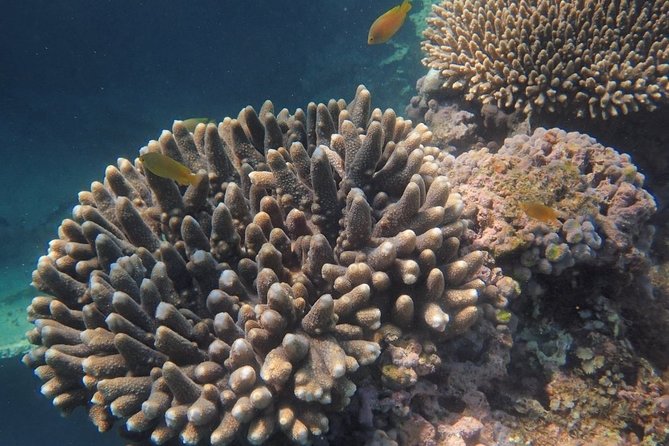
On the return trip, you’ll stop for an afternoon snorkel as well.
This is a smart structure for two reasons. First, it gives you a second chance to see more coral and fish after the main manta-ray period. Second, it helps you avoid that letdown feeling that happens when a tour ends right after the highlight.
If you’ve already had one great snorkel, this second stop is where you can go a bit slower and focus on details you missed the first time—fish behavior, coral shapes, and the way the reef changes with light.
Safety and comfort in the water: what to ask your crew
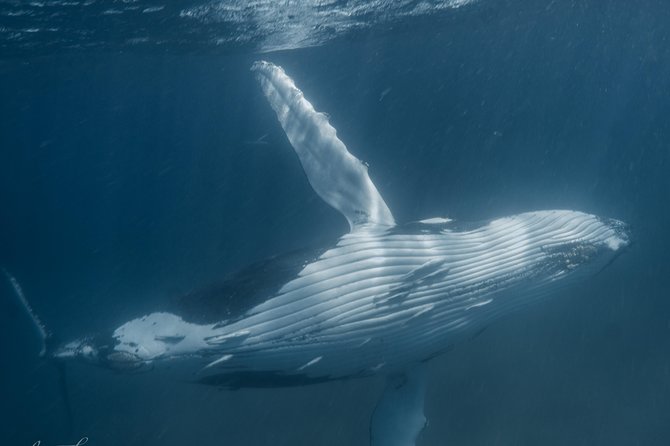
The strongest repeated theme from good experiences is how supported people feel in the water. Safety briefings are a priority, and the crew works hard to make sure everyone gets a fair chance to see marine life.
If you’re new to snorkeling deeper than you’re used to, ask the team how to equalise your ears. People specifically advise requesting a quick lesson before you go down—especially since the crew may go deep while positioning and spotting where the animals are.
A few practical comfort tips from real experiences:
- Bring warm layers for when you’re out of the water (wind can make it feel colder fast).
- If you use flippers, consider going one size up for comfort and better fit.
- If you tend to feel cold easily, plan for that early-morning chill, not just the time you’re floating.
- If you have your own wetsuit, bringing it can help you control warmth.
Names that come up in crew stories include Lou (often mentioned as leading the group in the water), and team members such as Bodie, Tash, Dan, and Kai. Photographer Laura also appears frequently as the person capturing souvenir images you can purchase later.
What’s included on board: the food and drinks keep the day enjoyable
You’ll get morning tea, hot drinks, snacks, and a buffet lunch, plus afternoon tea. That’s a big deal for a seven-hour marine day. When you’re on a boat, cold wind and salt water appetite hit you sooner than you’d expect, and you’ll feel it if you’re running on empty.
The buffet lunch also helps because it’s not a tiny, rushed meal. You’ll have enough time to eat properly so you can stay focused on snorkeling rather than counting minutes.
Drinks and snacks are included, which makes it easier to keep energy levels steady while you wait for sightings and regroup after each water section.
Souvenir photos: nice add-on, not the core value
Souvenir photos are available to purchase, but they’re not included. If you want professional images of manta rays and turtle moments, budget extra.
If you’re the type who photographs with a phone or small camera, you might still like the official shots because the crew knows where the animals usually move and can capture angles that are hard to get while you’re concentrating on staying safe and breathing steadily.
Who this Ningaloo Reef day fits best
This tour is best for people who are comfortable snorkeling for extended periods and can handle open-water conditions. You don’t need to be an athlete, but the tour information calls for moderate physical fitness, and the experience is run with an expectation that you can follow the crew’s guidance in the water.
It’s a great match if you want:
- A serious shot at manta rays using a spotter plane
- Several snorkel chances, not just one long waiting game
- A full-day wildlife plan with turtles, possible sharks, and lots of reef life
- A tour where meals and drinks are covered
If you struggle with cold water, high wind, or you get nervous in open water, you can still consider it—but bring warm layers and be honest with yourself about your comfort level. The crew can support you, but the best results come when you can swim confidently.
Weather, wind, and the one thing you should pack for sure
This is a weather-dependent experience. The day needs good conditions, and if it can’t run due to weather, you’ll be offered another date or a refund.
Even when it runs, conditions can still swing. Some days are calm and crystal-clear; others bring strong wind and colder water-out-of-water time. That’s why warm layers are the “do not skip” item.
Think: something wind-resistant plus warm insulation you can put on quickly. People have specifically called out bringing a warm vest and windcheater for comfort.
Should you book Marine Eco Safari – Swim with Manta Rays?
Book this if Ningaloo is on your bucket list and you want the best shot at swimming with manta rays without turning your day into pure guesswork. The combination of multiple reef stops, turtle sanctuary time, solid onboard meals, and the spotter plane approach is built for getting you into the action efficiently.
Skip it only if you know you won’t handle cold or windy conditions, or if you’re uncomfortable snorkeling for long stretches even with staff guidance. In that case, you’ll likely spend too much energy worrying instead of enjoying the reef.
If you do book, prepare for the practical stuff: pack warm layers for when you’re out of the water, ask the crew about equalising your ears, and aim to be a comfortable snorkeler—then you’re set up for the kind of marine encounter that’s hard to forget.
FAQ
What time does the tour start in Coral Bay?
The experience starts at 8:00 am at Coral Bay EcoTours (Peoples Shopping Village, 4 Robinson St, Coral Bay WA 6701).
How long is the Marine Eco Safari?
It runs for about 7 hours.
What’s included in the price?
It includes morning tea, hot drinks, snacks, a buffet lunch, coffee and/or tea, and afternoon tea.
Are souvenir photos included?
No. Souvenir photos are available to purchase, but they are not included in the tour price.
Can I expect to see manta rays?
The tour is designed to help you snorkel with manta rays using assistance from a spotter plane, and manta rays can often be seen year-round. Still, nature isn’t guaranteed.
What happens if weather conditions are poor?
This experience requires good weather. If it’s canceled due to poor weather, you’ll be offered a different date or a full refund.