REVIEW · DA NANG
Safari – Finding the most endangered monkey in the World
Book on GetYourGuide →Operated by SON TRANG DUNG COMPANY LIMITED · Bookable on GetYourGuide
Chasing one of the world’s rarest monkeys feels personal. This Sunset Safari in Son Tra Nature Reserve is built around finding the critically endangered Red-Shanked Douc Langurs, with wildlife experts guiding you off the tourist path. I especially like the close, respectful observing style and the way you learn to read monkey behavior as you go; the snag is you cannot count on seeing monkeys every time.
You also get more than just a wildlife sighting. The ride-and-walk format lets you reach quieter slopes, and the trail can include birds, colorful butterflies, plants, or even mongoose—plus stops tied to Monkey Mountain and a secret beach vibe. My other favorite part is the hands-on learning: you can help collect real-time field data and practice telling what you’re looking at.
One thing to plan around: this is a short trip with limited storage, so you’ll want light travel and accept some uncertainty depending on weather and what the langurs are doing.
In This Review
- Key things to love about this Son Tra monkey safari
- Why the red-shanked douc langur safari in Son Tra is so compelling
- Sunset timing: the 2.5-hour window that changes how you see monkeys
- The ride-and-walk setup: motorbike, private driver style, and your comfort
- On-trail learning: how you spot males, females, and babies
- Watching without pushing them: respectful distance and better photos
- Hidden routes around Monkey Mountain and a secret beach moment
- Price and value: is $48 fair for a rare-monkey search?
- Who should book this safari (and who should skip it)
- Should you book this Vietnam red-douc langur safari?
- FAQ
- How long is the safari?
- Where do I meet for the tour in Da Nang?
- Is seeing red-shanked douc langurs guaranteed?
- What’s included in the price?
- Can I bring my own camera?
- Is there an extra cost for Lunar New Year dates?
- Are there weight or age limits?
- What’s the cancellation policy?
Key things to love about this Son Tra monkey safari
- A small group capped at 5 means more time for your questions and better chances at quieter viewing
- Binoculars for extremely shy langurs so you can actually make out what’s in the canopy
- Learning to tell male, female, and age adds meaning beyond a quick wildlife sighting
- Helping with real-time research data turns your walk into something useful
- Motorbike access + jungle footpaths gets you to remote viewing areas with less fuss
- A sunset timing window that often pairs great light with active forest behavior
Why the red-shanked douc langur safari in Son Tra is so compelling
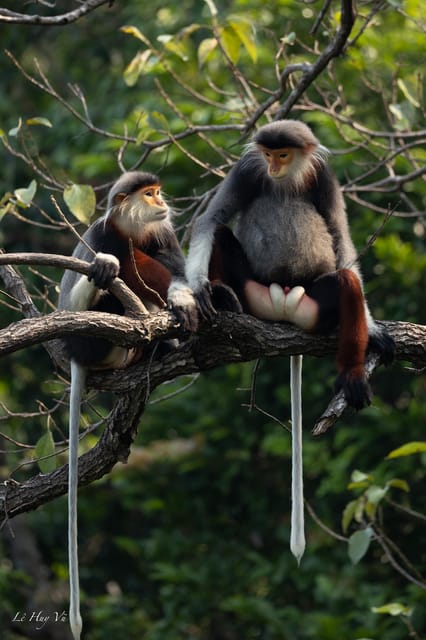
In Vietnam, Da Nang is close to real jungle habitat, not just a roadside patch of trees. Son Tra Nature Reserve is where you go to look for the red-shanked douc langurs, often called the rare monkeys on this route. These are critically endangered primates, and seeing them well—at a respectful distance—takes more than luck. It takes good eyes, local knowledge of where they move, and an approach that doesn’t push wildlife around.
I like that this safari doesn’t sell a guaranteed encounter. The trip is honest about the reality: whether you see the monkeys (and which ones) depends on weather, the monkeys’ behavior, and plain old luck. Still, the guides focus on “finding chances,” and that’s where the experience earns its price.
What makes it especially memorable is the feeling of working in the field, not just following a route. You’ll learn how to spot details that most people miss at first glance. From there, watching becomes a skill: you’re not only looking at monkeys; you’re learning how to recognize what you’re seeing.
And yes, you may get video and photo time. The idea is to catch the moment—especially if you find the langurs the guides call out as the most photogenic on that stretch of trail.
Sunset timing: the 2.5-hour window that changes how you see monkeys
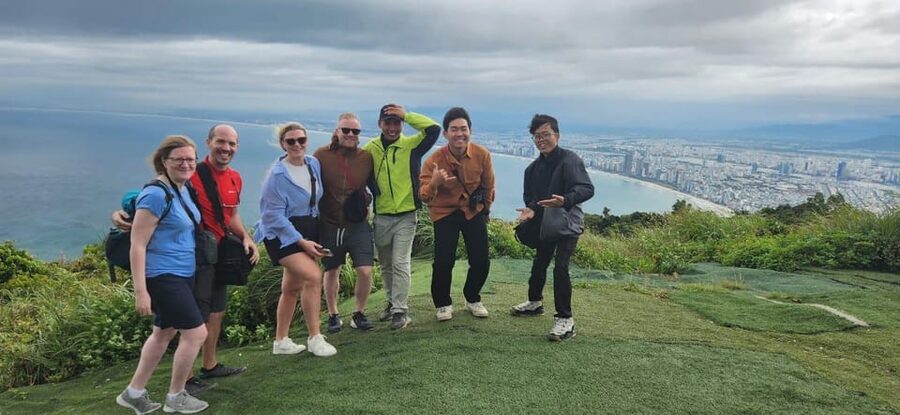
This safari runs about 2.5 hours, timed for sunset. That matters. Lighting gets softer, shadows shorten, and the forest mood shifts from daytime chatter to something calmer and more watchable. Even if the monkeys don’t show up instantly, you’ll usually notice more: birds calling, butterflies moving through sun breaks, and tiny forest sounds you miss earlier in the day.
The walk itself is described as an easy, 3-hour stroll feel, with twisting mountain road sections and multiple hidden jungle slopes. In plain terms, you’re not trudging for hours. But you are leaving the easy, flat sightseeing lane. You’ll be on a route that’s built for spotting, not for checking boxes.
You should also know the tour is structured for mobility and access. You travel by motorbike to reach remote areas, then you walk portions on the trail where the guides can get eyes on what’s in the canopy and along the forest edges. That combo often makes more sense than trying to reach these viewpoints by foot from the city.
The ride-and-walk setup: motorbike, private driver style, and your comfort
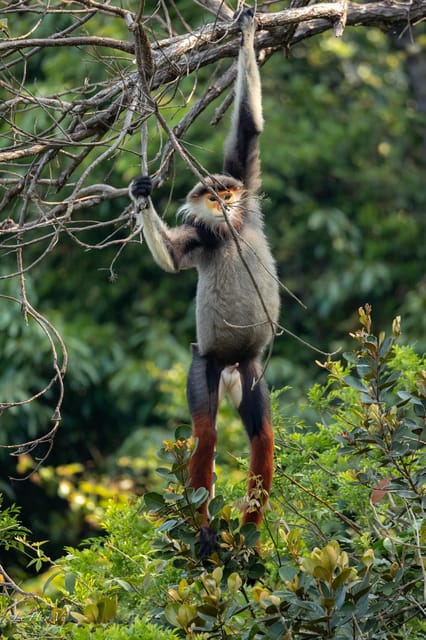
Logistically, this tour is straightforward, and that’s a big part of why it works. You meet at Esco Beach Bar in Da Nang. If you’re coming from Hoi An or you don’t have a Da Nang pickup arranged, this is the start point. At the end, you return to the same meeting point.
Inside the experience, the “private driver” idea shows up as a guide who handles the bike and route while you focus on spotting. The group stays small—up to 5 participants—so you don’t get swallowed by a big pack of people. In a primate habitat, that’s more than comfort. It’s a better way to keep noise down and reduce chaotic stopping.
Bring only what you can carry lightly. The tour says there’s no space for backpack or luggage, so plan for a small day bag or nothing more than the essentials.
Also check weight considerations before you book. If you weigh more than 85 kg up to 100 kg, there’s an extra 250,000vnd charge on the day to prepare a more powerful bike for the hill climb. Over 100 kg, the tour isn’t suitable.
If you’re nervous about motorcycles, you might still feel okay. The ride is a core part of getting up and down the mountain quickly and safely, and many people highlight how carefully their guides drive.
On-trail learning: how you spot males, females, and babies
The best wildlife tours change your brain as you watch. This one does that in a very practical way. When you encounter red-shanked douc langurs, you don’t just stand there hoping for a better look. You learn how to observe them and interpret what you’re seeing.
During the walk, you’ll practice ways to tell she from he and how to estimate age. That’s not trivia for trivia’s sake. It changes the whole experience, because suddenly you can track what the group is doing: which individuals are more assertive, how the group reacts, and how breeding-season behavior can look different than other times of year.
You’ll also help with real-time research. The tour includes the chance to collect data about the monkey you encounter. I like this because it gives you a reason to slow down and observe details rather than just rushing to get photos.
And you’re not watching primates in isolation. Along the trail, you might see other forest creatures—birds, colorful butterflies, plants, and sometimes mongoose. That broadens the trip from a single-target hunt into a full habitat experience.
One more nice touch: guides may also set up conversations with local animal photographers along the route. If they share insights or show photos they’ve taken, you’ll get a different perspective on how to read wildlife behavior and movement.
Watching without pushing them: respectful distance and better photos
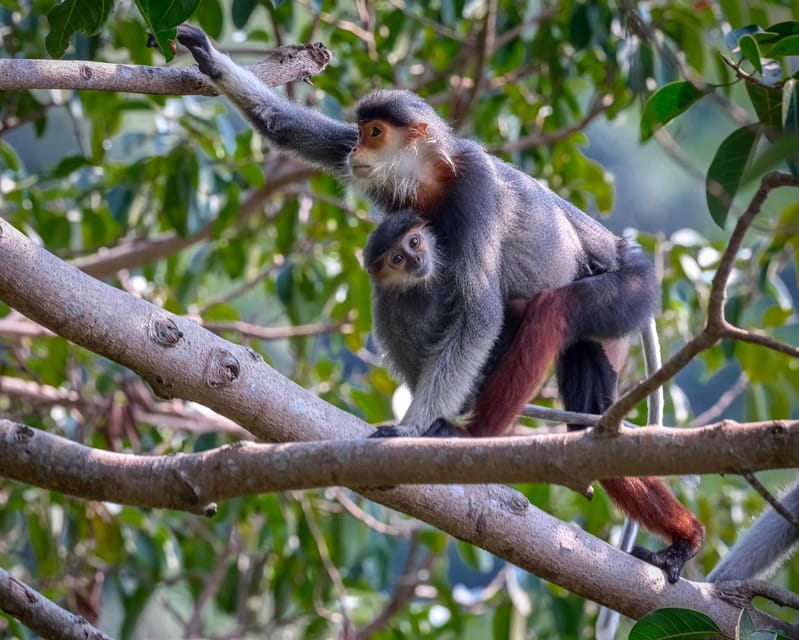
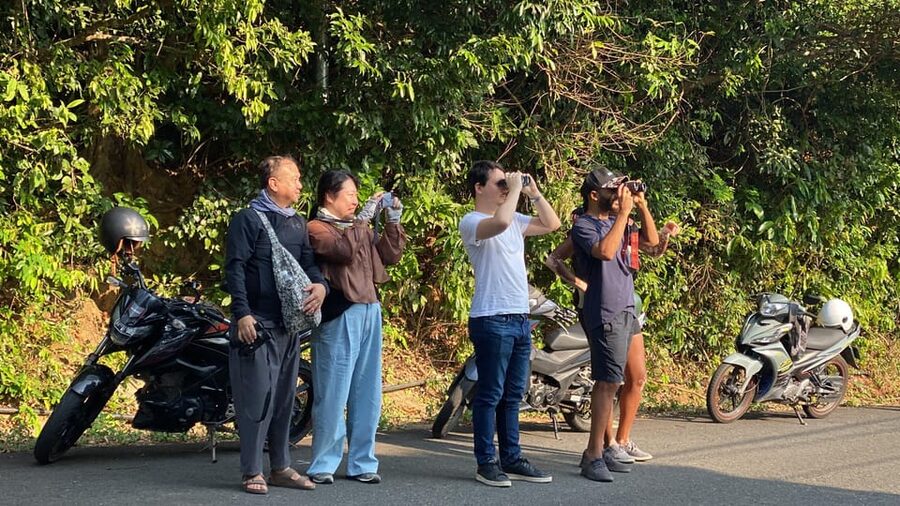
For endangered wildlife, “close” is tricky. This tour leans into the smart approach: keep a safe distance so the monkeys don’t feel disturbed. That doesn’t mean you see nothing. Instead, it means you learn to use tools and timing.
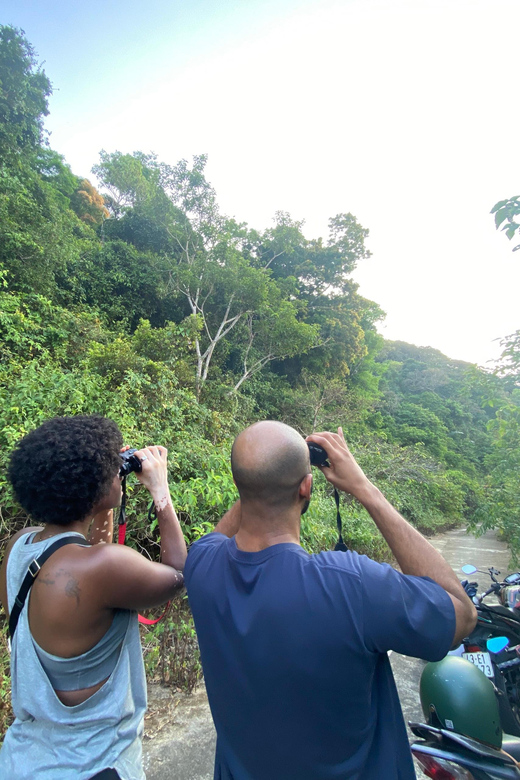
Binoculars are included, specifically because these langurs are described as extremely shy. That inclusion is a big deal. It lets you spend more time looking at the details that make the species recognizable, and less time guessing from far away.
Cameras are not included, so bring yours if you want to record video or photos. But the best photo moments still rely on the guide’s ability to spot and position you for observation without crowding.
Also, based on people’s on-trip feedback, guides sometimes share a link where you can access photos taken on professional cameras. That’s useful if you want crisp shots without constantly juggling your own gear.
Hidden routes around Monkey Mountain and a secret beach moment
This safari is not only “monkeys, then back.” The experience is also built around the mountain scenery and quieter corners of the Da Nang/Son Tra area.
Along the way, you’ll have opportunities to see Monkey Mt and a secret beach style stop as part of the surprises. Even when a rare primate doesn’t appear immediately, these scenery stops help keep your attention on the environment rather than the countdown to spotting.
You’ll travel via multiple slopes through the jungle. The tour description is careful about the terrain: it’s across twisting mountain roads and into secret spaces known to the red-shanked douc langurs. For me, that’s what separates this from a generic nature walk. You’re going somewhere you probably wouldn’t find on your own, and your guide is choosing routes based on what the animals are likely to do.
If you care about seeing more than one side of Son Tra, this format helps. It mixes movement (motorbike + walking) with viewing pauses, so you’re not trapped in one viewpoint for the entire time.
Price and value: is $48 fair for a rare-monkey search?
At $48 per person, this trip can feel like a bargain or a risk, depending on what you expect. Here’s how I’d weigh it.
You’re paying for three things:
- Specialized guiding by Son Tra Nature Reserve wildlife experts
- The binoculars and the “we will actually look” approach for shy monkeys
- Transportation into remote areas by motorbike, plus a structured walk
The uncertain part is the main value test. You cannot guarantee monkeys, and you cannot guarantee rare ones every time. Weather and monkey behavior can shut down the best sightings. So if your goal is absolute certainty, this won’t match that mindset.
But if your goal is a respectful, high-effort chance to see an endangered species in the wild, the math can work out. The small group size (up to 5) plus the chance to learn sex/age and participate in field data collection makes the experience more than a simple ticket to a viewpoint.
Price also changes during Lunar New Year. From Jan 28 to Feb 1, 2025, there’s a 300,000vnd service charge on the spot. If your dates fall in that window, treat the total cost as higher than the base headline price.
Who should book this safari (and who should skip it)
You’ll probably love this tour if:
- You care about wildlife observation more than loud, crowded sightseeing
- You want to learn how to read animal details, not only capture a quick photo
- You like the energy of a motorbike ride paired with a slower jungle walk
- You’re comfortable with uncertainty and understand that nature sets the schedule
It may not fit if:
- You want a guarantee of seeing monkeys
- You don’t handle uneven jungle paths well
- You need to bring bulky luggage (there’s no space for backpacks or luggage)
- You’re traveling with children under 5 (not suitable)
- You’re over 100 kg (not suitable)
Also, alcohol and drugs are not allowed, which is a good rule for both safety and wildlife respect.
Should you book this Vietnam red-douc langur safari?
Book it if you’re the type who enjoys a plan that adapts to what the forest gives you. This trip is built for a serious chance at seeing red-shanked douc langurs with binoculars, careful distance, and real learning along the way. The small group size and the included snacks and water help you focus on the experience, not on logistics.
I would hesitate only if your schedule is tight enough that the uncertainty feels stressful, or if you need a no-exceptions guarantee. Nature doesn’t do guarantees. But with this setup, you’re paying for a focused search and respectful observing in Son Tra.
FAQ
How long is the safari?
The activity lasts about 2.5 hours.
Where do I meet for the tour in Da Nang?
Meet in front of Esco Beach Bar in Da Nang.
Is seeing red-shanked douc langurs guaranteed?
No. The tour notes that whether you see monkeys (or rare ones) depends on weather, the monkeys’ behavior, and luck.
What’s included in the price?
Binoculars to view shy monkeys, plus water and fruit snacks. You also travel by motorbike with your guide/driver and walk to remote areas.
Can I bring my own camera?
Yes. Cameras are not included, but you’re welcome to bring yours.
Is there an extra cost for Lunar New Year dates?
Yes. There is a 300,000vnd service charge on the spot during Lunar New Year Holiday from Jan 28 to Feb 1, 2025.
Are there weight or age limits?
It is not suitable for children under 5 and not suitable for people over 220 lbs (100 kg). If you weigh over 85 kg to 100 kg, there is an extra 250,000vnd charge on the day for a more powerful bike.
What’s the cancellation policy?
You can cancel up to 24 hours in advance for a full refund.