One sunset walk can change how you see everything. This 7-day private Tanzania safari pairs big northern-game-viewing parks with a crater rim walking moment at sunset, plus a Maasai village visit that adds real people and real culture to the wild. And the guides matter here: names like Mwita, Benjamin, Frederick, Shafino, and Salehe come up often for a reason.
I love the way this trip balances the big-name places with time to actually watch animals, not just rush through photos. My other favorite part is the guide attention—drivers who keep the jeep calm, help you spot the small stuff (birds, tracks, behaviors), and answer questions without making you feel rushed. On the Maasai side, you get hands-on stops like beadwork and fire-making, not just a quick photo stop.
One consideration: the itinerary is packed, and you’ll have some early mornings—especially around the Ngorongoro crater sunrise. Also, at $3,731 per person, this is a premium-style safari, so you’ll want to be sure you’re comfortable with a high-end private schedule and a no-changes, non-refundable purchase.
In This Review
- Key things to know before you go
- Entering Arusha Safari Mode: your first night sets the tone
- Tarangire National Park for elephants: acacias, river life, and open-roof drives
- Serengeti: migration country, plus farms you’ll pass on the way
- A full Serengeti day: predators, big herds, and the value of patience
- Maasai village + Ngorongoro rim sunset walk: the human side of the crater
- Ngorongoro Crater morning descent: one bowl, thousands of animals
- Lake Manyara finale: flamingos, primate woodlands, and tree lions
- Guides are the difference: what you can learn from names like Mwita and Benjamin
- Price and value: $3,731 per person and what you’re really paying for
- Who this safari suits best (and who should reconsider)
- Should you book this private Tanzania safari with crater rim sunset walking?
- FAQ
- What time does the safari start?
- Is pickup included?
- Is this a private tour?
- How long is the safari?
- Which major places will you visit?
- Is the sunset crater rim walking included?
- What meals are included?
- What’s included besides meals?
- What’s not included in the price?
- Can you get a refund if you cancel?
- How do you receive your confirmation and ticket?
Key things to know before you go
- Private means private: only your group participates, with pickup in the Arusha area.
- Crater rim at sunset is a highlight: you’ll add a walking experience to the Ngorongoro story, not just a drive.
- Ngorongoro crater is the animal powerhouse: it’s UNESCO, about 610 m deep, and known for extremely strong viewing because of the density of wildlife.
- Serengeti day is flexible by season: the wildlife timing shifts with rainfall patterns and migration cycles.
- Lake Manyara can deliver tree-climbing lions: the park is also famous for primate woodlands and flamingos when conditions are right.
- Meal plan matters: the tour lists 7 breakfasts, 6 lunches, and 6 dinners, plus all fees and taxes.
Entering Arusha Safari Mode: your first night sets the tone
You start in Arusha, and the trip begins with pickup after you arrive at Arusha or Kilimanjaro airport. You’ll head to your accommodation in Arusha for an overnight, then get ready for the long days ahead.
This first day is not about wildlife. It’s about getting your footing: you sleep, you eat, you reset your travel brain. That makes the rest of the week feel smoother, especially when you hit early starts.
You can also read our reviews of more tours and experiences in Arusha.
Tarangire National Park for elephants: acacias, river life, and open-roof drives
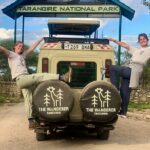
Tarangire is a great first real safari day because it feels different from the others. You drive from Arusha across Masai plains with scattered acacia trees, and you’ll pass people along the roadside in colorful clothing—some herding, some cycling, some working with animals.
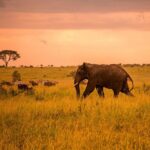
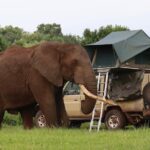
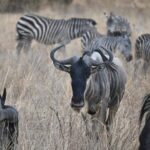
Once you’re inside the park, Tarangire’s reputation is simple: big elephant herds. You’ll be out on game drives from an open roof safari jeep, which helps you see far and take in the sky. Expect to look for zebra, wildebeest, buffalo, elephants, and other creatures that use the Tarangire River area and seasonal swamps.
What I like for your planning: Tarangire often gives you wildlife without feeling like a mad dash. You can slow down, scan, and actually learn what animals are doing in a specific place, not just when a guide shouts stop.
Serengeti: migration country, plus farms you’ll pass on the way
The drive day from Arusha toward Serengeti includes a cultural geography moment: you pass fertile highlands where wheat, coffee, and corn are grown by the Iraqw people. You also pass through the Ngorongoro Conservation Area, with the crater visible before you continue to Serengeti.
Serengeti National Park is Tanzania’s largest park, and the big selling point here is habitat variety: grassy plains, swamps, lakes, savannah, and mountains. That variety is why you can see animals in many different moods—grazers in one zone, water animals in another, and birds everywhere.
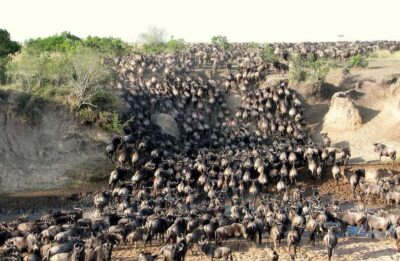
Serengeti’s other major draw is migration. Depending on the season, the wildebeest and zebra movement shifts between north and south areas as rainfall changes. The timing in your planning matters because it affects how many animals you’ll see and where you’ll likely spend time.
A full Serengeti day: predators, big herds, and the value of patience
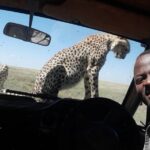
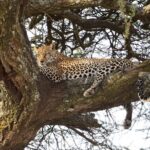
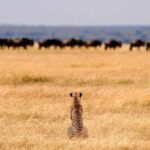
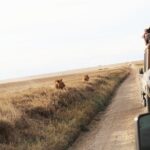
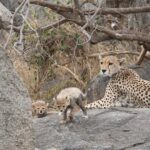
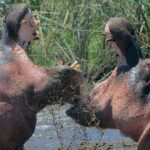
Day 4 is set aside for a longer stretch of game drives in Serengeti. This is where the trip can surprise you. You’ll still look for zebra and wildebeest migration movement, but you’ll also keep an eye out for resident predators like lion, leopard, and cheetah, plus other animals such as impala, buffalo, crocodile, and hippo.
This is also one of the reasons guides get such consistent praise on this safari circuit. People highlight how guides read the animals and manage the jeep for good viewing angles and calm rides. You can feel the difference when a driver isn’t just chasing distance, but watching behavior: where animals are feeding, resting, or moving and why.
A small note for your expectations: migration can be spectacular, but it still depends on season and weather. The best mindset is to treat the day as a wildlife search mission, not a guaranteed checklist.
Maasai village + Ngorongoro rim sunset walk: the human side of the crater
This is the part that makes the safari feel more complete. On the way toward the Ngorongoro area, you’ll pass by a Maasai village for about an hour. This isn’t framed as a hard-sell performance. It’s more like structured cultural learning: customary practices such as fire-making and beadwork, plus opportunities to meet and speak with villagers in their homes, with your guide interpreting as needed.
Then comes the crater rim sunset walk, which is exactly what it sounds like: you slow down at the edge of Ngorongoro as daylight fades. It’s a different pacing than game driving. Instead of scanning for movement through a grassland lens, you’re taking in the crater’s scale and the sky’s changing light at ground level.
One thing to watch for: village visits can be brief by design. If culture is a major priority for you, ask your guide how the village segment will feel that day and what you’ll be able to do beyond photos.
Ngorongoro Crater morning descent: one bowl, thousands of animals
Ngorongoro Crater is UNESCO World Heritage, and the numbers are impressive. It formed about three million years ago. It’s about 610 m deep and covers roughly 260 square kilometers.
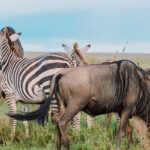
What matters more than the geology is the wildlife density. The crater is known for one of the best viewing setups in Tanzania because of its huge concentration of animals—about 25,000 ungulates is often cited for the area. You’ll likely spot wildebeest, zebra, gazelle, elephant, and you’ll also be tracking birds (more than 500 species are known from the crater).
You’ll go early. Early risers get views of sunrise over the crater edge, then breakfast before heading down into the crater. That early timing is one of the biggest reasons this day feels so special: you’re starting with cooler light and a calmer atmosphere, which makes wildlife watching more comfortable and easier to focus on.
My practical takeaway: this day rewards good expectations. If you arrive thinking you’ll get a dozen guaranteed sightings, you’ll be disappointed. If you arrive ready to watch closely, the crater’s natural density gives you plenty to work with.
Lake Manyara finale: flamingos, primate woodlands, and tree lions
Lake Manyara is a smaller park, but it earns its place at the end of the week. It sits about 120 km west of Arusha. The park is named for its shallow salt lake, which covers about 70% of the park’s surface area. The lake’s wet-and-dry cycle affects what you see.
When flooding conditions line up, you can see thousands of flamingos. The area is also known for more than 500 other bird species, so bird-spotting isn’t an afterthought here.
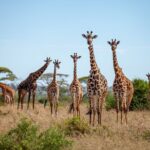
Wildlife viewing rounds it out: monkey, giraffe, zebra, wildebeest, buffalo, elephant, and sometimes lions lounging in trees. Manyara’s “wow” factor often comes from its mix of open plains with primate-filled woodlands and baobab-dotted cliffs, where animals use cover differently than they do in fully open grass.
This is a good final day because it’s variety without the overwhelming travel tempo of a long transfer day into deeper wilderness.
Guides are the difference: what you can learn from names like Mwita and Benjamin
This safari’s best praise points are consistent: guides who know where to look, answer questions in plain language, and keep the jeep ride smooth. Several guide names show up repeatedly, including Mwita, Benjamin, Frederick/Freddy, Shafino, Leonard, Joseph, Aziz and Shebi, Salehe, and Gilbert.
In plain terms, here’s what that means for you:
- You’re more likely to find animals by behavior, not by luck.
- You’ll spend more time actually viewing, and less time feeling lost.
- You’ll get help with spotting and photography angles, since people specifically call out how guides bring them close and help with good positioning.
The best safari doesn’t just “have wildlife.” It has decision-making. This trip leans into that, and the guide reputations suggest the operator takes guiding quality seriously.
Price and value: $3,731 per person and what you’re really paying for
At $3,731 per person, this is not a budget safari. You’re paying for a private, full-week circuit in Tanzania’s northern highlights. Value isn’t only about the sticker price. It’s also about what’s included and what you avoid.
From the tour information, you get all fees and taxes plus a meal plan (7 breakfasts, 6 lunches, 6 dinners). Pickup is offered, and the experience is organized as a private itinerary across multiple major parks, including a UNESCO crater day and a sunset rim walking moment.
What you don’t get is also clear: international flights, tips, and additional accommodation before and at the end of the tour. If you’re coming from far away, your total trip budget will be higher once flights and gratuities are added.
Who will feel the value best: couples, small families, or friends who want private guiding and less friction. If you hate uncertainty and want your days planned tightly around wildlife and timing, this kind of package can feel efficient. If you’d rather build your own route and accept more variability, a self-planned approach may suit better.
Who this safari suits best (and who should reconsider)
This safari is a strong fit if you want:
- A private Tanzania safari experience with your own group.
- Big wildlife days across Tarangire, Serengeti, Ngorongoro, and Lake Manyara.
- A cultural stop that includes practical learning like beadwork and fire-making.
- A rare add-on: crater rim walking at sunset.
It may not be your best match if:
- You’re extremely price-sensitive and don’t want a premium private setup.
- You’re not comfortable with early starts, especially around crater sunrise.
- You prefer a slower pace with more free time, because the week is structured around wildlife blocks and park transfers.
Should you book this private Tanzania safari with crater rim sunset walking?
If you want a once-in-a-lifetime northern circuit with a standout Ngorongoro moment on the rim at sunset, I think this is a solid choice. The combination of parks is strong: Tarangire for elephants, Serengeti for migration potential, Ngorongoro for dense viewing, and Lake Manyara as a bird-and-behavior finish.
Booking is easiest when you’re the type of traveler who likes planning. If that’s you, the private format and the guide reputations from names like Mwita and Benjamin are exactly what you’re looking for. Just be sure the early-morning rhythm works for you, because this safari runs on it.
One more reality check: the tour is non-refundable and can’t be changed for any reason. If your dates are flexible or uncertain, think twice before paying.
FAQ
What time does the safari start?
The start time is 8:30 am.
Is pickup included?
Yes. Pickup is offered.
Is this a private tour?
Yes. It’s private, and only your group participates.
How long is the safari?
It’s listed as 7 days (approx.).
Which major places will you visit?
You’ll go to Tarangire National Park, Serengeti National Park, the Ngorongoro Conservation Area and Ngorongoro Crater, and Lake Manyara National Park. You’ll also visit a Maasai village.
Is the sunset crater rim walking included?
Yes. The experience summary includes sunset walking on the crater rim.
What meals are included?
The package includes breakfast (7), lunch (6), and dinner (6).
What’s included besides meals?
All fees and taxes are included.
What’s not included in the price?
International flights, tips, and additional accommodation before and at the end of the tour are not included.
Can you get a refund if you cancel?
No. This experience is non-refundable and cannot be changed for any reason; the amount paid is not refunded if you cancel or request an amendment.
How do you receive your confirmation and ticket?
Confirmation is received at the time of booking, and the tour uses a mobile ticket.