REVIEW · BYRON BAY
Whale Watching Safari Byron Bay
Book on GetYourGuide →Operated by WILD BYRON · Bookable on GetYourGuide
Whales just off the coast changes your whole day. Winter humpbacks migrate past Brunswick Heads, and this trip turns that migration into a fast, close-up experience from the ocean side. It’s run as a small, personalised outing from the Wild Byron office, so you’re not stuck watching from the back row of a floating bus.
I really like that you get a marine naturalist guide onboard, not just a driver who points and waves. And I also like the way the boat is set up for spotting: 360-degree viewing means you can track whales as they surface, shift, and move without playing ocean-location guessing games.
One thing to plan around: this experience is not suitable for children under 5, and you’ll be out on the water for about 2.5 hours. If you’re sensitive to cold breezes, you might want to bring layers.
In This Review
- Key highlights worth planning for
- Winter humpback migration, right where you can see it
- Apollo 2 setup: comfort and spotting in one package
- The onboard guide and the hydrophone: learning what you’re seeing
- The 2.5-hour experience at sea: how the time actually feels
- Photos, videos, and keeping the memory real
- How the whale guarantee changes your decision
- When to go: June to October, and why timing matters
- Practical planning: meeting point, time zones, and what to expect onboard
- Who this whale safari is best for (and who should skip it)
- Should you book this Whale Watching Safari Byron Bay?
- FAQ
- Where does the tour start?
- How long is the whale watching safari?
- When does this tour operate?
- What is the price per person?
- What boat does the tour use?
- Do you get help identifying whales?
- Is there whale-song audio?
- Are photos or videos included?
- Is the tour wheelchair accessible?
- Is the tour suitable for young children?
Key highlights worth planning for
- Purpose-built Apollo 2: modern eco vessel with powerful engines for speed and safety
- 360-degree whale spotting: keep scanning without turning your neck into a workout
- Marine naturalist + hydrophone: learn what you’re seeing and listen to whale songs
- Photos/videos shared on social media: extra keepsakes beyond your own shaky phone footage
- Whale guarantee: you’re not left with just hope and wishful thinking
- Small personalised format: more attention, better sighting chances, less chaos
Winter humpback migration, right where you can see it
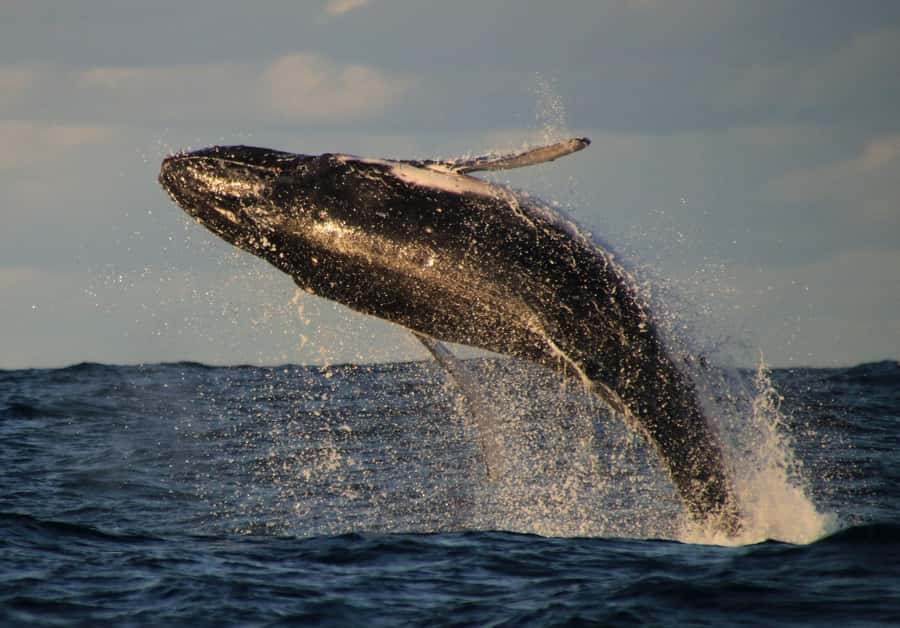
Humpback whales take on a long trip each year, and the payoff happens in winter along Australia’s east coast. From June to October, over 30,000 humpbacks migrate up from Antarctica. They move toward warmer waters to mate and give birth, so you’re not just watching adults cruise by. You’re watching a whole living process play out at sea.
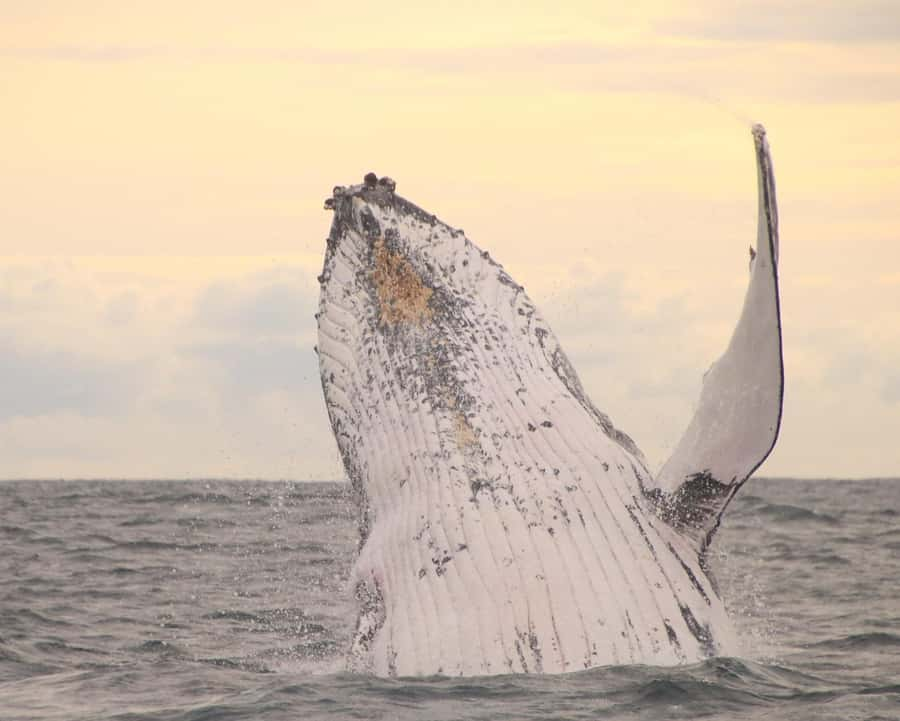
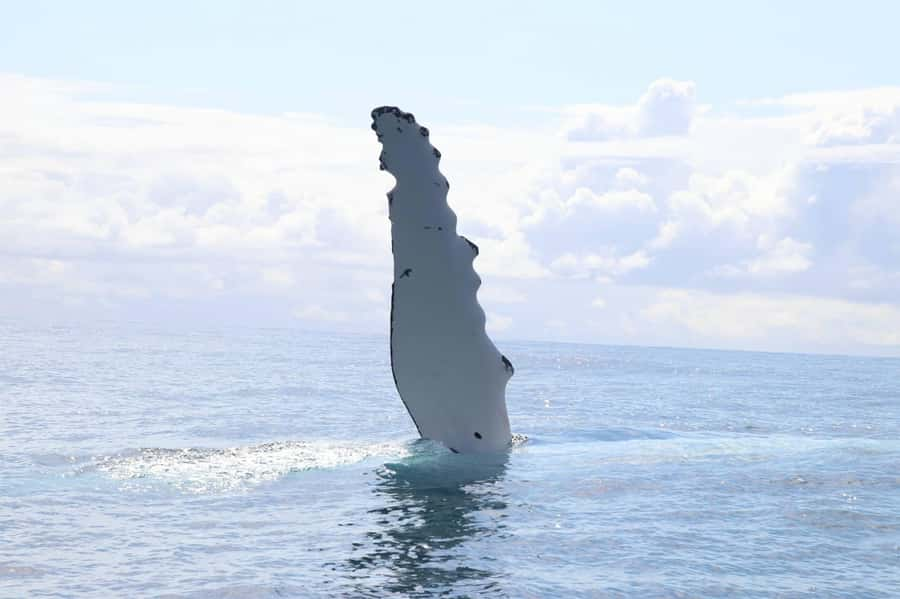
The reason I like this specific area is simple: Brunswick Heads sits right on the route that lets whales approach the coast while you’re still close enough for real viewing. You get the Byron Bay experience from the ocean side, which feels more immediate than shoreline lookouts. It’s also a route that supports active whale behavior like breaching, slapping, and splashy curiosity near the boat.
And since this is a daily operation in the winter season, you’re not stuck trying to line up the perfect weather window weeks in advance. You can pick a day that suits you, then let the sea do its thing.
You can also read our reviews of more tours and experiences in Byron Bay.


Apollo 2 setup: comfort and spotting in one package
This trip runs on a purpose-built boat called Apollo 2. That matters more than it sounds. A boat designed for wildlife viewing usually means better visibility, a layout that encourages scanning, and a ride that’s made for the job rather than an afterthought.
Here’s what you’ll notice about the setup:
- 360-degree viewing: the layout is built so you can see whale activity from different directions, not just one side of the deck.
- Padded seating: comfort counts when you’re staying ready for a surface.
- Powerful engines: the goal is not slow sightseeing. It’s getting to where the action is, while still prioritizing safety and stability.
One small detail that can change how you experience the whole day: the tour is about speed and reach. You’re not doing a long, meandering cruise while you hope something happens “sometime.” The pace helps keep your odds higher that you’ll spend more time watching whales and less time watching empty water.
The onboard guide and the hydrophone: learning what you’re seeing
The best whale watching trips don’t just show you animals. They teach you how to interpret what you’re seeing, so the spectacle turns into understanding.
On this safari, you’ll have an English-language marine naturalist guide onboard. In real terms, that means you’re getting context while you’re watching: what a surfacing behavior often signals, why a whale might be moving in a certain pattern, and how to read the timing of activity. It also means the guide can adjust the experience as conditions change.
Then there’s the hydrophone. Yes, it’s a whale-watching tool and also a mood-setter. You’re not just looking at whales; you can listen to whale songs. That audio layer makes the whole trip feel more “alive,” because the whales don’t stop being present when they’re underwater. The guide can help you connect what you hear to what you’re seeing.
In addition, you might encounter guide personalities like Glenn and Montana, and on some sailings the helm is run by captains such as Captain Gary. That mix of professionalism and personality shows up in how smoothly the boat runs and how clearly the group is guided to the best viewing.
The 2.5-hour experience at sea: how the time actually feels
The overall tour runs about 3 hours, with roughly 2.5 hours out on the water. That structure is ideal for winter whale trips: long enough to track movement and catch multiple sightings, but not so long that you fatigue before the best moments land.
What typically defines your time onboard is the rhythm:
- You get oriented and scanning begins fast. With 360-degree viewing, the idea is to keep eyes moving in all directions as soon as the boat is in position.
- Sightings become the plan, not interruptions. When whales appear, you don’t just stare at one spot and wait for a miracle. The boat’s setup and engine power support quick repositioning.
- You learn while you watch. This is where the naturalist guidance and hydrophone come into play. The aim is to help you turn a quick glance into an actual moment with meaning.
- The group stays ready. Whale watching is a timing game. The padded seating and smaller format help keep everyone attentive without feeling packed in.
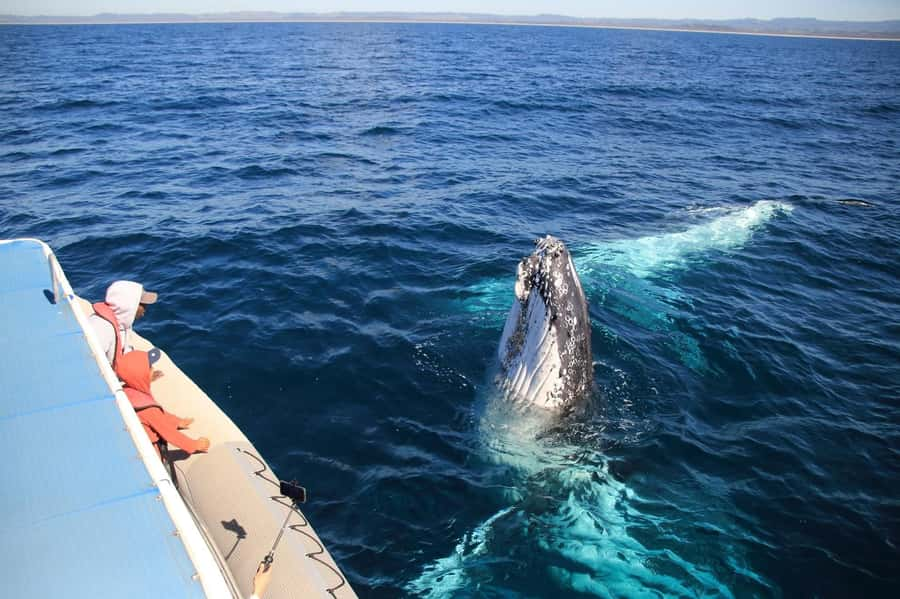
Some trips have included close, active encounters—mothers with young, breaching, and tail slapping. You might also be lucky enough to see whales approach the boat and move in ways that feel oddly personal, like an adult whale swimming under or near where you’re watching from. On some days, sightings can stack up fast, including the kind of surprise you won’t forget—like a rare albino whale sighting reported on a past sailing.
Even if activity varies, the experience usually feels like you’re out there for real wildlife watching, not just taking a scenic spin.
Photos, videos, and keeping the memory real
You will get photos and videos shared on social media as part of the experience. That’s not just a convenience. It solves a common whale-watching problem: most phone photos look like a blurry smudge at sea. Even when you’re doing everything right, the ocean has its own camera settings.
So I treat the shared media as the safety net for your best moments. You can enjoy the sighting in real time without obsessing over framing, and then later you can look back at actual footage. It’s a nice balance: you still get the wonder on the water, and you also get a usable souvenir when you’re back on land.
How the whale guarantee changes your decision
Seeing humpbacks is never 100% guaranteed in the literal sense. Animals move. Conditions shift. That’s true for every operator.
What makes this tour feel less risky is that it includes a whale guarantee. In practical terms, it signals that they stand behind the experience and want you to leave the day satisfied. You should still dress and plan like you’ll have an amazing time, but the guarantee gives you an extra layer of confidence compared with tours that offer only best-effort spotting.
It’s one reason this is priced like more than a casual cruise. At $91 per person for about three hours, you’re paying for: time on a purpose-built boat, an expert onboard, whale-song audio, and a structure designed around getting sightings—not just going out and hoping.
When to go: June to October, and why timing matters
This whale watching safari runs daily from June to October. That seasonal window lines up with humpbacks migrating along Australia’s east coast, so you’re not gambling outside the prime season.
Within that season, your luck often shows up in the details: activity levels, how close whales approach, and whether you get a clean viewing day. Past sailings have included everything from blue-sky afternoons to dramatic light—like full moon rising on one side and sunset over the hills on the other. That kind of sky can make a whale encounter feel cinematic.
Still, your best strategy is to choose a day based on your schedule, then come prepared for whatever weather shows up. If the water is choppy, you’re still in the right place because the boat is set up for comfort and safety with padded seating and powerful engines.
Practical planning: meeting point, time zones, and what to expect onboard
You’ll meet at the Wild Byron office building. From there, you’ll board and get settled before heading out for the main whale-watching window.
Two timing notes that matter if you’re planning your day:
- Tours run on New South Wales time. If you’re coming from Queensland, you’ll want to account for a 1 hour time difference.
- Start times depend on availability, and the experience is scheduled daily in the season.
Onboard is wheelchair accessible, which is a meaningful inclusion for a wildlife activity where deck space can often be the limiting factor. And since the tour isn’t suitable for children under 5, it’s a better fit for families with older kids, couples, and anyone traveling solo who wants a guided wildlife outing.
What should you bring? The data doesn’t list specific items, but for a winter sea trip off Byron Bay, plan like you might need layers. Even when the air is pleasant on land, being on the water can feel cooler.
Who this whale safari is best for (and who should skip it)
This tour is a strong fit if you want:
- A guided whale experience with real context, not just sightseeing
- A setup with 360-degree viewing so you can track whales as they move
- A smaller, more personal feel that makes it easier to stay engaged
- Extra value beyond the sighting itself, like hydrophone audio and photo/video sharing
It’s likely not the best choice if:
- You’re traveling with children under 5
- You want a long, slow, casual day. This trip is built around being out at sea efficiently and staying ready for active whale behavior.
If you’re on a Byron Bay weekend and want your big wildlife moment without losing your whole day, this length and format make sense.
Should you book this Whale Watching Safari Byron Bay?
I’d book it if you match the vibe: you want the best shot at real humpback encounters, you like having a guide onboard who can explain what you’re seeing, and you value the extras like hydrophone and shared photo/video keepsakes.
At $91 for a 3-hour outing, it feels like good value because you’re not just paying for a boat ride. You’re paying for a purpose-built vessel, marine interpretation, and a whale-focused approach that prioritizes getting you to where the action is.
If you’re flexible with your date within the season and you’re comfortable spending a couple hours on the water, this is the kind of experience that turns into one of those trip memories you keep mentioning later.
FAQ
Where does the tour start?
The meeting point is the Wild Byron office building.
How long is the whale watching safari?
The overall duration is listed as 3 hours, with about 2.5 hours on the water.
When does this tour operate?
It runs daily between June and October.
What is the price per person?
The price is $91 per person.
What boat does the tour use?
The tour uses the purpose-built boat called Apollo 2.
Do you get help identifying whales?
Yes. A marine naturalist guide is included, and the guide is English-speaking.
Is there whale-song audio?
Yes. A hydrophone is included so you can listen to whale songs.
Are photos or videos included?
Yes. Photos and videos are shared on social media.
Is the tour wheelchair accessible?
Yes, the tour is listed as wheelchair accessible.
Is the tour suitable for young children?
It is not suitable for children under 5 years.