
REVIEW · NETHERLANDS
Zeeland Zeehonden strand safari NL/DE
Book on GetYourGuide →Operated by www.zeelandguidedtours.nl · Bookable on GetYourGuide
A North Sea beach safari beats a museum day every time. This 2-hour Zeeland experience is built around seal spotting plus hands-on shoreline searching, so you’re not just watching the coast, you’re learning it as you go. You’ll use binoculars, magnifying jars, and identification cards while a live guide keeps the pace friendly for both kids and adults.
I especially love how the walk stays interactive. When you’re hauling (and looking) with a large trawl net or hunting with crab rods, the whole beach turns into a simple, safe science lab. And in the process you get stories that make animal behavior actually stick.
One thing to plan for: the beach can feel cold even when you expect sun. They remind you that it is always colder on the shore, so you’ll want extra warm layers and a change of clothes ready.
In This Review
- Key Things I’d Focus On
- Zeeland Zeehonden Beach Safari: What Makes It So Fun (and Practical)
- Meeting at Beachbar Atlantis and Dressing for Real Beach Weather
- Seal Watching With Binoculars: How to Make It Click
- The Tool Switch: Summer Trawl Net Versus Crab Rods
- Magnifying Jars and Identification Cards: Learning Without Feeling Like School
- What Happens After You Catch a Glimpse
- Marine Life You Might Spot on the North Sea Shore
- The Two-Hour Rhythm: Walk, Look, Try, Learn
- Price and Value: Is $19 Worth It?
- Who Should Book This Zeeland Beach Safari
- Should You Book the Zeeland Zeehonden Strand Safari or Skip It?
- FAQ
- Where is the meeting point for the Zeeland Zeehonden strand safari?
- How long is the tour?
- How much does it cost?
- What languages is the guide speaking?
- Is it suitable for wheelchair users?
- What do I need to bring?
- Do we use binoculars during the tour?
- What seasonal equipment is used?
- Can we go into the water?
- What animals and sea life might we see?
Key Things I’d Focus On
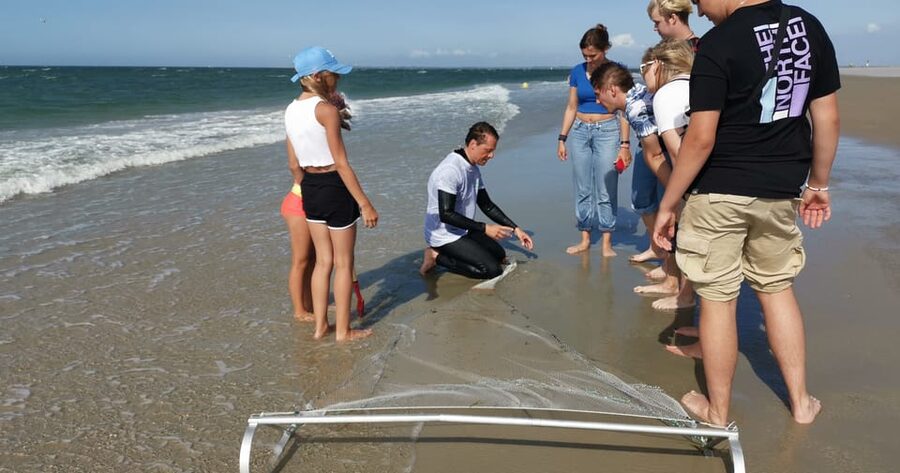
- Binocular seal watching during a guided shoreline walk
- Summer trawl net (July/Aug edition) versus crab rods (spring/autumn edition)
- Magnifying jars + identification cards to learn what you’re seeing
- A guide-led pace that works for young kids and adults, not just one age group
- Careful handling of finds, including crabbing with minimal impact to animals
Zeeland Zeehonden Beach Safari: What Makes It So Fun (and Practical)
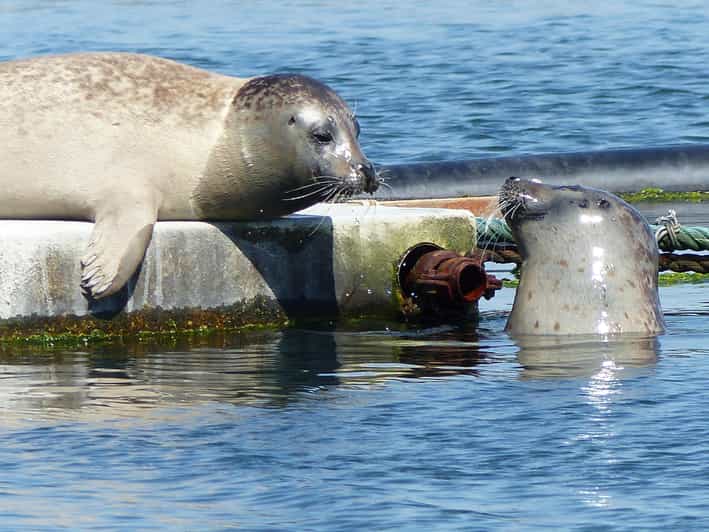
This is the kind of tour that makes sense fast. You meet at Beachbar Atlantis, then you head onto the North Sea beach to search for seals and the life they share with starfish, crabs, shrimp, and all the small stuff hiding in sand and shallow water.
The best part is that you’re doing more than standing around. Even if you’re not a “nature person,” the tools make it easy: binoculars for seal watching, and then equipment for exploring the shore directly. In just two hours, you get that feeling of being outdoors with a purpose, without it turning into a long hike.
Also, the guide approach matters. Tours run in Dutch and German, and guides like Mark are known for explaining clearly while still keeping it fun for kids. That balance is what turns a coastal walk into a memory you’ll actually talk about later.
Meeting at Beachbar Atlantis and Dressing for Real Beach Weather
You’ll meet in front of Beachbar Atlantis (best found on Google Maps), and the tour area is near the Neeltje Jans parking area (Parking beach Neeltje Jans 6), which is free. Plan on a short walk from parking to the meeting spot.
Now the big practical note: the shore is often colder than you expect. The tour info is blunt about this, and it’s smart advice. Bring warm clothing, plus sunscreen and beachwear if you’re going in the water during the summer edition. A towel and a change of clothes are also worth it, because sand and spray are part of the deal.
If you’re visiting in July or August, you may be allowed to go into the water with the guide. That’s not for every month, so check your tour date and bring swimwear if you’re there in summer. For cooler days, you can still have a great time without getting wet, but layers still help a lot.
Seal Watching With Binoculars: How to Make It Click
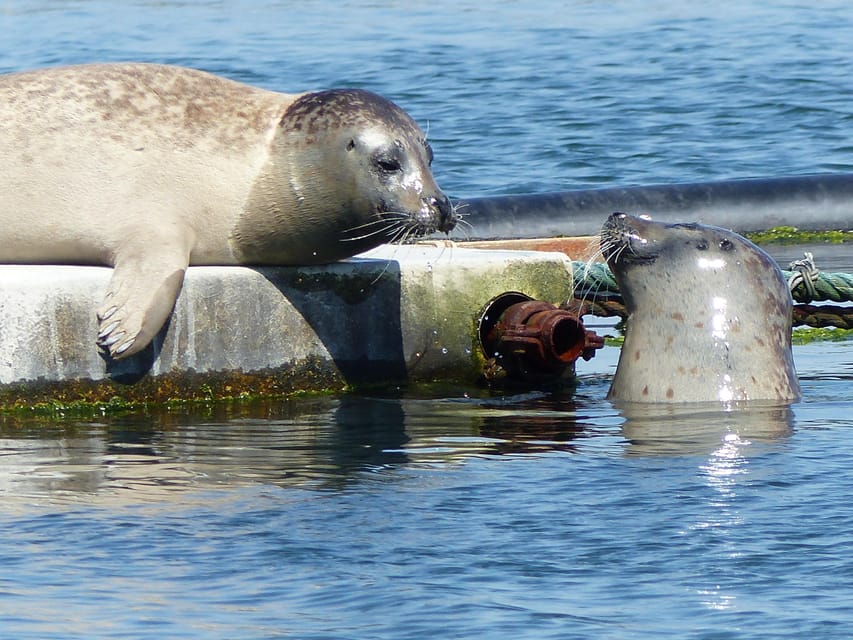
Seals are the headline, but they can be tricky to spot from the beach if you don’t know what to look for. That’s why the binoculars are included. You’re not hunting blind; you’re learning how to scan and what to watch as you walk.
The guide also helps you connect sightings to behavior. You’ll learn fun facts about seals in their natural habitat, and you’ll get tips that help you tell details apart—like the difference between a common seal and a grey seal. That kind of simple guide-led knowledge changes everything. After a bit, you start noticing movements and patterns instead of only searching for a flash of fur.
If you’re traveling with kids, this part usually lands well. Seal spotting gives you a reason to pause, look, and stay calm for a moment—then the tour keeps moving so nobody gets restless. In the experience, everyone gets a chance to be active, not just observe.
The Tool Switch: Summer Trawl Net Versus Crab Rods
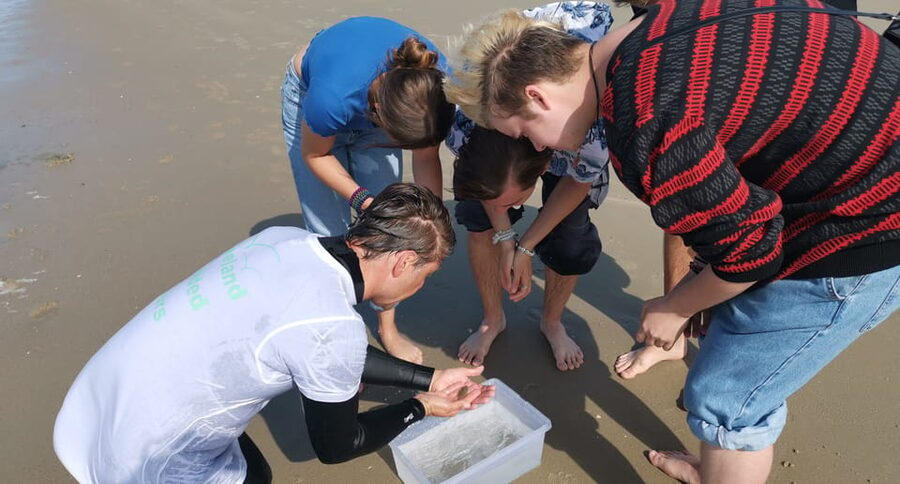
This safari has a clever seasonal rhythm. Depending on the time of year, the group uses one main “search” tool, and it changes the mood of the walk.
Summer edition: the big trawl net. When it’s summer (July and August), you’ll use a large trawl net to trawl through shallow waters along the coastline. The point isn’t deep-sea catching. It’s exploring what’s living near shore, in a way that’s visible and teachable. Seeing the results of the net work is one of those moments kids love and adults appreciate, because it turns learning into something you can point at.
Spring/autumn edition: crab rods. In other seasons, you’ll use crab rods to search for the biggest crab. This shifts the tour from “watch the shoreline life in a net” to “work the shoreline like a game.” You’ll be challenged to find what hides where the sand meets the water, using included search tools and the guide’s instructions.
Either way, the tour doesn’t turn into chaos. The safety setup stays focused on shallow water and avoiding strong currents. And based on how the activity is described, crabbing is handled carefully so animals aren’t damaged.
Magnifying Jars and Identification Cards: Learning Without Feeling Like School
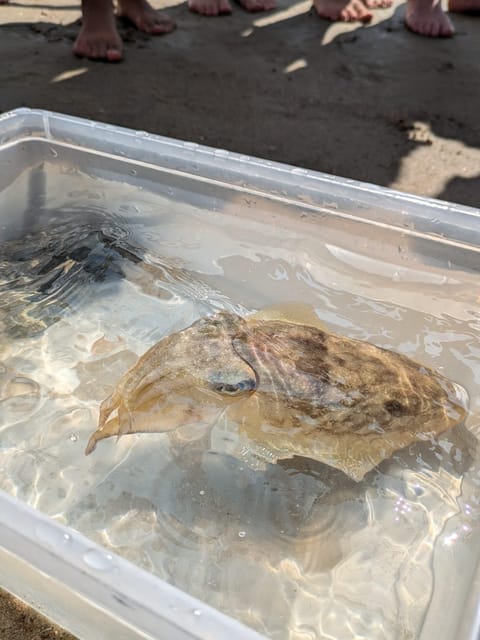
This safari’s learning system is surprisingly effective. Instead of dumping facts, it gives you tools for noticing.
You’ll use loop jars or magnifying jars to examine smaller finds up close. You’ll also use identification cards to recognize animals, plants, and shells. That combination is key: the guide points things out, you look closely, then you match what you see to a card.
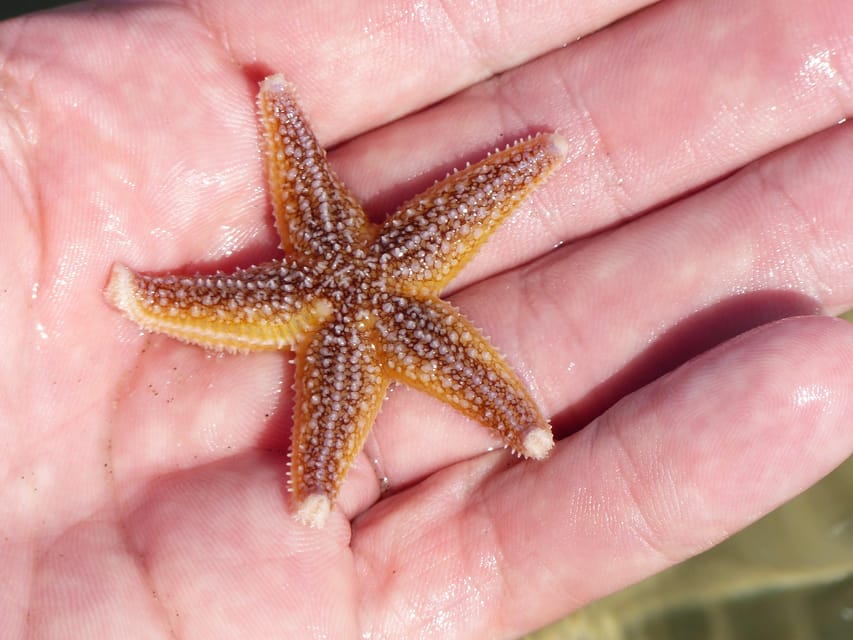
It’s a simple loop, but it works. Kids get the satisfaction of “I found it,” and adults get the calm pleasure of slow observation. And you’ll learn quick, memorable fun facts along the way, like how a starfish can regenerate a lost arm or why crabs walk sideways.
The shoreline also helps. Shells wash up, sea life shifts with tides, and the guide’s job is to connect those observations to what’s actually happening in the North Sea ecosystem.
What Happens After You Catch a Glimpse
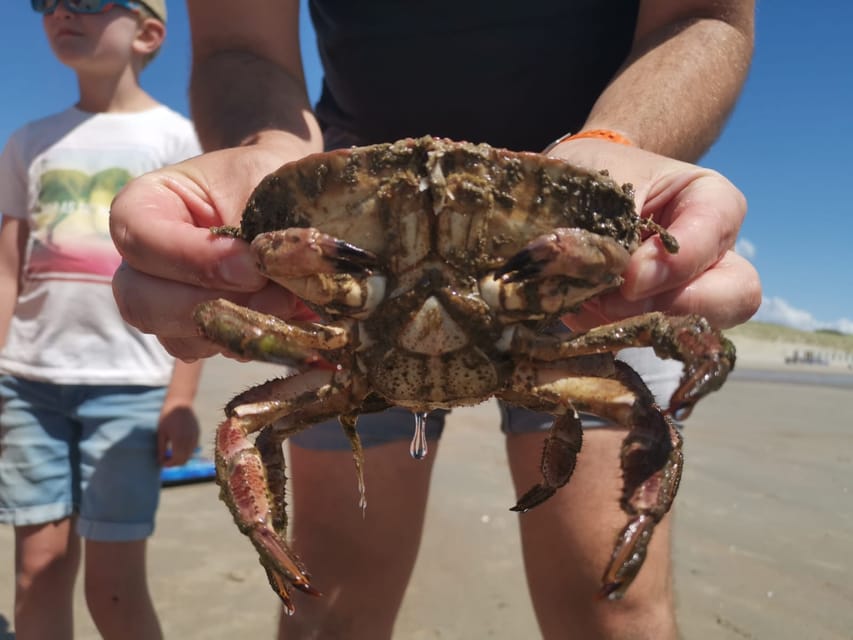
A beach safari can go two ways: respectful learning or careless grabbing. This one is clear about respect for nature. You observe and examine finds, and then you return them to their natural environment after observation.
That approach matters because it keeps the tour true to what you’re trying to learn. You’re not removing living things from the coast for the sake of a photo. You’re learning the ecosystem’s rules by watching it in action.
Safety also stays part of the picture. The tour uses shallow water and keeps away from strong currents. If conditions are rough, the tour may be canceled or switched to a forest or dune safari. That’s a practical way to keep the experience going without forcing beach conditions.
Marine Life You Might Spot on the North Sea Shore
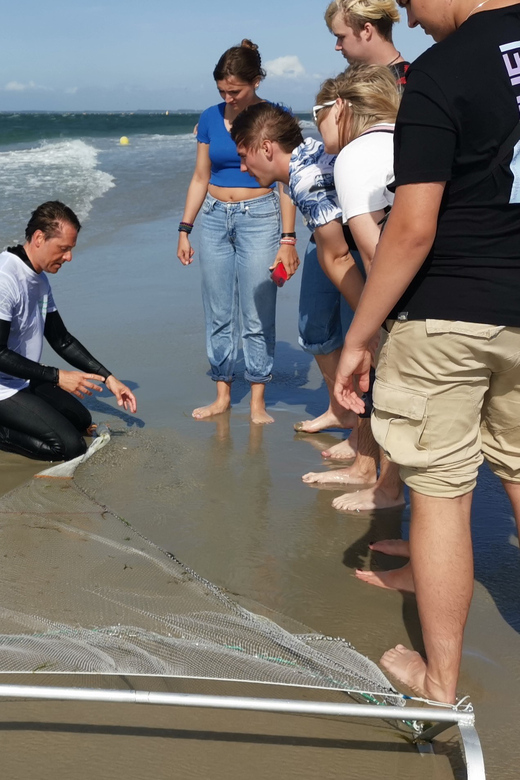
You can’t guarantee everything every time, but the tour description gives you a good idea of what to watch for.
Expect to focus on:
- seals in the North Sea
- starfish, in different shapes and sizes
- crabs of various types, from small shore crabs to larger North Sea crabs
- shrimps that often hide under rocks or in sand
- small fish like sand eels near the shore
- shells washed up on the beach
You might also encounter other marine life depending on conditions, such as seahorses, cuttlefish, or jellyfish. Even if you don’t find every listed animal, the point is that you’re learning how to scan, identify, and understand what lives in this strip of coast.
The Two-Hour Rhythm: Walk, Look, Try, Learn
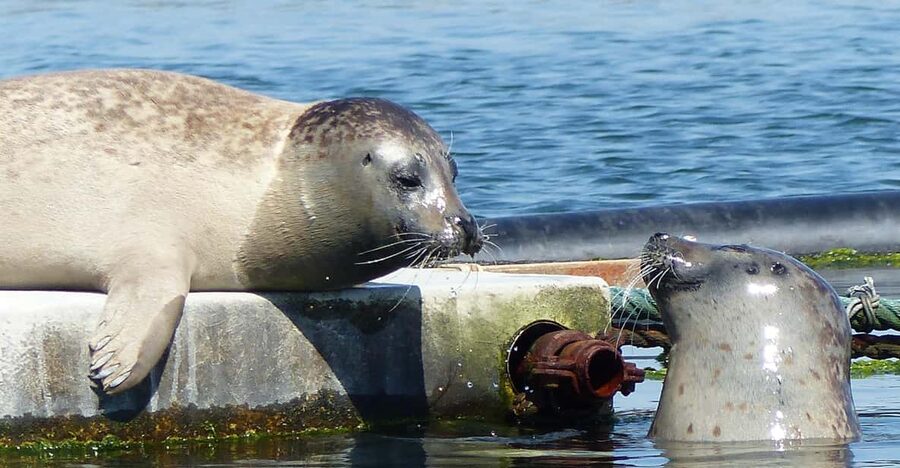
The duration is 2 hours, and the pacing is built around short “windows” of attention. You’ll do a beach walk to discover seals and shoreline life. Then you’ll spend time using the included tools—binoculars, jars, and the seasonal equipment (trawl net or crab rods).
In this format, you don’t need to be fit to enjoy it. It’s an activity that works for families because it gives everyone a role: look, search, identify, and listen to the guide’s stories. It also helps that the guide provides entertaining facts throughout, so there’s always something to focus on besides just the horizon.
That rhythm is also why it’s good for mixed groups. Kids get the excitement of the hunt. Adults get the education without feeling like they’re stuck in one place.
Price and Value: Is $19 Worth It?
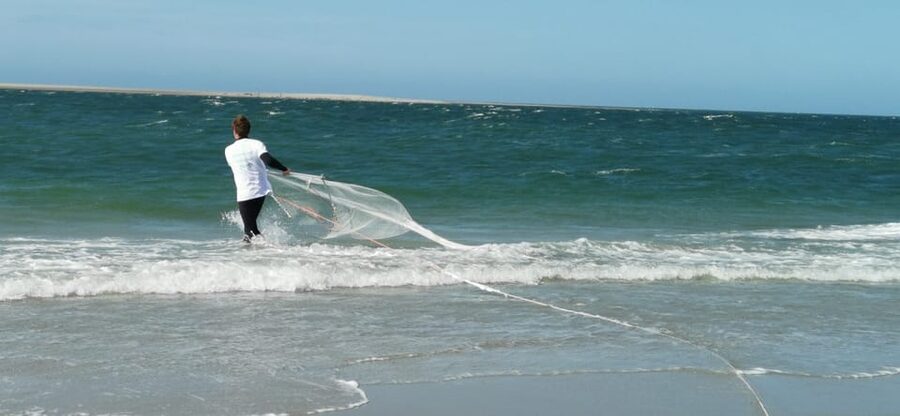
At about $19 per person for a 2-hour guided experience, this tour is positioned as good-value family nature time. What you’re really paying for is not just the walk. You’re paying for:
- a live guide in Dutch or German
- included field tools (binoculars, jars/search items, net or rods)
- structured identification support via cards
- a focused goal (seals plus North Sea shore life) rather than a random stroll
If you’re traveling with kids, the math gets easier because they can participate actively rather than just wait for grown-ups to take photos. One note to keep in mind: the pricing can feel uniform across ages, and that may not feel fair if you’re bringing very small kids. Still, the overall structure is built for families, and the included gear makes it feel more than a simple guided “look around.”
Who Should Book This Zeeland Beach Safari
You’ll probably love it if you want:
- a hands-on nature activity on the beach
- a short tour that fits easily into a day near Zeeland
- seal watching with help, not guessing
- an experience that treats kids and adults as part of the same learning group
It’s also a nice choice if you like learning through observation. The identification cards and magnifying jars encourage you to look more carefully than you would on your own.
One limitation to note: it is not suitable for wheelchair users, based on the tour details provided.
Should You Book the Zeeland Zeehonden Strand Safari or Skip It?
Book it if you want a guided, family-friendly coastal experience in Zeeland that’s active, educational, and built around real shoreline life. The combination of seals, seasonal searching tools (trawl net or crab rods), and identification support makes the 2 hours feel worth it.
Skip it if you hate cold beach weather or you’re looking for a long, deep hiking adventure. This tour is about short observation bursts and interactive shoreline searching, not a big physical challenge.
If you’re on the fence, your best deciding factor is your month. In July and August, you may get extra water time with the guide, which changes the feel. Any other time of year leans harder into the crab-rod searching style.
FAQ
Where is the meeting point for the Zeeland Zeehonden strand safari?
You meet in front of Beachbar Atlantis. The best way to find it is to use Google Maps for Beachbar Atlantis.
How long is the tour?
The safari lasts 2 hours.
How much does it cost?
The price is listed as $19 per person.
What languages is the guide speaking?
The live tour guide speaks Dutch and German.
Is it suitable for wheelchair users?
No, it is not suitable for wheelchair users.
What do I need to bring?
Bring warm clothing, swimwear, a change of clothes, a towel, a camera, sunscreen (biodegradable sunscreen is recommended), beachwear, cash, and binoculars.
Do we use binoculars during the tour?
Yes. Binoculars are included for seal watching.
What seasonal equipment is used?
In summer (July and August) you use a large trawl net (summer edition). In spring and autumn you use crab rods to search for crabs.
Can we go into the water?
In July and August, the info says it is allowed to go in the water with the guide, and swimwear is recommended.
What animals and sea life might we see?
The tour focuses on seals and may include starfish, crabs, shrimps, fish near shore, shells, and possibly other marine life such as seahorses, cuttlefish, or jellyfish.