REVIEW · KATHMANDU
3-Day Chitwan National Park Jungle Safari Tour Package with Pick Up
Book on Viator →Operated by Welcome Nepal Treks P.ltd · Bookable on Viator
Rhinos and crocodiles meet Tharu culture. This 3-day Chitwan National Park package from Kathmandu bundles a guided safari rhythm with meals included and two nights near Chitwan. You spend the trip doing exactly what Chitwan is best at: early wildlife spotting, river scenery on the Rapti, and a cultural stop that isn’t just a photo op.
I like the value because the national park entrance fee is included, plus you get two breakfasts, two lunches, and two dinners without chasing receipts. I also like the early timing that keeps the day cooler and more animal-friendly, with a morning canoe ride and bird watching built in.
One drawback to consider is the long tour-bus transfers on a group itinerary. If you’re prone to motion sickness or you dislike stop-and-go travel, you’ll want to plan for it before you go.
In This Review
- Key takeaways before you book
- Chitwan National Park: where rivers and rhinos set the pace
- Price and value: what $180 includes (and why it matters)
- Day 1 from Kathmandu to the Sauraha area: briefing, refreshment, and Tharu Village
- Day 2 on the Rapti River: canoe ride, birds, and Marsh Mugger crocodiles
- Day 3 morning bird watching and the long return to Kathmandu
- Jeep safari, jungle walk, and the Tharu cultural show: how the wildlife day is put together
- Where you’ll stay near Chitwan: three-star resort style, not luxury
- Bus ride reality check: pickup timing, stops, and motion-sickness planning
- Guides and safety: clear communication is part of the experience
- Who this group tour suits best (and who should rethink it)
- Should you book this Chitwan jungle safari package with pickup?
- FAQ
- What’s included in the $180 per person price?
- Is the national park entrance fee included?
- Where do pickup and transfers happen?
- How many nights and meals are included?
- What wildlife and activities are part of the tour?
- Do you provide a mobile ticket?
- What time does day 2 start for the canoe ride?
- Can I cancel for a full refund?
Key takeaways before you book
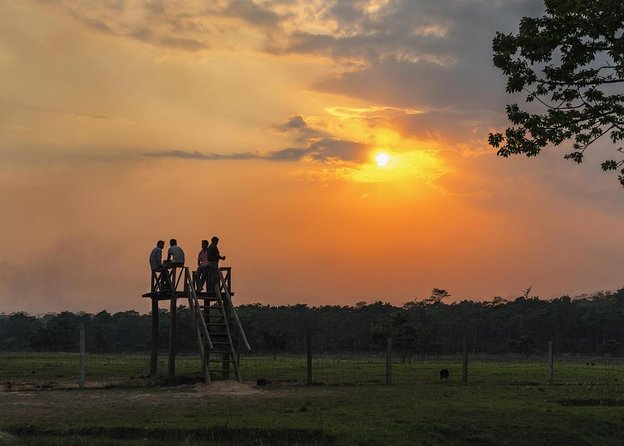
- Rapti River canoe ride: bird watching plus a chance to spot Marsh Mugger crocodiles
- Wildlife safari mix: jeep safari, jungle walk, and guided cultural activities built into the schedule
- Tharu culture stop: a village visit plus time at the national park visitor’s centre
- Two nights near Chitwan: three-star resort stay after your day-one travel into the area
- Meals and park fee included: two breakfasts, two lunches, two dinners, plus the national park entrance fee
- Group size capped at 25: smaller than big coach tours, but still a group setting
Chitwan National Park: where rivers and rhinos set the pace
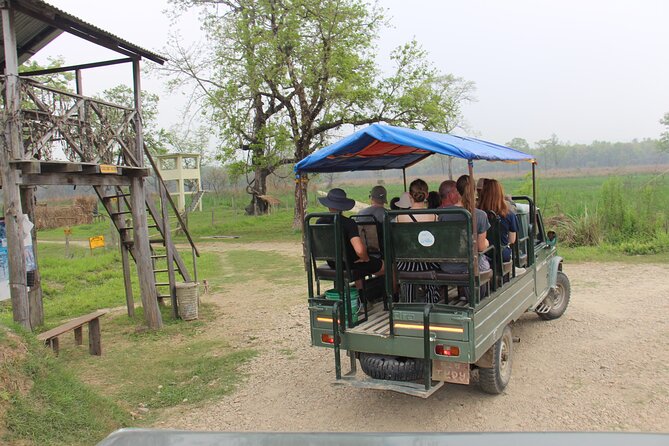
Chitwan is one of Nepal’s easiest places to understand wildlife in real time. It isn’t just about spotting animals from a single viewpoint. The park is shaped by waterways and grassland edges, so you get different viewing angles: from safari jeeps, on river calm, and during short guided walks when conditions are right.
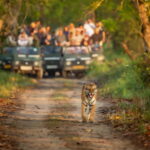
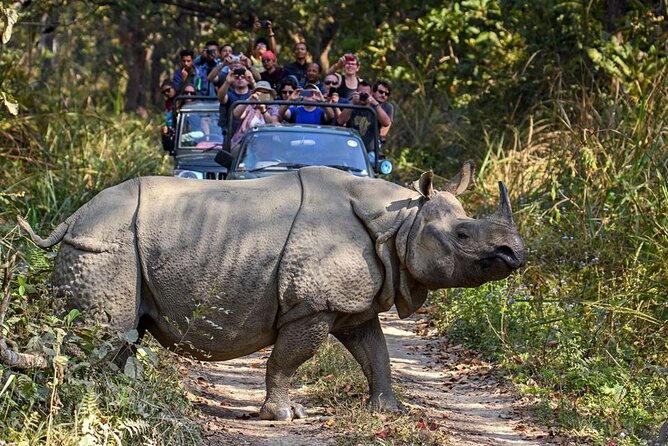
This tour leans into that Chitwan style. You’re not sitting still for hours hoping for luck. You’re moving through the day with a clear focus: wildlife first thing in the morning, then culture and smaller activity blocks. One-horned rhinoceros are explicitly part of the wildlife focus, and the program also notes that Royal Bengal tigers may be possible. Even when wildlife isn’t guaranteed (no one can promise that), Chitwan’s setup gives you multiple chances to see something.
Chitwan also has a strong human thread. The Tharu village visit and visitor’s centre stop help you understand the region’s people and how park life intersects with local livelihoods.
You can also read our reviews of more tours and experiences in Kathmandu.

Price and value: what $180 includes (and why it matters)
At $180 per person, this package is priced for people who want the structure of a guided group trip without paying separately for every small add-on.
Here’s the practical “value math”:
- Transfers: Kathmandu ⇄ Chitwan by tourist bus
- Lodging: two nights in a three-star resort near Chitwan
- Park entrance fee: included (so you don’t get hit later at the gate)
- Meals: two breakfasts, two lunches, two dinners
When meals and the entrance fee are already handled, you can budget mostly for personal costs like drinks, tips, laundry, or phone use. You also reduce decision fatigue. Instead of piecing together guides, tickets, and transport yourself, you follow a set plan.
The group cap of 25 travelers also helps. It’s not a private safari, but it’s usually manageable for getting organized quickly and moving together between activities. For solo travelers, that structure is a big part of the comfort factor.
Day 1 from Kathmandu to the Sauraha area: briefing, refreshment, and Tharu Village
Your day starts with an arrival meet-up rather than a complicated scavenger hunt. Staff receive you at Sauraha Bus Park/Tadi or Bharatpur Airport, then you’re transferred to the resort. After you arrive, you’ll get refreshment and a briefing so you know what the next day’s early start looks like.
In the afternoon, the plan turns cultural. At around 15:00, you go to a nearby Tharu village. This is where the trip earns points beyond wildlife. You learn about Tharu life and lifestyle, and you spend time at the national park visitor’s centre. The visitor’s centre is especially helpful early in the trip, because it frames what you’re about to see—animals, habitat, and the park’s purpose.
A couple of reviews also mention the trip’s clarity and smooth coordination, including pick-up and drop-off timing. That matters on day one because you’re already tired from travel. If the logistics are clean, you can focus on what you came for.
Day 2 on the Rapti River: canoe ride, birds, and Marsh Mugger crocodiles
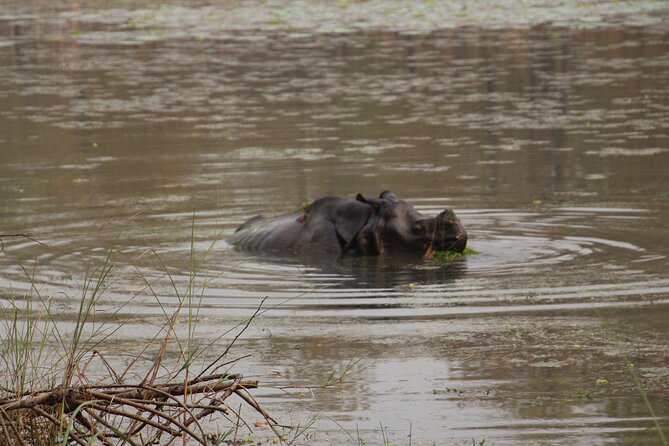
This is the day Chitwan fans usually circle first. Your wake-up is 06:00, followed by breakfast. Then you head out around 07:00 for the canoe ride along the Rapti River.
Why the canoe matters: river wildlife often shows itself differently than land safari sightings. If you like birds, this is a strong match because the canoe time is built for bird watching. And the itinerary specifically mentions a chance to see two rare species of crocodiles, including the Marsh Mugger. That combination—birds plus crocodile viewing potential—makes the canoe ride feel like more than just a scenic break.
The morning timing is also a practical advantage. Early hours tend to bring calmer water and fewer crowds on the river edges. That can improve how much you actually notice while you’re out there.
Then you return, rest, and continue the broader safari-and-culture rhythm. Even if you don’t see every animal you hoped for, the river experience gives you a different kind of Chitwan moment—quiet, up-close, and focused.
Day 3 morning bird watching and the long return to Kathmandu
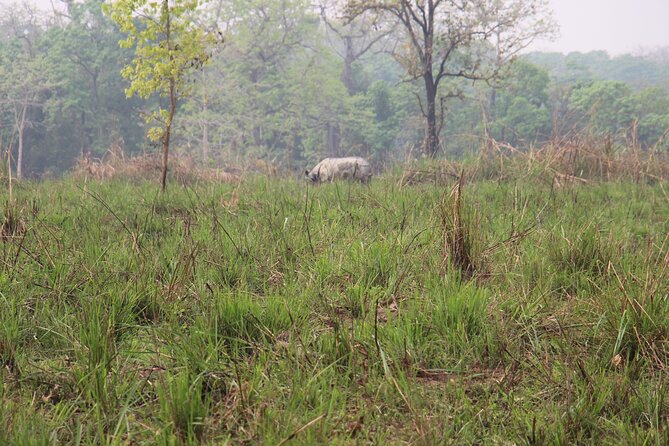
Day three also starts early: 06:00 wake-up, followed by breakfast. Then you’ll have bird watching around 07:30. It’s a gentle way to finish if you want more wildlife chances without adding extra physical stress.
At 08:00, you depart Chitwan to Kathmandu. The program notes travel time of about 5–6 hours. It also mentions that if you’re routing through Pokhara, it may take around 4 hours, depending on the route plan.
This return day is important for logistics-minded travelers. You’re not heading straight to a hotel nap and calling it done; you’ll likely roll from morning activity into a long bus ride. If you know you’re sensitive to travel time, I’d pack a few comfort items: water, a light snack, and anything you need for motion sensitivity.
The trip ends the way many Chitwan group tours do: you get your final morning wildlife block, then you transition back to city life.
Jeep safari, jungle walk, and the Tharu cultural show: how the wildlife day is put together
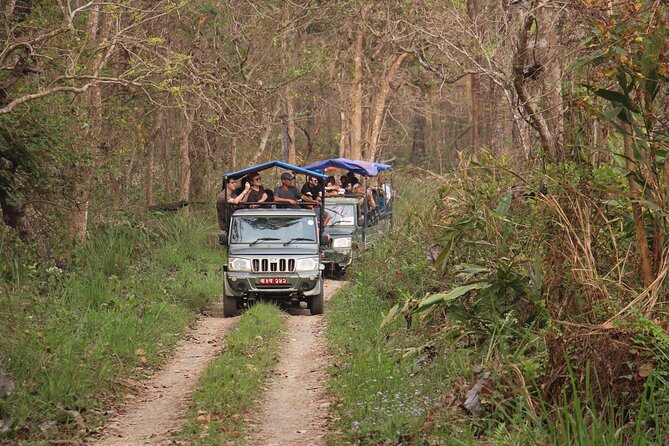
Even though the day-by-day timings don’t list every single moment, the package describes a full mix of Chitwan activities, including:
- Jeep safari
- Jungle walk
- Tharu cultural show
- And other guided safari-style moments tied to the park visit
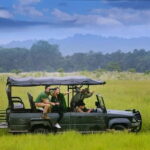
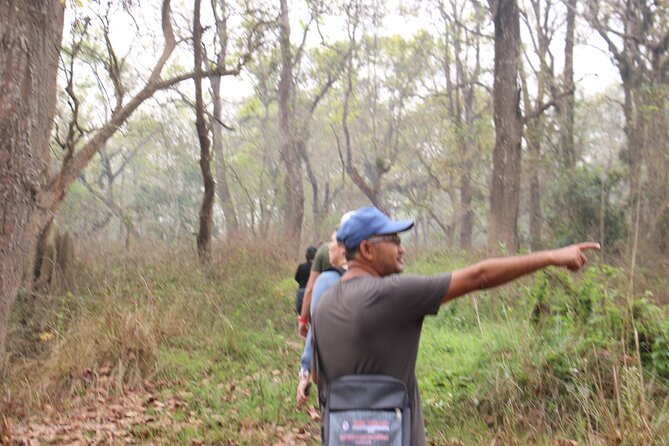
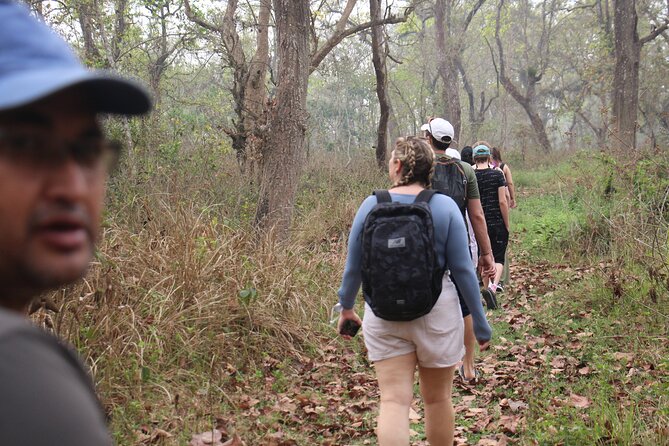
This mix is how the tour stays interesting. A jeep safari is best for covering ground and improving odds for larger animals. A jungle walk can feel slower and more intimate, but it depends heavily on trail conditions and how many people are out that day. One review noted that a jungle walk felt easy, but wildlife spotting was harder in part because of the number of people on the trail. That’s a useful expectation to carry: the more crowded the walk, the less “quiet predator spotting” you’ll feel.
The Tharu cultural show adds a different rhythm after wildlife time. In a place like Chitwan, culture isn’t separate from the park—local communities share the landscape and history that visitors are trying to understand.
If your top priority is seeing as many animals as possible, focus on the early blocks and the safari time. If your priority is understanding place, the Tharu activities and visitor’s centre stop do real work.
Where you’ll stay near Chitwan: three-star resort style, not luxury
You stay two nights in a three-star resort near Chitwan. That wording is important. Expect comfort basics rather than high-end design.
In one review, the lodge mentioned was Safari Adventure Lodge, described as pleasant but basic. That aligns with what you should budget for from a mid-range resort included in an economical package. Rooms will be functional. The value comes from what the property supports: location for safari logistics, meals included, and a place to reset between early departures and safari blocks.
Since you’re in the area mainly for wildlife and guided activity, you don’t want to spend your time evaluating hotel décor. I’d think of the lodge as a base camp: clean enough, decent for sleep, and close to the schedule.
Bus ride reality check: pickup timing, stops, and motion-sickness planning
This is where you should be honest with yourself. The tour is built around Kathmandu–Chitwan–Kathmandu tourist bus transfers. That’s not a problem for everyone, but it is a common strain point for some travelers.
One review praised comfy seating and on-time coordination, and it also described feeling safe as a solo traveler. Another review flagged that the pickup timing wasn’t exactly as expected, and it also mentioned a lot of stops on the way. There was even a complaint about a rude outburst by a bus member on the return.
And one particularly practical detail from a review: motion sickness happened. The solo traveler didn’t ignore it and tough it out. Instead, the agency helped them handle a flight back after the discomfort. That’s a useful signal: if you’re sensitive, don’t wait until you’re miserable. Plan sooner.
My best practical advice:
- If you get motion sick, pack your usual solution. Don’t improvise.
- Choose your seat when possible and bring something to block visual cues if needed.
- Expect the bus to stop. Treat it like part of the trip, not a surprise.
Guides and safety: clear communication is part of the experience
A guided tour only works if you trust the handoffs: pickup, seat assignment, meeting points, and activity timing. The positive reviews you shared emphasize that communication was clear and transportation was smooth for many people.
One review specifically called out an organizer named Dipendra as friendly and helpful, making sure key information was in place. Another review highlighted that, for a solo female traveler, the experience felt safe and the pickup and drop-off were on time.
That safety piece matters in Nepal because safari logistics can feel confusing if you’re trying to manage everything alone. Here, staff meet you on arrival, you get a briefing, and you move through scheduled activities with a group.
Also, the group cap helps. A tour with up to 25 travelers is usually easier to manage than large crowds when it comes to coordination.
Who this group tour suits best (and who should rethink it)
This is a solid fit if you want:
- Guided wildlife activities in Chitwan with fewer logistics to manage
- Included meals and park entrance fee
- A schedule that prioritizes early mornings
- A cultural component with the Tharu village and visitor’s centre
It’s also a good match if you’re traveling solo and value structure. Multiple reviews highlighted feeling safe and supported, including clear pickup/drop-off handling.
You might rethink it if:
- You strongly dislike long bus rides or stop-heavy routes
- You get motion sickness and haven’t planned for it
- You expect jungle walks to be quiet and private. With a group tour, trails can be busier than the movie version of wildlife.
Should you book this Chitwan jungle safari package with pickup?
Book it if you want a straightforward, value-heavy way to experience Chitwan National Park with guided safari time, river wildlife chances, and cultural depth—all wrapped into one price.
I’d hold off or ask more questions first if you’re highly sensitive to motion sickness or you’re expecting a stress-free private transfer. The activities are the selling point here, but the bus part is real.
If you’re the kind of traveler who likes early mornings, practical plans, and the rhythm of guided wildlife days, this tour is aimed at you.
FAQ
What’s included in the $180 per person price?
The package includes Kathmandu–Chitwan–Kathmandu transfers by tourist bus, the Chitwan National Park fee, meals (two breakfasts, two lunches, and two dinners), and the two-night resort stay near Chitwan. Guided activities are also part of the tour, including safari and cultural experiences.
Is the national park entrance fee included?
Yes. The Chitwan National Park entrance fee is included in the tour price.
Where do pickup and transfers happen?
On arrival, you’re met at Sauraha Bus Park/Tadi or Bharatpur Airport. After meeting the staff, you’re transferred to the resort near Chitwan.
How many nights and meals are included?
You stay for two nights near Chitwan, with two breakfasts, two lunches, and two dinners included.
What wildlife and activities are part of the tour?
The tour includes a range of safari and cultural activities such as a jeep safari, canoe ride (Rapti River), and jungle walk, plus Tharu cultural experiences. The wildlife focus includes one-horned rhinoceros and possible sightings of Royal Bengal tigers, and the canoe ride highlights bird watching and Marsh Mugger crocodiles.
Do you provide a mobile ticket?
Yes. A mobile ticket is listed as part of the tour features.
What time does day 2 start for the canoe ride?
Day 2 starts with a wake-up call at 06:00, followed by breakfast. The canoe ride is around 07:00.
Can I cancel for a full refund?
Yes. You can cancel up to 24 hours in advance for a full refund. Cancellation within 24 hours of the start time is not refundable.