REVIEW · MOMBASA
4 Days Tsavo West, Amboseli and Tsavo East National Park Safari
Book on Viator →Operated by Natural World Kenya Safaris Mombasa · Bookable on Viator
Four parks in three names is a great idea on paper. In practice, this 4-day safari knits together Tsavo West, Amboseli, and Tsavo East into a wildlife loop with early starts and big-picture scenery you’ll still remember months later.
I especially love the mix of habitats and the timing. One day you’re chasing small forest-edge creatures in Tsavo West, then you’re watching hippos and crocodiles at Mzima Springs, and then you’re back out before breakfast looking for predators at dawn.
One consideration: the drive days are long, and the usual bathroom-and-stretch breaks can turn into quick stops at shops. If you’d rather keep those breaks strictly for toilets and water, ask your guide to keep them short.
In This Review
- Key takeaways before you go
- Coast to savannah in four days: the pace you’ll feel
- Day 1 Tsavo West: rhino sanctuary and volcanic history
- Mzima Springs: where walking beats just driving
- The Amboseli approach: when Kilimanjaro appears
- Tsavo East at dawn: red-dust elephants and big-cat scanning
- Tsavo East watering holes: Mudanda Rock and Aruba Dam
- Price and value at about $2,235 per person
- Who the guides are matters more than people think
- Practical tips so you don’t fight the experience
- Should you book this 4-day Tsavo West, Amboseli and Tsavo East safari?
- FAQ
- FAQ
- How long is the safari?
- Where does the safari start?
- Is this a private tour?
- What does the meal plan include?
- Are park admission tickets included?
- What’s the price per person?
- Is good weather required?
- Can I get a full refund if I cancel?
Key takeaways before you go
- Private group feel: only your group joins you in the jeep, so the pace can be more tailored.
- Dawn game drives: mornings are built into the schedule, which is when you tend to get the best animal activity.
- Three parks, three wildlife moods: rhinos in Tsavo West, elephant country in Amboseli, and rugged predator country in Tsavo East.
- Mzima Springs on foot: shaded bank walks and close viewing opportunities can make the day feel different from pure open-country drives.
- Kilimanjaro at the horizon: even when the summit isn’t visible, the mountain’s presence adds scale to Amboseli.
Coast to savannah in four days: the pace you’ll feel
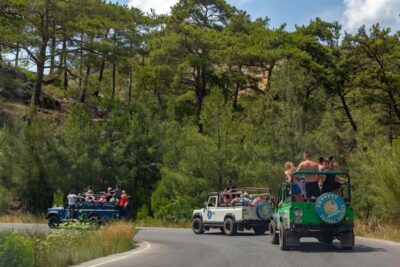
This safari runs out of Mombasa, then swings inland on the Mombasa–Nairobi highway. You’ll do a lot of driving, but it’s not dead time. The schedule is built around game drives and planned stops that help break the trip up, plus the parks themselves deliver constant changes in terrain and animal behavior.
Start time is set for 7:00 am, and the days begin early when you have dawn drives. Think of this as a safari rhythm: long eyes-on-the-safari moments, then meals, then more roads, then another stretch of wildlife hunting with a guide who knows how to spot movement and read the ground.
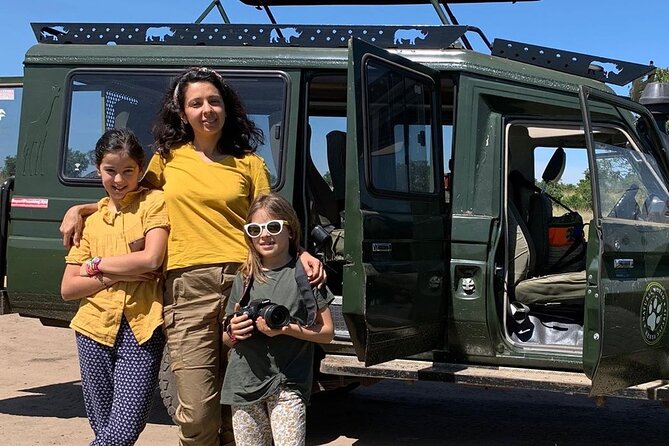
For most people, the private format is a big quality-of-life upgrade. If you’re traveling as a couple or a small family group, you’re not stuck waiting your turn at the front of a big crowd. One traveler noted a comfortable, spacious private jeep and guides who position the vehicle well for viewing and photos. That matters because safari days are about angles, timing, and not blocking each other.
You can also read our reviews of more tours and experiences in Mombasa.
Day 1 Tsavo West: rhino sanctuary and volcanic history
Tsavo West is a strong opener because it mixes classic savannah looks with places that feel more unusual. Game drives here go over rolling hills and grassy savannah, with the sort of volcanic and lava-bed country that can make you feel like you’re driving across a living geology map.
Your day also includes time for smaller wildlife, not just the big names. With a good guide, you’ll get chances to spot things like bushbaby and small antelopes such as dik-dik and lesser kudu. These are the animals that reward patient scanning, and they’re exactly what many people miss when they rush through parks.
The standout stop is the rhino sanctuary, a protected enclosure inside Tsavo West. This is the kind of place that gives your day a purpose beyond general game viewing. Even if rhinos aren’t always easy to spot on command, knowing there’s a dedicated sanctuary area in the plan helps make the experience feel focused.
What could slow you down? The first day is still a travel day. You’ll be on the road from the coast and you’ll have a few refresh/stretch stops along the highway. If you’re sensitive to early starts, plan to sleep as soon as you can the night before pickup.
Mzima Springs: where walking beats just driving
Day 2 adds a change of pace with Mzima Springs, a spring-fed oasis where wildlife concentrates. This is one of those places that’s hard to replace with another photo stop, because it’s water-based and busy.
You’ll spend time on the banks, and the plan includes walking along the shaded area rather than only watching from the road. That matters because animal behavior at springs is different: you may see animals feeding, moving in and out of water, and using the waterline as a route.
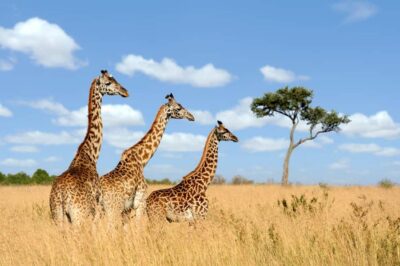
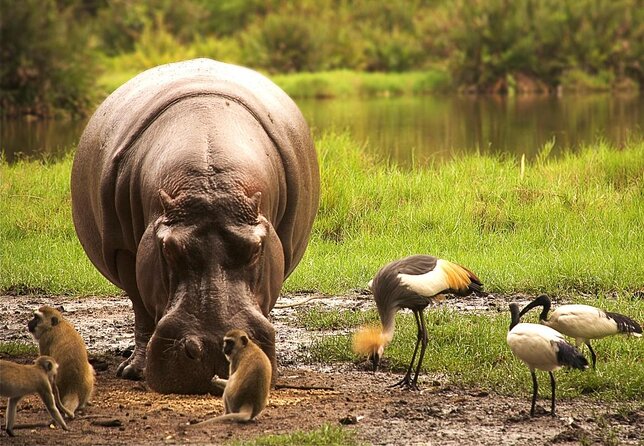
Mzima is known for hippos and crocodiles, and you might also spot exotic fish and birds. Along the edges, zebra and giraffe can appear too, especially as animals take advantage of the same reliable water source.
A practical note: since this is partly on foot and partly around water, you’ll want closed-toe shoes with good grip. Roads and park edges can be uneven, and you’ll be standing and scanning for longer stretches than a typical roadside stop.
The Amboseli approach: when Kilimanjaro appears
After exploring Tsavo West’s nearby areas and reaching the park boundary zone, the route continues toward Amboseli. One of the fun parts of this day is the build-up: Mt. Kilimanjaro can come into view as you travel south, adding scale in the same way a city skyline does when the road finally levels out.
Amboseli’s big draw is its elephant focus. You’re visiting at the foot of Kilimanjaro, and that combination of geography and habitat tends to bring serious elephant activity. On a safari like this, elephants are more than a checklist item. They change the way the whole park feels—bigger social groups, more interaction across distances, and more opportunities for interesting close-up behavior when the herd slows down to feed.
Even if the mountain is cloudy some days, the park still delivers. The real win is how the schedule sets you up: you get early start energy, plus a full day format that gives time for viewing rather than rushing straight through.
If you’re hoping for the classic Kilimanjaro-and-elephants photos, focus on one thing: don’t just stare forward. Ask your guide to tell you when the light shifts and when the view opens up. One guide mentioned a habit of positioning the vehicle for the best angle, and that’s the kind of small planning that changes your results.
Tsavo East at dawn: red-dust elephants and big-cat scanning
Day 3 is where Tsavo East flexes its muscles. The park is described as Kenya’s largest, and it also has a rugged, sparse feel compared with greener-looking areas. That kind of terrain can actually make game viewing easier because animals are more visible when the view lines aren’t blocked as often.
The morning starts early, with a pre-breakfast game drive. This is the kind of time window that rewards patience. Lions, cheetah, and hyena are all on the radar for the schedule, and the dawn hours are usually the best shot at active movement and clear sightings.
Amboseli elephants are also part of the farewell in this plan—your day includes time before you head out. Then it’s tracks into Tsavo East, where you’re looking for the so-called red-dust elephants. You may also notice them doing the classic roll-in-dust behavior, which helps them cope with sun and insects.
Here’s the practical takeaway: Tsavo East can feel like a different safari mood. Instead of constant lush-cover hiding spots, you often spend more time scanning for movement across open ground, checking for tail swishes and head turns, and watching how animals react to wind and vehicle position.
One small comfort upgrade you should ask for is a planned rhythm: when the viewing is hot, stop more often. When the animals are not visible, keep driving but don’t stop randomly. A guide who’s used to this schedule can keep you from wasting daylight.
Tsavo East watering holes: Mudanda Rock and Aruba Dam
Day 4 is all about the last big ingredient: water. During your time in Tsavo East, you visit watering holes such as Mudanda Rock and Aruba Dam, where different species share the same life-sustaining spots.
These areas are valuable because animals come to water even when predators are quiet. So even if the day doesn’t deliver a dramatic big-cat moment, you still get steady wildlife action: drinking, resting near the edge, and moving in coordinated patterns that you can actually observe from the vehicle.
This day starts early again, and then you head back for breakfast before moving toward the return trip to the coast. It’s a satisfying wrap-up because you’re finishing with “activity on demand” rather than just chasing sightings across empty-looking terrain.
When it’s time to head back toward Mombasa, the drive becomes part of the emotional arc too. By day 4, you’ve already seen enough lions, elephants, and smaller forest creatures that your brain starts to connect behaviors. You’ll catch yourself narrating what you think you’re seeing—where an animal might go next, what route it takes, and why it’s choosing the waterline.
Price and value at about $2,235 per person
At $2,235 per person, this is not a budget safari. But it also isn’t a luxury “pay for silence in a private plane” kind of price, either. The value comes from three things: the number of parks packed into a short window, the private-group setup, and the on-the-ground time you get for viewing rather than just checking boxes.
You’re also buying a lot of convenience from the start. Pickup is offered from the coast, and you’re given a mobile ticket so you’re not scrambling for paperwork. If you’re traveling from abroad, those small logistics wins can matter as much as the animal sightings.
One reason private safaris can feel worth it: your guide can manage your time and your positioning. A comfortable, spacious jeep and a driver who keeps the vehicle angled for best views can make the difference between a distant dot and a real moment you can actually study.
If you’re trying to judge value honestly, compare what you’re getting for that cost:
- Four days across three major parks
- Early drives and structured stops
- Meal plan support (lunch and dinner are clearly built in, and breakfast is part of the morning routine)
If you’re a wildlife-first traveler who wants maximum time in the parks and less time coordinating with other groups, this price can start to look reasonable fast.
Who the guides are matters more than people think
On safari, the driver is also your search-and-spotting system. The reviews attached to this tour strongly suggest that guides like Henry, Danson, Saidi, Omar, and Abdul are attentive behind the wheel and strong at animal spotting.
Here’s what that looks like in practical terms:
- getting the jeep into a safe, legal position for viewing
- noticing small movement early
- being patient enough to wait for an animal to commit to a visible path
- timing the stops so you’re not wasting the best light
In particular, one traveler described a guide with sharp spotting skills and a knack for positioning for photos. Another praised punctual pickup and careful driving on bumpy tracks, which sounds basic until you’re riding dirt roads for hours.
If you get Kelly Brian Wanjohi, one guest described warm hospitality and quick help settling in. If you’re traveling with a guide like Kennedy, another guest highlighted solid communication ahead of time, including arrangements for an airport transfer in Mombasa before the safari started.
Don’t stress over names. Instead, when you message the operator, ask: Who will be driving? What’s the typical jeep setup? How do you handle viewing positioning? The answers will tell you a lot about how serious the guide is.
Practical tips so you don’t fight the experience
Safari days have a few predictable friction points. Here’s how I’d keep them from ruining your vibe.
First, plan for early mornings and long drives. Hydrate before you leave the hotel, and keep a light layer handy for dawn air. When the sun rises, you’ll warm up fast, but early hours can feel cooler than you expect.
Second, think about your breaks. One review mentioned bathroom stops that involved tourist shop stops where people can feel pressured to buy things. That doesn’t mean you’ll face it every time, but it’s common enough to be worth managing. Ask your guide to keep stops strictly necessary and brief. You’ll thank yourself later.
Third, pack for dust and for “stand and scan” viewing. You’ll likely be leaning out or sitting forward a lot, looking for movement. Bring sunglasses, a hat, and a way to protect your eyes. If you wear contacts, consider having glasses for dusty moments.
Finally, work with your guide on your priorities. If you care about elephants most, say so. If you want big cats, say that too. A good guide will adjust where they focus the time inside the day.
Should you book this 4-day Tsavo West, Amboseli and Tsavo East safari?
I think this tour is a strong pick if you want a classic Kenya safari mix without spending a week on the road. The schedule makes sense: Tsavo West gets you started, Amboseli adds the Kilimanjaro-and-elephants element, and Tsavo East delivers predator-country energy plus watering-hole action.
Skip it (or at least rethink it) if you hate early mornings, long driving stretches, or any chance of shop-related stops during breaks. The trip can run with real momentum, and the experience works best when you’re comfortable with that rhythm.
If you do book, send a quick note to the operator asking:
- what the jeep will be like for your group
- whether you can keep break stops minimal
- how they handle viewing positioning during the dawn drives
FAQ
FAQ
How long is the safari?
It’s listed as about 4 days.
Where does the safari start?
Pickup is offered from your beach hotel or resort in Mombasa, with a start time of 7:00 am.
Is this a private tour?
Yes. It’s a private tour/activity, and only your group participates.
What does the meal plan include?
The tour includes breakfast (2), lunch (3), and dinner (2), as listed in the included details.
Are park admission tickets included?
Admission tickets are marked free for the park segments shown in the itinerary, and the final segment notes admission ticket included.
What’s the price per person?
The price is $2,235.00 per person.
Is good weather required?
Yes. The experience requires good weather, and if it’s canceled due to poor weather you’ll be offered a different date or a full refund.
Can I get a full refund if I cancel?
Free cancellation is available. You can cancel up to 24 hours in advance for a full refund, based on the local start time.