REVIEW · BORA BORA
Aqua Safari Introductory Helmet Dive (Underwater Walk)
Book on Viator →Operated by Aqua Safari Helmet Dive · Bookable on Viator
A helmet walk in Bora Bora feels like cheating the laws of physics. This guided underwater helmet experience lets you see a coral garden up close at about 3 meters deep, without swimming skills. You’ll walk on the lagoon sand, with a guide, while a team captures photos so you don’t spend the whole time fumbling your camera.
What I like most is how simple and accessible it is: you don’t need to scuba or even snorkel, and your head stays dry under the helmet. The second big win is the close-up nature of the setting—expect fish cruising in under you, plus a stingray encounter in the same roped-off area.
The one thing to keep in mind is that conditions can matter. Even with a shallow walk, if there’s wind, current, or swells, the operator may reschedule for safety, and you’ll want to build in a little flexibility.
In This Review
- Key things to know before you go
- The “walk the reef” setup: what actually happens
- Who this works for (and why it feels easier than snorkeling)
- What you’ll see: coral garden fish and the stingray moment
- Gear, helmet sensations, and simple comfort tips
- How the guides keep it safe (and keep you calm)
- Photos included in the experience (and why they’re worth it)
- Timing and logistics in Bora Bora: what your day feels like
- Price and value: is $158.76 a fair deal?
- A few smart choices before you book
- Who should book this helmet walk
- Who might want a different activity instead
- So, should you book the Aqua Safari helmet walk?
- FAQ
- How deep do you go?
- Do I need to know how to swim or snorkel?
- How long is the underwater part?
- What’s the total duration of the tour?
- Are photos taken during the helmet walk?
- Is pickup available?
- How many people are in the group?
- What happens if weather or sea conditions cancel the tour?
- What’s included with the tour?
Key things to know before you go
- No swimming required: You can participate even if you’re not a swimmer or not comfortable in open water.
- 30 minutes underwater: Plan on around 2 to 2.5 hours total, including a safety briefing and gear time.
- Shallow coral garden: You’ll be around 3 meters (about 10 feet) deep, often described as around 10 to 15 feet.
- Guides control the pace: You’ll stay in a roped-off area, and you’ll hold a line if you need help with drag.
- Photo help included: Your instructor uses a high-definition camera, and souvenir photos are available at the end.
- Some people bring extra gear: A waterproof camera or phone mount can help, since helmet visibility has limits.
The “walk the reef” setup: what actually happens
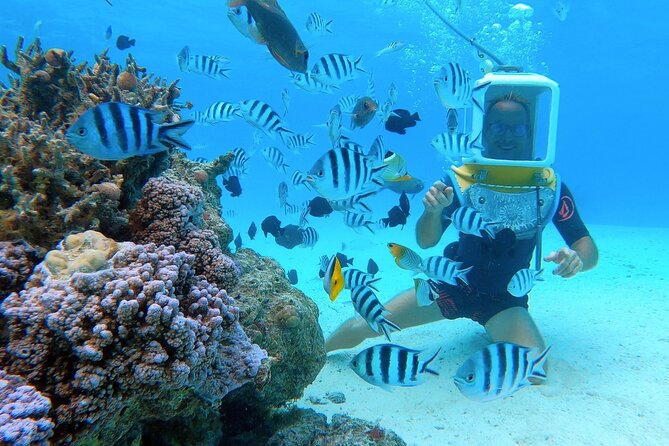
This tour is built around a very specific idea: instead of snorkeling or scuba, you’ll do a helmet-based underwater walk on a protected lagoon floor. After you meet up and get checked in, you’ll get a safety briefing and fitted with the full equipment. Then you’ll head out to the site and follow the crew’s instructions step-by-step.
Once you’re geared up, the experience stays calm and controlled. You descend with an instructor, settle in, and then you walk—typically described as about 30 minutes on the bottom. The whole point is that you’re not trying to “explore” a wide ocean; you’re walking through a coral garden that’s close enough to feel intimate, while staying in a limited, roped-off area.
Depth is usually around 3 meters (about 10 feet), and some groups report going closer to 15 feet depending on setup and conditions. Either way, it’s shallow enough that most people feel like they can manage it, especially with the guide right there helping you maintain position.
You can also read our reviews of more tours and experiences in Bora Bora.

Who this works for (and why it feels easier than snorkeling)
If you love the idea of Bora Bora’s lagoon but worry about open-water skills, this is the kind of activity that makes sense. You don’t need prior scuba or snorkeling experience, and you don’t need to be able to swim. Under the helmet, you’re able to breathe normally, which removes a lot of the panic that can come with being face-down in the water.
This also helps people who wear glasses. The helmet removes the usual snorkeling problem of dealing with goggles and fit, plus you’re not balancing in waves. One common theme from guides like Tama, JP, Séverine, and Sebastian (names that come up often in different groups) is that they slow things down, explain the process clearly, and keep you supported while you get used to the sensation.
Is it for scuba experts? You can still enjoy it, especially if you want a calmer, shorter, visual tour with less gear stress. But it’s really designed for everyone else who wants that “up close to the fish” moment without the learning curve.
What you’ll see: coral garden fish and the stingray moment
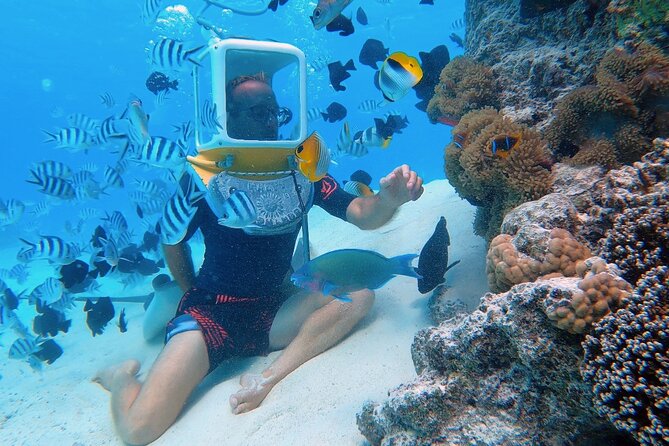
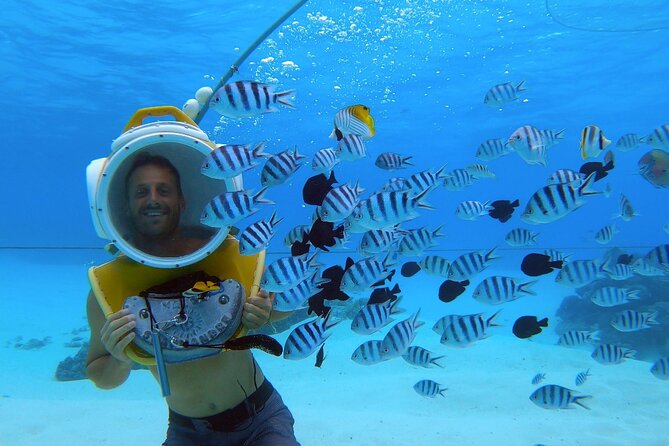
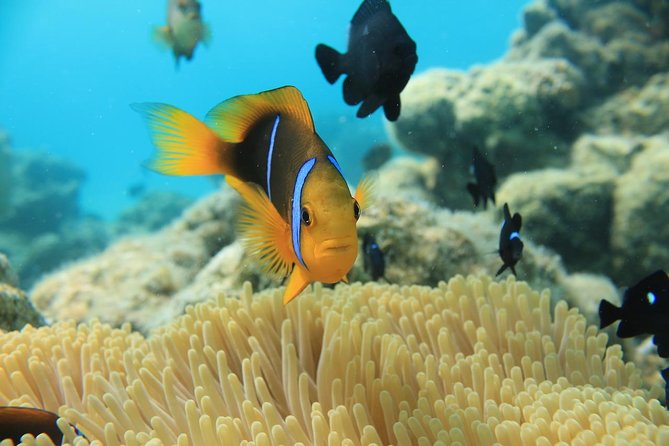
The underwater area is described as a coral garden with plenty of tropical fish passing through. Expect species like parrot fish, butterfly fish, clownfish, and even moray eels—plus plenty of other colorful reef fish that show up as you move. A big part of the fun is that you’re not looking for wildlife from far away. Fish come right near you as you walk.
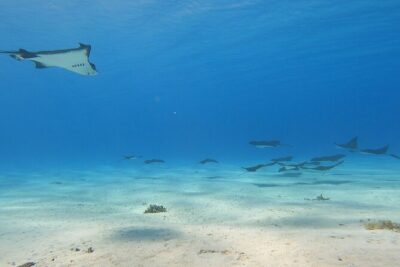
One of the most memorable moments is the stingray encounter. In several accounts, a friendly stingray joins the group and stays around, cruising close enough that you can really study how it moves. It’s often tied to the way the spot is managed—again, it’s not an open-ended dive site, it’s a consistent, guided “walk zone.”
There may be bait involved, described as bananas and/or bread in some situations. If they offer it, it can be optional, and it tends to pull fish into the viewing range. If you’re a little squeamish about touching marine life, you can still keep your hands to yourself and just watch—though having the bait can make the whole walk more visually active.
Gear, helmet sensations, and simple comfort tips
The helmet is the star of the show. Your head stays dry, and you get clear instruction before you enter the water. You’ll likely hear advice like keeping calm, holding the right position, and following the guide’s timing.
There are two sensory realities to plan for:
1) Helmet visibility is limited. One common note is that peripheral vision can feel restricted, so it’s easier to get disoriented if you try to look everywhere at once. The solution is simple: trust your guide, look where they point, and move only when they tell you it’s time.
2) Ear pressure can be a thing. Some people feel ear discomfort on the way down. A practical tip that comes up: chewing gum can help with ear popping. Bring gum, and don’t treat this like an all-or-nothing test—tell the crew if anything feels off.
If you want photos, think ahead about how you’ll record. A waterproof camera helps. Some people also suggest bringing a GoPro or similar action camera for close-ups, since you’ll want shots of coral texture and fish behavior rather than just the general “I was underwater” proof.
How the guides keep it safe (and keep you calm)
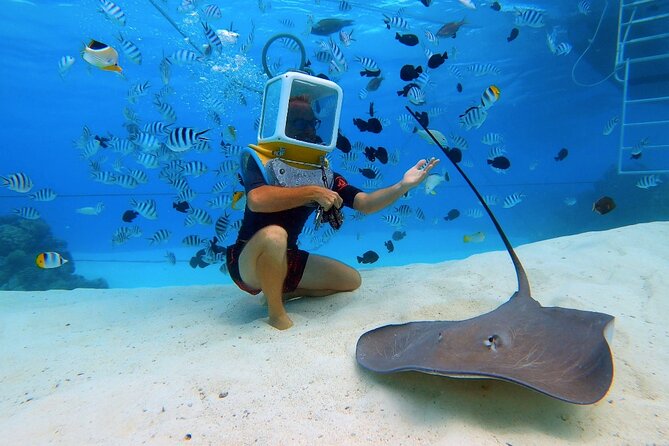
This tour runs with a professional scuba instructor guiding the underwater portion, and that matters. The safety briefing comes first, then the crew helps with gear setup and the descent. During the walk, instructors stay attentive and guide your movement so you’re not fighting currents or trying to freestyle your way across the reef.
You’ll often be encouraged to use a rope for stability. If there’s wind or slight current, holding the line helps you avoid being dragged and keeps the group aligned. When conditions are calm, it can feel effortless; when conditions aren’t perfect, the rope becomes your best friend.
It’s also a team-effort setup. Different guides can take different roles, like one handling group management and another focusing on photography. That’s why people tend to mention that things feel organized even with a small group.

Photos included in the experience (and why they’re worth it)
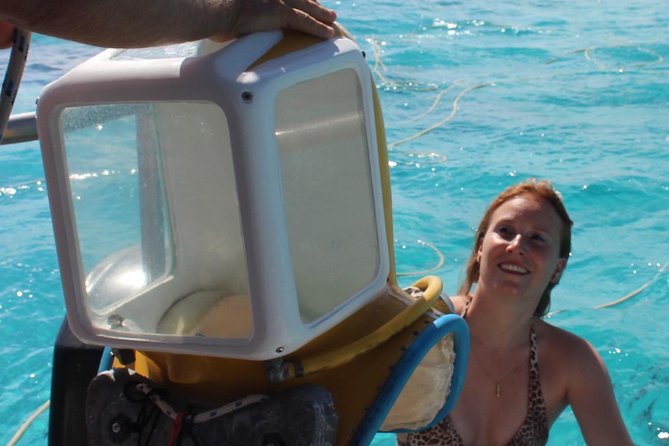
One of the most useful parts of this tour is the built-in photo plan. The instructor uses a high-definition camera and takes pictures during the walk. You then have access to the souvenir photos at the end of the activity.
Why is that a big deal? Underwater, it’s hard to both follow your guide and nail good photos. With the camera work handled for you, you don’t lose the best minutes of the walk trying to get a shot. If you’re the type who normally forgets to take pictures, this setup fixes that problem.
If you do want to add your own images, bring a waterproof camera and take a few “overview” shots early. Save the rest of your energy for watching fish behavior—especially around coral edges and when the stingray circles in.
Timing and logistics in Bora Bora: what your day feels like
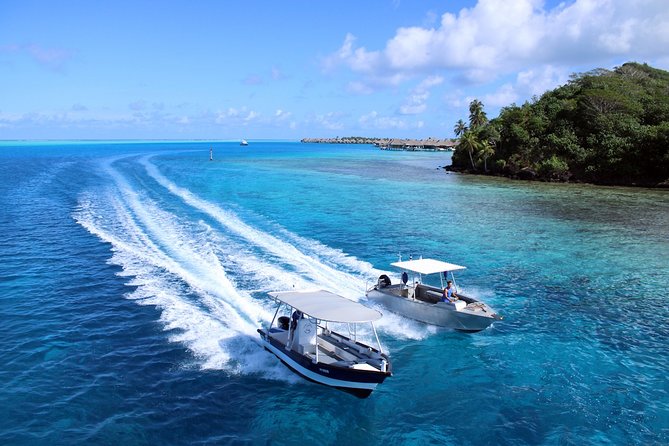
Plan on about 2 hours to 2.5 hours total, depending on the day’s pace. The underwater portion is about 30 minutes. The rest of the time is briefing, gear, boat transfer, and getting everyone ready.
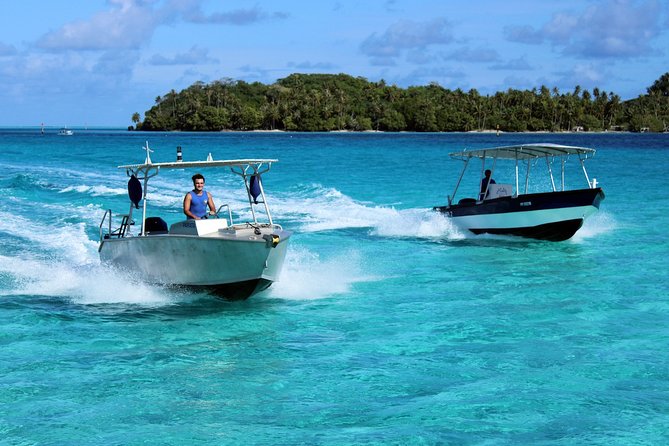
Pickup is offered, which can make this very easy if you don’t want to figure out transport on your own. If you don’t have pickup, you’ll meet at the Ferry and Boat Point area (meeting location uses the code F6VX+53X, Bora-Bora). It’s listed as near public transportation, which is helpful if you’re staying somewhere with easy bus access.
Group size is capped at 12 travelers, so it’s not a cattle-car situation. Still, you’ll want to arrive ready to gear up promptly, especially if you’re on a tight Bora Bora schedule.
Price and value: is $158.76 a fair deal?
At $158.76 per person, this isn’t a “cheap fun” activity. But it can be good value because you’re paying for equipment, a guided underwater safety system, and a set of photo souvenirs that are hard to replicate yourself.
Here’s how I’d judge value for this specific experience:
- You’re not just paying for viewing fish. You’re paying for the helmet system that makes it possible for non-swimmers to go underwater safely.
- You’re paying for the guided structure: briefing, descent help, rope support, and staying in a defined area.
- You’re also getting a real photography component, since the instructor takes photos during the walk and they’re available afterward.
If you already snorkel easily and have great reef access, a regular lagoon snorkel might feel cheaper. But if you want a guaranteed close-up and a lower-stress “underwater for everyone” format, the price can pencil out.
A few smart choices before you book
If you’re on the fence, focus on the factors that affect enjoyment most:
- Your comfort with being under pressure: If ear pressure is a concern, bring gum and follow the crew’s guidance closely.
- Your expectations about movement: This is walking in a roped-off zone, not a free-ranging reef swim. That’s why the experience can be smooth, and why it’s worth it to enjoy what’s right in front of you.
- Your photo plan: If you care about underwater pictures, this tour’s camera system is a strong plus. Bring a waterproof device if you want to add your own shots.
- Your schedule flexibility: Weather and sea conditions matter. If you have one narrow day with no backup, consider booking with a buffer.
Who should book this helmet walk
This is a great match if any of these describe you:
- You want to see Bora Bora’s reef life but don’t swim well.
- You’ve been turned off by snorkeling gear, comfort issues, or open-water nerves.
- You’re traveling with kids or anyone who wants a safer-feeling underwater experience.
- You want a structured, guide-led close-up moment with minimal hassle.
It’s also a nice “second reef activity” if you’ve already snorkeled elsewhere and want something different.
Who might want a different activity instead
Consider skipping if you:
- Hate the idea of being in a helmet with restricted peripheral vision.
- Expect long exploring time. The underwater portion is about 30 minutes, so it’s short and focused.
- Have a very inflexible schedule and can’t handle weather-related changes.
So, should you book the Aqua Safari helmet walk?
I think you should book if your goal is simple: close-up reef life in Bora Bora with a low learning curve. The helmet setup, the rope-controlled stability, the guide-led safety rhythm, and the included photo plan make this feel like a “no excuses” reef experience.
Book it with the right mindset: you’re walking through a curated underwater area, watching fish and coral at close range—not chasing every corner of the lagoon. If you want that, you’ll come away with the kind of memory that looks unreal on land.
FAQ
How deep do you go?
You’ll walk on the lagoon floor at around 3 meters deep (about 10 feet), though some experiences are described as around 15 feet depending on conditions and setup.
Do I need to know how to swim or snorkel?
No. You do not need diving or snorkeling experience, and you can participate without being able to swim.
How long is the underwater part?
The underwater walk is about 30 minutes.
What’s the total duration of the tour?
It runs around 2 to 2.5 hours total, depending on the day’s pace.
Are photos taken during the helmet walk?
Yes. Your instructor uses a high-definition camera to take photos, and the souvenir photos are offered at the end.
Is pickup available?
Pickup is offered, though not every traveler may require it depending on where they’re staying.
How many people are in the group?
The maximum group size is 12 travelers.
What happens if weather or sea conditions cancel the tour?
Because the activity depends on good weather, it may be canceled for safety. You’ll be offered a different date or a full refund.
What’s included with the tour?
All necessary equipment and a briefing are included, and a professional instructor guides the underwater walk.