REVIEW · SIGIRIYA
From Sigiriya: Minneriya National Park Private Jeep Safari
Book on GetYourGuide →Operated by Sri Sri Lanka Tours · Bookable on GetYourGuide
Elephants spill into Minneriya like a morning tide. This private jeep safari is built around Sri Lanka’s famous dry-season elephant gathering, with hotel pickup and a guide who works hard for good sightings and respectful viewing.
I really like two things here. First, you get a proper wild-spotting driver who keeps you moving to the best viewing areas and gives you time to watch quietly. Second, it’s not only elephants—this trip is also a birdwatcher’s paradise, with sightings that often include painted storks, pelicans, and grey herons. One thing to consider: the park entrance fees aren’t included, and rainy or bad-weather days can shift you to Kaudulla National Park or Hurulu Eco Park instead of staying strictly in Minneriya.
In This Review
- Key moments worth planning for
- Minneriya elephant season: why timing and water level matter
- Hotel pickup around Sigiriya and Habarana: smooth start, fewer hassles
- The core experience: a 4-hour jeep game drive focused on elephants
- More than elephants: birds, deer, monkeys, and the rest of the park cast
- Kaudulla and Hurulu: when the route changes (and why that’s good)
- Your guide makes or breaks the safari: Prasad, Prabath, Sami, Sarath, Shenu
- Price and value: what $38 covers and what costs extra
- Rules, packing, and how to enjoy it in any weather
- Should you book the Minneriya private jeep safari?
- FAQ
- FAQ
- How long is the safari?
- Is hotel pickup and drop-off included?
- Are park entrance fees included in the price?
- Which parks might I visit on rainy days?
- What wildlife can I expect besides elephants?
- What rules are you required to follow in the park?
- Can I cancel for free?
Key moments worth planning for
- Great Elephant Gathering at Minneriya Tank during the dry season
- Private jeep with hotel pickup and drop-off from the Sigiriya/Habarana area
- Baby-elephant spotting when families come close to the water
- Birdwatching focus with chances for storks, pelicans, and herons
- Other wildlife on the route like sambar deer, toque macaques, purple-faced langurs, and sloth bears
- Rain-smart routing to Kaudulla or Hurulu when Minneriya is waterlogged
Minneriya elephant season: why timing and water level matter
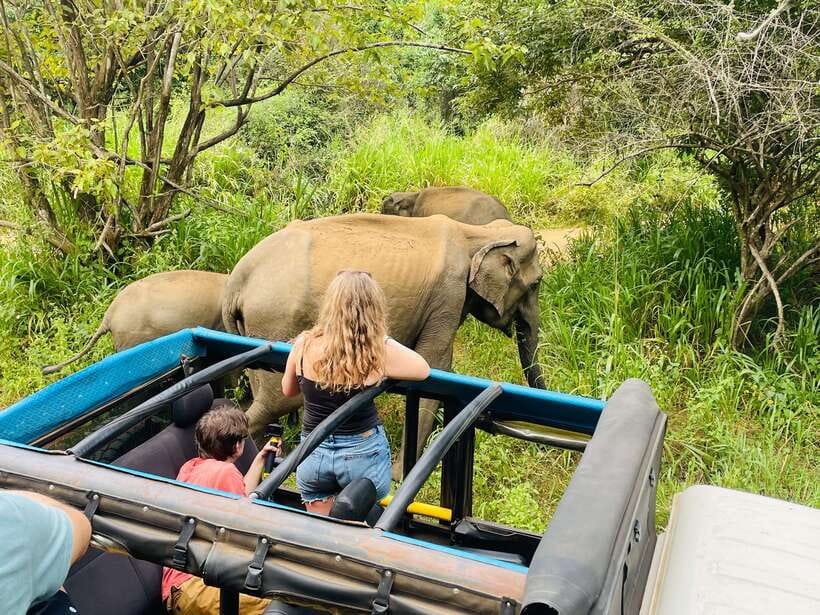
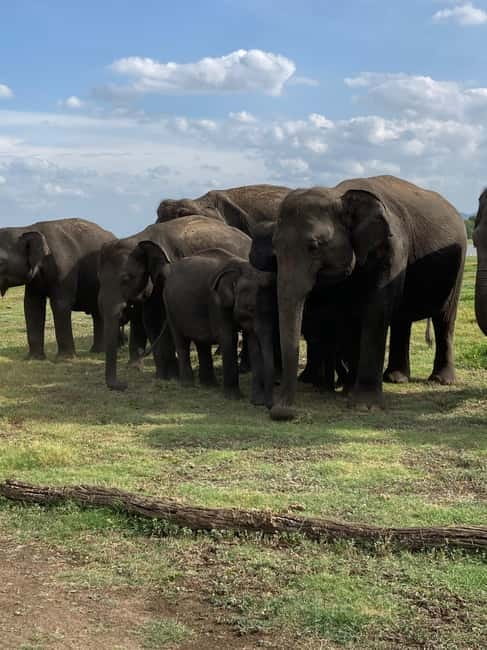
Minneriya’s big draw is simple: elephants come to water. In the dry season, the Minneriya Tank becomes a magnet, and you can see herds drinking, bathing, and socializing in a way that feels truly wild—no zoo routines, just animals doing animal things.
Now for the practical part. If you travel during rain or rough weather, the elephant action doesn’t always sit in one place. On wetter days, elephants may shift toward Kaudulla National Park or Hurulu Eco Park, because the water situation changes. Your driver is expected to recommend the best park based on what’s happening that day, and you’ll get updated guidance before you start.
This is one reason I like this safari format. You’re not stuck with a rigid plan that can go sideways if the park conditions change. You’re paying for a smart, on-the-ground hunt—elephants first, then birds and other wildlife.
You can also read our reviews of more tours and experiences in Sigiriya.
Hotel pickup around Sigiriya and Habarana: smooth start, fewer hassles
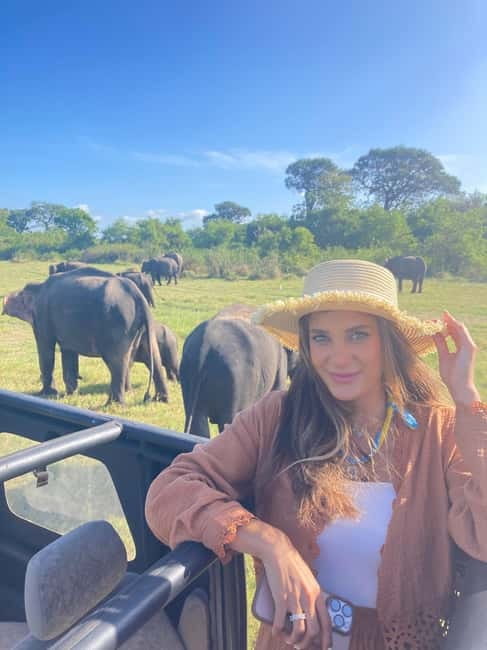
The whole day runs on logistics. You’re looking at a 4-hour experience, so the pickup and transfer time matters. The good news: free hotel pickup and drop-off is part of the deal, and that saves you from paying for a separate car or figuring out meeting points.
Your pickup options listed include Kimbissa, Dambulla, Sigiriya, Kandalama, Habarana, and Minneriya. But there’s an important note: complimentary pickup and drop-off is not offered in Dambulla, Kandalama, or Trincomalee, and an extra transport charge may apply for those areas.
So here’s my advice: message your operator (or check your confirmation) and confirm the exact pickup location is truly included before you rely on it. It’s a quick step that prevents a last-minute surprise.
Also, expect a clean jeep/SUV setup and an easy handoff with a professional driver. Even the ride quality gets consistently strong marks—this matters when you’re headed into rougher tracks and you want a comfortable ride during the viewing time.
The core experience: a 4-hour jeep game drive focused on elephants
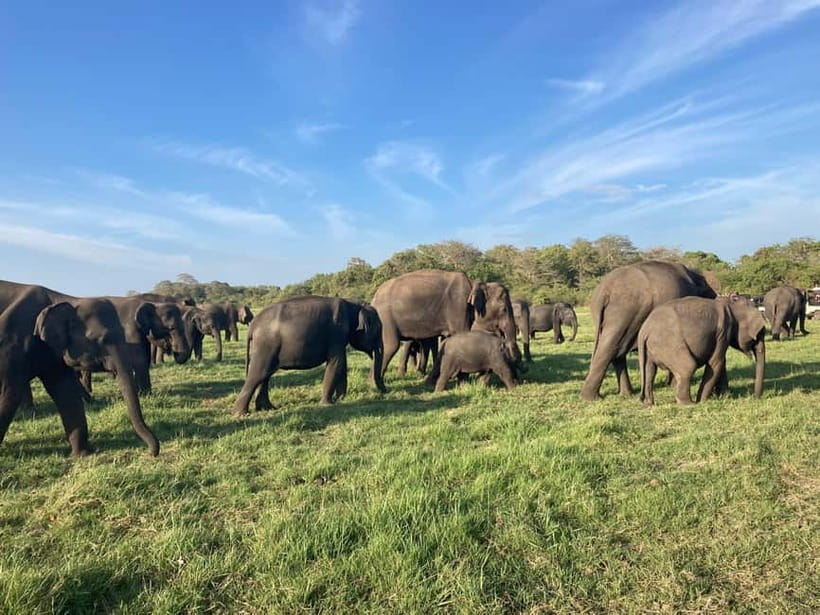
Inside the park, you’ll spend the most time on your main game drive, with a mix of photo stops, guided viewing, and roaming for sightings. The goal is to balance two things: finding elephants and not crowding the moment once you’re there.
The elephant gathering doesn’t always mean every herd will show up at exactly the same spot. That’s where your guide’s skill matters. A strong driver:
- reads tracks and movement
- positions your jeep for better sightlines
- and keeps enough distance to follow park rules
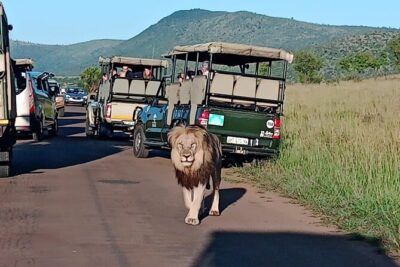
One review detail that’s worth taking seriously: guides are careful about the rules and often manage the viewing so that when jeeps gather, they choose respectful positions and avoid staying too long in one spot. You’ll likely notice the effort to keep the animals calm—quiet watching beats constant revving.
You may also get a chance at baby elephants. When calves are present, they tend to stay close to their mothers, and watching that family behavior is often one of the most memorable parts of a safari. Even if you don’t catch the “perfect close-up,” the chance to observe how herds interact at the water is the real payoff.
More than elephants: birds, deer, monkeys, and the rest of the park cast
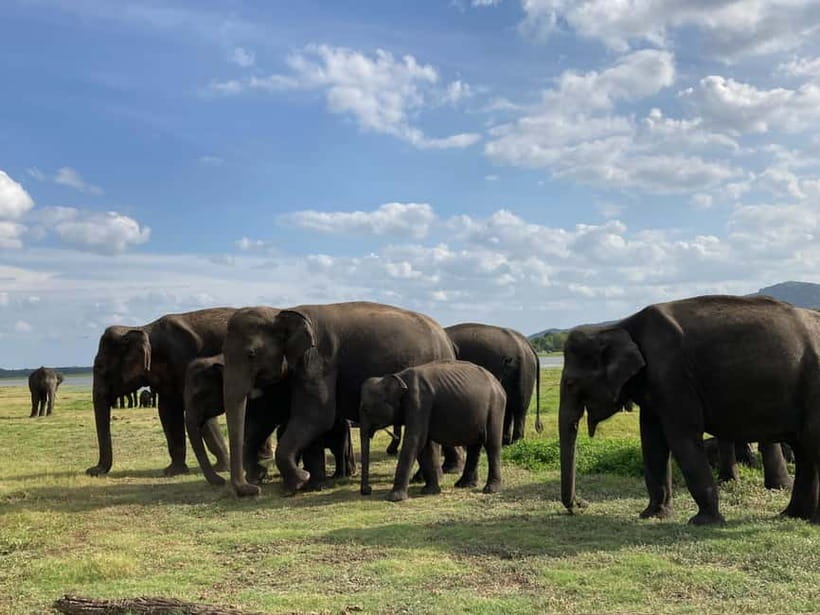
This safari is built for people who want the full wildlife mix, not just a single headline animal. Yes, elephants are the star, but you’re also in Minneriya’s wider ecosystem—wetlands, tank edges, and wooded areas that pull in different creatures through the day.
Birdwatching is a big deal here. You’ll have multiple chances to spot resident and migratory birds, including:
- painted storks
- pelicans
- grey herons
A good driver-guide doesn’t just point at birds. They help you understand where birds feed and what the behavior means. That turns the bird list from random sightings into something you can actually read.
Then there’s the mammal side. Based on what’s listed for this safari, you can be on the lookout for:
- sambar deer
- toque macaques
- purple-faced langurs
- sloth bears
- and sometimes other animals like buffalo and more
One extra note from real-world guidance: don’t assume you’ll only see wildlife in the obvious places. A good guide may stop when you spot movement—or when the conditions suggest animals are heading to water. That’s why being patient during the drive pays off.
And if luck is on your side, you might even encounter something rarer, like reports of leopard sightings. The truth is you can’t schedule a leopard. But with the right searching style, you improve your odds.
Kaudulla and Hurulu: when the route changes (and why that’s good)
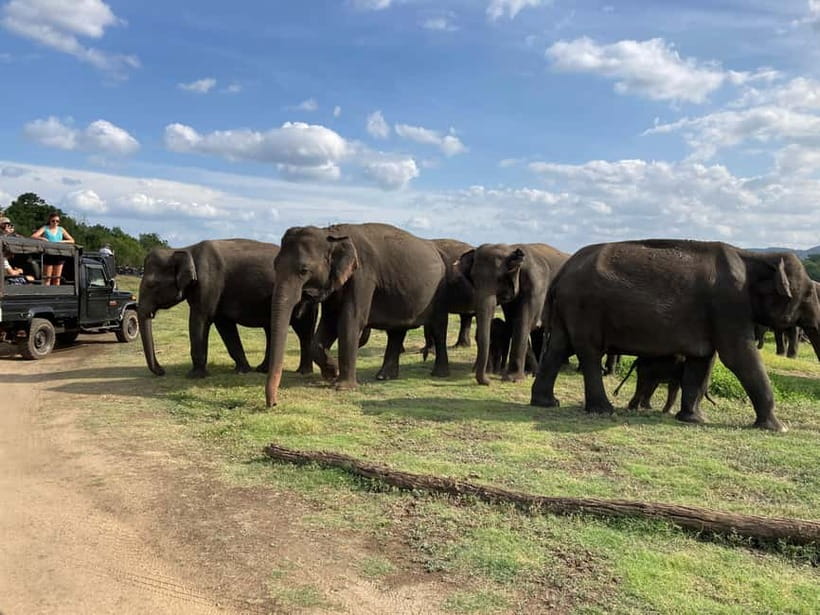
The itinerary can adapt depending on the day’s elephant movement. When Minneriya is waterlogged or conditions are poor, elephants can shift, and a driver may recommend Kaudulla National Park or Hurulu Eco Park instead.
This matters for two reasons:
1) Elephants follow water, so the “best” park can change quickly.
2) Wildlife viewing is partly about timing and positioning, and your guide can hunt the most active zones.
Hurulu Eco Park is also part of this safari’s planning, especially during periods when elephants spread out. In rainy conditions, Hurulu can be the better choice for sightings. You’ll still get the same general safari feel—photo stops, guided viewing, and wildlife scanning—just in the park that’s most productive that day.
Kaudulla National Park comes up for the same reason: it can be the alternative elephant hub when Minneriya’s tank situation changes.
So if you’re the kind of traveler who hates uncertainty, this might feel different from a “locked-in” tour. But in practice, it’s often smarter. If you’re flexible, you end up in the park with more animal activity.
Your guide makes or breaks the safari: Prasad, Prabath, Sami, Sarath, Shenu
The safari is private, and that’s important. When it’s just you and your group, a good guide can fine-tune the route without needing to please a crowd.
Names that show up often in people’s experiences include Prasad, Prabath, Sami, Sarath, and Shenu. Beyond names, here’s what you want to look for in how the guide operates:
- Patience: you shouldn’t feel rushed through elephant viewing.
- Respectful distance: they should keep a safe, rule-following approach.
- Timing choices: they pick spots where animals are likely to move next.
- Quiet driving: guides should prioritize calm viewing over spectacle.
In some experiences, drivers also went off-road to reach less crowded viewing points, while still staying within rules. The best guides don’t just know where animals are; they also understand how other jeeps affect animal comfort. That’s why you’ll often see the engine-off style pauses and the careful repositioning when multiple groups of jeeps converge.
Safety and comfort are part of it too. Reviews mention feeling comfortable and safe even for solo travelers, which is a big deal if you’re worried about being alone on a long outing.
Price and value: what $38 covers and what costs extra
The listed price is $38 per person for a 4-hour private jeep safari, and it includes:
- free hotel pickup and drop-off (where complimentary applies)
- the jeep safari service in the park
- a professional driver
- bottled water
What’s not included is the park entrance fee, charged by the Sri Lanka Wildlife Department:
- Minneriya and Kaudulla: 13,200 LKR for 1 person; 21,800 LKR for 2 people
- Hurulu Eco Park: 2,800 LKR for 1 person; 5,000 LKR for 2 people
That means your real total is “$38 + entrance fee,” and it can vary depending on which park you end up visiting. For a short safari, I think the pricing still makes sense because you’re paying for a private vehicle and expert searching time—not just a scenic drive.
One more money tip: carry cash for park entry. In at least one reported case, an additional per-adult amount plus a vehicle charge was mentioned at arrival. The official entrance fee is the baseline, but real-world on-the-ground charges can be confusing. Asking what you’ll need to pay before you enter is the safest move.
Rules, packing, and how to enjoy it in any weather
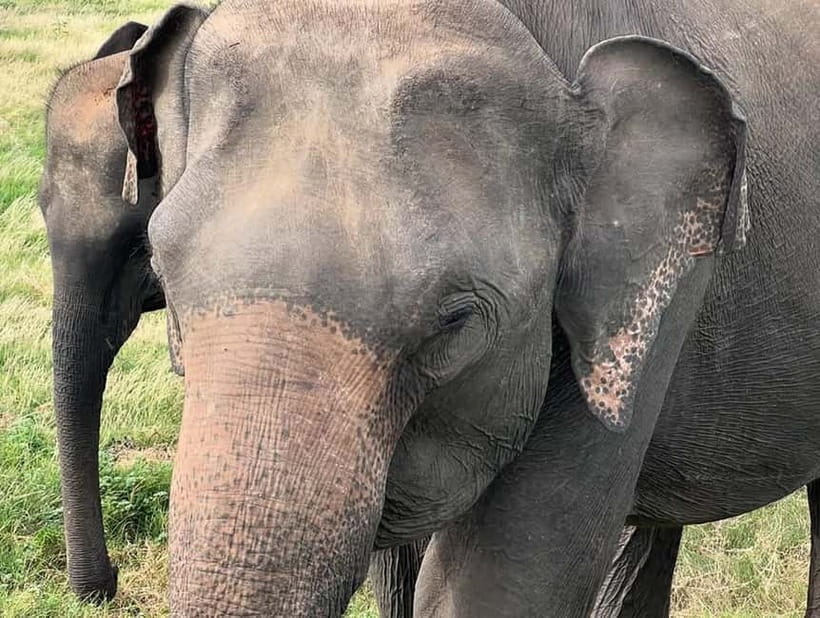
This safari has clear rules: you can’t touch animals and you can’t ride animals. That’s exactly what you want for an ethical wildlife experience.
For packing, think “practical safari day.” Bring:
- sunglasses and sun protection (the jeep can trap glare near open water)
- a light layer for morning shade or late-afternoon chill
- a rain layer if showers are possible
- binoculars if you own them (birdwatching is part of the plan)
Even when visibility is lower, the guide’s job is to keep searching. Rain doesn’t automatically ruin a safari; it just changes where animals choose to be active. And remember that elephant routing can change—your guide will recommend the park based on conditions.
Finally, set expectations for the 4-hour format. This is not a full-day expedition. It’s a tight window where your guide’s decision-making affects outcomes. If you keep your schedule flexible and stay open to park switching, you’ll get more value out of the time.
Should you book the Minneriya private jeep safari?
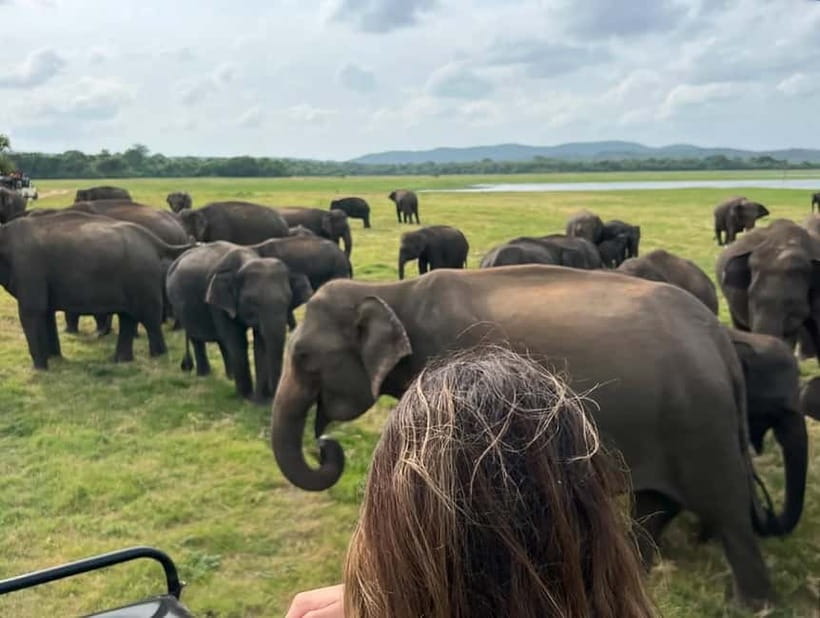
Book it if you want a high-effort wildlife drive with a private jeep, hotel pickup, and a guide who focuses on spotting—elephants first, but also birds and other animals. This fits well for first-time safari visitors, bird lovers, couples, and even solo travelers who value a professional, rule-following setup.
Don’t book it if you’re counting on seeing Minneriya specifically no matter what weather does. The experience is designed to adapt to elephant movements, and that’s good for sightings, but it does mean your park can change.
If you’re fine with that trade-off—and you’re ready to pay the park entrance fee separately—this is a strong way to experience Sri Lanka’s elephant country without wasting half a day on transport logistics.
FAQ
FAQ
How long is the safari?
The experience duration is 4 hours, including pickup time from your selected area and the safari time in the parks.
Is hotel pickup and drop-off included?
Free hotel pickup and drop-off are included, but complimentary pickup may not apply in Dambulla, Kandalama, or Trincomalee. Confirm your exact pickup point before you go.
Are park entrance fees included in the price?
No. Park entrance fees are charged by the Sri Lanka Wildlife Department and are not included in the $38 price. Fees depend on which park you visit.
Which parks might I visit on rainy days?
During periods of rain or bad weather, elephants may move from Minneriya to Kaudulla National Park or Hurulu Eco Park. Your guide will recommend the best option based on current elephant movements.
What wildlife can I expect besides elephants?
You may also spot sambar deer, toque macaques, purple-faced langurs, sloth bears, plus birds and other animals such as water buffalo and other wildlife depending on conditions.
What rules are you required to follow in the park?
You’re not allowed to touch animals or ride animals.
Can I cancel for free?
Yes. Free cancellation is available up to 24 hours in advance for a full refund.