REVIEW · STOCKHOLM
From Stockholm: Moose & Wildlife Safari with Campfire Dinner
Book on GetYourGuide →Operated by The Green Trails · Bookable on GetYourGuide
Moose hunting turns into story time fast. This short trip swaps Stockholm streets for forest tracks, evening drives, and a campfire dinner cooked in the woods.
I especially like the small group feel, limited to 8 people, so the guide can read the terrain and help you spot signs without the tour feeling rushed.
The second big win is the strategy: you hike for tracks, then you hop back in the minibus and hit multiple hotspots to improve your odds. One thing to plan for, though: moose are never guaranteed, and on some nights the group may focus more on deer, hares, and birds instead.
In This Review
- Key things to know before you go
- From Urban Basecamp into the Sweden Night
- Campfire dinner in the forest: food, fire, and Swedish nature stories
- The viewpoint hike: where you start noticing what animals leave behind
- The minibus hotspot run: how the tour improves your odds after the hike
- Meet the guide: the storytelling that makes scanning less stressful
- Binoculars and the art of spotting animals that stay just out of view
- Wildlife expectations: what you might see around Stockholm (and what you shouldn’t assume)
- Price and value: is $151 per person worth it?
- What to wear and how to make the most of the night hike
- Who should book this moose and wildlife safari
- Should you book the Moose & Wildlife Safari with Campfire Dinner?
- FAQ
- How long is the Stockholm Moose & Wildlife Safari?
- What is the group size?
- Where is the meeting point in Stockholm?
- Is the tour in English?
- Does the price include pickup and drop-off?
- What animals might you see during the safari?
- Is seeing a moose guaranteed?
- What is included with the campfire dinner?
- What happens if it gets dark during the tour?
- Is this tour suitable for people with mobility impairments or minors traveling alone?
Key things to know before you go
- Campfire dinner, bushcraft-style: fire-making and cooking in nature, not a restaurant stop.
- A hike plus driving between hotspots: walk to read signs, then cover more ground.
- Small group (max 8): better attention while scanning forests and shorelines.
- Quality binoculars: helpful when animals stay just out of sight.
- Evening wildlife view with torches: the tour keeps going even as it gets dark.
From Urban Basecamp into the Sweden Night
This tour starts from a central Stockholm meeting spot called the Green Trails Urban Basecamp. You’ll find it at the entry point to The Green Trails, a short walk from Skanstull metro or Mariatorget metro, and also close to Stockholm Södra station. The nice part is that you don’t have to solve transport on your own after work or dinner plans.
Once you meet your guide, the evening moves quickly but calmly. You get an intro to how the safari will run, then you board a comfortable minibus and head out into the woods. This ride matters more than it sounds. It gets you away from city noise and light early enough that animals are still active, and it sets the tone: the rest of the evening is about patience and quiet scanning, not speeding around.
You can also read our reviews of more tours and experiences in Stockholm.

Campfire dinner in the forest: food, fire, and Swedish nature stories

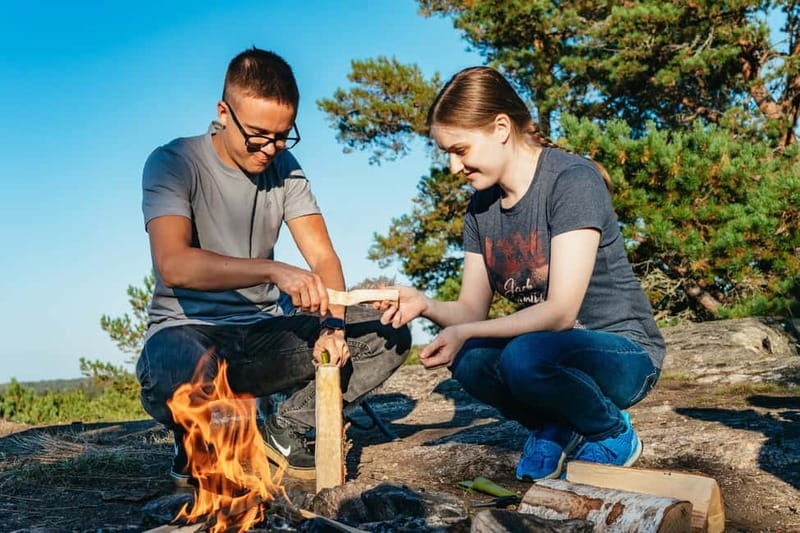
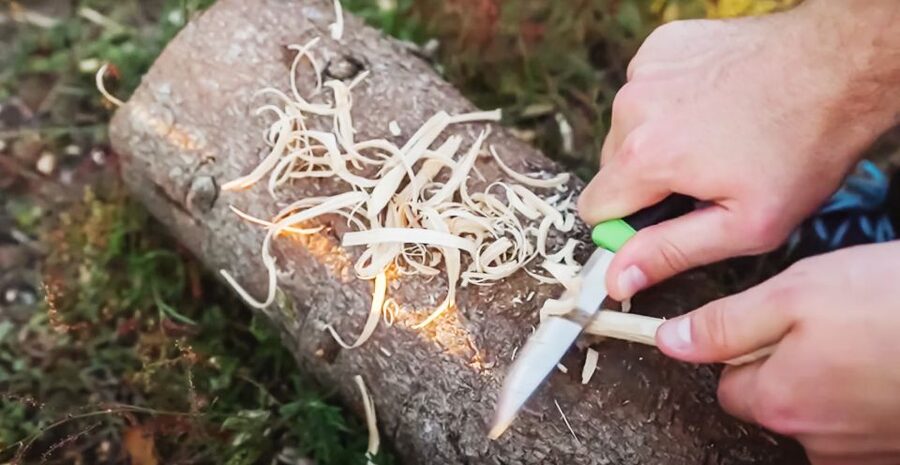
The heart of the experience is the campfire dinner. When you arrive, you hike up to a viewpoint first, then the guide starts getting the fire going using a bushcraft approach. This is not just a showpiece. You’re actually part of a night in the woods where dinner is cooked over the flame and eaten outside with the forest around you.
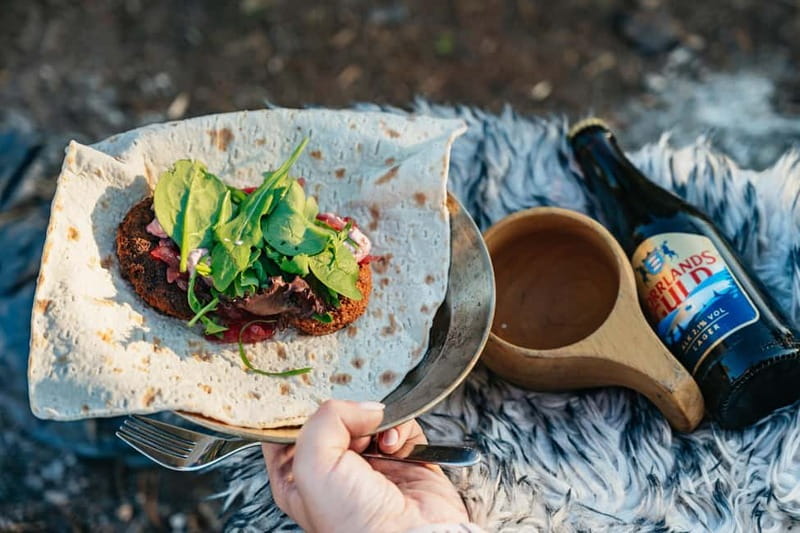
After that, you eat your meal and share a drink—local craft beer or juice—while the guide tells stories about Sweden’s animals and where you might spot them that evening. The stories aren’t random facts. They’re tied to the kinds of species likely to be moving nearby, like moose, roe deer and other deer species, wild boar, hares, and birds. If you’re the type who likes learning while doing, you’ll enjoy how the guide points your attention toward what to watch for next.
You might also get extra rustic touches depending on the guide and the group—some people have mentioned things like fire-starting tools such as a fire iron and drinks brewed with local plants. The campfire setup is what makes this feel different from a standard wildlife drive.
One practical note: food reviews are mostly positive, but one comment called out beetroot burgers as a weak spot. That doesn’t mean you’ll hate it, but it’s worth knowing your meal options may follow a rustic menu style rather than a crowd-pleasing buffet.
The viewpoint hike: where you start noticing what animals leave behind
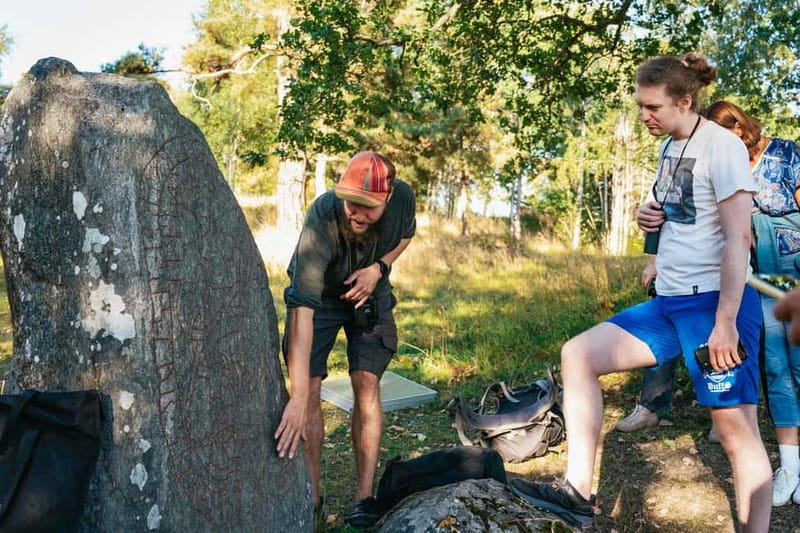
Before the dinner full swing, you walk up to a viewpoint, which helps you orient fast. Seeing the terrain—woods, edges, and where the light falls—makes the later tracking easier. Then the tour continues with a lighter trail walk where the goal shifts from scenery to signs.
On the way down, you look for tracks and clues animals leave behind. This is one of those moments where you’ll stop thinking of wildlife as luck and start thinking of it as behavior. In the forest, you’re basically reading the night. The guide helps by explaining what animals might be doing and what signs to look for.
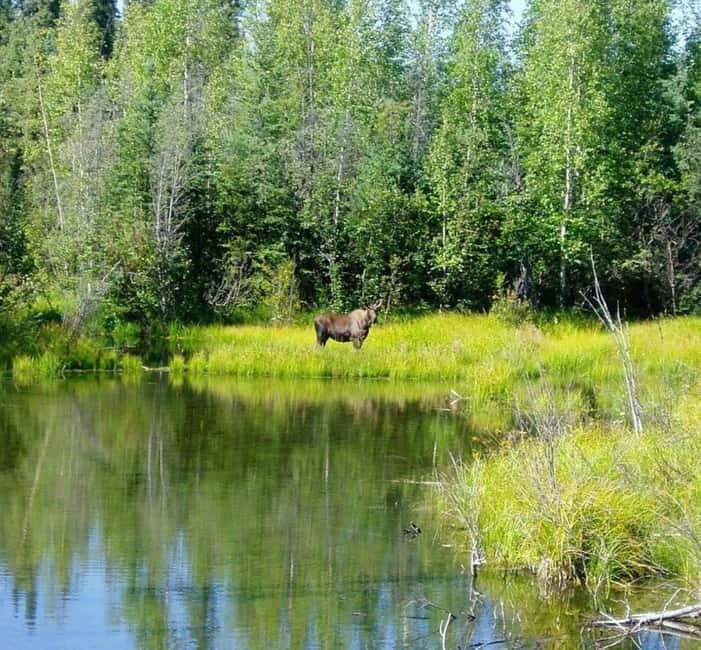
In past evenings, groups have talked about seeing lots of deer and hares and then, on some nights, a moose at the very end. Even when a moose doesn’t show up, the track-watching part can still be satisfying because you’re learning a real skill: how to notice movement, trails, and feeding patterns.
The minibus hotspot run: how the tour improves your odds after the hike
After the trail walk, you hop back into the van. This is where the safari becomes a proper search mission. The driver and guide use multiple stops—hotspots—to increase your chances, rather than relying on one place at one moment.
If it gets too dark, the tour uses large torches so you can keep scanning safely. That matters for visibility and for not turning the evening into a guessing game. You’ll also have the benefit of someone tracking where animals have been active during the season. That season knowledge is a quiet advantage: it helps the guide choose locations based on timing, not just map pins.
This is also where you might get lucky in a big way. People have reported everything from roe deer to wild boar, plus moose sightings that ranged from distant views to very close encounters. The pattern is consistent: the guide works hard, and the group generally ends up seeing at least deer and birds, with moose more likely on the best nights.
Meet the guide: the storytelling that makes scanning less stressful
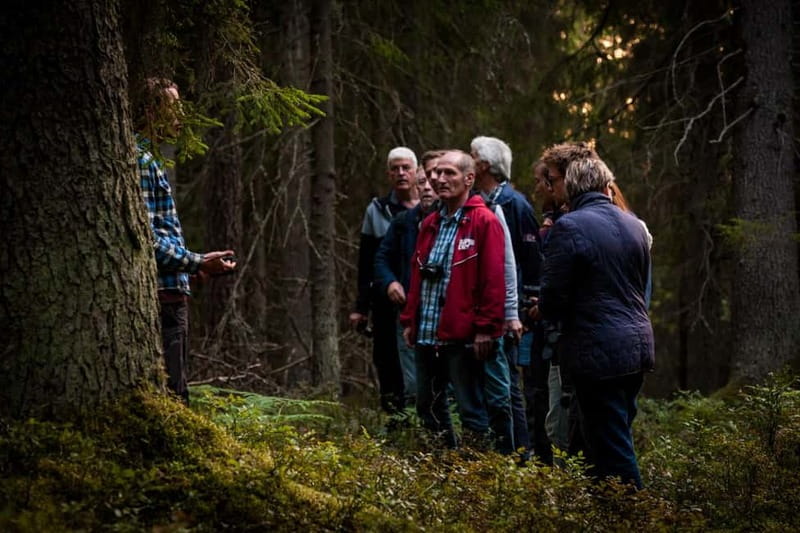
A wildlife safari can feel like sitting and waiting. What keeps this tour from feeling passive is how the guide manages the pace.
In the reviews, different guide names come up—Jesper, Diego, Rasmus, Stevie, Ella, Isabel, Emily, Patrick, and Ben—and the praise isn’t just about being friendly. It’s about giving clear explanations and keeping the hunt fun. Some guides are singled out for strong communication and for teaching survival-style skills around the campfire setting. Others are praised for being direct and helpful while you scan the forest, which is important when you’re trying to decide what you’re actually looking at.
You should expect the guide to talk through what you’ll see next: how certain animals move, why you might find tracks, and what the group should do when the light drops. That reduces the stress of night searching. You’ll still be quiet, but you won’t feel lost.
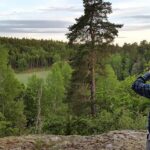
Binoculars and the art of spotting animals that stay just out of view
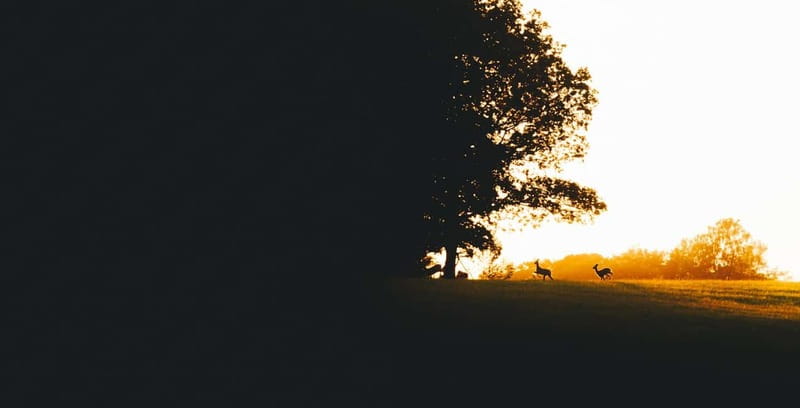
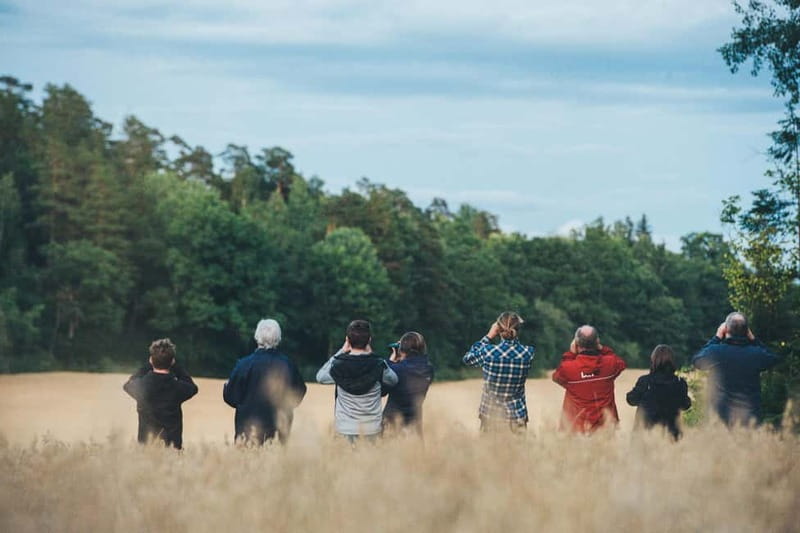
Your tour includes quality binoculars, which is a big deal in the woods at dusk. Deer and moose can be present but hard to see without the right magnification. With binoculars, you’ll spend less time guessing and more time confirming.
Use them like a pro: scan slowly, then pause. If you rush, you’ll miss subtle movement—head turns, ear flicks, or a shift in posture that animals do before stepping out. When you find something, don’t zoom in mentally on one spot. Instead, look for context: what direction the animal faces, what the ground looks like nearby, and whether there are signs leading away.
This is also where torches help. When you get a brief chance to see shape and silhouette, binoculars help you decide whether it’s really an animal or just a shape in the brush.
Wildlife expectations: what you might see around Stockholm (and what you shouldn’t assume)
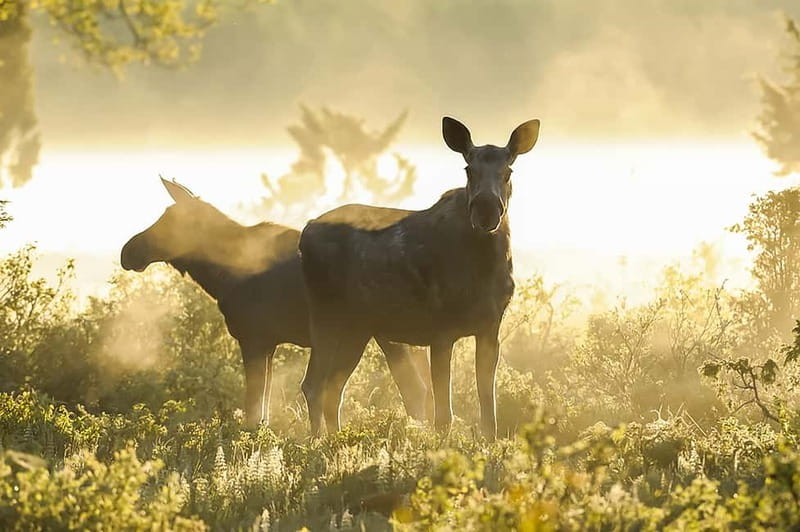
This safari is designed for Swedish wildlife, and the likely lineup includes moose, deer, wild boar, hares, and birds. You’ll also be out looking for signs, which means you can learn even if you see fewer animals in direct view.
Here’s the honest way to set expectations:
- Moose are the headline, but the tour’s real strength is that it doesn’t stop there. Even without moose, you should expect roe deer and other deer species as a common outcome.
- Hares, rabbits, and birds can show up while you’re walking or scanning at hotspots.
- Wild boar can appear, but it’s still part of the chance-driven nature of wildlife watching.
You’ll hear stories of multiple moose sightings, including a moose very close to the group. You might also get an evening where the moose doesn’t show and the guide keeps searching anyway. Either way, the tour is built to keep you engaged through story, tracking, and movement between areas.
Price and value: is $151 per person worth it?
At about $151 per person for roughly 5 hours, this is not a bargain-basement outing. But it can be good value if you’re factoring in what you receive.
Here’s what you’re paying for:
- Pickup and drop-off from a central Stockholm meeting area
- A professional, English-speaking guide guiding a wildlife search
- A real campfire dinner cooked in nature
- Binoculars included
- The effort of multiple hotspots and night scanning using torches
Compared with DIY wildlife drives, the cost makes sense because you’re buying both access and expertise: someone who knows when and where to look, plus the equipment and the campfire meal that turns waiting into an actual evening.
If your goal is guaranteed moose photos, you should be aware that no Stockholm-area wildlife tour can promise that. If your goal is an evening nature experience with strong odds for deer and the chance for moose, this is priced in the ballpark of what that effort costs.
What to wear and how to make the most of the night hike
This tour isn’t labeled as a tough expedition, but it is a night hike in a forest. Reviews include moments like walking through the woods around 10 pm, so you should pack for darkness and cool air.
Wear:
- Warm layers you can move in
- Closed shoes with grip for forest paths
- A hat and gloves if the temperature drops
Bring:
- A camera (and plan for lower light)
- Extra battery if you use your phone for photos
Skip:
- Anything you can’t handle getting a bit dirty or dusty. You’re hiking and scanning in natural terrain.
Also, this tour isn’t suitable for people with mobility impairments. If that’s you, it’s better to look for a different style of wildlife outing that matches your needs.
Who should book this moose and wildlife safari
This is a great fit if you want:
- A fun, night-in-the-woods experience without long hours or complicated planning
- A small group setting where you can actually hear the guide and use binoculars
- Campfire dinner plus animal spotting as the main event
It’s also a strong option if you’re visiting Stockholm and want something genuinely Swedish that’s outside the usual city routine. You get city convenience (central pickup and drop-off) plus wilderness time.
It’s less ideal if:
- You need an accessible route for mobility reasons
- You’re only interested in moose at all costs (because sightings vary)
Should you book the Moose & Wildlife Safari with Campfire Dinner?
If you like nature nights, campfire cooking, and a real search for wildlife signs, I’d book it. The mix of hike + hotspot driving, plus the campfire dinner and binoculars, makes it feel like more than a standard drive.
Book especially if you’re okay with the reality of wildlife watching: some nights deliver moose, some nights deliver lots of deer and birds. Either way, the evening is built to keep you learning and looking, not just waiting in silence.
FAQ
How long is the Stockholm Moose & Wildlife Safari?
The tour lasts about 5 hours.
What is the group size?
It’s a small group limited to 8 participants.
Where is the meeting point in Stockholm?
You meet at the entry point to The Green Trails, which is a short walk from Skanstull metro station and Mariatorget metro station, and also near Stockholm Södra station.
Is the tour in English?
Yes. The live tour guide provides the experience in English.
Does the price include pickup and drop-off?
Yes. Pickup and drop-off from the central Stockholm meeting point are included.
What animals might you see during the safari?
You may spot moose, deer (including different species), wild boar, hares, and several species of birds. The guide also looks for tracks and signs.
Is seeing a moose guaranteed?
No. Moose sightings are possible, but wildlife viewing depends on timing and conditions, and moose may not appear every night.
What is included with the campfire dinner?
You get campfire dinner in nature, plus a drink such as local craft beer or juice. Quality binoculars are also included.
What happens if it gets dark during the tour?
If it gets too dark, the group uses large torches so you can still see and scan for animals.
Is this tour suitable for people with mobility impairments or minors traveling alone?
It is not suitable for people with mobility impairments. Unaccompanied minors are not allowed.