REVIEW · SAWAI MADHOPUR
Ranthambore National Park: Safari Ticket with Pickup Option
Book on GetYourGuide →Operated by Safarirajasthan · Bookable on GetYourGuide
Ranthambore safari is one of the rare wildlife experiences where your whole morning plan is basically built around chance, patience, and skilled spotting. You get the practical stuff covered too: an official entry ticket, permits, and a naturalist guide to help you read the jungle instead of just staring at trees.
What I really like is the flexibility in how you ride: a smaller jeep (6-seater) for close-up views when available, or a larger canter (20-seater) for a wider sightline and usually easier comfort on bumpy tracks. The other big win is the wildlife variety you can reasonably expect to scan for—Royal Bengal tigers and leopards, plus sloth bears and lots of birds.
One consideration: you can’t control your safari zone. The Forest Department assigns zones, and if you’re chasing a specific area, that’s not something this experience can change.
In This Review
- Key points before you go
- Ranthambore in 4 hours: why this timing works
- Meeting the guide: pickup that minimizes stress
- Jeep or canter: what each vehicle changes for your safari
- Jeep safari (6-seater)
- Canter safari (20-seater)
- How to choose
- Zone assignment: the one thing you can’t change
- What you’ll actually look for inside the park
- Predators: tigers and leopards
- Sloth bears and the quieter drama
- Birds and everyday wildlife
- Guides who help you see more than shapes
- Language note
- The route feel: breaks, scenic driving, and off-road reality
- Ticket flow and permits: why included entry saves hassle
- Rules you will feel on safari (and why they matter)
- What to bring (and what to skip)
- Price and value: why $54 can feel fair
- Who should book this Ranthambore safari?
- Should you book? My practical take
- FAQ
- Can I choose between a jeep and a canter safari?
- Where do I meet the guide for pickup?
- How long is the safari?
- Are safari zones assigned by the Forest Department?
- What animals and wildlife can I expect to see?
- What should I bring and what isn’t allowed?
Key points before you go
- Jeep vs canter choice: decide between tighter, more intimate viewing and a roomier, larger-group ride (availability decides)
- Zone assignment is out of your hands: plan for where you’re sent, not where you want to be
- Guides matter: experienced spotting and species explanations can make or break your wildlife success
- Real rules on safari: no flash, no noise, no litter, and you’ll feel the park’s boundaries
- Good value built in: official entry, permits, and camera permission are included in the price
- Morning pacing fits tiger country: 4 hours is long enough for action, short enough to stay alert
Ranthambore in 4 hours: why this timing works
A safari in Ranthambore is not about ticking off animals like a shopping list. It’s about being in the right place at the right time, then using your eyes the way the guides do. That’s why this experience is built around a short, focused block (about 4 hours), typically in a morning slot. You get enough time to settle in, scan different parts of the park, and still keep your energy for the moments that matter.
This also helps you make smart day-by-day choices in Rajasthan. If you’re basing yourself around Sawai Madhopur, you can usually fit a safari morning into a schedule that still leaves time for a relaxed lunch, a fort or market visit, or an evening scenic drive.
You can also read our reviews of more tours and experiences in Sawai Madhopur.

Meeting the guide: pickup that minimizes stress
If you select pickup, you’ll meet your group at one of many listed options across Ranthambore and Sawai Madhopur. The practical detail I like here is that pickup isn’t treated as an all-or-nothing promise. If your hotel is on a main road, pickup can happen directly. If it’s tucked into narrow lanes or off-road areas, they’ll arrange pickup from the nearest accessible point.
That small tweak can save you from the classic vacation problem: wandering around waiting with your phone at 7:00 a.m. and no idea where your vehicle is. Once you’re picked up, you’ll head toward the Ranthambore National Park entrance area for check-in and the start of the safari drive.
After the safari, you’ll be dropped back at one of the listed locations. If you’re traveling light or staying at a resort outside the main road network, the “nearest accessible point” approach is especially helpful.
Jeep or canter: what each vehicle changes for your safari
This is where the day can feel different, even if the goal is the same.
Jeep safari (6-seater)
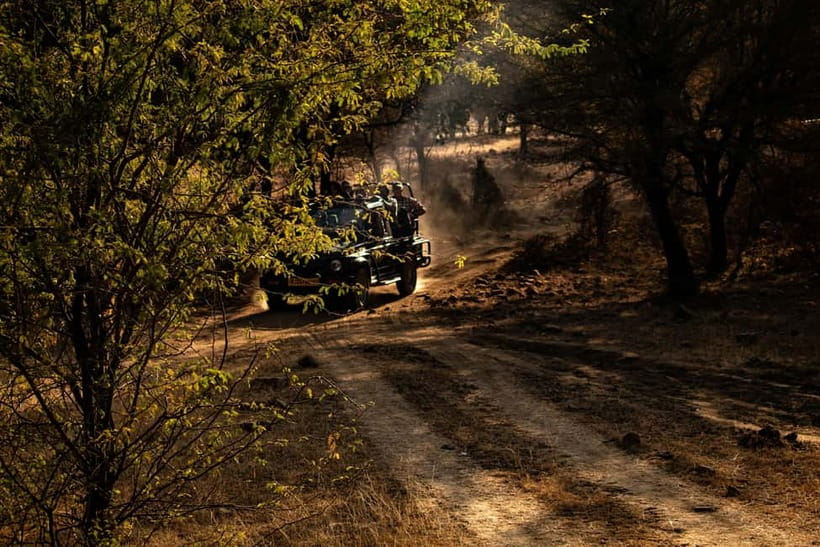
A 6-seater jeep is the pick if you want a more personal safari vibe. Fewer people can mean less noise in the vehicle and faster back-and-forth spotting when something moves. The tradeoff is space. On a jeep, you’ll feel the squeeze if you have a taller group or three adults sharing the back row. Seats may be comfy, but physically it’s still tighter than most cars.
Canter safari (20-seater)
A 20-seater canter gives you a wider viewpoint as you move through the zone. It’s also more forgiving for comfort, especially over rougher sections of road. One practical detail you might notice: on longer day circuits or busier routes, there may be toilet stops along the way in some zones. That’s a comfort factor, particularly if you’re booking more than one safari day.
How to choose
If you’re traveling as a small group and you want maximum attention to what’s happening around you, the jeep often feels better. If you’re bigger on comfort and less concerned about personal space, the canter is a smart choice.
Zone assignment: the one thing you can’t change
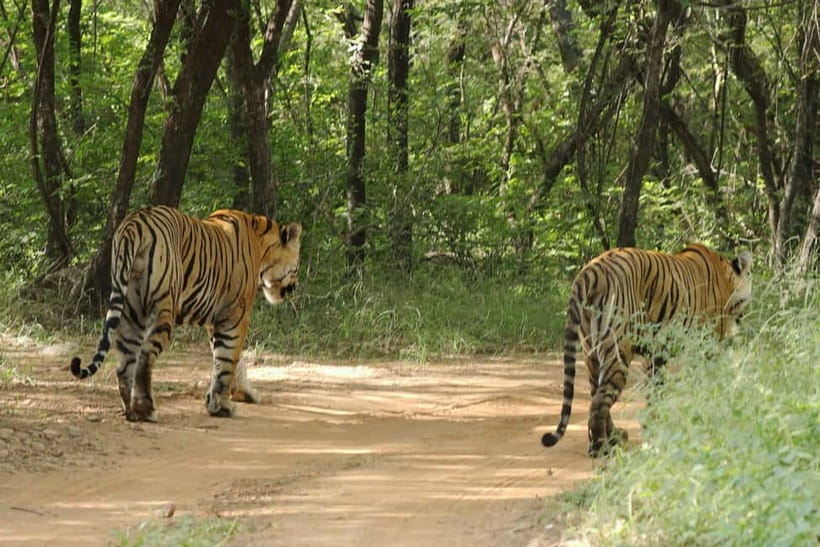
Ranthambore works in zones, and here’s the rule that affects your outcome: safari zones are assigned by the Forest Department, and they cannot be changed by the operator. That means you should shift your mindset.
Instead of planning a strategy like I want zone X for tiger odds, focus on being ready for whoever you get. The best approach is to book early (spots fill up quickly), then show up with flexible expectations.
The upside of this system is that you’re still in real tiger territory. Even when you don’t get the moment you’re hoping for, you’re likely to encounter plenty of other wildlife and bird life.
What you’ll actually look for inside the park
This safari is built around scanning for a shortlist of star species, but the jungle rewards broader attention.
Predators: tigers and leopards
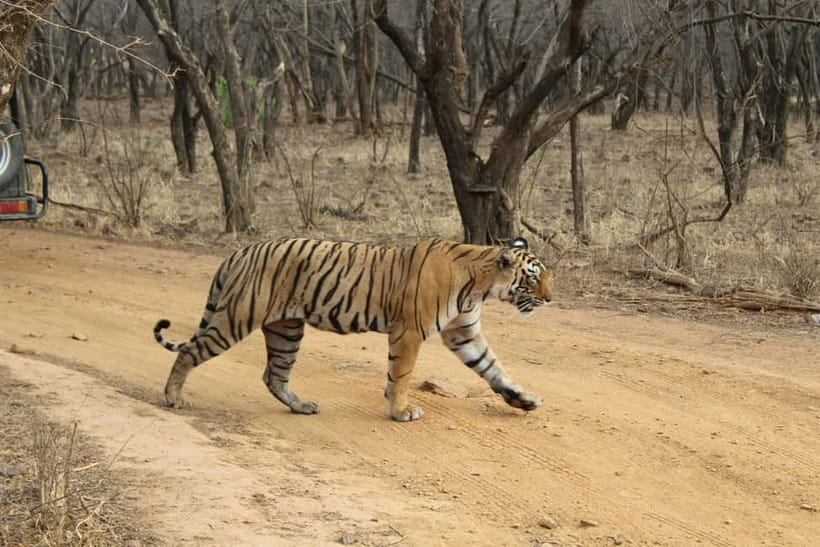
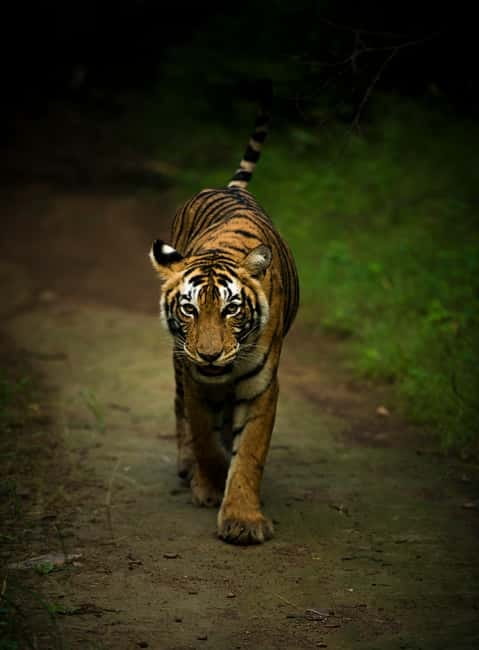
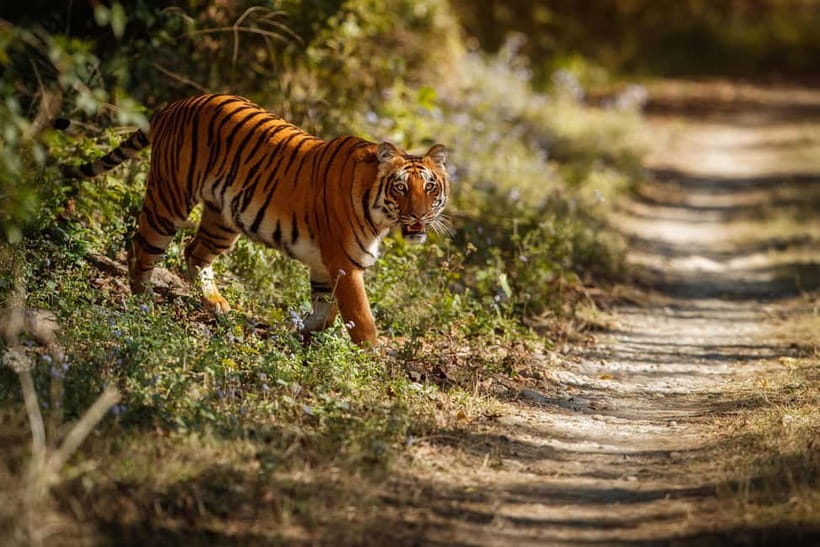
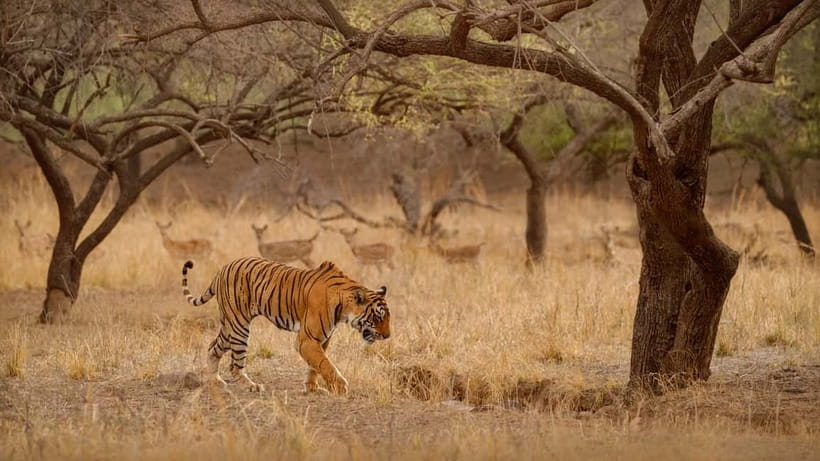
The headline goal is spotting Royal Bengal tigers and leopards. In practice, that can look like long quiet stretches followed by a flurry of attention when movement appears in scrub or along the edges of clearings. The most exciting sightings tend to come when guides help you interpret sign—tracks, fresh activity, and the kinds of positions animals choose during certain light and temperature conditions.
You’ll hear the difference between guesses and real guidance. Good guides push you to look slightly left, slightly higher, and past the obvious tree trunk. They also explain what you’re seeing, not just that something might be there.
Sloth bears and the quieter drama
Sloth bears are less predictable than the cats, but the chance is part of why Ranthambore is so famous. When a sloth bear shows up, it can feel like a completely different game from tiger spotting. Expect slow, cautious attention rather than dramatic bursts.
Birds and everyday wildlife
Even when tigers and leopards don’t show at close range, birds can keep the safari feeling alive. You might also see other species listed for the park experience, including sambar deer and even crocodiles in the broader ecosystem mix.
On safari, these sightings matter because they keep you watching with intention. If you only focus on tigers, the trip can feel flat. If you give yourself permission to notice the whole food web—birds, deer, and signs of water activity—you’ll get more satisfaction.
Guides who help you see more than shapes
One of the best things about this safari format is that you’re not stuck alone with binoculars and hope. You’ll travel with a naturalist guide during the safari, and the guidance is a big part of the value.
In particular, guides such as Bharti have a reputation for being attentive and engaging, with a lot of animal knowledge. Another guide name that comes up is Aman, who gets described as working to find the best part of the park when things are shifting.
If you care about birds, don’t assume it’s automatic. You’ll get the best experience when your guide points birds out and names species. Some of the strongest safari moments come from guides adjusting their focus when you mention you want birding.
Language note
The guide is available in multiple languages, including English, French, German, Hindi, Russian, Spanish, and Italian. Still, language distribution can vary day to day because safari groups can mix. If you want more English-style commentary, it’s worth confirming language preferences when you book.
The route feel: breaks, scenic driving, and off-road reality
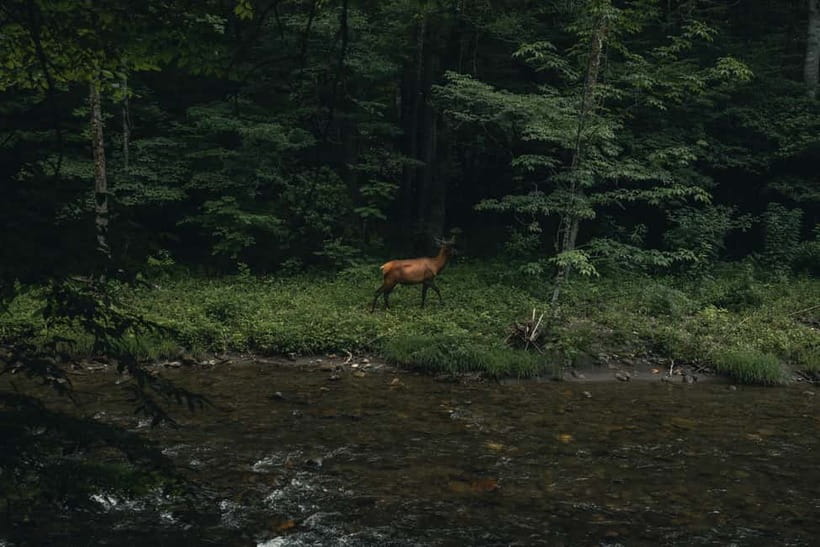
You’re going to experience a mix of driving and scanning, including off-road tracks and scenic views along the way. There’s also a break time built into the 4-hour schedule. That matters more than you’d think, because fatigue makes your eyes less sharp over time.
On a canter, you may enjoy the ride stability more. On a jeep, you’ll likely feel every turn more directly. Either way, this is wildlife logistics, not sightseeing in paved comfort.
The park is assigned into zones, so your day’s “story” depends on where you’re placed. But whatever zone you enter, your job is the same: look, listen for guide cues, and keep calm when the vehicle slows.
Ticket flow and permits: why included entry saves hassle
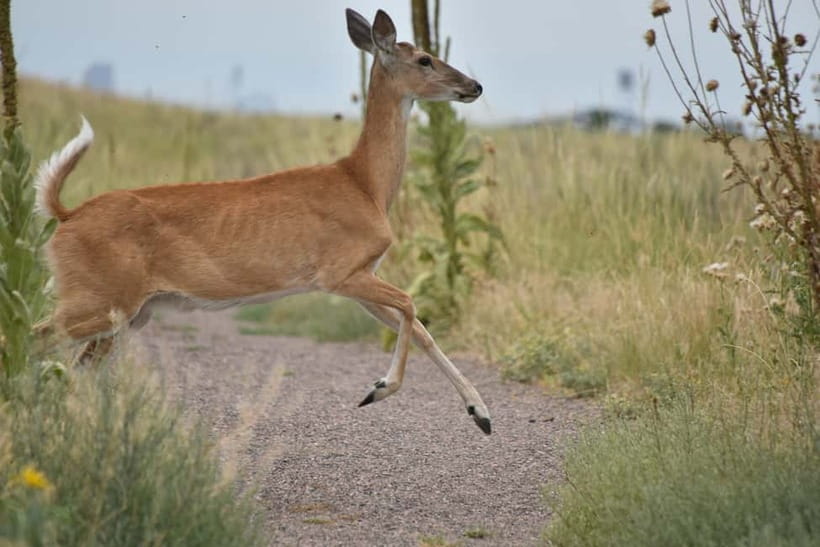
A lot of safari value is invisible until you’re standing at the entrance. Here, the included items are practical:
- Official Ranthambore National Park entry ticket
- Forest permits and fees
- DSLR camera permit
- Skip the ticket line
That combination is the difference between spending your morning solving paperwork and spending it watching for movement. It also helps if you’re traveling with camera gear, since the experience includes a DSLR camera permit. Video camera fees aren’t included, though—so if you’re planning to film seriously, check camera-related costs ahead of time.
Rules you will feel on safari (and why they matter)
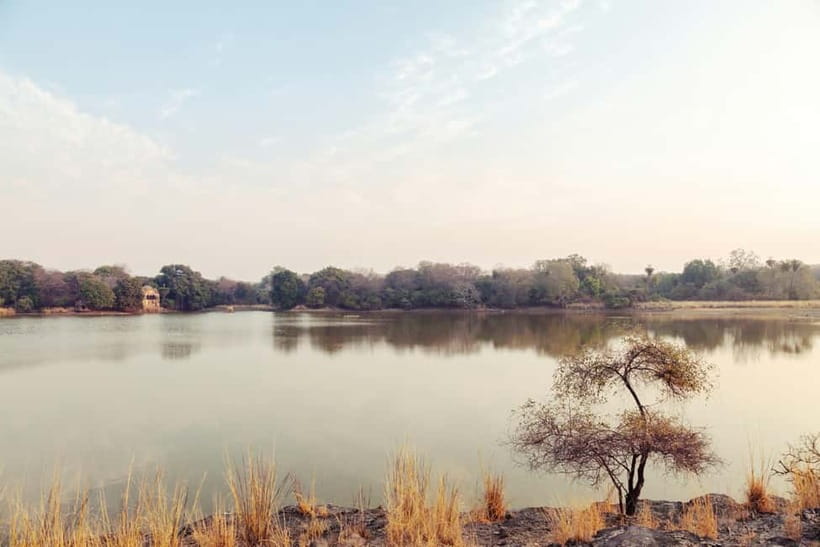
Safari rules aren’t just for etiquette. They protect the animals, the guide’s ability to position the vehicle, and your overall experience.
You should expect strict limits like:
- no smoking
- no flash photography
- no littering
- no feeding animals
- keep noise down
Also, the safari is not suitable if you have back problems or if you’re using a wheelchair. This is a rugged, bumpy vehicle environment with tight seating in places, especially on jeeps.
These restrictions are part of what makes Ranthambore work as a conservation-focused park experience. Following them isn’t optional if you want a smooth, respectful day.
What to bring (and what to skip)
You’ll want to keep it simple and practical:
- Comfortable shoes (the ground around pickups and entrances can be uneven)
- Sunglasses and a hat (morning light can be bright)
- Water
- Camera (and you’ll need your included DSLR permit covered by the package)
- A valid photo ID for entry verification
If you’re tempted to bring extra items “just in case,” remember that you’ll be managing them in a moving vehicle. Pack for the essentials, and keep your hands free for spotting.
Price and value: why $54 can feel fair
At $54 per person for a ~4-hour guided safari with pickup, this price is more than “just a seat in a vehicle.” It includes the official park entry, permits, the naturalist guide, and camera permission, plus pickup and drop-off if you choose it.
If you tried to DIY this—organizing entry ticketing, figuring out permits, arranging a licensed safari vehicle, and handling guides independently—you’d likely spend time (and sometimes money) that adds up quickly. Here, the value is in turning a complicated morning into a clean sequence: meet, check in, ride, return.
The only hidden “cost” is the tiger odds themselves. Wildlife isn’t guaranteed. But your day is still very likely to deliver birds, deer, and other wildlife even if the big cats don’t appear in your zone window.
Who should book this Ranthambore safari?
Book this if:
- you want a guided wildlife experience with formal permits handled for you
- you’re happy to let the Forest Department decide your zone
- you want either a jeep-style small group feel or the comfort of a canter ride
- you care about learning (especially if you mention you’re interested in birds)
Consider skipping or choosing a different style if:
- you’re pregnant
- you have back problems
- you need wheelchair-friendly access
- you’re expecting guaranteed tiger sightings (even great guides can’t override animal behavior)
Should you book? My practical take
Yes, I’d book it if your goal is a well-run, guided Ranthambore safari where the logistics are taken care of and you can focus on spotting. The included entry ticket, permits, DSLR camera permit, and skip-the-line flow make it a smoother start than many do-it-yourself plans.
I’d also book early if you’re serious about securing a slot. Zones fill quickly, and safari availability drives what you can get. And if you care about language or birds, say so when booking so the guide can tune the explanations.
FAQ
Can I choose between a jeep and a canter safari?
Yes. You can choose a jeep (6-seater) or a canter (20-seater), but it’s subject to vehicle availability.
Where do I meet the guide for pickup?
You can meet at the Ranthambore National Park entrance, or your hotel if pickup is selected. If your hotel is in narrow lanes or off-road areas, pickup is arranged from the nearest accessible point on the main road.
How long is the safari?
The experience runs for about 4 hours.
Are safari zones assigned by the Forest Department?
Yes. Safari zones are assigned by the Forest Department and cannot be changed.
What animals and wildlife can I expect to see?
The safari is aimed at spotting Royal Bengal tigers and leopards, plus sloth bears and a variety of birds. You may also see sambar deer, crocodiles, and other wildlife.
What should I bring and what isn’t allowed?
Bring comfortable shoes, sunglasses, a hat, your camera, and water. You should not smoke, use flash photography, litter, feed animals, or make noise. A valid photo ID is required for entry verification.