REVIEW · WELLINGTON
Seal Coast Safari – Exclusive access to Wellington’s secret coast
Book on Viator →Operated by Seal Coast Safari · Bookable on Viator
Seals, stations, and a leaning lighthouse. Seal Coast Safari is the kind of half-day in Wellington that feels like you’ve slipped past the usual city crowds and straight into the Cook Strait edge of New Zealand. You’ll get private farmland access, big coastal viewpoints, and time at a fur seal colony in a spot many Wellingtonians don’t even visit.
Two things I really love: the mix of nature stops and working farm scenery, and the way the route is built for panorama photo angles rather than quick, jerky stop-and-go. Another plus is that you’re not stuck in a big bus. This tour caps at 10 travelers, uses comfortable 4WD Mercedes vans, and the guides keep the commentary moving without turning it into a lecture.
One drawback to think about first: the driving includes steep, curvy roads on the way down to the coast. If you have neck problems, this likely won’t be your best match.
In This Review
- Key Things That Make This Tour Work
- A Secret-Coast Wellington Escape in 3.5 Hours
- Otari-Wilton’s Bush: Native Forest and a Real Start
- Terawhiti Station Private Drive: Cows, Sheep, and the View from Working Land
- Cape Terawhiti and the Leaning Lighthouse (Karori Rock)
- The Seal Colony Moment: How to See Fur Seals Without Rushing
- Bring your “seal time” mindset
- Price and Value: Why $121.01 Feels Fair for This Route
- Comfort, Curvy Roads, and What to Pack
- Guides You Might Meet, and the Style You Get
- Should You Book Seal Coast Safari?
- FAQ
- Is this a morning or afternoon tour?
- How long is Seal Coast Safari?
- What’s included in the tour price?
- How big is the group?
- Do you provide pickup from cruise ships or hotels?
- Is the tour suitable for everyone?
- What weather conditions affect the tour?
Key Things That Make This Tour Work
- 4WD Mercedes vans: smaller, comfortable, and made for the curvy coastal roads
- Private farmland access at Terawhiti Station: you’re not just roadside looking, you’re actually on station driveways
- Otari-Wilton’s Bush stop: native forest and New Zealand’s native-plant botanic focus, not just a quick photo pull-over
- Karori Rock’s leaning lighthouse area: the view points are timed into the route so it feels like one smooth arc
- Fur seals in a secluded habitat: you get time to watch and take photos with guidance on how to behave
- Tea, coffee, and snacks: small comfort, big morale boost during the coast time
A Secret-Coast Wellington Escape in 3.5 Hours
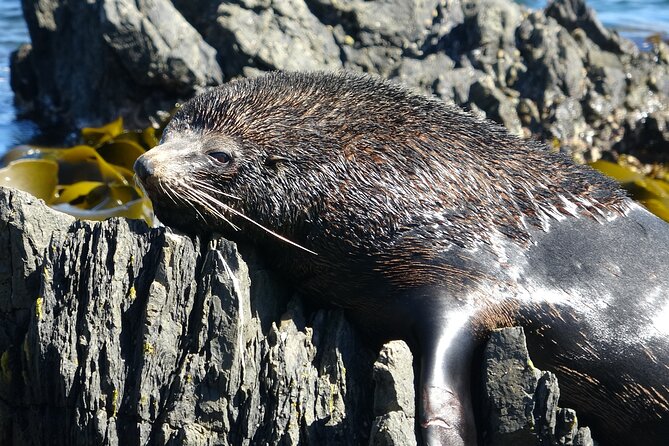
If your Wellington days feel too city-smooth, this is the antidote. Seal Coast Safari gives you a fast ticket out to the south coast, where the Cook Strait and the South Island show up on clear days, and where wildlife is the main event. The pacing is designed for a half-day: you start with bush, roll through farmland, then end near the seal colony where you can linger long enough to actually see behavior, not just spotting.
The format is also stress-free. You get a mobile ticket, and pickup and drop-off are offered direct from cruise ships. For port days, that matters more than people think—Wellington can be easy, but timing still eats time. Here, the tour structure is built to return you on schedule.
This is also a small-group outing. Maximum is 10 travelers, and I’d expect that to make the guide feel like a real host rather than a tour announcer. The 4WD Mercedes vans also mean you’re sitting higher and traveling with less jostle than you might in a rougher vehicle.
You can also read our reviews of more tours and experiences in Wellington.
Otari-Wilton’s Bush: Native Forest and a Real Start
The tour begins at Otari-Wilton’s Bush Native Botanic Garden, a 100-hectare area of ancient and regenerating forest and a botanic garden devoted solely to New Zealand native plants. This stop gives you context fast. Instead of jumping straight to seals, you get the local ecological “why”: what grows here, how the bush looks in different stages of regrowth, and why these native habitats matter.
Practical note: this is a 30-minute stop. So think of it as a focused walk and orientation, not a full hike. If you like plants, birds, and learning what you’re actually looking at, you’ll appreciate it. If you just want coast and animals, it still works because it sets you up to notice more on the rest of the route—especially when the scenery changes from bush to farmland to shoreline.
Terawhiti Station Private Drive: Cows, Sheep, and the View from Working Land
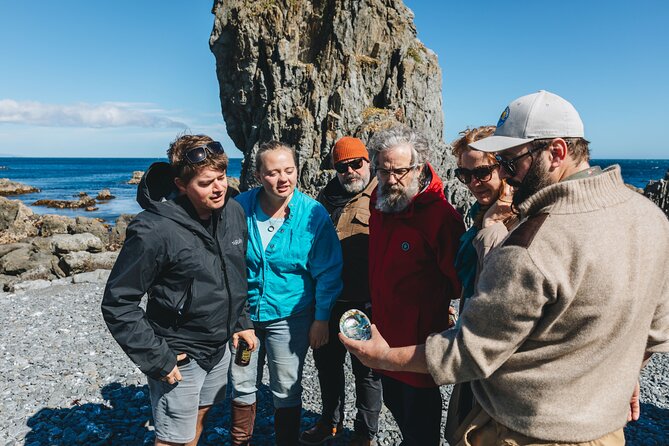
After Otari, you head through suburbs and then turn off onto private access at Terawhiti Station. This is where the tour stops being generic. Terawhiti is one of the oldest and largest stations in New Zealand, and the drive is part of the experience: private station roads, wide valley views above Wellington, and a sense of scale that’s hard to get from the public roadside.
You’ll likely spot farm animals along the way—cows, sheep, and goas as they point out what’s happening out on the station. You also get that “we’re really going somewhere” feeling because the route is not just a route; it’s access.
This section is often where the photography gets fun. One review highlighted getting uninterrupted panorama shots of the Cook Strait and the South Island. That lines up with why this tour feels like a good value: you’re paying for time that’s spent in the right places, not money for lots of roadside glimpses.
Cape Terawhiti and the Leaning Lighthouse (Karori Rock)
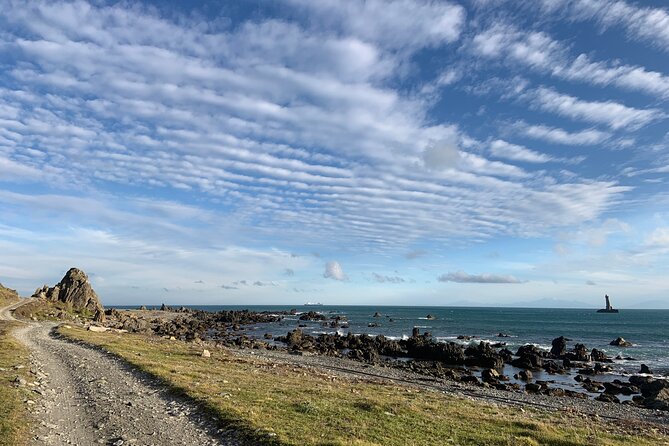
As the tour descends toward sea level, the Karori Rock leaning lighthouse comes into view. Built in 1915 after a shipwreck, it’s known for its tilt—and it’s the kind of landmark you can spot from a distance that makes you instantly point your camera the right direction.
The stop here is shorter and more viewpoint-focused than the others. It’s not a long museum visit; it’s about the sightline and the sense of the coastline stretching out. Even when visibility isn’t perfect, the structural landmark helps you understand the geography of the area.
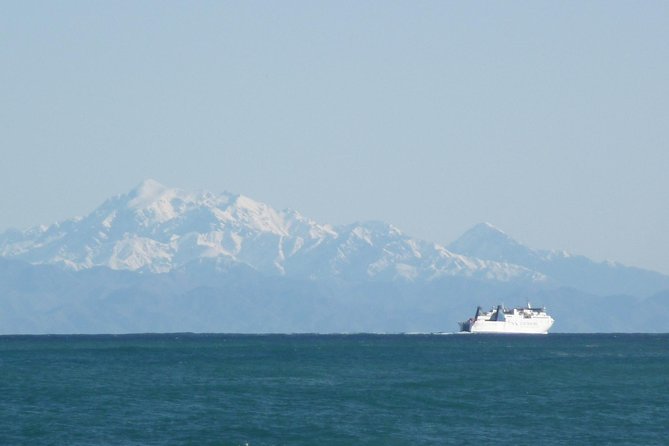
A key day-to-day factor: on clear weather days, you can see the South Island from Wellington’s south coast viewpoints. If you care about that visual, morning or afternoon timing matters less than weather. This is also why this tour runs with a good-weather requirement.
The Seal Colony Moment: How to See Fur Seals Without Rushing
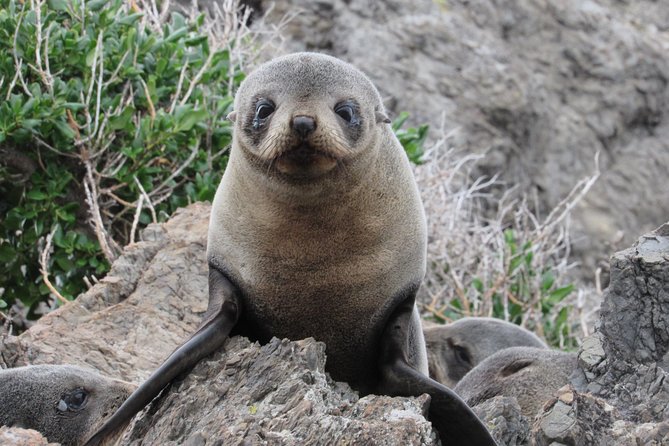
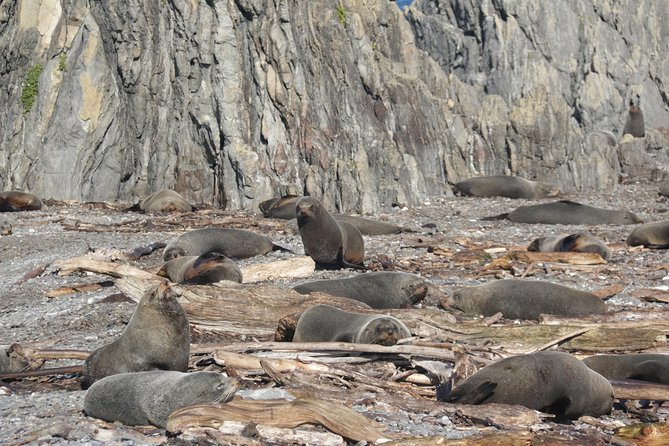
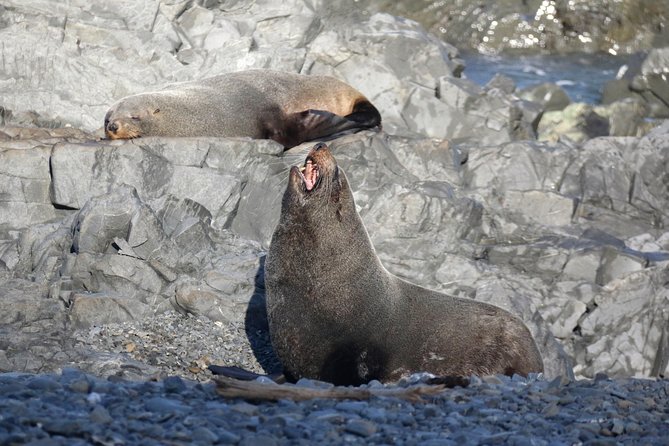
The main event is the fur seal colony on Wellington’s south coast area. This tour goes out to the region’s only fur seal colony and gives you time to watch them in their natural setting. The vibe is not theme-park. It’s more like you’ve been invited to the edge of their world, and now you need to behave like a good guest.
You’ll learn about the history of the seal colony and get tips on the best way to say hi—basically, how to observe without crowding or making it stressful for the animals. That’s important because the most interesting behavior is the slow, normal stuff: seals lounging, shifting positions, interacting at a distance, and occasionally reacting to movement around them.
What you can realistically expect: you’ll have enough time to take photos and videos, and also enough time to notice patterns rather than just snap a few quick shots and move on. One review said they could have spent all day there, which tells you the seal time is not rushed for a half-day tour.
Bring your “seal time” mindset
Don’t treat the beach like a stoplight. The payoff comes when you settle in and watch for a while. If you’re the type who gets distracted easily, set yourself a simple goal: watch for 10 minutes without walking away. You’ll usually see more than you think.
Price and Value: Why $121.01 Feels Fair for This Route
At about $121.01 per person for roughly 3 hours 30 minutes, this isn’t the cheapest way to fill a Wellington afternoon. But it’s also not just a drive-by. You’re paying for:
- access through private farmland (Terawhiti Station),
- a route designed for good coastal viewing,
- native-plant garden time at Otari-Wilton’s Bush,
- and transportation in a 4WD Mercedes built for this terrain.
For many people, the “value” part is actually the vehicle and the access. If you tried to do this on your own, you’d still spend time getting around, and you likely wouldn’t get the same private drive sections or a structured timeline that gets you to the seal area when the day is moving.
Also, the tour provides tea, coffee, and snacks. That doesn’t sound huge until you’re on the coast and you realize you’ve been planning around travel time and weather. It’s small comfort that helps you enjoy the wildlife time instead of feeling hungry and impatient.
Finally, the small group cap matters. With a maximum of 10 travelers, you’re less likely to feel like you’re sharing space with a crowd, especially during the seal viewing.
Comfort, Curvy Roads, and What to Pack
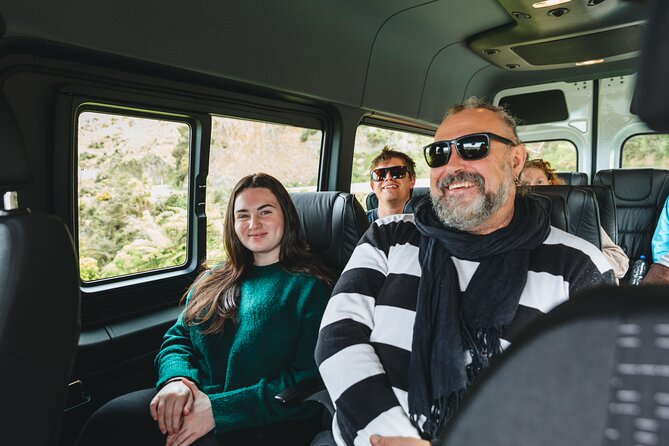
Here’s the honest part: this tour includes winding roads and steep descents. One review basically said, be ready for steep, curvy roads, and another mentioned the driving as a highlight—exciting, scenic, and memorable. That said, if you have neck problems, the tour is explicitly not recommended.
So I’d plan your “comfort strategy”:
- If you’re prone to motion sickness, bring what you normally use.
- Wear shoes you can stand comfortably in for short stops.
- Bring a light layer. Coastal wind can change fast.
Cameras: you’ll want them. The drive includes big views over Cook Strait and coastal lines. Some stops are short, so you’ll likely shoot and move.
Food and drinks: the tour includes tea, coffee, and snacks. Still, if you have specific dietary needs, plan to bring something small on your own. The provided snacks are a nice bonus, but you’re the only one who knows your preferences.
Guides You Might Meet, and the Style You Get
This tour is driven by local hosts who mix driving skill with on-the-ground farm and nature storytelling. Guides mentioned in the experience include Sara and Grant, Chris, Hamish, Marc, Chewy, Blue, and Natalie. You can’t count on a specific guide, but you can count on the same kind of experience style: friendly, talk-along-the-way commentary and a real connection to what you’re passing.
One thing I like about this approach is that it’s not just “fact dumping.” It’s commentary built into the route. You get history and conservation context while you’re already looking at the scenery, and it makes the landscape changes feel meaningful rather than random.
If you enjoy guides who point things out while moving—plants, birds, farm operations, and conservation efforts—this will land well.
Should You Book Seal Coast Safari?
Book it if you want a half-day that feels different from the usual Wellington routine: native bush, private farmland access, and a fur seal colony you can actually watch. The value is strongest when you care about transport comfort plus access plus a tight route that uses your time well.
Skip—or at least think hard—if you hate curvy roads, struggle with motion, or have neck issues. Also, if you’re the type who needs long walks and deep hiking time, you might find the stops short. This is a drive-and-watch style tour.
If weather is good, it’s an easy yes. If visibility is limited, you’ll still get the farm-bush-coast arc, but the “panorama wow” may be less dramatic.
FAQ
Is this a morning or afternoon tour?
You can choose a morning or afternoon departure to better fit your schedule.
How long is Seal Coast Safari?
The tour runs about 3 hours 30 minutes.
What’s included in the tour price?
The tour includes pickup and drop-off (including from cruise ships), access to the Otari-Wilton’s Bush native garden, admission for the Terawhiti Station stop, and tea, coffee, and snacks. The Cape Terawhiti stop is listed as free.
How big is the group?
The tour has a maximum of 10 travelers.
Do you provide pickup from cruise ships or hotels?
Pickup and drop-off are available direct from cruise ships, and the tour also offers free hotel pickups.
Is the tour suitable for everyone?
Most travelers can participate, but it is not recommended for travelers with neck problems.
What weather conditions affect the tour?
This experience requires good weather. If it’s canceled due to poor weather, you’ll be offered a different date or a full refund.