REVIEW · SRI LANKA
Udawalawe National Park Safari with Elephant Transit Home Visit
Book on Viator →Operated by Nature Ceylon Tours - Udawalawe · Bookable on Viator
Baby elephants are the draw in Udawalawe. This short Sri Lanka outing pairs a jeep safari with a visit to the Elephant Transit Home, where you watch young elephants during feeding time. It’s built for people who want real sightings, not just hoping for the best.
What I really like is the focus on the babies: the sanctuary visit is set up for guaranteed baby-elephant viewing. And the safari side has practical wildlife odds, with Uda Walawe’s reputation for frequent elephant encounters.
One thing to keep in mind: at the transit home, you aren’t meant to get close. You’ll view the elephants from a platform, and there’s also some confusion in the details about entrance fees—so confirm what’s covered before you go.
In This Review
- Key highlights at a glance
- Why Udawalawe is the Baby-Elephant Magnet
- Jeep safari time in Udawalawe: what you’re really paying for
- Elephant Transit Home feeding time: the best part, with one limitation
- Timing that works: 3–4 hours without feeling rushed
- Pickup, jeep size, and the guide factor
- Price and value: is $24 really a bargain?
- What animals spotting feels like in real life (and how to approach it)
- Best fit: who should book this combo
- Should you book Udawalawe National Park Safari with Elephant Transit Home?
- FAQ
- Is this tour in Udawalawe National Park and the Elephant Transit Home?
- How long does the experience take?
- How much time do I spend in Udawalawe National Park?
- How much time do I spend at the Elephant Transit Home?
- What animals can I expect besides elephants?
- Do I get guaranteed baby-elephant sightings?
- Can I get up close to the elephants at the Elephant Transit Home?
- Is hotel pickup included?
- What’s the maximum number of passengers per jeep?
- Are entrance fees included?
- What if weather is bad and the tour is canceled?
- Is there free cancellation?
Key highlights at a glance
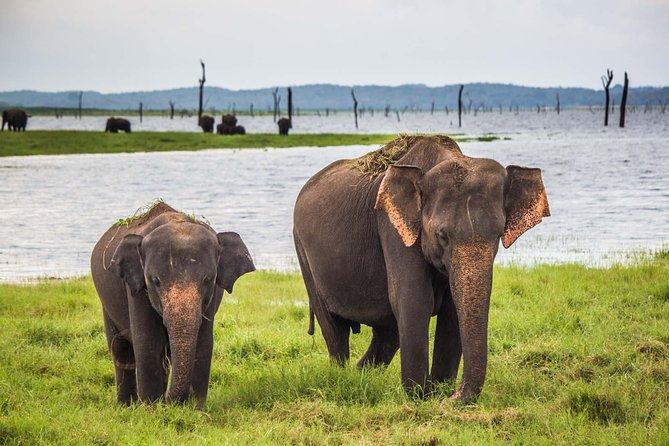
- Guaranteed baby-elephant sightings at the sanctuary during feeding time
- Elephant Transit Home visit supported by the Born Free Foundation
- Jeep safari in Udawalawe National Park with strong chances for elephant sightings
- Short, focused timing: about 3 hours in the park plus ~30 minutes at the sanctuary
- Small-group format: a maximum of 6 passengers per jeep
- Guided searching + photo-friendly spotting (a big plus on safari)
Why Udawalawe is the Baby-Elephant Magnet
Udawalawe National Park is famous for one very specific reason: elephants. The park’s wide grasslands and patches of bush create an easy “spotting stage” for wildlife, especially during daylight hours when animals move openly. It’s also a great reminder that Sri Lanka’s animal life isn’t only about elephants—if you keep your eyes moving, you’ll likely find other wildlife in the mix too.
This is exactly why this combo works. You don’t start with blind luck. The trip builds in a sanctuary stop centered on young elephants, then follows it with a game-drive jeep safari through one of the island’s best elephant areas.
You can also read our reviews of more tours and experiences in Sri Lanka.



Jeep safari time in Udawalawe: what you’re really paying for
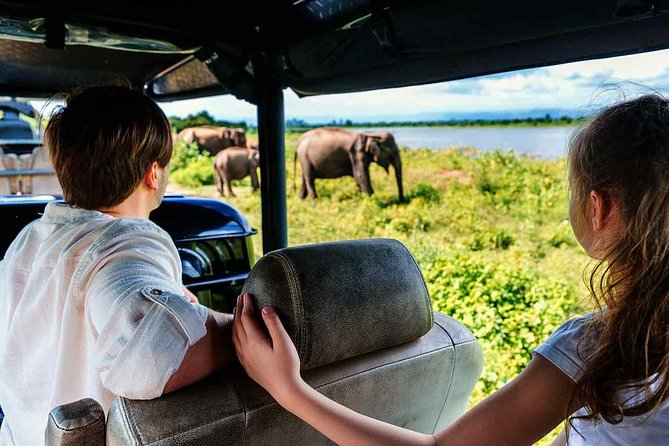
This part is the heart of the outing, about 3 hours in the park. You’ll ride in a safari jeep with a maximum of 6 passengers, which matters more than it sounds. In small jeeps, you get better views and less crowding around the windows when animals pop into sight.
Udawalawe is known for a large elephant population, and it’s not just “elephants somewhere in the park.” You’re in a region framed by higher ground to the north, and the park’s grassy setting often gives animals more open movement. That means when elephants are active, you tend to notice them without doing the exhausting work of scanning for long stretches.
Keep an eye out for the extras, too. Besides elephants, you might spot water buffalo, mongoose, eagles, and peacocks. Leopards are mentioned as elusive, so treat that as a bonus possibility rather than a goal. On safari, your mindset helps: focus on elephants first, then let the other sightings be the fun surprises.
Elephant Transit Home feeding time: the best part, with one limitation
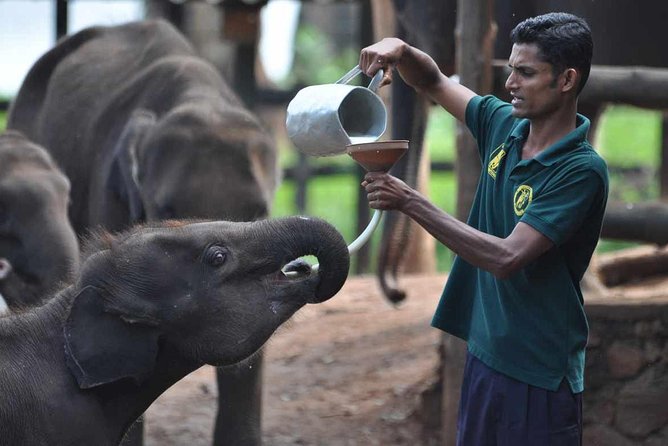
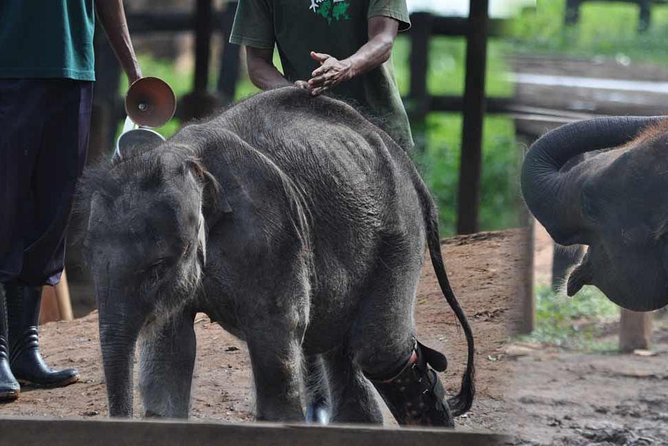
The Elephant Transit Home (ETH) is a halfway place for orphaned elephants. After rehabilitation, many young elephants are later released back into the wild, including into Udawalawe. The sanctuary is supported by the Born Free Foundation, which is worth noting because it signals a structured care and release pathway rather than just a sightseeing setup.
Here’s what makes the visit special: you get to watch the young elephants during feeding time. The viewing happens from a platform, so you should expect distance and designated viewing areas rather than up-close interaction. That isn’t a deal-breaker for most people. Seeing baby elephants actively feeding is a different vibe than seeing adults standing still from across the grass.
The main “consideration” is exactly that distance. If you’re hoping for close contact or photo magic at arm’s length, you’ll be disappointed. But if you want a reliable baby-elephant moment, this stop is built to deliver it.
Timing that works: 3–4 hours without feeling rushed
The whole outing runs about 3 to 4 hours. In practice, that means you’re getting a meaningful wildlife block in Udawalawe without turning your day into a travel marathon. The park segment is the longer one (around 3 hours), then you’re off to the transit home for about 30 minutes.
This pacing is a good fit if you have limited time in Sri Lanka, or if you don’t want to commit to a full-day safari. It also helps you avoid the common trap of doing too much in too little space—especially on humid days, when “just one more stop” can quietly drain your energy.
Pickup, jeep size, and the guide factor
Logistics can make or break safari days. This one includes hotel pickup and drop-off, plus transport in a safari jeep. The jeep is capped at 6 passengers, which keeps the ride comfortable and improves sightlines.
A guide can also change the experience. In the feedback you’ll see one name come up again and again: Pradeep. People point out that he was on time and had a strong ability to spot wildlife and set up good viewing moments. Even when you can’t control what animals choose to do, a guide who knows where to look helps you make the most of your limited safari window.
If you’re sensitive to heat or crowds, small-group jeep rides are a big plus. If you’re someone who loves photos, being in a jeep with room to move your angle quickly is also helpful.
Price and value: is $24 really a bargain?
At $24 per person, this is positioned as an affordable way to combine two major elephant-focused experiences. The included items are practical: driver/guide, pickup and drop-off, and safari jeep transport (max 6 passengers).
Now, here’s the part you should verify before you book: entrance fees. The experience details show entrance fees listed as not included, even though the marketing highlights also say entrance fees and taxes are included. Since that information conflicts, don’t guess. Before you go, confirm whether the national park and sanctuary entry are covered in what you pay.
If entrance fees are on you, the value depends on your time. Still, for many visitors, the “short safari + ETH feeding viewing” combination is worth it because it compresses planning. You’re not trying to coordinate separate rides, separate schedules, and separate ticketing on your own.
Also check what you care about most:
- If you want elephants reliably, the sanctuary stop is the safety net.
- If you want the wild-energy safari feel, Udawalawe is the payoff.
This tour gives you both in one block.
What animals spotting feels like in real life (and how to approach it)
Safari success is partly luck, but you can tip the odds with your attitude. I like treating Udawalawe as a wildlife search game with rules:
- Start with elephants.
- Then scan edges and open patches for movement.
- Keep your head up for birds like eagles and peacocks, because they often clue you into active areas.
Because Udawalawe is known for a huge elephant population, you’re not stuck in a “nothing to see” scenario as often as you might be in smaller parks. The park’s grasslands and bush areas create opportunities for sightings during a short drive.
At the transit home, the “rules” are easier: expect the feeding routine and enjoy watching the young elephants eat. That’s a controlled, scheduled viewing moment, which is why it anchors the whole trip.
Best fit: who should book this combo
This experience makes the most sense if:
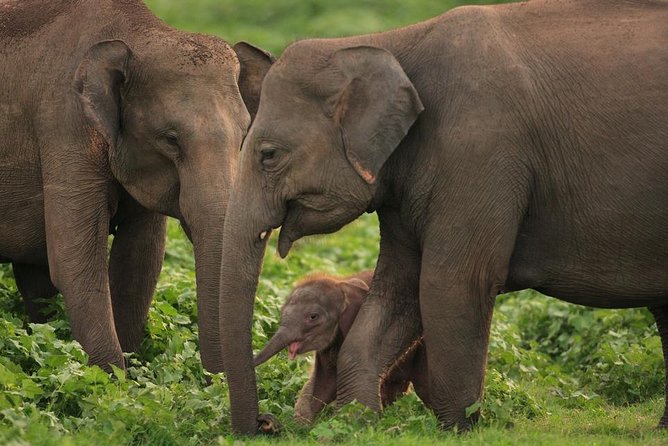
- You’re traveling with kids or you want a baby-elephant highlight without long hours.
- You want an organized safari without hiring a private driver for a full day.
- You’re short on time but still want a mix of wild and rehab-focused elephant encounters.
- You value comfort and sightlines, and you like the idea of a max 6-passenger jeep.
It’s also a good choice if you’re the kind of traveler who enjoys wildlife variety. Udawalawe is about elephants, but the chance to see water buffalo, mongoose, eagles, and peacocks keeps it interesting when elephants aren’t right in front of you.
Should you book Udawalawe National Park Safari with Elephant Transit Home?
I’d book it if you want a high-likelihood elephant day that doesn’t swallow your whole afternoon. The sanctuary feeding time is a strong anchor—especially if you’re chasing baby-elephant memories. The safari jeep format helps you see more than you would with a bigger, noisier group.
I’d pause and confirm details first if entrance fees are a concern for you, since the info you’ll see can conflict. Also, if your ideal elephant encounter means getting up close, this isn’t that kind of visit.
Overall, this is good value for a focused Udawalawe elephant experience—one part wild searching, one part baby-elephant viewing where the schedule does some of the heavy lifting.
FAQ
Is this tour in Udawalawe National Park and the Elephant Transit Home?
Yes. You visit Udawalawe National Park for a jeep safari, then you visit the Elephant Transit Home.
How long does the experience take?
It’s about 3 to 4 hours in total.
How much time do I spend in Udawalawe National Park?
You spend about 3 hours in Udawalawe.
How much time do I spend at the Elephant Transit Home?
You spend about 30 minutes at the Elephant Transit Home.
What animals can I expect besides elephants?
Udawalawe is also known for spotting water buffalo, mongoose, eagles, and peacocks. Leopards are mentioned as something to keep an eye out for, but they can be elusive.
Do I get guaranteed baby-elephant sightings?
The experience highlights say guaranteed sightings of baby elephants at the sanctuary.
Can I get up close to the elephants at the Elephant Transit Home?
No. You view the elephants at feeding time from a viewing platform, not up close.
Is hotel pickup included?
Yes. Hotel pickup and drop-off are included.
What’s the maximum number of passengers per jeep?
The safari jeep has a maximum of 6 passengers.
Are entrance fees included?
The details provided are inconsistent: one part says entrance fees and taxes are included, while another section lists entrance fees as not included. Check your booking details to confirm what you’ll pay on top of the tour price.
What if weather is bad and the tour is canceled?
The experience requires good weather. If it’s canceled due to poor weather, you’ll be offered a different date or a full refund.
Is there free cancellation?
Yes, you can cancel for a full refund up to 24 hours before the experience starts.