REVIEW · WINDHOEK
6 Day Sand, Sea & Etosha Budget Camping Safari
Book on Viator →Operated by Chameleon Safaris · Bookable on Viator
Desert mornings start before most alarms. This 6-day budget camping safari strings together the big Namibia hits: sunrise at Dune 45 and Etosha waterhole game drives, with camping nights timed for prime viewing. I also like how it keeps the group small (max 9), so you get more actual time with your guide instead of standing around. One thing to think about: you’ll start early, and this is camping with shared logistics, so bring patience for camp setup and leave money aside for extra drinks and a sleeping bag hire if you need one.
Here’s what makes this route work: you go from deep desert spectacle (Sossusvlei) to coastal-adjacent scenery (Swakopmund area) and then into Etosha, where animals show up because water does the talking. If you’re hoping for a fully cushy trip, this isn’t it. If you want real Namibia on a controlled budget, with park fees and guided game driving handled, it can be a strong value.
The tour is run by Chameleon Safaris, starting at 07:00 with a pick-up option inside Windhoek city limits, plus a pre-departure meeting at their HQ. Expect a steady pace, comfortable-enough travel days, and evenings built around camp and wildlife stops rather than long sightseeing detours.
In This Review
- Key points to know before you go
- Entering the right mindset for sand, sea, and Etosha
- Price and logistics: what $1,355.66 really covers
- Day 1 in Sesriem: the camelthorn shade and setting up
- Day 2 Sossusvlei and Dune 45: pre-dawn for a reason
- Day 3 Swakopmund drive: Tropic of Capricorn and Namib plains
- Day 4 Etosha begins at Okaukuejo waterhole
- Day 5 Halali camp and the morning drink game plan
- Day 6 back to Windhoek: Otjiwarongo fuel and Okahandja wood carvings
- What camping feels like here (and what to prepare)
- Who this safari fits best
- Should you book this Sand, Sea & Etosha budget camping safari?
- FAQ
- What time does the tour start?
- Is pickup available from Windhoek?
- How long is the safari?
- How many people are in the group?
- What’s included in the camping setup?
- Can I hire a sleeping bag?
- What meals are included?
- Are national park entry fees included?
- Are drinks and mineral water included?
- Is the tour refundable if I cancel?
Key points to know before you go
- Dune 45 sunrise timing: pre-dawn departure from Sesriem gives you the best light for the dunes’ orange, apricot-red glow
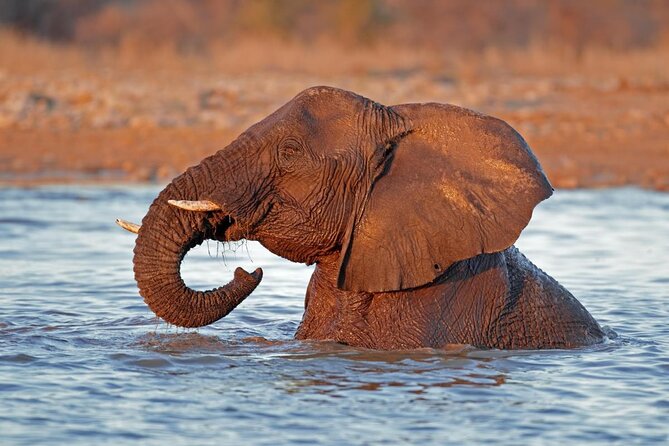
- Etosha waterholes on purpose: game drives are planned around animals coming to drink, including time at Okaukuejo
- Small group feel: max 9 travelers makes the camping setup and driving schedule feel more human
- Camping gear included, sleeping bag not: you’ll get camping equipment, but you may need to hire a sleeping bag
- Park fees and game driving included: national park entry and game drives are part of what you pay
- Swakopmund day has big-road Namibia scenery: you cross dramatic Namib terrain and stop at the Tropic of Capricorn sign
Entering the right mindset for sand, sea, and Etosha
This safari is built around contrasts, and that’s the whole point. Day 1 and 2 are all about Sesriem and the dunes of Sossusvlei, where the light changes so fast you stop thinking about schedules and just watch the colors roll across the sand. Then you cut west toward Swakopmund, breaking up the trip with classic Namib scenery and photo stops. Finally, you land in Etosha, where the “desert” part is real—but the wildlife energy comes from waterholes.
I like that the trip isn’t trying to cram in random stops. It has a clear rhythm: arrive, set up camp, then go straight into the wildlife or the dunes when the light or animal activity is best. That’s why it works for people doing Namibia for the first time on a budget: you’re paying for the main events, not just transportation.
The main trade-off is that early starts and camping logistics are part of the deal. Breakfast can mean very early wake-ups, and evenings are about doing the next thing (waterhole time, camp setup, or breaking camp), not relaxing in one spot all day.
You can also read our reviews of more tours and experiences in Windhoek.
Price and logistics: what $1,355.66 really covers
At about $1,355.66 per person for 6 days, you’re not just buying transport. You’re paying for a package that includes several costly pieces in Namibia: national park entry fees, park fees, guided game driving in the Chameleon Safaris vehicle, and the Sossusvlei excursion itself.
Also included are tap water, plus meals (breakfast 5 times, lunch 6 times, dinner 4 times). Drinks are not included, and water beyond the tap water is specifically called out as extra. That’s a practical detail because on long drives in Namibia, you’ll want to control your spending by planning for bottled drinks yourself.
You’ll also want to budget for a sleeping bag if you don’t already have one. The tour includes camping equipment, but sleeping bags are not included; they can be hired. If you’re traveling light, that hire option can save you hassle.
Lastly, the group size cap of 9 matters. You get to move as a group, but it doesn’t feel like a cattle call. That helps on days like Etosha, where the value is in watching animals through careful driving and repeated waterhole visits.
Day 1 in Sesriem: the camelthorn shade and setting up
You start with a 07:00 pick-up option within Windhoek city limits, then move to Chameleon Safaris HQ for a short pre-departure meeting. That meeting is useful even if you’ve done other safaris, because it sets expectations on timing, camping gear, and how the day will run.
The drive to Sesriem takes you up and over Namibia’s central plateau, with mountain scenery and a couple of practical stops. You’ll pass Rehoboth for essential supplies, then travel on via BűellsPort, aiming to reach Sesriem around lunchtime.
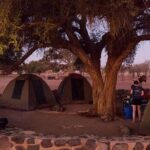
Once you arrive, the camp is set up under a huge ancient camelthorn tree, and you get a glimpse of the towering red dunes of what’s described as the world’s oldest desert. After setting up, you’ll have a picnic-style lunch. This is the day to get your bearings: dunes at a distance, camp in view, and a night that positions you for the sunrise the next morning.
The big practical moment is camp setup. One review highlight I took seriously: guides like Raymond have a reputation for making camping feel manageable, including showing people how to put up tents, even if they’ve never camped before. That kind of real instruction can turn a nervous first night into a confident one fast.
Day 2 Sossusvlei and Dune 45: pre-dawn for a reason
If you want Namibia to feel cinematic, this is where it happens. Sunrise in the dunes isn’t a marketing line—it’s the main event, and the tour starts before dawn.
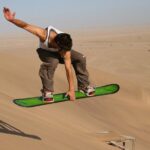
Today’s big move is a pre-dawn start toward Dune 45, named because it’s about 45 km from Sesriem. You drive in darkness and early twilight, then arrive at Dune 45 and climb to a vantage point for sunrise. The payoff is the light: dunes turning orange, apricot-red on one side and shadowed on the other, with great depth and photo-friendly conditions.
You’ll also get a quick breakfast back at the vehicle after reaching the dune viewpoint. It’s not a long stop dressed up as comfort; it’s more like a guided, timed mission for the best light, with just enough food to keep you functional for the climb and photos.
A small note for your planning: sunrise means your body clock will feel like it took a hit. If you’re easily thrown off by early mornings, consider bringing eye masks or anything that helps you sleep earlier than usual in camp.
Day 3 Swakopmund drive: Tropic of Capricorn and Namib plains
On day 3, you leave the desert dunes behind and head west into more classic Namib scenery. After an early breakfast, the route crosses Namib gravel plains—flat, seemingly empty terrain broken by huge inselbergs, those isolated rock forms that look like they don’t belong to the same world.
You cross the Tropic of Capricorn at 23.5 south latitude, and there’s a signpost where you stop for photos. This is one of those moments that’s simple but satisfying: a tiny marker that makes the scale of the place feel real.
Then you hit two mountain passes. First is the Gaub River canyon, described as a smaller canyon. After that, you continue up to the top of the mountains and descend steeply into the canyon carved by the Kuiseb River before it heads toward the ocean. Even if you don’t want to be photographing every pull-off, this drive is worth your attention because the terrain changes quickly and keeps your eyes working.
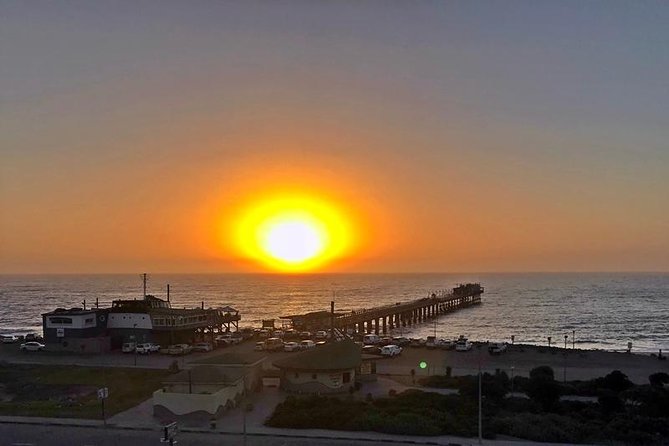
The day ends in Swakopmund. The itinerary snippet doesn’t spell out a specific afternoon activity, but this is your coastal-side reset after dunes and driving days. It’s a good time to rest, stretch out, and mentally shift from sand colors to sea-air vibes.
Day 4 Etosha begins at Okaukuejo waterhole
Etosha is where this trip turns from scenery to wildlife rhythm. After breakfast, the plan is to be on the road from 09:00, using a scenic route on comfortable paved road to reach Etosha National Park in the afternoon. Then you do a first camp drive into the park to set up camp.
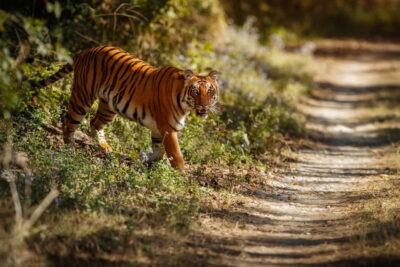
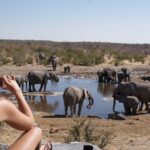
Once you’re settled, the evening focus is the waterhole at Okaukuejo. This is not a random stop. The tour frames Etosha as a desert place where water is scarce, so the waterholes become meeting points for animals—and that’s why your game driving approach is to take in as many waterholes as possible.
Even if you’ve seen wildlife before, Etosha’s waterhole time can feel oddly concentrated. It’s one of those set-ups where you’re not chasing animals across huge distance. Instead, you’re positioned close to where they need to be, and you wait for the action to come.
Day 5 Halali camp and the morning drink game plan
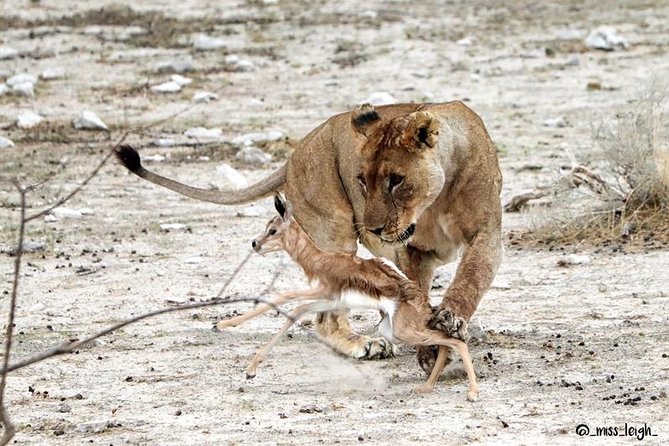
Day 5 is all about repeating the Etosha waterhole strategy, but with new territory. After breakfast, the plan includes getting an early start for animals coming to drink. The tour also builds in a stop at a designated picnic area for a quick breakfast before continuing the game drive toward camp at Halali.
Halali is not just a place to sleep. The name comes from a bugle refrain used during sport hunting with horses and hounds in Europe, sounding Halali to signify that the hunt was over. It’s a reminder that Namibia’s conservation story includes a long, complicated mix of past land use and modern wildlife management.
In practical terms, what you care about is that the drive is structured around animal activity. That means you’re spending your daylight in the right zones at the right times, rather than gambling on sightings.
This is also where the small group size really helps. When you aren’t dealing with a large tour crowd, your driver can manage timing and positioning more smoothly at stops like waterholes.
Day 6 back to Windhoek: Otjiwarongo fuel and Okahandja wood carvings
You start by breaking camp and heading south back toward Windhoek. You stop briefly at Otjiwarongo to refuel the truck, then continue through Okahandja.
Okahandja is known for Namibia’s largest wood carving market. This is one of the better souvenir stops on any Namibia itinerary because it’s connected to local craft makers rather than just a shop row. The tour gives you the chance to buy a truly Namibian souvenir while supporting the artisans and communities.
You aim to be back in Windhoek in the late afternoon, and there’s a shuttle service to your accommodation within Windhoek city limits.
This day is intentionally not too heavy. After Etosha and the early mornings, you don’t want one more long, mentally taxing stretch. Instead, you get a final taste of culture and then a clean handoff back to the city.
What camping feels like here (and what to prepare)
This is a budget camping safari, which means the “style” matters. You’ll get camping equipment, and you’ll have tap water. But sleeping bags aren’t included, and drinks and water (including mineral water) are not part of the package.
If you’re new to camping in Namibia, the best advantage you’ll have is that you’re not thrown into total DIY mode. From the guide-focused feedback, Raymond has a reputation for making first-time campers comfortable by teaching tent setup clearly. That sort of coaching matters more than people think. The first time you fumble with a tent in dry air and early darkness, you’ll wish you had learned in daylight.
Packing-wise, keep it simple:
- Bring your sleeping bag or plan on hiring one
- Plan for very early mornings, meaning you’ll want layers for cooler pre-dawn starts
- Bring a way to keep electronics charged during driving days
Also: the tour notes a moderate physical fitness level requirement. That doesn’t mean you need to train for a hike marathon, but it does mean you should be comfortable with walking around dunes and camp areas, and being active for sunrise viewing.
Who this safari fits best
This is a strong fit if you:
- Want Namibia’s top highlights in one tight itinerary without paying for a luxury version
- Prefer guided wildlife drives and structured dune time
- Are okay with camping and early starts
- Want a small-group experience (max 9) and not a huge convoy
It’s less ideal if you need guaranteed long stops in cities or you get cranky when mornings start well before daylight. Also, if you’re picky about comfort, remember that drinks are extra and the sleeping setup depends on whether you bring a sleeping bag or hire one.
Should you book this Sand, Sea & Etosha budget camping safari?
I’d book it if you want your Namibia trip to feel like a real adventure, not a long list of checkboxes. The value is solid because the ticket covers the expensive essentials: park entry, game driving, the Sossusvlei excursion, and the core meals. Then you’re adding your own spending on drinks and anything optional.
I’d think twice if you hate early wake-ups or you know you dislike camping. The sunrise at Dune 45 is the kind of experience that’s hard to recreate later in the day, so this route asks for that trade.
If you’re flexible, travel with a practical attitude, and want to see Etosha animals around waterholes rather than hope for sightings, this safari has the right structure to deliver.
FAQ
What time does the tour start?
The meeting point start time is 07:00.
Is pickup available from Windhoek?
Pickup is offered within Windhoek city limits, and there is also a shuttle service back to accommodations within Windhoek city limits on the final day.
How long is the safari?
The tour duration is 6 days (approx.).
How many people are in the group?
The group maximum is 9 travelers.
What’s included in the camping setup?
Camping equipment is included, but sleeping bag is excluded.
Can I hire a sleeping bag?
Yes, sleeping bag hire is available.
What meals are included?
Breakfast is included 5 times, lunch is included 6 times, and dinner is included 4 times.
Are national park entry fees included?
Yes. National park entry fees and park fees are included.
Are drinks and mineral water included?
No. Drinks and water (including mineral water) are not included.
Is the tour refundable if I cancel?
No. The experience is non-refundable and cannot be changed for any reason.