REVIEW · WINDHOEK
3 Day Sossusvlei Budget Camping Safari
Book on Viator →Operated by Chameleon Safaris · Bookable on Viator
Waking up for Dune 45 changes everything. I love the pre-dawn timing that puts you on the dunes when the colors are at their best, and I love the small-group camping setup run with local Namibian guidance. One catch: you’ll need to plan for what’s not included, especially a sleeping bag and most snacks/drinks.
From Windhoek, the day starts with a straightforward 07:00 pickup and a short pre-departure meeting at Chameleon Safaris HQ. The drive has real payoffs, too: mountain scenery on the way to Sesriem, then a campsite placed under a huge camelthorn tree with those iconic red dunes in view.
On the way out, you get more than just Sossusvlei. There’s a classic stop at Solitaire for apple pie, a photo break at the Tropic of Capricorn, and then you finish with a long desert-to-coast transfer and drop-off in Swakopmund after lunch near Walvis Bay Lagoon.
In This Review
- Key things to know before you go
- Dune 45 at sunrise is the reason to do this
- Sesriem camping setup: the desert feels close on Day 1
- Day 1 road classics: Solitaire pie and Capricorn photos
- Day 2: Dune 45 again, then Deadvlei on foot
- Sesriem Canyon: lunch, cooling down, and the rare water moment
- Day 3: desert departure, Walvis Bay Lagoon lunch, Swakopmund drop-off
- Price and value: why $632.65 can make sense here
- The group size (max 7) helps more than you think
- Gear, comfort, and what to expect from camping
- Should you book this 3-day Sossusvlei budget camping safari?
- FAQ
- What time does pickup happen in Windhoek?
- How many people are in the group?
- Where does the safari start and where do you end it?
- What meals are included in the price?
- Is a sleeping bag included?
- Are snacks and drinks included?
- What happens if I cancel?
Key things to know before you go
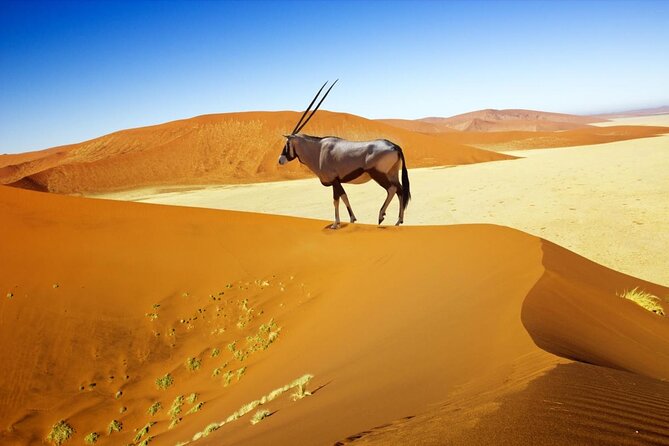
- Dune 45 sunrise is built in, with an early departure so you’re not rushing in the dark
- Camping with dinner and two breakfasts keeps this a true budget-friendly way to see Sossusvlei
- Deadvlei is handled with the right access plan (2×4 parking, then 4×4 shuttle into the area)
- Sesriem Canyon has a swim option, a welcome break from dune heat
- Your trip ends in Swakopmund, so you don’t have to backtrack to Windhoek
Dune 45 at sunrise is the reason to do this
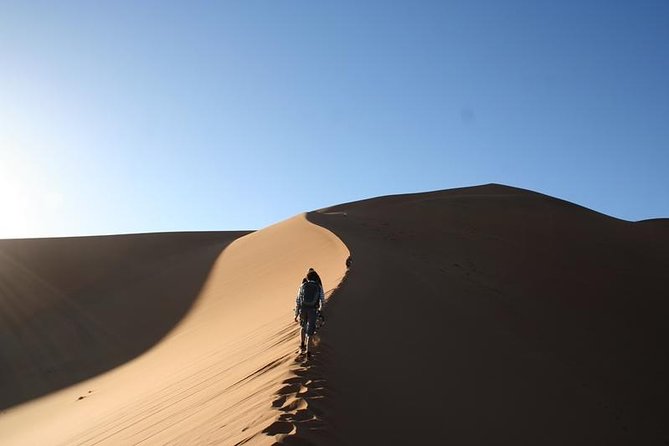
If you care about photos, you care about timing. This safari is designed around the best light window—before the desert fully heats up—so you can climb up to the viewing spot and watch the dunes shift from dark to orange to red.
Dune 45 is named because it sits 45 km from Sesriem, which makes it far enough to feel remote but close enough to manage as part of a short itinerary. You’ll be out early, drive down an ancient river bed surrounded by tall dunes, and then do the classic climb for the sunrise view. This is where the experience feels most alive: the light changes fast, shadows stretch, and the colors look different every few minutes.
Practical note: sunrise dune viewing always means cool air at the start and warm sun later. Bring a layer you can peel off once you start walking and climbing.
You can also read our reviews of more tours and experiences in Windhoek.
Sesriem camping setup: the desert feels close on Day 1
Day 1 begins in Windhoek with pickup within the city limits at 07:00, then a brief meeting at Chameleon Safaris HQ. That meeting matters more than it sounds. It’s time to get clear on the group pace, how the camp will work, and what you should expect from early starts.
The drive to Sesriem climbs up from the central plateau, passing through areas like Rehoboth for essential supplies and then onward through desert terrain. Expect scenery that looks different as the road rises and changes character—more reason to be awake and ready with your camera.
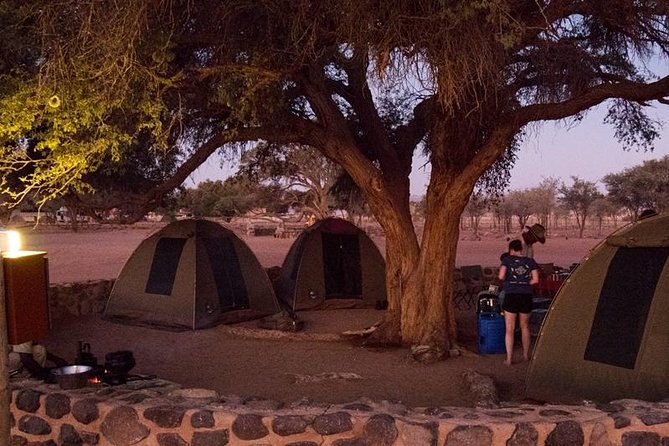
When you arrive near lunchtime, you make camp under a huge ancient camelthorn tree. That’s not just a cute detail. A shaded meeting point is valuable in Sossusvlei country because heat can hit hard, and it gives you a place to reset before going out again. From camp, you can glimpse the towering red dunes—so even if you don’t climb anything that first afternoon, you still get the payoff.
Then, after you’ve taken in the setup, the plan is structured to match the desert’s reality: cool mornings, hotter afternoons. One of the smart parts of this itinerary is that it doesn’t try to force big walking in the worst heat window.
Day 1 road classics: Solitaire pie and Capricorn photos
Leaving Sesriem for the next leg happens after an early breakfast. You head west across gravel plains toward the Namib’s dramatic rocky features (the kind of inselbergs that make the horizon look sculpted).
The route includes the kind of small stops that make a long transfer easier:
- Solitaire for stretching your legs and sampling apple pie, famous for good reason and set in an old homestead style with photo-friendly props
- A photo stop at the Tropic of Capricorn (23.5 south), where you can do that quick, fun roadside picture
- Two mountain passes on the morning drive, which means the road itself gives you changing views even when you’re not hiking
These pauses don’t feel like wasted time. They help you arrive ready for the next desert morning instead of drained and cranky.
Day 2: Dune 45 again, then Deadvlei on foot
Day 2 starts with another pre-dawn departure. Doing Dune 45 twice might sound repetitive, but it’s actually a smart way to make the timing work for different group energy levels and sunrise conditions. The cooler temperatures in the early morning make climbing more comfortable, and you’re less likely to feel rushed.
The first stop is again Dune 45. You drive down through the dunes/river-bed area, then take the sunrise climb. On the descent, you get breakfast—so you’re not just freezing in the dark and then waiting around.
Then comes the big walk: Deadvlei. The access plan matters here. You park at the 2×4 area (about 55 km), then use a 4×4 shuttle into the Sossusvlei zone. That keeps the schedule manageable and helps you avoid turning your day into a logistics headache.
Once you’re in, you explore on foot through the area, focusing on the contrast:
- bleached, cracked clay
- skeletal camelthorn trees
- and the constant backdrop of huge dunes with shifting color
It’s not just scenery—it’s atmosphere. The silence is thick out there, and walking makes it easier to notice textures and scale than if you’re only driving past.
After the walking time, you shuttle back to your vehicle, then return toward Sesriem for lunch.
Sesriem Canyon: lunch, cooling down, and the rare water moment
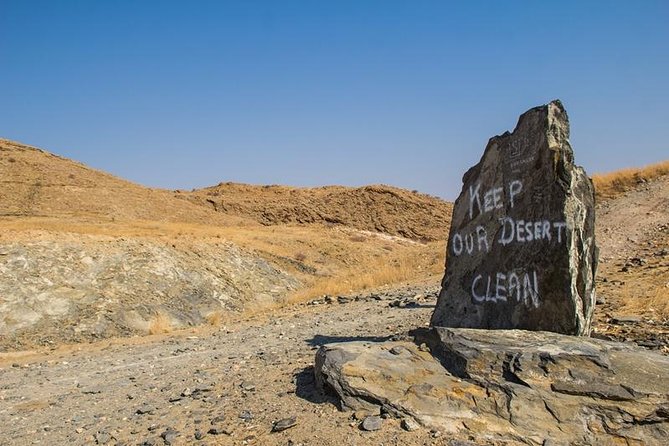
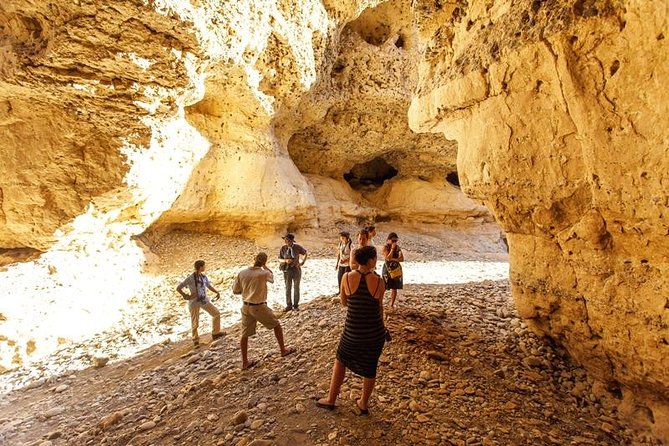
In the afternoon, the safari returns to Sesriem for lunch and a swim and late-day visit to Sesriem Canyon. This is one of those spots where the desert gives you a break. The canyon is known for being one of the few permanent water sources in the area, and that means the environment feels a touch more alive than the surrounding sand and rock.
Timing is key. Late afternoon is often the sweet spot: you’re not cooking in the full midday heat, and the light gets softer for photos and canyon walks.
This part of the itinerary also helps balance the trip. After mornings built around climbing and walking, Sesriem Canyon is your reset button.
Day 3: desert departure, Walvis Bay Lagoon lunch, Swakopmund drop-off
Day 3 is a long travel day, and the itinerary handles it with a reasonable pace. You depart early from the desert and work your way to the coast.
Lunch is at Walvis Bay Lagoon, which breaks up the day so you don’t just sit in a vehicle for hours without a proper stop. After lunch, arrival in Swakopmund happens about an hour later.
Finally, this safari ends with a drop-off at your preferred accommodation in Swakopmund. That’s a practical win. You’re not stuck hunting for your own transfer at the end of a physically demanding few days.
Price and value: why $632.65 can make sense here
At $632.65 per person (booked on average about 60 days in advance), this is positioned as a budget option. Here’s how that budget adds up in real-life value terms.
You’re paying for:
- guided movement through a remote area (including early starts and dune access)
- two camping nights with dinner included twice
- two breakfasts and three lunches
- transfers from Windhoek and then out to Swakopmund
- small-group structure (max 7 travelers)
What you’re not paying for is also important. Snacks and drinks aren’t included, and that includes bottled mineral water. Also, sleeping bag is not included, so factor in the cost (or renting/bringing one).
So the smart way to look at the value is this: the big expenses of time, transport, and guided access are handled for you. Your main added costs are personal comfort items and everyday food/drink extras.
If you’re the kind of traveler who packs a few essentials and eats what’s provided in the schedule, the price can feel fair for a safari that hits the highest-demand sights.
The group size (max 7) helps more than you think
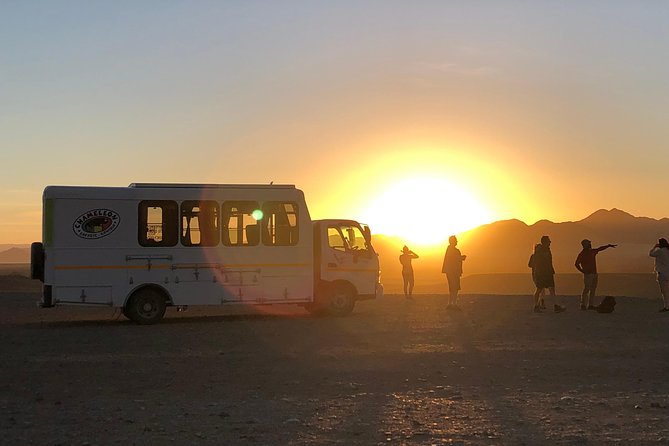
A maximum of 7 travelers keeps the experience from feeling like cattle, especially when you’re doing pre-dawn starts, dune climbing, and shuttle transfers. Smaller groups also tend to move more smoothly at key photo stops—less waiting, less chaos on narrow paths.
It’s also the kind of tour where solo travelers often do well, because the day has clear structure and a guide who can explain what to expect. One guide specifically mentioned in past trips is Johnny (spelled Jonny in at least one account), described as attentive and good at making people feel safe, even when language comfort varies.
Gear, comfort, and what to expect from camping
Camping here is simple, and that’s part of the budget math. The tour provides meals but does not provide a sleeping bag, and it doesn’t include extra snacks or mineral water.
For desert camping comfort, you’ll want to think about the gap between day and night temperatures. Even if the days are hot, early mornings and evenings can feel chilly once you’re away from the sun.
Bring or plan for:
- a sleeping bag (or a rental solution you confirm before you go)
- sun protection for dune walks
- a water plan, since bottled mineral water is not included
- layers for pre-dawn conditions
Also remember that the itinerary includes at least one heavy hiking-style experience (Deadvlei is on foot, and Dune 45 involves climbing). Even if you’re not a serious hiker, pace yourself. Take breaks, drink water, and let the group flow.
Should you book this 3-day Sossusvlei budget camping safari?
Book it if you want:
- Sossusvlei highlights without paying for a luxury package
- camping + guided structure (and you’re fine bringing your own sleeping setup)
- a trip that starts in Windhoek and finishes with real convenience in Swakopmund
- a schedule that respects heat (cool mornings, structured afternoons)
Skip it (or consider another format) if you:
- hate early starts and pre-dawn driving
- don’t want to manage essentials like sleeping bag and buying your own snacks/drinks
- want lots of free, unscheduled time in the desert itself
If you’re budget-minded but still want the iconic dunes—especially that first light at Dune 45—this is a solid, practical way to do it.
FAQ
What time does pickup happen in Windhoek?
Pickup starts at 07:00 within the Windhoek city limits.
How many people are in the group?
The safari has a maximum of 7 travelers.
Where does the safari start and where do you end it?
It starts in Windhoek and ends in Swakopmund, where you’ll be dropped off at your preferred accommodation.
What meals are included in the price?
You get 3 lunches, 2 breakfasts, and 2 dinners included.
Is a sleeping bag included?
No. A sleeping bag is not included.
Are snacks and drinks included?
No. Snacks and drinks, including bottled mineral water, are not included.
What happens if I cancel?
This experience is non-refundable and cannot be changed for any reason.