REVIEW · KAMPALA
8-Day Murchison Falls, Chimp and Epic Gorilla Trekking Safari
Book on Viator →Operated by Home To Africa Tours and Travel · Bookable on Viator
Gorillas one day, rhinos the next. This private 8-day Uganda safari strings together chimp trekking and gorilla trekking with big-game drives and boat trips, plus a rhino-tracking detour that helps you feel the adventure from day one. It’s built for maximum wildlife time across Murchison Falls, Kibale, Queen Elizabeth, and Bwindi.
What I like most is how the schedule stacks action without feeling random. You get proper water wildlife viewing with a 3-hour boat trip to Murchison Falls and a Kazinga Channel launch, and chimp trekking runs like a real field operation with rules briefing first and a full hour once you find the chimps. One drawback to plan for: chimp and gorilla permits cost extra (USD 150 for chimps and USD 600 for gorillas) and are not included in the $3,598 price.
In This Review
- Key things that make this safari work
- First steps in Entebbe and the Zziwa Rhino warm-up
- Murchison Falls: game drive morning, boat trip to the base of the falls
- Exiting Murchison and getting your next primate day started
- Kibale chimp trekking: briefing first, then a real forest search
- Queen Elizabeth National Park: game drive plus Kazinga Channel launch
- Bwindi transfer via Isasha: tree-climbing lions en route
- Gorilla trekking in Bwindi and the Lake Bunyonyi reset
- Price and what $3,598 covers (and what doesn’t)
- Comfort, timing, and the guide/driver factor
- Who should book this safari
- Should you book 8-Day Murchison Falls, Chimp and Epic Gorilla Trekking?
- FAQ
- Where does the safari start?
- Which parks and key sites are included?
- Are chimp and gorilla permits included in the price?
- What boat trips are part of the itinerary?
- Is this tour private?
- Is pickup and drop-off included for the airport and hotels?
- What meals and drinks are included?
- How early is chimp trekking?
- What is the minimum age for this safari?
- Is free cancellation available?
Key things that make this safari work
- Rhino tracking at Zziwa Rhino Sanctuary before Murchison even starts (about one hour of tracking as a warm-up)
- Two big “water for wildlife” days: Murchison Falls base-of-falls cruise plus the Kazinga Channel launch
- Chimp trekking with an 8:00am briefing and structured ranger time
- Isasha area drive on the way to Bwindi for tree-climbing lion chances
- Private setup and an English-speaking guide/driver, with pickup and drop-off handled
First steps in Entebbe and the Zziwa Rhino warm-up
Your safari begins with pickup from Entebbe International Airport. From there, the drive is the start of the story, not a boring transfer. You head toward Murchison Falls National Park, but you don’t go straight in. There’s a detour to Zziwa Rhino Sanctuary for about an hour of rhino tracking.
Why this matters: rhino tracking sets your expectations for how these days feel in Uganda—early, focused, and dependent on what the animals decide to do. It also gives you that rare sense that you’re not just driving through scenery. You’re doing something. You’re following a ranger-led rhythm, learning the rules, and scanning the landscape with a purpose.
Practical note: the whole trip is built around a full-time English-speaking guide/driver and a comfortable safari vehicle for ground travel. That means you’re not trying to coordinate multiple providers on your own while also chasing animals.
You can also read our reviews of more tours and experiences in Kampala.
Murchison Falls: game drive morning, boat trip to the base of the falls
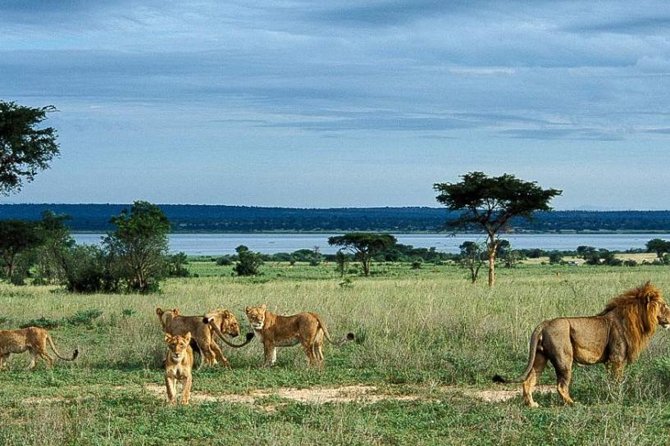
Murchison Falls is where the itinerary starts squeezing in wildlife with both wheels and water. After an early breakfast, you do a morning game drive in the northern section, which the route calls out as having a high concentration of savannah animals.
What you’re looking for on the drive is classic savannah variety: elephants, buffalo, waterbuck, giraffes, Uganda kob, lions, and (if you’re lucky) leopards. You’ll also see lots of birds, which is a nice bonus because it makes the game viewing more than a one-species mission.
Then comes the highlight shift: a 3-hour boat trip to the base of the falls. This is a different viewing world. On land you track movement across distance; on the water you get closer to how animals behave around river life and currents. The falls themselves give you a big, loud landmark, so even if wildlife doesn’t pop up every minute, you’re still experiencing the park in a way that road viewing can’t match.
If you’re the type who likes photos but gets frustrated with constant repositioning, the boat days are a relief. You get time to watch, and you don’t have to keep lifting your eyes while moving the vehicle every five minutes.
Exiting Murchison and getting your next primate day started
Day three is more about transition and placement. You leave Murchison and head toward Kibale Forest National Park, with a stop that depends on how your energy level feels.
If you didn’t hike earlier, you’ll drive to the top of the falls for spectacular views. That gives you a last look at Murchison Falls before you trade roar for rainforest edges.
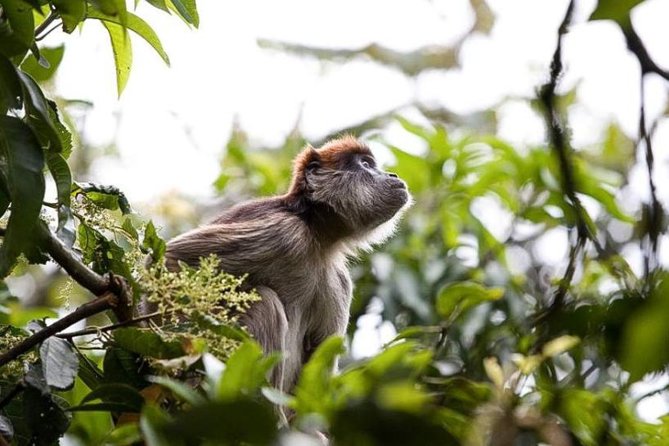
Then it’s straight into Kibale’s primate country. Kibale is known for chimpanzees and other primates like colobus monkeys, mangabeys, and red-tailed monkeys. Even before you trek, that matters because it sets the tone: you’re moving from savannah big game to forest-focused behavior. Your day-to-day expectations change fast on this route, and that’s part of the value.
Kibale chimp trekking: briefing first, then a real forest search
Chimp trekking in Kibale runs on ranger rules and early timing. The activity begins at 8:00am with a briefing on how you should behave while trekking. That briefing isn’t just paperwork. It’s there because you’re entering the chimps’ space, and your actions affect both safety and your chances of staying with the group.
Once you set off, you search the forest with an experienced ranger. When you locate the chimpanzees, you get a full hour with them. That hour is a big deal. It’s long enough for meaningful observation—movement, feeding, social behavior—not just a quick sighting and back to the vehicle.
What to consider: this day still requires moderate physical fitness. The trek is part hiking, part patience, and part following instructions in uneven forest terrain. If you like the idea of structure—rules, search, then a reward—this is a great match.
Also, remember the cost reality: the chimp trekking permit is USD 150 and not included. Even so, the day is included in the sense that your permit is the missing piece, while the ranger-led trekking experience is part of the package.
Queen Elizabeth National Park: game drive plus Kazinga Channel launch
Queen Elizabeth National Park is where the itinerary adds variety again. You get a Queen’s morning game drive and then a Kazinga Channel boat trip.
The morning drive is for classic wildlife sightings. Expect game viewing with the park’s mix of habitats—where animals come to drink and move through open areas. This type of drive is valuable because it complements your forest primate days. You get back to big-animal behavior you can watch with a wider field of view.
Then you shift to water on the Kazinga Channel with a launch trip. This is one of those “change your angle” experiences. You’re not hoping animals cross the road. You’re watching what’s already using the waterway. The channel boat time is also a change of pace: the day doesn’t feel like constant driving, so your eyes can reset between sightings.
If you want a safari that doesn’t rely on one single event to go right, these two-day elements matter. You have game drive chances in the morning and then a different viewing format later. That redundancy is how this itinerary improves your odds.
Bwindi transfer via Isasha: tree-climbing lions en route
By day six, you exit Queen Elizabeth and transfer to Bwindi Impenetrable National Park. The route includes an en route game drive in the Isasha area, which is famous for resident tree-climbing lions.
This is a clever use of travel time. Instead of treating the drive to Bwindi like a blank day, you build in a wildlife-focused stop. Tree-climbing lions are the kind of detail you remember for years, and even if you don’t see them in a specific moment, the Isasha drive adds another layer of chance during a day that could otherwise be mostly transit.
Then you’re set up for Bwindi’s main event. Bwindi is where the trip changes personality again: you’re heading into thick forest country and primate trekking rules take over.
Gorilla trekking in Bwindi and the Lake Bunyonyi reset
Gorilla trekking is the core headline here. Day seven starts early with breakfast, then a ranger guide briefing about how to proceed in the gorilla sanctuary. You then enter the sanctuary for your gorilla trek.
This is where the “moderate fitness” note becomes real. You’re walking with purpose, following ranger guidance, and you’re doing it because the gorillas are out there—not because a vehicle can drive right up to them on command. The payoff is the reason people come all this way.
Once the trek is done, you go back to your lodge for lunch, then check out and transfer to Lake Bunyonyi. This is the recovery chapter. Lake Bunyonyi is not just a place to sleep. It’s a calmer finale where your brain stops scanning for animals every few minutes and starts enjoying a slower pace. Day eight even leans into that, with breakfast happening in front of the Bunyonyi little islands view.
If you like safaris that end with a breather rather than immediately another full on activity, this pairing is smart. You’ll feel the physical effort of gorilla trekking more on the day after, so building in relaxation helps.
Price and what $3,598 covers (and what doesn’t)
At $3,598 per person, this is priced like a full packaged Uganda safari, not a DIY route. What helps the value is that a lot of the cost-heavy stuff is already built in: meals and accommodation across the itinerary, ground transfers in a safari vehicle, all airport/hotel pickup and drop-off, water during safari, and the boat trips.
It also includes landing and facility fees plus fuel surcharge—small line items that add up when you try to assemble everything yourself. You’ll also have coffee and/or tea included, plus bottled water.
What’s not included is the big-ticket primate permits. Chimp trekking is USD 150, and gorilla trekking is USD 600, and you’ll need both. So if you’re budgeting, plan on adding those to the package price. Air fare is also not included.
In plain terms: you’re paying for logistics handled, multiple parks linked efficiently, and the activities that create wildlife time. You just supply the permit costs that allow the treks.
One more thing: the tour is private, so you’re not sharing the vehicle or planning with strangers. You may also see group discounts depending on how many people are in your party, but the experience itself is only for your group.
Comfort, timing, and the guide/driver factor
This tour runs on early starts and field-day rhythm. Chimp trekking begins at 8:00am with briefing. Gorilla trekking is also paired with early breakfast and ranger briefing. Game drives and boat trips follow that pattern, which is why the tour leans on an experienced full-time English-speaking guide/driver.
A big part of the experience is how your guide handles timing, spotting, and decision-making. People connected with this company talk about guides like Derrick, Benon, Vianney, Augustine, and Karim for staying organized and spotting animals effectively. You should expect a guide who knows where to be and when to be there, not someone who treats wildlife as luck only.
Also, your private setup matters. With only your group in the plan, you don’t get dragged into other people’s schedules. That can make a difference on treks where timing and quiet matter.
Who should book this safari
Book this if you want an 8-day Uganda sampler that still hits the top wildlife events: rhino tracking, chimps, gorillas, big-game drives, and two boat experiences. It suits people who like variety and want to see multiple parks without planning each day from scratch.
It also fits couples and small groups who value privacy. The minimum age is 15, and the trip calls for a moderate physical fitness level—mainly because chimp and gorilla trekking are not couch workouts.
Skip it (or at least think hard) if you’re trying to keep costs extremely tight, because the chimp and gorilla permits are significant extras. And if you struggle with early starts and walking on uneven ground, this itinerary may feel like a lot.
Should you book 8-Day Murchison Falls, Chimp and Epic Gorilla Trekking?
Yes, if you want a well-paced wildlife route that combines savannah giants, rainforest primates, and river viewing. The biggest strengths are the way the days are built around sightings: you’re not only driving; you’re also doing boat trips. And you’re not only doing wildlife once; you’re doing it across several ecosystems.
My call comes down to this: the permit add-on is real, but the package is doing a lot of heavy lifting—meals, lodging, transfers, ranger-led treks, and the park experiences that make sightings more likely. If you can handle early mornings and moderate trekking days, this is a strong value way to see a lot of Uganda’s best wildlife in one trip.
FAQ
Where does the safari start?
It starts with pickup from Entebbe International Airport in Entebbe, Uganda.
Which parks and key sites are included?
You’ll visit Murchison Falls National Park, Kibale Forest National Park, Queen Elizabeth National Park, Bwindi Impenetrable National Park, plus a detour to Zziwa Rhino Sanctuary and relaxation at Lake Bunyonyi.
Are chimp and gorilla permits included in the price?
No. Chimp trekking permits cost USD 150 and gorilla trekking permits cost USD 600, and they are not included.
What boat trips are part of the itinerary?
You get a 3-hour boat trip to the base of Murchison Falls and a boat trip on the Kazinga Channel in Queen Elizabeth National Park.
Is this tour private?
Yes. Only your group participates, so it’s set up as a private tour/activity.
Is pickup and drop-off included for the airport and hotels?
Yes. Airport and hotel pickup and drop-off are included.
What meals and drinks are included?
All meals are included as per the itinerary. Bottled water is provided, and coffee and/or tea are included. Drinks other than water are not included.
How early is chimp trekking?
Chimp trekking begins at 8:00am, with a briefing before you set off.
What is the minimum age for this safari?
The minimum age is 15.
Is free cancellation available?
Yes. Free cancellation is available up to 24 hours in advance of the experience start time for a full refund.