REVIEW · WINDHOEK
9 Day Etosha, Skeleton Coast and Sossusvlei Camping and Lodge Safari
Book on Viator →Operated by Chameleon Safaris · Bookable on Viator
Sand, seals, and spotlit waterholes in one trip. This 9-day Namibia safari strings together Etosha National Park, Skeleton Coast, and Sossusvlei using a smart mix of camping and simple lodge-style nights. One thing I really like is how the days are built around actual animal viewing time, especially around waterholes.
I also like the small-group feel (max 10) and the custom safari vehicle with a pop-up roof, which helps you spot movement without craning. The main drawback to plan for is that some nights are still real camping, and a sleeping bag isn’t included, so you’ll want to be ready for chilly desert evenings.
In This Review
- Key things I’d clock before you go
- Why this Namibia route makes sense in 9 days
- Windhoek start, quick culture stops, then Mount Etjo rhinos
- Etosha National Park: waterholes are the main characters
- Etosha days: what can feel tiring
- Camping in Etosha and then rolling into the Himba village
- Skeleton Coast and Cape Cross: seals, shipwrecks, and real Atlantic mood
- Cape Cross Seal Reserve: what makes it so unforgettable
- Swakopmund: a break from camping and a choose-your-own-adventure window
- One thing to watch here
- Tropic of Capricorn to Desert Camp: gearing up for the dunes
- Deadvlei, Sossusvlei, Dune 45, and Sesriem Canyon: the Namib in full color
- Solitaire cheetah learning and the return to Windhoek
- Price and logistics: what you’re really paying for
- So… should you book this Namibia safari?
- FAQ
- How many days and nights are included?
- What’s the maximum group size?
- What’s the pickup setup in Windhoek?
- Is a sleeping bag included?
- What kind of safari vehicle is used?
- How much game driving in Etosha is included?
- Which major areas does this tour cover?
- Is dinner included every night?
- Are drinks included?
- What if my plans change?
Key things I’d clock before you go
- Etosha’s floodlit waterhole time where rhino, elephant, giraffe, lion, and hyena can show up
- Mount Etjo’s rhino work through the Mount Etjo Rhino Trust and a reserve game drive at sunset
- Cape Cross Seal Reserve scale with Cape fur seals (up to 200,000+ in breeding season)
- A real Himba village visit at Otjikandero Himba Orphan Village, with a chance to exchange culture
- 4×4 access for Deadvlei plus classic Sossusvlei stops like brunch at Sossusvlei and photos at Dune 45
- Food cooked in camp—the open-fire dinners and practical meals are repeatedly praised by the guides’ team
Why this Namibia route makes sense in 9 days
Namibia works because distances are huge—but you still want variety. This tour gives you that classic three-part mix: Etosha’s wildlife and waterholes, the Skeleton Coast’s harsh Atlantic drama, and the Namib Desert’s dune world. You’re not doing the same thing twice in a row, which keeps the pace feeling like a set of moments instead of one long drive.
The second thing that makes this route click is timing. You start early for game drives, you hit key places while light is good for viewing and photos, and you spend evenings where you can actually slow down—camp meals, a walk, a waterhole visit.
Finally, the camping-and-lodge balance is practical. You get the open-air experience without making every single night a gear-fuss situation.
You can also read our reviews of more tours and experiences in Windhoek.
Windhoek start, quick culture stops, then Mount Etjo rhinos
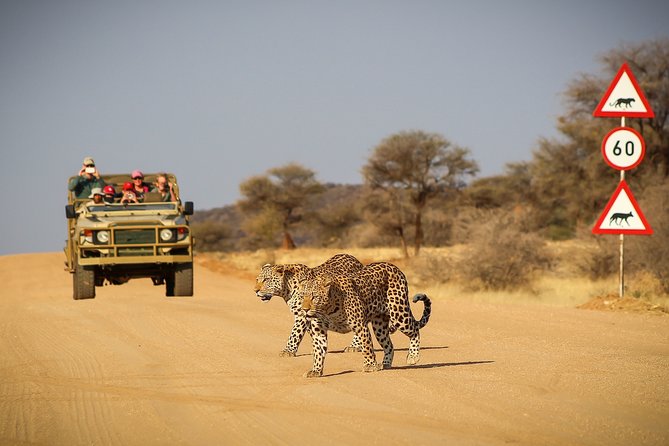
Your day starts at Chameleon Safaris in Windhoek around 7:00am, with a pre-departure talk and then a couple of short stops that help you get your bearings. One is Okahandja Mbangura Woodcarvers Craft Market, where carvers from across Namibia sell their work and you can practice haggling while supporting local makers. It’s quick, but it adds texture before you head into parks.
Then you move on to Mount Etjo Game Reserve, which has a conservation mission focused on the survival of Namibia’s black and white rhinos. The big payoff here is the afternoon game drive specifically tied to that rhino work, plus a sunset finish. If you care about conservation as well as safari thrills, this part sets the tone.
Practical note: the tour aims to arrive at camp before lunch so you’re not rushing all day. That gives you time to set up camp and actually enjoy the afternoon drive instead of feeling like you’re always packing and moving.
Etosha National Park: waterholes are the main characters
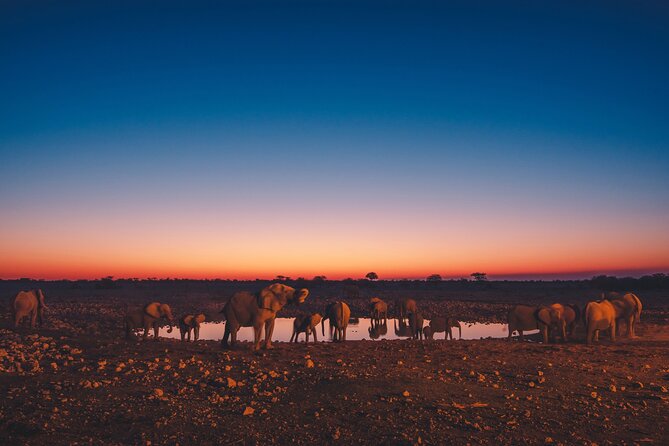
Etosha isn’t just about seeing animals—it’s about how you see them. This tour does it in the way that tends to work best: game drive routing that moves you between waterholes and back toward areas where sightings are realistic.
On your first full Etosha day, you enter the park, drive to Okaukuejo, set up camp, have lunch, then head out for an afternoon drive. The rhythm is classic Etosha: watch for predators, scan plains game, keep an eye on birds and even reptiles, then return before sunset.
The standout Etosha evening moment is the chance to visit the floodlit waterhole. The tour schedule lists frequent visitors there, including rhino, elephant, giraffe, lion, and hyena. Even when you don’t see everything, floodlit waterholes are where you get those “wait—there it is” sightings without having to chase the impossible.
Day 3 adds a different flavor: a sunrise game drive. You’re out early to catch predators while they’re active, then you stop for breakfast at a fenced picnic spot within Etosha. Later you go to the Etosha Pan, described as a “great white place” and a massive 4,500 sq km saline desert area. You’ll even get out and experience the pan on foot for a bit before continuing the search for Big Four.
Etosha days: what can feel tiring
Etosha can be a long day, not because the walking is brutal, but because the driving and scanning never fully switch off. If you’re the type who gets travel-motion sick, consider taking breaks when you can and staying hydrated (tap water is included). Also remember: the best sightings often happen when you’re focused, so the day rewards patience.
Camping in Etosha and then rolling into the Himba village
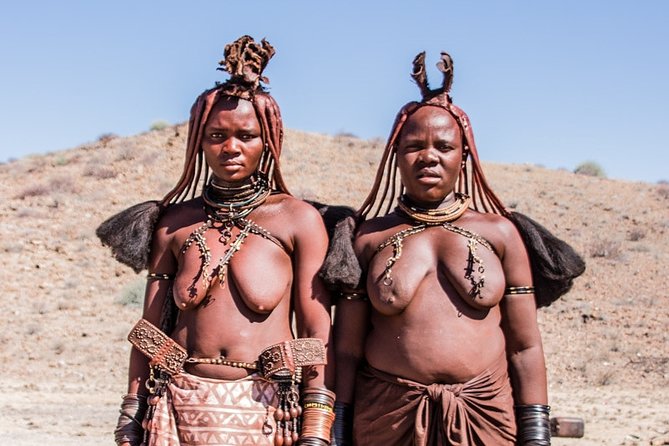
One of the smarter choices on this itinerary is that it doesn’t treat Etosha like the whole trip. After another early exit day, you’re out of the park and then headed to Otjikandero Himba Orphan Village.
This is where you slow down and switch gears from wildlife tracking to human culture and community life. The village visit is guided, and the tour notes that it’s an opportunity to learn about Himba customs and daily life and to share a little of your own culture. If you do this part well—listening more than talking, showing respect—you’ll walk away with something that doesn’t fade like a quick photo can.
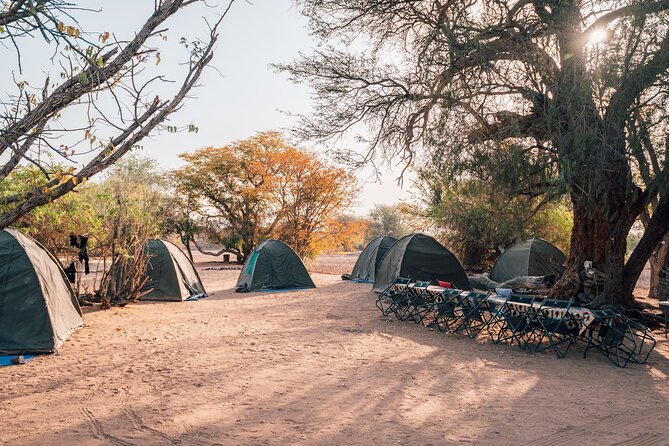
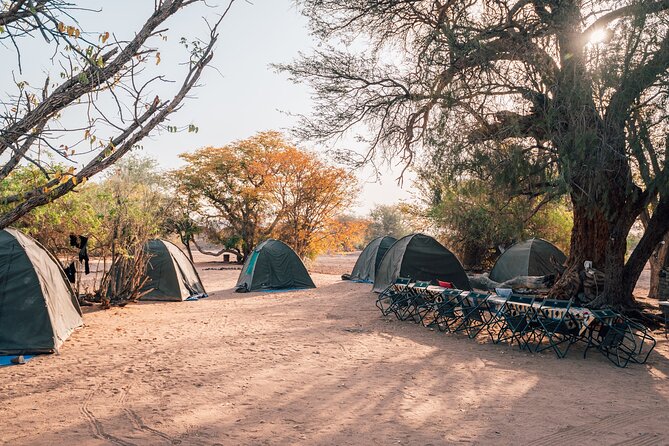
Then it’s on to Palmwag, where you camp at Palmwag Campsite. There’s time to relax, and you might even get lucky with a desert elephant sighting. Dinner is cooked over an open fire, which fits the vibe of the route: animals in the day, camp rhythm at night.
Skeleton Coast and Cape Cross: seals, shipwrecks, and real Atlantic mood
From Palmwag, you head west toward the Atlantic and enter Skeleton Coast National Park. This coastline is described as hostile and fascinating, with shipwrecks shaped by fog, currents, and rough seas over the years. That detail matters because it gives you context: you’re not just looking at a beach. You’re looking at a place that has swallowed ships and challenged navigation for a long time.
You end the day at Cape Cross, where you set up camp for the night. Expect sunset views over the Atlantic and another open-fire dinner. This is also one of those places where the air and the smell are part of the reality—Cape Cross is famous, and the seal colony is right there.
Cape Cross Seal Reserve: what makes it so unforgettable
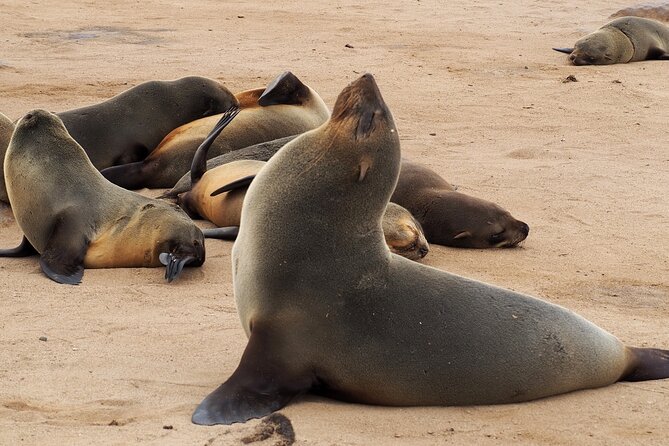
Day 6 is all about seals. After a cooked breakfast, you take a short walk to the Cape Cross Seal Reserve, home to one of the world’s largest Cape fur seal breeding colonies. During breeding season (November–December), the tour notes you can see 200,000+ seals basking on the beach. Even outside peak season, the colony scale is the point: it’s noisy, active, and visually intense.
Then you stop at the Zeila Shipwreck, described as one of the Skeleton Coast shipwrecks with a relatively recent date (2007). It’s a short stop, but it helps you feel the Coast’s mix of beauty and danger.
Swakopmund: a break from camping and a choose-your-own-adventure window
Swakopmund is a breather in the middle of a serious safari arc. The tour arrives early afternoon, and you get time to explore on foot or join optional activities.
The schedule specifically calls out options like skydiving and quad biking, which is a nice reminder that Swakopmund is Namibia’s adventure base for a reason. Dinner is at your own expense tonight, so budget for that meal and know you’ll likely want time to enjoy the town.
Day 7 continues the “your choice” theme. You leave Swakopmund at 11:30, which is deliberate—it gives you a block of morning time for an optional activity. Another set of examples is listed: sandboarding down dune slopes, quad biking through the dune field, or cycling through old parts of Swakopmund.
One thing to watch here
This is the part where costs can creep up because the tour doesn’t include optional activities, and your dinner is also on your own. If you want a more controlled budget, pick one optional activity and keep the rest simple with walking, sightseeing, and one good meal.
Tropic of Capricorn to Desert Camp: gearing up for the dunes
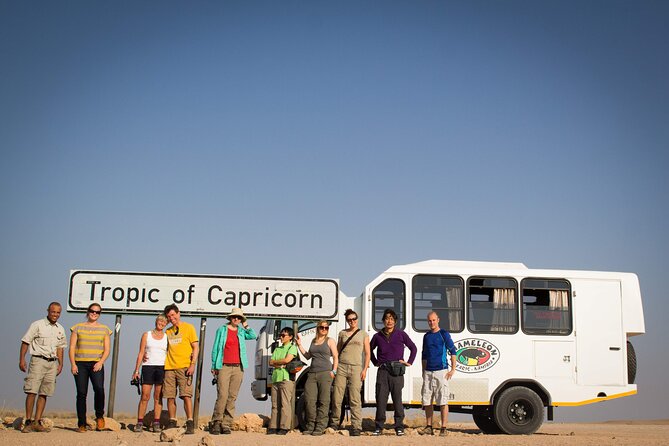
After Swakopmund, you drive south and stop briefly at the Tropic of Capricorn sign for photos and a leg stretch. Then there’s a stop in Solitaire for a bathroom break and a chance to grab a cool drink and snack. Those short breaks are small but helpful in a route this long.
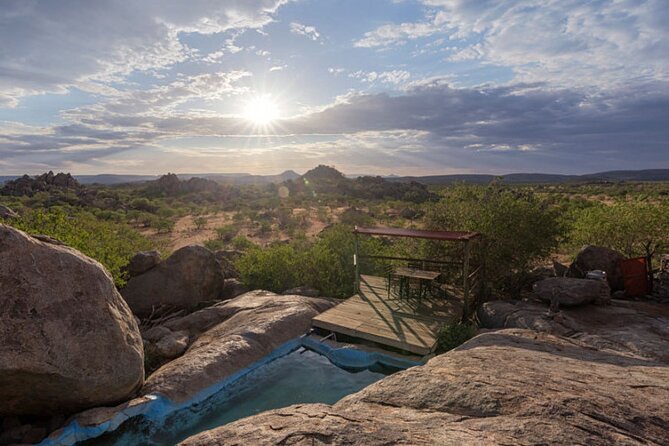
You end day 7 at Desert Camp, where you settle into rooms. The schedule also mentions a quick sunset walk, plus dinner prepared by the guide. Compared to the camping nights, rooms feel like a real reset—especially when you’re moving into some of Namibia’s most visually intense terrain.
Deadvlei, Sossusvlei, Dune 45, and Sesriem Canyon: the Namib in full color
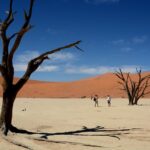
Day 8 is where the desert turns from “pretty” into “how is this real?” You start at Deadvlei from the 4×4 car park, and you explore from there. Deadvlei is a signature stop because it looks otherworldly in the Namib—dry pans, pale ground, and those striking dead trees against bright sand tones. You’re not rushing through it; you get a few hours.
Then you head to Sossusvlei for brunch, which is a smart scheduling choice. Eating in the dunes keeps the day from feeling like one long photo rush, and it means you’ll sit with the setting rather than just pass through.
Next comes Dune 45 for photos. It’s a classic because it’s photogenic and iconic, and the tour keeps the stop focused.
You close with Sesriem Canyon, explored as a smaller but important water source for local wildlife. Even when you don’t see much at the canyon edge, it gives you a reality check: deserts aren’t just sand. They’re systems, and water points matter.
Solitaire cheetah learning and the return to Windhoek
On your last day, you stop at Solitaire Carnivore Conservation project for an hour learning about cheetahs. It’s a compact conservation education moment, and it fits nicely after days of wildlife viewing—this time you’re learning how conservation works around these animals, not just spotting them.
Then you drive back to Windhoek, arriving early afternoon. The tour notes that no flights are recommended on this day, which is practical advice if you’re building your itinerary around this safari.
Price and logistics: what you’re really paying for
At $2,568.47 per person, this isn’t a budget deal. But it is priced like a well-supported route across huge distances. The value comes from what’s included, not just the big-name parks:
You’re getting transport in a custom-built safari vehicle with a pop-up roof, a professional English-speaking driver/guide, and a mix of camping and accommodation across the trip. Meals are heavily covered: included breakfasts, lunches, and dinners (with Swakopmund dinner at your own expense). You also get camping equipment, tap water, and a set of guided experiences such as the Himba village, Cape Cross Seal Colony, and the Sossusvlei region day including Sesriem Canyon.
You’re also getting game driving support: the tour includes a full day and an afternoon game drive in Etosha, plus other timed drives tied to sunrise and evening viewing.
What costs extra is equally clear. A sleeping bag isn’t included, drinks (including mineral water and alcohol) aren’t included, and optional activities in Swakopmund are on you. If you’re planning to buy lots of extras, the effective price climbs fast.
One more practical note: this is a non-refundable tour. That’s not fun to read, but it’s important for decision-making if your dates are uncertain.
So… should you book this Namibia safari?
Book it if you want a classic Namibia highlights loop—Etosha wildlife, Skeleton Coast shipwreck drama, and Sossusvlei dunes—without having to arrange separate trips for each region. This route also suits you if you like small-group pacing and you don’t mind being active early in the day.
Pass or rethink if:
- you’re sensitive to cold nights and don’t want to bring a sleeping bag,
- you don’t want any “on your own” expenses (drinks and Swakopmund dinner and optional activities),
- or you prefer a slower pace with fewer long drive transitions.
If you do book, I’d focus your planning on readiness: expect early mornings, accept that some nights are true camp living, and treat the Himba village visit and conservation stop as the moments that add meaning beyond the photos.
FAQ
How many days and nights are included?
It’s a 9-day tour with 5 nights camping and 3 nights accommodation, for a total of 8 nights.
What’s the maximum group size?
The tour has a maximum of 10 travelers.
What’s the pickup setup in Windhoek?
Pickup is offered within Windhoek city limits, and the tour starts at Chameleon Safaris on Ferry Street. Return airport transfers are included.
Is a sleeping bag included?
No. Sleeping bag is not included, but camping equipment is provided.
What kind of safari vehicle is used?
Transport is in a custom-built safari vehicle with a pop-up roof.
How much game driving in Etosha is included?
The tour includes 1 full day and 1 afternoon game drive in Etosha National Park.
Which major areas does this tour cover?
You’ll cover Etosha National Park, Skeleton Coast National Park (including Cape Cross Seal Colony and the Zeila Shipwreck area), Swakopmund, and the Sossusvlei region (including Deadvlei, Dune 45, and Sesriem Canyon), plus stops such as Mount Etjo and Himba village experience.
Is dinner included every night?
Meals are included for most days, but dinner in Swakopmund is listed as at your own expense. Other dinners are prepared by the guide in camp.
Are drinks included?
No. Drinks, including mineral water, soft drinks, and alcohol, are not included.
What if my plans change?
The tour is non-refundable and cannot be changed for any reason. If you cancel, the amount you paid will not be refunded.