REVIEW · NEW DELHI
08 Days Golden Triangle Tour with Ranthambore and Jhalana Safari
Book on Viator →Operated by Golden Triangle Tours India · Bookable on Viator
Some trips feel packed; this one feels paced.
This private 8-day route strings together Delhi, Agra, Jaipur, and two wildlife parks without you juggling tickets. I especially like the way it pairs famous monuments with real wildlife time, and how private guides keep the story clear while you move from place to place. You’ll also appreciate the comfort details: private air-conditioned transport, bottled water, and a battery bus up to the Taj area.
There’s a lot here, though. The biggest thing to consider is cost creep from monument entrances, since many key sites list fees that are not included (Taj Mahal and multiple Jaipur/Delhi monuments).
In This Review
- Key takeaways before you go
- Why this Golden Triangle + wildlife combo actually works
- Price and logistics: what you’re paying for (and what to budget)
- Vehicle reality check (good to know)
- Day-by-day flow: what each part feels like
- Delhi day starts with Bangla Sahib and slows your brain down
- The big Delhi day: Qutub Minar, Lotus Temple, India Gate, Jama Masjid, Chandni Chowk
- Agra: Taj Mahal plus fort and “Baby Taj” energy
- A second Taj Mahal day: sunrise changes everything
- Ranthambore: tiger country, with two chances built in
- Jhalana Safari Park: leopard chance in Jaipur-area timing
- Jaipur: forts, stepwells, and the classic photo stops
- Temple stops that keep Jaipur grounded
- Amber Fort day: the “Rajasthan day” you came for
- Another Birla Mandir visit on the way back
- The safari + sightseeing pacing trick
- Small details that make a big difference
- Should you book this Golden Triangle with Ranthambore and Jhalana?
- FAQ
- How long is the tour?
- Where does the tour start and end?
- What’s included in the price?
- Are monument entrance fees included?
- How many safaris do you get?
- What kind of vehicle will I use?
- Are the safaris private or shared?
- What about rooms and room sharing?
- Does the tour offer hotel pickup?
- What’s the cancellation policy and what can cause changes?
Key takeaways before you go

- Two safari days at Ranthambore: you get a morning/afternoon rhythm plus an evening option on different days, not just one quick drive.
- Jhalana Safari Park entry included: you’re not treating leopard time as an afterthought.
- Sunrise Taj Mahal time is built in: a calmer, cleaner-feeling visit than the middle-of-the-day crush.
- Guided sightseeing with private local guides: you won’t be wandering around monuments guessing what matters.
- Private transport sized to your group: sedan, wagon, or minivan based on group size.
- Hotel pickup and drop-off included: less stress than figuring out city logistics on your own.
Why this Golden Triangle + wildlife combo actually works
The Golden Triangle usually comes with a tradeoff: speed. You either rush, or you add more days and more money. This one tries to solve that by spreading the classic sights across multiple days, then anchoring your trip with wildlife where timing matters.
What makes it feel smart is the mix. Delhi and Agra give you Mughal scale and big-name architecture. Jaipur adds forts, palaces, and stepwells. Then you shift from sightseeing crowds to the slower suspense of safari roads—where the “plan” is really tiger or leopard sightings, not just checking boxes.
I also like the trip’s focus on private pacing. Instead of being herded through stops on a fixed bus schedule, you’re in a vehicle with your driver and moving with your guides. That matters when you want bathroom breaks, a slightly longer look at a wall of carvings, or a quick detour to grab water before the next stretch.
One more plus: the trip is set up as a private group experience, meaning only your group participates. That tends to make the whole day feel more personal and less chaotic.
You can also read our reviews of more tours and experiences in New Delhi.



Price and logistics: what you’re paying for (and what to budget)
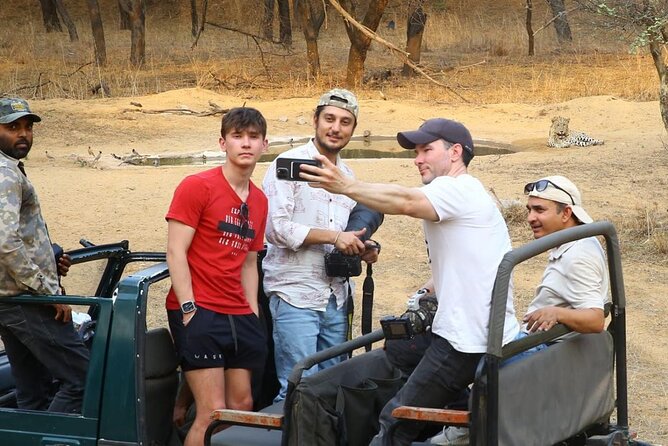
The price is listed at $553.85 per person for an 8-day/7-night trip from New Delhi. That may sound like “just transport and hotels,” but the value is in what’s bundled:
- Private air-conditioned vehicle with a driver
- Daily breakfast (if you choose the hotel-included option)
- Hotel or airport pickup and drop-off
- All sightseeing with private local guides
- Battery bus ride to/from the Taj Mahal parking area up to the monument area
- Bottled mineral water during journeys
- Ranthambore National Park entrance and Jhalana Safari Park entrance
Where you’ll need to think is entrances. Several high-demand sites list separate fees that are not included, including Taj Mahal, Agra Fort, Qutub Minar, Humayun’s Tomb, Jantar Mantar, City Palace, Hawa Mahal, and more. The costs are shown in INR per person, such as Taj Mahal ₹1,100, Agra Fort ₹600, City Palace ₹700, and Qutub Minar ₹550.
If you want an easy way to plan: treat the published price as your “base,” then add a line-item budget for monument tickets. If you skip some fee-charged stops (if your guide offers a lighter alternative), you can keep costs tighter. But if you’re doing everything, plan for it.
Vehicle reality check (good to know)
The car size scales with your group: a 4-seater sedan for 1–2 people, a 6-seater wagon for 3–4, and a 10-seater minivan for 5–10. That’s a practical detail because it affects comfort, trunk space for camera bags, and how easy it is to stop quickly during busy city driving.
Day-by-day flow: what each part feels like
Delhi day starts with Bangla Sahib and slows your brain down
Your first stop is Gurudwara Bangla Sahib, a Sikh gurdwara with a large tank area and a reputation tied to historical healing stories. It’s a calmer start than jumping straight into monuments. You get a sense of the city beyond the usual photo list.
This stop is listed as admission free and short (about 30 minutes). That’s intentional: it sets the tone and keeps you from burning energy on day one.





The big Delhi day: Qutub Minar, Lotus Temple, India Gate, Jama Masjid, Chandni Chowk
The next day goes full Delhi classic.
You’ll see Qutub Minar (UNESCO site, listed height 73 meters, built starting in 1193) and then head to the Lotus Temple (free entry; open to everyone, built 1986). From there you pass India Gate and the Parliament House area near Rajpath—more of a viewpoint moment than a long sit-down stop.
Then comes the religious-history contrast: Jama Masjid, described as one of Delhi’s largest mosques, built 1650–1656 under Shah Jahan. Even if you don’t know every detail, the scale hits fast.
You also get a “local texture” stop with Chandni Chowk, where the pace and crowd energy change the feel of the day. It’s a good place for people-watching and shopping impulses (spices, jewelry, and more), but it’s also busy, so keep your expectations for moving slowly.
A couple of extra Delhi stops round it out: Agrasen Ki Baoli (a protected stepwell) and Humayun’s Tomb (ticket not included). Humayun’s tomb is a useful contrast after Jama Masjid because it shifts you into the Mughal mausoleum mood.
Consideration: this is a long day of many stops. If you’re traveling with kids or anyone who needs frequent breaks, ask your guide to pace entrances and keep transfer time reasonable.
Agra: Taj Mahal plus fort and “Baby Taj” energy
After breakfast, you drive to Agra (about 222 km, around 4 hours). In Agra, the day focuses on the big three: Taj Mahal, Agra Fort, and a quieter Mughal tomb stop.
At Taj Mahal, you’re looking at the ivory-white marble mausoleum built in 1632 by Shah Jahan. The listing doesn’t include the ticket cost, so this is one of the clear “add to budget” items.
You’ll also see Agra Fort (UNESCO, tied to Akbar and later emperors) and Itmad-ud-Daula (often called the Bachcha Taj or Baby Taj in the descriptions you’re given). This is the kind of stop that people sometimes rush—don’t. It tends to feel more intimate and detailed than the “biggest, most famous” monument.
The day ends with Mehtab Bagh (Moonlight Garden), positioned for a Taj Mahal view across the Yamuna. If the timing lines up with sunset light for your visit, it can be one of those “I get it now” moments where you finally understand why people stop walking and just stare.
A second Taj Mahal day: sunrise changes everything
On the next morning, you get the highlight upgrade: watch the sun rise over the Taj Mahal and then do a guided tour inside for about two hours. This is a huge quality-of-life difference versus arriving mid-day.
Also, you’ll use the battery bus that takes you up from the Taj parking area toward the monument. It’s not just convenience—it saves energy at a point when your brain is already running on early starts.
Then you move on to Fatehpur Sikri, described as Akbar’s City of Victory and once the Mughal capital for about a decade. Think: massive complex, strong historical vibe.
After that comes an offbeat but great visual stop: Chand Baori in Abhaneri, a stepwell that drops roughly 30 meters. It’s one of those places where you can’t help but look up and count repeating geometry.
Ranthambore: tiger country, with two chances built in
After all that, you transfer into Ranthambore National Park and check in. Your total time at Ranthambore is longer than many short packages, which matters because safari success depends on conditions and tiger movement, not your schedule.
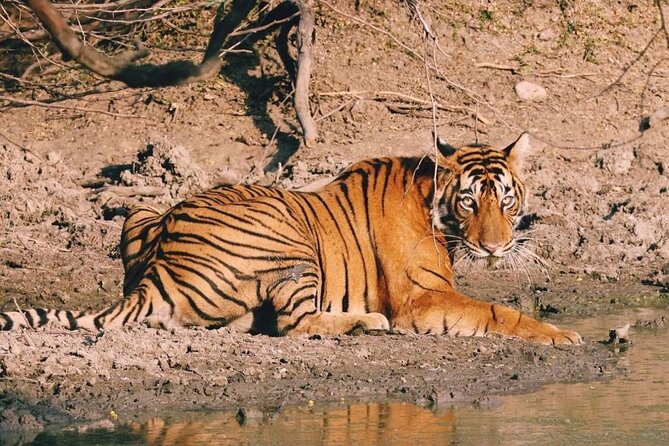
You then get two safaris across the two sessions you’re listed for: one after breakfast and another in the evening. Each safari session is listed at about 3 hours.
Ranthambore is known in this kind of circuit for tiger sightings, and the experience is set up around that. In the feedback you provided, people called out seeing tigers up close as a major win, and that’s exactly what two safari attempts can give you: more probability and more time to learn the safari rhythm (how the drivers position the vehicle, how visibility changes, how the calls move through the group).
Practical consideration: safaris are exciting, but they’re still early morning/evening. If you’re sensitive to heat or long waits, plan your expectations for “waiting between moments that feel like nothing is happening.”
Jhalana Safari Park: leopard chance in Jaipur-area timing
Later in the trip, you shift to Jaipur, then make time for Jhalana Safari Park in the evening. This safari entrance is included, and your listed safari slot is about 3 hours.
Jhalana is different from Ranthambore in feel—more of a “near-city” safari add-on. That can be a good thing if you want wildlife without burning the whole day again on long transfers. The key benefit is that your leopard-focused safari experience doesn’t replace your tiger time; it complements it.
If you’re a wildlife-first traveler, it’s smart to keep your energy up for this evening slot. Wildlife windows don’t care that you just spent hours on palaces and forts.
Jaipur: forts, stepwells, and the classic photo stops
Jaipur is where the trip turns into variety: temples, city monuments, and a fort day with scenic moments.
Temple stops that keep Jaipur grounded
On one day you start with Galta Peeth / Galtaji (Monkey Temple). It’s described as having complex structure and three sacred pools. Whether or not monkeys steal your attention, you’ll feel the local temple energy more than the tourist-only sites.
Then you stop at Birla Mandir Temple, listed as a Hindu temple and noted in your itinerary details for white marble latticework and dedication to Vishnu. Even as a shorter stop, it’s a nice reset from forts and crowds.
Amber Fort day: the “Rajasthan day” you came for
Another day includes Panna Meena ka Kund, a stepwell near Amber Fort, then the main event: Amber Palace. The description calls it the capital until 1728 and highlights a two-hour guided tour of its palaces, squares, and monuments.
This is the kind of stop that rewards a guided explanation. Otherwise, you can walk through beautiful spaces and only half understand what you’re seeing. With a guide, you tend to notice the design choices—where power shows up in architecture.
You also get Jal Mahal for a photo opportunity. It’s a palace in the middle of Man Sagar Lake—brief, but visually memorable.
Then you move to City Palace of Jaipur for about an hour, followed by Jantar Mantar (UNESCO listed) with its 19 astronomical instruments and the story of Sawai Jai Singh II. Your day also includes Hawa Mahal for about 30 minutes—built with red and pink sandstone, in a five-storey pyramidal shape—and then Albert Hall Museum for a quick visit.
Consideration: this is also a long sightseeing day. If you’re someone who likes to linger, ask your guide where you can spend extra minutes and where you can skip.
Another Birla Mandir visit on the way back
On the final morning, you return to Birla Mandir Temple again (listed as free; around 30 minutes). This is either a timing adjustment or a “catch it once more without stress” choice. If you’re already done with temples, you’ll still find it easy to manage because the stop is short.
The safari + sightseeing pacing trick
The strongest part of this trip is how the days don’t pile up in one theme. When you’re in Delhi and Agra, you’re sightseeing-heavy. When you get to Ranthambore and Jhalana, the focus shifts to wildlife schedules.
That pacing matters because safari days can drain you emotionally and physically. If your plan had just one day of wildlife, it would be easy to feel cheated if conditions weren’t great. Two Ranthambore safaris give you a better shot at the kind of tiger moment people remember for years.
In feedback you shared, the trip stood out for flexibility and smooth organization. The owner named Gopal was mentioned for communication and tailoring the itinerary for families and different needs. You also saw praise for drivers including Surendra, Maan Singh, and Man Singh, with comments about safe, skilled driving and making long transfers easier.
Small details that make a big difference
These aren’t flashy, but they’re the stuff you’ll feel on day 3 when you’re tired and still have places to go.
- Battery bus for the Taj area: saves walking energy right when you want to focus on sunrise and the monument.
- Bottled water during journeys: helps during long drives and city traffic.
- Private guides throughout: you don’t lose time translating on your own or guessing what’s important.
- 24×7 support: useful if something changes with timing, especially in India where plans can shift.
- Twin-sharing rooms by default: likely good for most couples and friends; if you’re traveling as three people and want two rooms, you may have to pay an extra charge.
Should you book this Golden Triangle with Ranthambore and Jhalana?
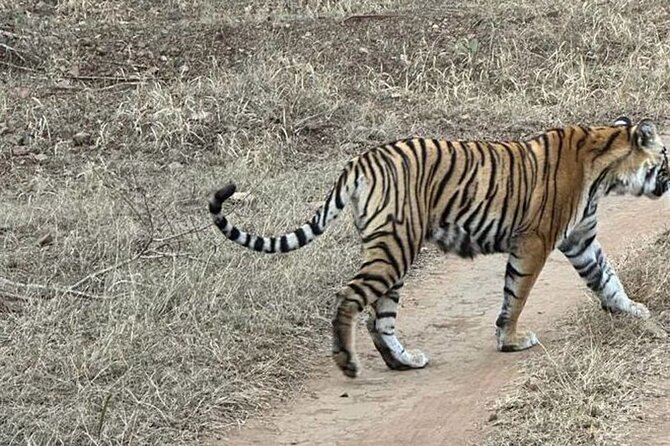
I’d book it if you want the classic India monuments but refuse to trade them for a rushed schedule. The mix of private transport + guides and the wildlife structure (two Ranthambore safaris plus Jhalana) gives you more chances for the experiences that matter.
I’d hesitate if you’re trying to control total costs tightly. The base price is clear, but multiple major sites list entrance fees not included, and Taj Mahal alone is a meaningful line item. You’ll also want to be comfortable with a packed rhythm—especially in Delhi and Jaipur where many stops fit into a day.
If you’re traveling with family (including kids or older adults), this kind of private pacing can be a big comfort win. In the feedback you shared, people highlighted that the trip worked for a wide age range and that customization helped match real needs.
FAQ
How long is the tour?
It runs for 8 days (approximately), with 7 nights of accommodation.
Where does the tour start and end?
It starts with meeting at Indira Gandhi Intl Airport in New Delhi, and on the final day you return to Delhi for drop-off at the airport, hotel, or another location in the city.
What’s included in the price?
The tour includes private air-conditioned transport with a driver, hotel or airport pickup and drop-off, all sightseeing with private local guides, daily breakfast (when booking the option including hotels), bottled water during journeys, battery bus rides to and from the Taj Mahal parking area, and safari park entrances for Ranthambore and Jhalana.
Are monument entrance fees included?
Not all of them. The tour lists several admission fees that are not included, including Taj Mahal, Agra Fort, Itimad-ud-Daula’s Tomb, Qutub Minar, Humayun’s Tomb, Jantar Mantar, City Palace, Hawa Mahal, and others listed in INR.
How many safaris do you get?
You get two safari sessions at Ranthambore National Park (one after breakfast and one in the evening). You also get one safari at Jhalana Safari Park later in the evening.
What kind of vehicle will I use?
For groups of 1–2 people, it’s a 4-seater sedan. For groups of 3–4, it’s a 6-seater wagon. For groups of 5–10, it’s a 10-seater minivan.
Are the safaris private or shared?
The tour is private for your group, and the safari park entrance is included, but the safari itself may be subject to how the park runs vehicles and capacity. The provided details confirm the tour/activity is private to your group.
What about rooms and room sharing?
Rooms are generally twin-sharing. If you book 3 people, rooms are provided on triple-sharing by default. If 3 guests prefer 2 rooms, there may be an additional charge.
Does the tour offer hotel pickup?
Yes. It includes hotel or airport pickup and drop-off.
What’s the cancellation policy and what can cause changes?
Free cancellation is available up to 24 hours in advance for a full refund. The experience requires good weather, and if it’s canceled due to poor weather, you’ll be offered a different date or a full refund. It also requires a minimum number of travelers; if that isn’t met, you’ll be offered a different experience/date or a full refund.