
REVIEW · NEW DELHI
From Delhi: 4 Day Golden Triangle and Tiger Safari Private Tour
Book on Viator →Operated by Lumina Holidays · Bookable on Viator
Tigers, monuments, and zero stress on the roads. This 4-day Golden Triangle-style trip layers Ranthambhore wildlife with classic Delhi, Agra, and Jaipur highlights, and I love that pickup, AC driving, and the guiding are built around keeping your days moving. I also love the way the guides can turn big-ticket sights like the Taj Mahal into something you actually understand (you’ll hear the sort of history that people like Rahil Khan and Azhar are known for), but one catch: some major entrances are not included, and the tiger safari is shared, not private.
A private group setup helps a lot when you want your own pace, photo stops, and less waiting around. Still, it’s a fast timeline across multiple cities, so if you hate early mornings or long drives, keep that in mind before you book.
In This Review
- Key things that make this tour work (and for whom)
- Delhi day: getting oriented fast (and still seeing the good stuff)
- Delhi landmarks that cost extra vs. free stops
- Qutub Minar, President House, Akshardham: where a photo stop can still be meaningful
- Agra: how the sunrise Taj Mahal shapes the whole trip
- Agra Fort and the Baby Taj side quests
- The long drive to Ranthambhore: what to expect on the way
- Ranthambhore tiger safari: shared jeep thrill with real limits
- Jaipur on a single day: palaces, viewpoints, and the famous facades
- City Palace, Hawa Mahal, Jantar Mantar: three different flavors
- Price and value: is $259 per person fair for this mix?
- Guides and service style: the human part that makes it feel easy
- Should you book this Golden Triangle + Ranthambhore safari tour?
- FAQ
- Is pickup from Delhi airport or my hotel included?
- Is this a private tour or a group tour?
- What language options are available for the tour guide?
- Are admission tickets included for all monuments?
- Is the Taj Mahal open every day?
- What happens if my travel dates include Monday?
- Is the tiger safari private?
- Do I need to bring an ID for monuments?
- FAQ
- What type of accommodation is included?
- Are meals included?
- What should I wear for temple visits?
Key things that make this tour work (and for whom)

- Private group, AC car/tempo traveler: you’re not stuck with a mixed crowd hopping in and out all day.
- Sunrise Taj Mahal timing: the early start matters for both light and fewer crowd vibes.
- Ranthambhore tiger safari (shared jeep/canter): thrilling, but you’re sharing the vehicle.
- Delhi Mughal circuit plus a couple of calm stops: Red Fort and Jama Masjid energy, then Lotus Temple for reset.
- Guide-led history with real names: people highlight guides such as Rahil Khan in Agra and Azhar with strong on-site explanations.
- Lunch included on key days: Delhi, Agra, and Jaipur meals are part of the flow (not an afterthought).
Delhi day: getting oriented fast (and still seeing the good stuff)
Delhi can feel like a blur if you arrive on your own. Here, the day starts with a smooth pickup from the airport or your hotel area, which is a big deal when you’re tired from flying or negotiating your first rides. You’re then pointed toward a set of Mughal-era landmarks and city icons that help you get your bearings fast—the kind of sites where the design language (arches, domes, gardens) becomes your quick visual vocabulary for the rest of the trip.
You’ll spend time at Red Fort, built in the 1600s as a Mughal power center, and then move on to Jama Masjid, one of the largest mosques in India. Both places are worth it, but they’re also intense: this is where you’ll want comfortable shoes and a bit of patience for crowd flow. After that, Humayun’s Tomb gives you a calmer, garden-and-mausoleum vibe that makes it easier to understand why Mughal architecture later evolved into the Taj style you’ll see in Agra.
Then comes a thoughtful break with Lotus Temple—a striking, lotus-shaped Bahá’í House of Worship. The design is eye-catching, but the real value is the atmosphere. Even on a packed schedule, you get a small pocket of quiet, which helps more than you’d think when the rest of the day is nonstop sightseeing.
You can also read our reviews of more tours and experiences in New Delhi.



Delhi landmarks that cost extra vs. free stops
Not every stop has the same ticket situation. Some big names like Red Fort, Jama Masjid, Humayun’s Tomb, and Qutub Minar typically involve extra entry fees (those fees are not included by default). On the other hand, you’ll find lighter-cost or free entry options mixed in, like India Gate and Lotus Temple (marked free in the plan).
A practical tip: if you’re traveling with kids or you hate waiting, think of the “not included” monuments as the ones where you should arrive with time buffers and a bit of cash or card readiness.
Qutub Minar, President House, Akshardham: where a photo stop can still be meaningful
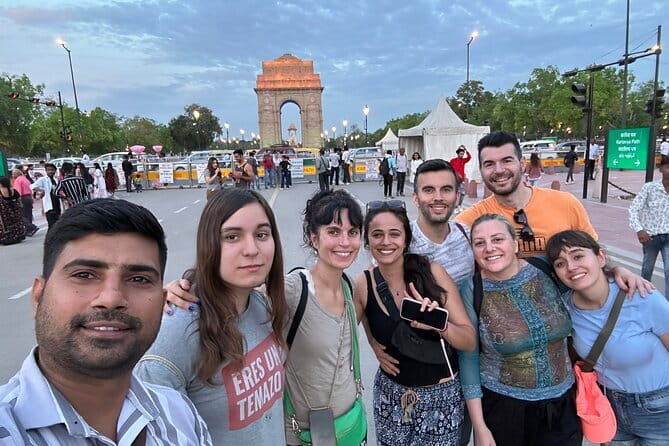
Delhi doesn’t just do history. It also does scale. Qutub Minar is one of those landmarks you recognize instantly once you see it in person—the tall minaret has a strong “how is this still standing?” quality. You’ll also see areas near Rashtrapati Bhavan (President House). Even if you’re not going inside, these photo stops help you understand Delhi’s official layout and why British-era planning later influenced the city’s look.
Akshardham and India Gate round out the day nicely. Akshardham tends to run like a full complex visit, so it’s good that your schedule gives it its own time block rather than treating it like a quick glance. One heads-up though: Akshardham and Lotus Temple are listed as closed on Mondays. If your dates fall on a Monday, you’ll be redirected to Iskcon Temple and Shri KalkaJi Temple instead. That’s a solid swap, and it helps you keep momentum without losing a major part of the plan.
Dress note that matters on this day: you’ll be asked to remove shoes before entering temples and sacred places. Wear shoes you can take off and put back quickly. This isn’t the place for complicated footwear unless you enjoy holding your shoes like a suitcase.
Agra: how the sunrise Taj Mahal shapes the whole trip
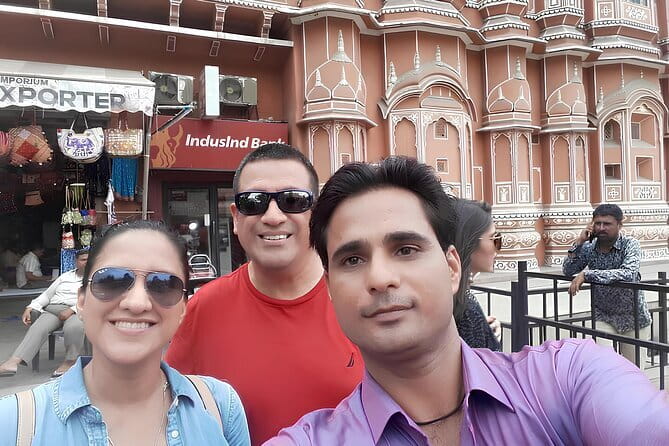
Agra is where the Golden Triangle earns its reputation. The biggest moment here is the Taj Mahal at sunrise. That early timing isn’t just about romance—it’s practical. Dawn light makes the white marble look different than midday glare, and starting early keeps you from wasting time in the thickest parts of the day.
The other practical win: you don’t have to worry about syncing schedules across multiple bookings. You’ll go from Delhi to Agra, check in, and then the next morning you’re out the door for the Taj before the day gets loud. The tour plan also includes breakfast time in Agra, so you’re not stuck searching for food right after the long morning walk.
Entry fees for the Taj Mahal are not included in the base plan, so budget for tickets on arrival or per your chosen option. Also note a critical closure detail: the Taj Mahal remains closed on Friday. If your trip lands a Friday in Agra, your day needs to be handled around that reality.
Agra Fort and the Baby Taj side quests
After the Taj, Agra gets two strong follow-ups.
Agra Fort is another UNESCO-listed site, and it’s the kind of place where you’ll appreciate the guide’s explanation of power, defense, and changing eras. It’s easier to understand history when the buildings are physically there in front of you—this fort layout makes that happen.
Then you’ll visit Itimad-ud-Daula, often called the Baby Taj. It’s smaller than the Taj, but that’s exactly why it works. You’re not forced to choose between time for photos and time for detail. If you like patterns, marble work, and the slow beauty of craft, this stop scratches that itch.
People also frequently praise guides specifically for the Taj Mahal storytelling—Rahil Khan is one example that comes up for clear, in-depth guidance. Azhar also gets mentions tied to Taj Mahal history in Agra, so if history matters to you, you’ll likely enjoy the explanations your guide brings to the marble.






The long drive to Ranthambhore: what to expect on the way
Once Agra ends, you’ll head toward Sawai Madhopur / Ranthambhore. The drive is listed as about 3 hours, and this matters because it’s not just a transfer—it’s a day reset. You’ll check into your accommodation and unwind, which is exactly what you should do if you want to feel sharp for the safari the next morning.
If you’re the type who hates being car-sick, I’d recommend you pack your basics: water, a light snack, and something to handle motion. The tour covers a lot of ground in four days, so you’re better off staying comfortable than trying to tough it out.
Ranthambhore tiger safari: shared jeep thrill with real limits
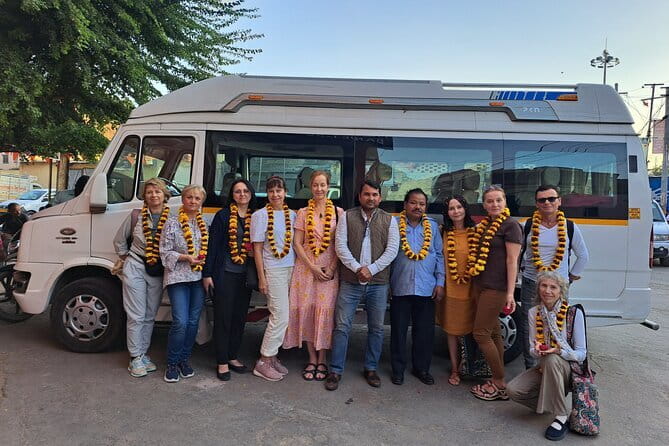
Day 3 is the wildlife centerpiece. You’ll go on a morning tiger safari through Ranthambhore National Park. The safari time is listed at about 3 hours, and it’s a shared safari on jeep or canter depending on the option chosen. That shared part is the main consideration here: you’ll have other people in the same vehicle, and you may not get the “exclusive, choose-your-own-position” feel you’d want for big-budget private wildlife experiences.
Still, the excitement is real. Ranthambhore is one of India’s big tiger-viewing regions, and the rugged terrain plus the early light can create those goosebump moments fast.
After the safari, you’ll visit Ranthambhore Fort. It’s a shorter, easier pacing change—about an hour—and it adds a historical layer so your day isn’t only waiting for wildlife.
Lunch is included with Ranthambhore-style dishes (options like Laal Maas, Ker Sangri, and gatte ki sabzi are specifically mentioned as examples). This is another practical touch: it keeps your energy up without forcing you to hunt for food after wildlife time.
Jaipur on a single day: palaces, viewpoints, and the famous facades

Jaipur is the grand finale, and the schedule is built to pack in the headline sights without skipping the smaller “why it matters” details.
You’ll head to Jaipur after lunch on Day 3, check in, and then start fresh the next morning with breakfast and check-out time. The plan then takes you to Amer Fort (Amber Fort). This is UNESCO-listed and a big architecture moment tied to Rajput power. You’ll also likely appreciate why this fort sits where it does: it’s all about position and defense, not just looks.
Then you’ll stop at Jal Mahal, the palace in the lake. It’s short, but it’s a great visual reset between major fort and palace buildings. The “wow” comes quickly, and you can enjoy it even with limited time.
City Palace, Hawa Mahal, Jantar Mantar: three different flavors
City Palace is the centerpiece complex in the old city. Expect a walking-feeling visit through major royal sections, with enough time to understand the site rather than just pass through it.
Hawa Mahal (Palace of Winds) is usually the iconic postcard stop. It’s also worth it in person because you see the facade design up close—an architectural way of saying this city loved spectacle, not just function.
Finally, Jantar Mantar is your science-and-geometry break. It’s an astronomical observatory, built by Maharaja Sawai Jai Singh II in the 1700s. Even if you don’t consider yourself a science person, it’s a fun contrast to forts and palaces. You end the trip seeing that Jaipur wasn’t only about royal glamour—it was also about measurement, precision, and curiosity.
You’ll also have lunch included on this day. Jaipur food examples include Dal Baati Churma. This helps keep the day from turning into a snack hunt, especially since you’ll be walking.
On the ride back, the departure time to Delhi is listed at about 3 hours 30 minutes. It’s a long but straightforward end, and you’ll be dropped at your desired location in Delhi.
Price and value: is $259 per person fair for this mix?

At $259 per person, the value depends on what’s included in your chosen option. The plan is clear about that: monument entry fees are included only if you select that entry-fee option, and several major sights are marked as not included. The Taj Mahal, Red Fort, Jama Masjid, Qutub Minar, Agra Fort, and other key stops fall into the ticket-extra category based on the plan details.
So the real question becomes: are you paying mostly for organization and transportation, or also for ticket convenience? Either way, you’re getting several “big ticket” components:
- Private AC transport across multiple cities, not just local transfers
- Professional live guiding in various foreign languages
- Pickup and drop from Delhi airport/railway or your chosen locations
- Hotel accommodation with breakfast when you pick the 3- or 5-star option
- Tiger safari (shared jeep/canter) when chosen
- Included lunches on the key sightseeing days
I think the price is most fair if you want someone to manage the logistics and if you’re comfortable paying separate tickets for the big monuments. If you’re already planning to visit all these places anyway, the bundled travel time and guidance can be worth it. If you’d rather choose your own sights and skip some paid entrances, you might end up paying similarly for tickets while losing flexibility.
Guides and service style: the human part that makes it feel easy

This kind of tour lives or dies on the guide. The standout pattern in the feedback you provided is praise for clear explanations and a calm, professional way of handling the day.
Names like Anil Sharma show up tied to hospitality and helpfulness. In Agra, Rahil Khan is specifically called out for deep knowledge of the Taj Mahal, and Azhar is praised for guiding through the Taj and sharing details that made the experience feel more personal. You’ll feel that difference most at the moments where you’re looking at a building and wondering what you’re actually seeing. A good guide turns “pretty marble” into a story you can recall on your next trip.
Also, this is a private tour, meaning it’s only your group. That matters when you have older parents, active kids, or just a preference for staying together without group-size chaos.
Should you book this Golden Triangle + Ranthambhore safari tour?
Book it if you want:
- A tight 4-day loop from Delhi to Agra to Jaipur with a wildlife highlight
- Private group logistics and AC driving so you’re not planning daily rides
- A guide-led Taj Mahal and fort experience (and you’re okay with some separate entrance fees)
- A shared safari you can get excited about without paying for a fully private wildlife vehicle
Skip or rethink it if:
- You dislike early starts. Sunrise Taj Mahal is the core moment.
- You want fully private safari access or maximum control over every wildlife factor.
- You’re very sensitive to ticket costs, since several major monuments are not included by default.
If you like big monuments, clear explanations, and one truly memorable animal morning, this is a strong way to do it. Just budget for tickets where needed, and wear footwear that behaves well when shoes come off.
FAQ
Is pickup from Delhi airport or my hotel included?
Yes. Pickup is offered from Delhi Airport, Railway Station, or your desired locations in Delhi.
Is this a private tour or a group tour?
It’s a private tour. Only your group participates.
What language options are available for the tour guide?
The tour includes a live tour guide with various foreign languages. You should select the correct option before booking so communication is smooth.
Are admission tickets included for all monuments?
Not always. Entry fees for monuments are included only if you choose that option. Several major sites are marked as admission ticket not included in the plan, so you should expect to pay some entrances separately.
Is the Taj Mahal open every day?
No. The Taj Mahal remains closed on Friday.
What happens if my travel dates include Monday?
Akshardham and Lotus Temple remain closed on Monday. You’ll be taken to Iskcon Temple and Shri KalkaJi Temple instead.
Is the tiger safari private?
The wildlife tiger safari is shared (jeep/canter) based on the selected option.
Do I need to bring an ID for monuments?
Yes. Bring a valid photo ID for monument entry checks.
FAQ
What type of accommodation is included?
Hotel accommodation with breakfast is included if you choose the 3 or 5 star option.
Are meals included?
Lunch is included on the sightseeing days listed in the plan (Delhi day, Agra day, and Jaipur day).
What should I wear for temple visits?
Wear comfortable shoes. You will need to take shoes off before entering temple/sacred places.