
REVIEW · NEW DELHI
4-Day Ranthambore Tiger Safari Tour to Agra and Jaipur from Delhi
Book on Viator →Operated by Hire Taxi India · Bookable on Viator
A tiger safari plus the Taj Mahal in four days sounds like a sprint, and that’s exactly the appeal. You get a tight route through Delhi, Agra, Ranthambore, and Jaipur, with private sightseeing help and smooth ground transport between cities. It’s built to keep you moving without turning your trip into a logistics scavenger hunt.
Two things I really like: you’re not just doing the big icons, you’re also getting two Ranthambore jungle safaris with a naturalist and shared-vehicle wildlife time. And in the cities, the setup leans practical—pickup options, monument tickets included, plus water bottles and a live guide for the heavy explanations.
One drawback to weigh: the safari is scheduled around park access, and Ranthambore is closed from July 1 to Sept 30, while the sunrise Taj visit depends on weather and is closed on Fridays.
In This Review
- Key things that make this tour work well
- How the 4-day Delhi–Agra–Ranthambore–Jaipur flow feels in real life
- Pickup, private guides, and the small details that reduce stress
- Delhi Highlights: Qutub Minar, India Gate, and Parliament views
- Sunrise Taj Mahal and Agra Fort: a timing game worth playing
- Ranthambore National Park safari strategy: two rides, two chances
- Jaipur on day four: Amber Fort, Hawa Mahal, City Palace, Jantar Mantar
- Shopping stops without the hard sell feeling
- Price and logistics: is about $261 good value for this route?
- Who this tour suits best (and who might want a different pace)
- The honest tips I’d use on this exact route
- Should you book this 4-Day Safari + Icons tour?
- FAQ
- What cities and main stops are included?
- Do you get pickup in Delhi?
- How many tiger safaris are included?
- Are the safari vehicles shared or private?
- When is Ranthambore National Park closed?
- Is the Taj Mahal visit sunrise, and is it always available?
- Are monument entrance fees included?
- What meals are included?
- What dress code should you follow?
- Do I need passport details when booking?
Key things that make this tour work well
- Two Ranthambore safari outings (morning and afternoon) in shared jeeps or canters, each with a naturalist
- Sunrise Taj Mahal timing with golf-cart help to get you there efficiently
- Private city guides plus admission fees for major monuments (so you’re not constantly paying out of pocket)
- AC private vehicle transfers between cities, with pickup offered from Delhi/Noida/Gurugram
- Smart pacing for mixed ages, with enough breaks built in for real-world stamina
How the 4-day Delhi–Agra–Ranthambore–Jaipur flow feels in real life
This is a classic north India combo, but the value is in how it’s stitched together. You start with Delhi’s standout heritage sites, then shift to Agra for the Taj and Agra Fort, then you head into Ranthambore for the main wildlife draw. Jaipur rounds it out with forts and palace architecture before you’re delivered back toward Delhi.
The best part is that you’re rarely left to figure out what to do next. Transfers are handled in an air-conditioned private vehicle, with approximate drive times (traffic can swing those numbers), and a guide who can interpret what you’re seeing rather than just pointing at it.
What also helps: you get a mix of early starts and calmer blocks. Delhi begins at 8:00 am, the Taj has a very early pickup for sunrise, and then the days are structured around fixed sightseeing windows and safari slots.
You can also read our reviews of more tours and experiences in New Delhi.



Pickup, private guides, and the small details that reduce stress

If you’ve ever done India travel by yourself, you know the friction points: finding the right door at the right time, coordinating tickets, and managing transportation changes. This tour’s approach is mostly about reducing those headaches.
You get pickup offered from any desired location in Delhi, Noida, or Gurugram, including the airport. You’ll also have mobile ticket access, and you carry fewer loose ends because entrance fees are included for the listed monuments. Throughout the route, there are water bottles provided, which matters more than you’d think on long drive days.
A key practical detail: the safari experience is described with a naturalist in the mix, and the city side includes a professional private live tour guide. In plain terms, you’ll spend less time trying to decode your surroundings on your own.
From the feedback shared with this route, drivers named Mr. Singh, Mr. KK, and Ravi have been singled out for keeping things on schedule. The biggest takeaway you can use, even without knowing the driver: don’t be shy about confirming the time each morning and making sure you understand where to meet.
Delhi Highlights: Qutub Minar, India Gate, and Parliament views
Delhi on day one is a strong opener because it’s compact and landmark-heavy. You start with an 8:00 am pickup and head straight to Qutub Minar, a UNESCO World Heritage site. This isn’t just a photo stop; the tower is explained in terms of its era and the political story around its construction, which makes the scale and purpose feel real instead of random.
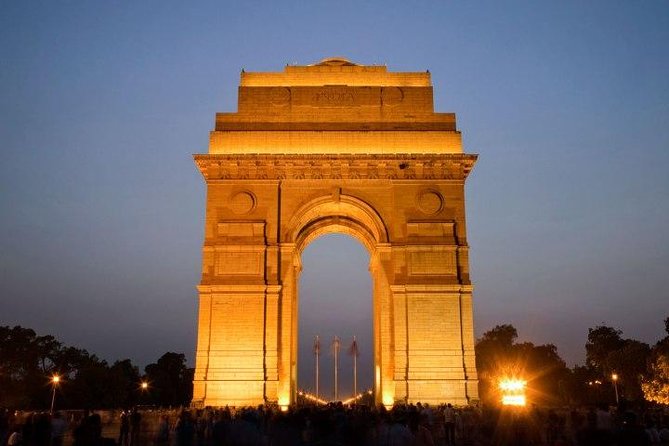
From there, you move to India Gate, the memorial tied to soldiers who died in WWI and other conflicts. It’s quick, and that’s fine—this tour isn’t trying to turn Delhi into a two-day marathon. Then you drive past major government buildings, including the Parliament area and the President’s House.
The practical value: you’ll get your bearings early, and you’ll start building context for what India looks like beyond the obvious tourist magnets. It also sets you up for the next leg toward Agra without losing half the day to “big city wandering.”
Sunrise Taj Mahal and Agra Fort: a timing game worth playing

Agra is where the trip’s wow factor locks in. The Taj Mahal visit is scheduled at sunrise, with pickup around 6:00 am. That timing matters. Morning light changes everything—shadows soften, crowds can be less aggressive, and the colors feel calmer.
Two things you need to know before you’re counting on it:
- The Taj Mahal sunrise visit is closed on Friday.
- It’s also subject to weather conditions, so don’t build your day around a guaranteed perfect sky.
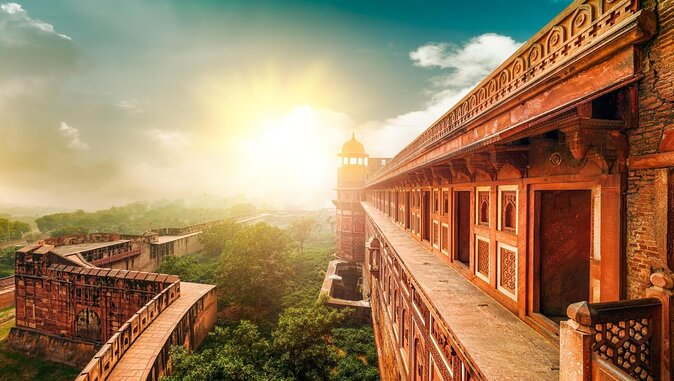
Once you’re in, the tour includes a golf cart ride to and from the Taj Mahal, which is a real comfort bonus. Walking distances at the complex can add up fast, especially if you’re traveling with kids or older family members. After the Taj, you visit Agra Fort, a massive red-sandstone fortress associated with Mughal rulers and packed with palace-style structures inside.
Then there’s a short shopping stop (Sanskriti’s Imperial Gems) focused on marble inlay work, carpets, Zari and embroidery, and leather goods. The smartest way to use this time: treat it as a chance to spot what’s actually made in the region, not as a must-buy session. If you’re tempted, compare prices and decide later—Agra has a way of making souvenirs feel urgent.
Ranthambore National Park safari strategy: two rides, two chances
Ranthambore is the reason most people book this tour, so the key is how the safari portion is handled. You get two wildlife outings: one in the morning and one in the afternoon. Each is described as a shared-vehicle safari (shared jeep or shared canter), and each includes a naturalist.
Here’s the reality check I’d give you upfront: tiger sightings can’t be guaranteed on any reserve system. What you can control is how many times you’re out there. Two safaris is the biggest advantage in this package, because it gives you extra chances and spreads out the odds.
Also, the safari timing matters for animal movement. Morning often brings more active behavior, while afternoons can shift sightings depending on heat and wildlife patterns. You’re not stuck with only one shot.
One logistics detail you must plan around: Ranthambore National Park is closed from July 1 to Sept 30 each year. If your travel window falls in those months, you’ll need a different season or a different itinerary.






Jaipur on day four: Amber Fort, Hawa Mahal, City Palace, Jantar Mantar
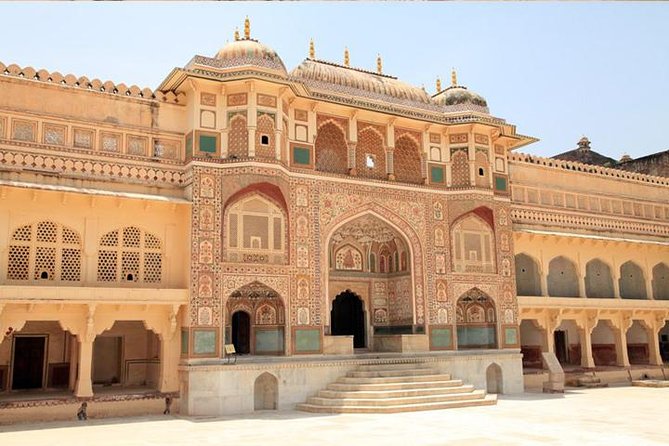
Jaipur closes the loop with architecture you can actually feel in your body—lots of stone, lots of detail, lots of carved work. You start with Amber Fort, where you learn how it used to be the capital of the Kachhwaha clan before Jaipur became the official capital in 1727. That background helps you understand why this place is so massive and so carefully laid out.
Next is a stop for Hawa Mahal, the Palace of Wind. Even when it’s described mainly as a façade, the shape and the lattice-like screens and balconies still look incredible. This is a shorter viewing window, so focus on the symmetry and the reason it was designed to let royal women observe street life.
After lunch, you visit City Palace of Jaipur, which includes a museum portion and a look at the royal residence complex. The tour also points out Jantar Mantar, the stone observatory from the 18th century. If you like science mixed with art, Jaipur is the place to bring that curiosity out.
If you still have energy, there’s time at a carpet and textile house where you can see silk carpet work by hand. Keep expectations realistic: this is partly education and partly a shopping environment. If you’re here to learn how handmade textiles work, it’s useful time.
Shopping stops without the hard sell feeling
You’ll notice shopping shows up twice—once in Agra and once in Jaipur. In tours like this, shopping stops can go either way: sometimes they feel like filler, sometimes they feel like context.
In this route, the Agra stop is framed around artisan categories like marble inlay work, embroidery, and carpet types. The Jaipur stop is framed around hand-woven carpets and textiles, with silk work by hand. That structure makes it easier for you to treat these moments as a chance to understand materials and craftsmanship rather than just browsing.
My advice: set yourself a budget before you step in. If you want something, pick one high-quality item rather than five impulsive ones. And if you want photos, don’t wait for someone else—use your free time, and ask your guide how they suggest you handle photo-taking spots.
Price and logistics: is about $261 good value for this route?
At roughly $261 for four days, the value depends on what you’d otherwise pay for on your own. The package includes:
- City and monument visits with entrance fees for the listed highlights
- Pickup from Delhi/Noida/Gurugram and transfers between cities in AC private transport
- Two Ranthambore safaris
- Three breakfasts and four lunches, plus dinner included
- 3 nights accommodation if booked with the hotel option
- Naturalist support on safari and a live guide for sightseeing
- Golf cart ride to/from the Taj Mahal
What’s not included is what usually adds up on day trips: drinks and gratuities (recommended), plus optional extras like the hotel gala dinner on Christmas and New Year’s Eve if those dates apply. Taj sunrise is also subject to weather, and Ranthambore has seasonal closure.
So is it a deal? For many people, yes, because you’re paying for planning and scheduling, not just tickets. If you’d hate spending your time negotiating entry lines, booking transport, and coordinating safari slots, this price looks fair for the amount of organization you get.
Who this tour suits best (and who might want a different pace)
This tour works especially well if you want a “big hits” trip without micromanaging. It also fits mixed-age travel because the plan includes set meal times and mostly guided, scheduled movement rather than wandering. That matters if you’re traveling with kids, grandparents, or anyone who needs predictable rest breaks.
It’s also a good choice for first-timers to this region who want the Taj and Jaipur highlights plus a serious attempt at the tiger experience.
The main reason to pause is the safari uncertainty. Even with two outings, you may not see a tiger every single time. If wildlife is your only priority and you want maximum control, you might prefer a more flexible plan designed around additional safari days (not described here).
The honest tips I’d use on this exact route
Small choices can make a big difference on short trips like this. Here are the practical moves that fit this plan.
- Use your guide for photos. One tip shared by people who did this route is that the Taj area includes people offering professional photos. A simpler approach is to ask your guide to take shots for you. You still get great results without adding extra steps.
- Plan your clothing for early mornings. Sunrise Taj means you’ll be up early. Bring something comfortable for cooler dawn temperatures and keep your smart-casual style in mind.
- Hydrate and keep snacks simple. You’ll have water bottles provided, but long drive days add up. Stick to easy-to-digest food between lunch and dinner.
- Respect the safari rules on the day. You’re in shared vehicles, with set viewing windows. Show up ready, stay flexible, and accept that wildlife timing controls the agenda.
Should you book this 4-Day Safari + Icons tour?
I’d book it if you want a structured route that hits the must-sees—Qutub Minar, sunrise Taj Mahal, Agra Fort, two Ranthambore safaris, Amber Fort, City Palace, and Hawa Mahal—without needing to run the logistics yourself. The included entrances, guides, transport, and key meals make it feel like real value rather than a pile of separate bookings.
I’d hesitate if your dates fall in the Ranthambore closure period (July 1 to Sept 30), or if you’re traveling on a Friday and sunrise Taj is a must. Also, if tiger sightings are the make-or-break goal for you, remember two safaris help—but they don’t guarantee.
If you’re the type who likes clarity, set meeting times, and a guide to translate what you’re seeing, this is a strong way to do north India fast.
FAQ
What cities and main stops are included?
You’ll cover Delhi, Agra, Ranthambore National Park, and Jaipur. Key sights include Qutub Minar, India Gate, the Taj Mahal, Agra Fort, Amber Fort, Hawa Mahal, and the City Palace area with Jantar Mantar.
Do you get pickup in Delhi?
Yes. Pickup is offered from the airport or any desired pickup location in Delhi, Noida, or Gurugram.
How many tiger safaris are included?
There are two jungle safaris at Ranthambore National Park, scheduled as morning and afternoon trips.
Are the safari vehicles shared or private?
The safaris are in shared jeeps or shared canters, depending on the safari setup on the day.
When is Ranthambore National Park closed?
Ranthambore National Park is not open from July 1 to Sept 30 each year.
Is the Taj Mahal visit sunrise, and is it always available?
The Taj Mahal is scheduled for a sunrise visit with pickup at about 6:00 am. It is closed on Fridays, and the sunrise visit is also subject to weather conditions.
Are monument entrance fees included?
Yes. Entrance fees for the listed monuments are included.
What meals are included?
Breakfast is included for three days, lunch is included for four days, and dinner is included as specified in the itinerary.
What dress code should you follow?
The dress code is smart casual.
Do I need passport details when booking?
Yes. Passport name, number, expiry, and country are required at booking (passport photo copy).