REVIEW · NEW DELHI
6-Days Golden Triangle Tour With Ranthambore & Jhalana Safari
Book on Viator →Operated by Golden Triangle Tours India · Bookable on Viator
Golden Triangle tours can feel like a sprint. This one slows down, adds extra safari time in Ranthambore and Jhalana, and uses comfortable hotels and transport so you spend less energy on logistics.
What I like most is the built-in rhythm: breakfasts in 4 or 5-star hotels for five nights and air-conditioned private transfers that actually get you from sight to sight without constant haggling. The second big plus is that the safari rides themselves are included—two safari games at Ranthambore plus one Jhalana safari—so you can plan around wildlife time instead of second-guessing costs.
One key consideration: monument entrance fees are not included, and the total add-on is substantial (listed as about $90 per person). If you hate surprise spending, budget for it early.
In This Review
- Key points worth knowing before you go
- A Six-Day Golden Triangle with real safari time
- Delhi landmarks in one day: Qutub Minar, Lotus Temple, Old Delhi markets
- Agra at dawn: Taj Mahal guided visit plus fort and “Baby Taj”
- Ranthambore safaris: two rides, Gypsy/Canter options, and the real wildlife rhythm
- Jaipur starts with Patrika Gate, then you shift into leopard-park mode
- Jaipur heritage day: Amber Palace, Jal Mahal photos, City Palace, Jantar Mantar, and Hawa Mahal
- Final Jaipur temples and return to New Delhi
- Price and value: what $397.28 buys you (and what costs extra)
- Private tour comfort: AC vehicles, vehicle size by group, and smoother planning
- What you should watch for: tickets, timing, and souvenir traps
- Should you book this Golden Triangle with Ranthambore and Jhalana?
- FAQ
- What’s included in the tour price?
- Are monument entrance tickets included?
- How many safari rides are included?
- Does the tour include meals besides breakfast?
- What kind of vehicle will I ride in?
- Is this tour private or shared?
- What are the room-sharing arrangements?
- Where does the tour start in New Delhi?
- Is free cancellation available?
Key points worth knowing before you go
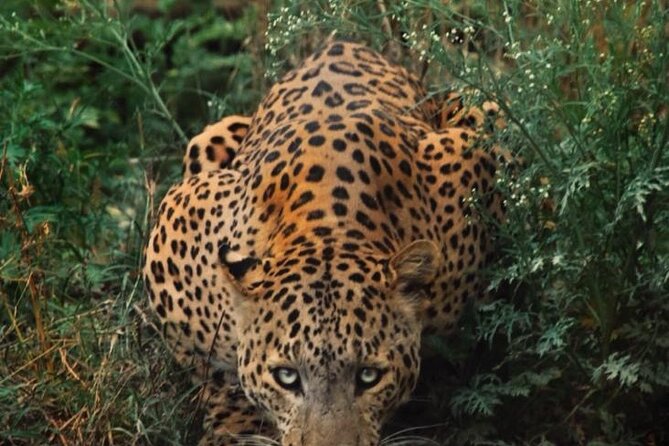
- Two Ranthambore safaris plus one Jhalana safari means wildlife gets real time, not a quick glance.
- 4 or 5-star hotel stays with breakfast keep the trip comfortable between early mornings and long drives.
- AC private vehicle and a trained representative reduce the usual Golden Triangle headaches.
- Taj Mahal and other big sights include guided time, but entry tickets are extra.
- Your group stays together on a private tour, with vehicle size matched to your number of travelers.
A Six-Day Golden Triangle with real safari time

This tour takes the classic route—Delhi, Agra, Jaipur—and gives it a more comfortable pace. Instead of trying to cram everything into a blur, you’re spread across 6 days / 5 nights with time to rest, eat at your own pace, and still fit in wildlife.
That pacing matters because your days include early starts for key sights, plus drives between cities. You’ll get a more relaxed feel in Old Delhi and Old Jaipur, and you won’t have to treat every stop like a photo checkpoint.
Also, the wildlife focus is unusually clear for a Golden Triangle package. You’ll have two safari rides in Ranthambore (using Gypsy or Canter vehicles) and one Jhalana Safari in Jaipur. Even if tigers or leopards don’t show every time—wildlife has its own rules—you’ll at least be spending meaningful hours where sightings are possible.
You can also read our reviews of more tours and experiences in New Delhi.



Delhi landmarks in one day: Qutub Minar, Lotus Temple, Old Delhi markets
Day 1 is a smart mix of Delhi “great hits” and the kind of sensory chaos that makes the city feel real.
You start with Qutub Minar, a UNESCO World Heritage site and one of Delhi’s most iconic monuments—a tall, 73-metre minaret attributed to the Delhi Sultanate era (constructed in 1193 by Qutub-ud-din Aibak). It’s the kind of place where you can appreciate details even if you’re not a monument person.
Then comes Lotus Temple, built in 1986. It’s a standout because it’s open to everyone regardless of religion, and the flower-like design makes it an easy stop to enjoy even if you’re tired from travel.
From there you’ll pass India Gate, a war memorial near Rajpath, which is also a popular local hangout spot. Next up are two heavyweights from the Mughal period: Jama Masjid (constructed between 1650 and 1656 by Shah Jahan) and Humayun’s Tomb (commissioned in 1558). These are major scale sites, and you’ll understand Delhi’s layers faster when you see them back-to-back.
Finally, you land in Chandni Chowk, Old Delhi’s shopping and street-food zone. This is where Delhi becomes alive—spices, dried fruit, jewelry, saris, and narrow streets packed with little shops.
Practical note: some monuments in Delhi are listed as having tickets not included, while others are free stops. Either way, your guide and timing help you avoid the worst of the navigation stress.
Agra at dawn: Taj Mahal guided visit plus fort and “Baby Taj”
Agra is one of those places where timing changes everything. You’ll be set up for an early start to see the Taj Mahal at sunrise, then continue with a guided visit inside that’s planned for about two hours.
The Taj Mahal stop is built around its origin story—Shah Jahan’s mausoleum—and the pacing matters because sunrise light is when the white marble softens. Even without being a photography purist, it’s the moment that makes the Taj feel less like a checklist item and more like a place.
After the Taj, you move through three more Mughal-era icons:
- Agra Fort (UNESCO-listed), tied to major Mughal emperors.
- Itmad-ud-Daula, often called the Baby Taj and nicknamed a jewel box for its refined look.
- Chand Baori in Abhaneri, a massive stepwell accessed by 3,500 steps. It’s not as famous as the Taj, but it’s exactly the sort of stop that breaks up monument overload.
A quick word about effort: this day is monument-dense. The value here is that you get guided time without having to design the day yourself. The tradeoff is that you’ll want comfortable shoes and a water plan.
Ranthambore safaris: two rides, Gypsy/Canter options, and the real wildlife rhythm
Ranthambore is where the tour starts to feel different from many Golden Triangle trips. You’re not just sightseeing—you’re looking for animals, and the schedule reflects that.
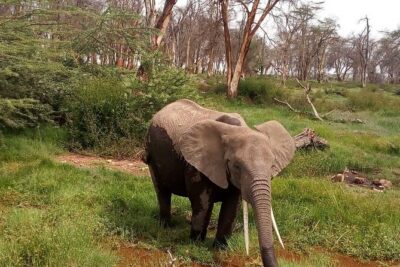
You’ll have two safari games at Ranthambore National Park, each listed as about 3 hours. That’s important because safari time is the main “currency” of wildlife trips. Most Golden Triangle tours either skip wildlife entirely or squeeze it into a single outing. Here, you get a second shot.
You also get a choice of safari vehicle type in the package: Gypsy or Canter. That can affect how you experience the drive—how you move, how you view the landscape from the seat, and how comfortable you are for the full ride.
Wildlife timing is never guaranteed, but Ranthambore is known for sightings, so your odds improve simply because you spend more time there. The bigger win is mental: you’re not constantly checking your watch, because the tour is designed around the safari blocks.
Jaipur starts with Patrika Gate, then you shift into leopard-park mode
Jaipur doesn’t start with the usual big palace photos. It begins with a modern cultural stop: Patrika Gate at Jawahar Circle. It’s known for colorful murals of Rajasthan’s history and festivals, and it’s a fun way to ease into Jaipur without immediately walking under crowds of top monuments.
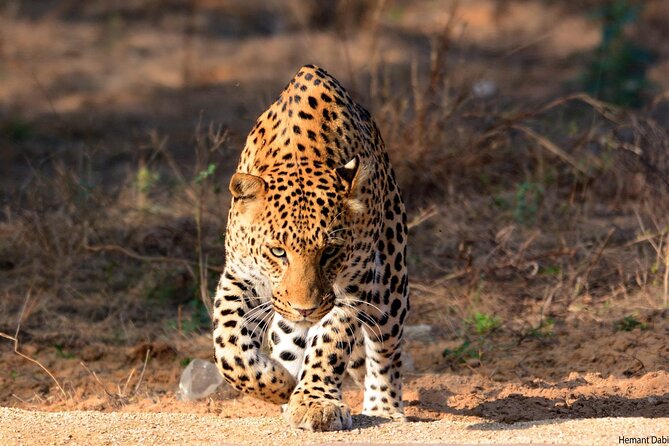
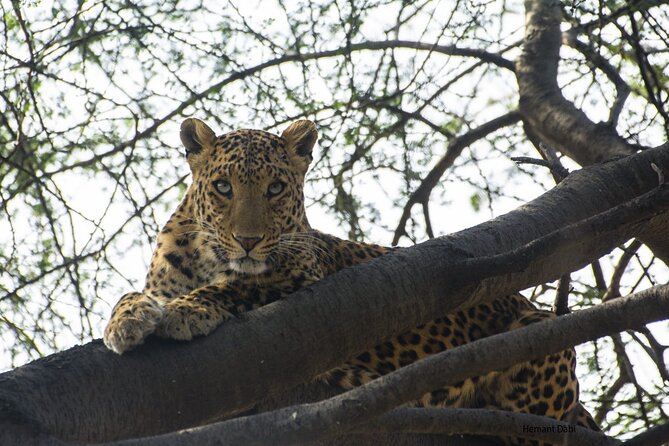
Then you’re set up for the main wildlife moment on the Jaipur side: Jhalana Safari at the Jhalana Safari Park, typically scheduled in the evening and listed at around 3 hours.
Why this matters: it adds a second animal-focused setting in a different environment than Ranthambore. It also breaks up the “forts and palaces” theme so the trip doesn’t become one long parade of stone and sandstone.
And yes, this is the moment where you’ll remember this trip isn’t just about architecture. You’re doing Jaipur with a wildlife lens.




Jaipur heritage day: Amber Palace, Jal Mahal photos, City Palace, Jantar Mantar, and Hawa Mahal
Day 5 is your full Jaipur sightseeing day, built around the city’s best-known sites.
You begin near Amber with Panna Meena ka Kund, a stepwell located near Amber Fort. It’s a quick stop, but it’s visually strong because the geometry of stepwells is one of Jaipur’s quieter signature forms.
Then comes Amber Palace, where the tour includes a guided visit planned for about two hours. Amber is important because it was the capital of Rajasthan until 1728, and it gives you context for why Jaipur’s later palaces and city planning look the way they do. The stop is also tied to Raja Man Singh I and is described as including palaces, squares, and monuments.
You’ll also pause for a photo moment at Jal Mahal, the palace set in the middle of Man Sagar Lake. The tour keeps this as a short stop, which is smart because it lets you get the image without losing half a day to traffic and walking.
Next is City Palace of Jaipur, with about one hour to explore the Maharaja’s ceremonial and administrative seat (constructed in 1721). From there, you go to Jantar Mantar, a UNESCO World Heritage site made in 1734. It’s a set of nineteen astronomical instruments built by Sawai Jai Singh II, and even if science isn’t your thing, it’s a refreshing change from forts.
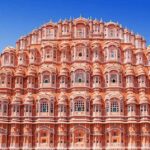
You finish with Hawa Mahal (Palace of Winds), the famous five-storey pyramidal facade in red and pink sandstone. It’s listed as a short visit, but it’s one of those buildings you’ll understand instantly just by standing there.
If you still have energy, Albert Hall Museum is included as a quick museum stop. It’s described as Rajasthan’s oldest museum.
Budget note: many of these monument entrances are not included, so expect extra payments on the ground unless you’ve planned for them.
Final Jaipur temples and return to New Delhi
Your last day shifts from big-ticket palaces to spiritual and local texture.
You’ll visit Birla Mandir, a white-marble temple with intricate latticework, dedicated to Vishnu. It’s a short stop but it’s the kind of quiet pause that helps after heavy sightseeing days.
Then you head to Galtaji Temple, also called the Monkey Temple. It’s listed as having three sacred pools of water and is famous for monkeys—so keep your belongings secure and assume you’ll share space.
After that, you drive back toward New Delhi. The tour includes a drop-off in Delhi at your airport, hotel, or other desired location in the city.
Price and value: what $397.28 buys you (and what costs extra)
At $397.28 per person, this package isn’t “cheap,” but it also isn’t purely sightseeing-only. The value is in the mix of:
- Five nights in 4 or 5-star hotels with breakfast
- Air-conditioned private transfers
- A trained representative throughout
- Safari fees included for Ranthambore and Jhalana safaris
- Two Ranthambore safari rides (Gypsy/Canter) plus one Jhalana safari
Where the cost can feel surprising is the monument entrance side. The tour states that entrance fee for all cities monuments is about $90 per person, and individual major sites are listed as having tickets not included (Taj Mahal, Agra Fort, Amber Palace, City Palace, Jantar Mantar, Hawa Mahal, and others).
So I’d treat the package price as your “transport + guides + hotels + safaris” baseline, and then plan another chunk for entrances. If you like knowing your daily spending, this helps.
One more practical point: no meals are included beyond breakfast. You’ll have lunch time built into the day, but you’ll be paying for it. That’s normal for India tours, but it’s good to be mentally ready so it doesn’t add up faster than expected.
Private tour comfort: AC vehicles, vehicle size by group, and smoother planning
This is a private tour/activity, meaning it’s only your group, not a big mixed bus situation. That alone can make the experience feel less stressful, especially in India where traffic patterns can change fast.
Transport is handled in an air-conditioned private vehicle, with vehicle type based on group size:
- A 4-seater sedan for groups of 1 or 2
- A 6-seater wagon for groups of 3 or 4
- A 10-seater minivan for groups of 5 to 10
This matters more than it sounds. More legroom and fewer transfers usually mean you arrive at forts and temples ready to enjoy them, not just survive them.
The tour also includes complementary mineral water per day, which is small but useful when you’re out under heat and crowds.
On top of that, you’re paired with a representative and well-experienced chauffeurs. In the past travel stories tied to this experience, drivers like Lalit, Sanjeev, Mahendra, Vinod, and Surendra show up as highlights, often praised for reliability, friendly attention, and smooth driving.
What you should watch for: tickets, timing, and souvenir traps
I’d go in with three expectations.
First: entrance tickets are extra. Many monuments you’ll want most are listed as not included. If you’re the type who hates paying on the spot, keep cash/card ready and budget before you arrive.
Second: the days are well planned, but they’re still full. Expect walking at major sites and concentrated schedules—especially around Taj Mahal and Amber.
Third: you may run into high-pressure selling around sightseeing zones. I’d keep your priorities straight: photo, quick look, move on. If you want shopping, build it into your plan. If you don’t, don’t get pulled into a conversation just because someone is friendly.
Should you book this Golden Triangle with Ranthambore and Jhalana?
If you want a Golden Triangle that feels like a vacation instead of a race, I think this is a strong pick. It’s especially appealing if wildlife is a key part of your trip, because you get three safari rides total (two at Ranthambore, one at Jhalana) rather than one token outing.
Book it if:
- You want comfortable hotel stays and AC transport
- You’re okay budgeting extra for monument entrances (about $90 per person)
- You prefer a private-group pace with a representative guiding the flow
Skip it (or at least compare carefully) if:
- You want a fixed price with zero surprises on tickets and meals
- You hate long day schedules and walking, even when the transport is comfortable
If you do book, I’d plan your spending for entrances up front and keep safari-friendly basics handy: water, sun protection, and patience for wildlife timing. That mindset turns the whole trip into the best kind of travel problem—choosing where to look first: monuments, markets, or tracks in the dust.
FAQ
What’s included in the tour price?
The tour includes five nights of accommodation (for options that include hotels), a trained representative, well-experienced chauffeurs, transfer in air-conditioned vehicles, parking and toll charges, mineral water per day, breakfast (5), two safari games in Ranthambore (Gypsy or Canter), and one Jhalana safari in Jaipur.
Are monument entrance tickets included?
No. Entrance fees for monuments in the cities are not included, and the total is listed as about $90.00 per person. Some specific sites are also shown as admission tickets not included.
How many safari rides are included?
You get two safari games in Ranthambore and one safari in Jhalana.
Does the tour include meals besides breakfast?
Breakfast is included. Other meals are not included, so lunch and dinner are on you.
What kind of vehicle will I ride in?
Vehicle type depends on group size: a 4-seater sedan for groups of 1–2, a 6-seater wagon for groups of 3–4, and a 10-seater minivan for groups of 5–10.
Is this tour private or shared?
It’s private. Only your group participates.
What are the room-sharing arrangements?
Rooms are generally provided on a twin-sharing basis. For a booking of three people, rooms are provided on triple-sharing basis by default, and if three guests prefer two rooms, there may be an additional charge.
Where does the tour start in New Delhi?
It starts at Indira Gandhi Intl Airport, New Delhi (meeting point listed in New Delhi, India).
Is free cancellation available?
Yes, free cancellation is available if you cancel up to 24 hours in advance for a full refund. The policy also notes that changes within 24 hours of the start time are not accepted, and refunds may be offered if the experience is canceled due to poor weather or if minimum traveler numbers aren’t met.