
REVIEW · NEW DELHI
From Delhi: 4-Day Golden Triangle & Ranthambore Tiger Safari
Book on GetYourGuide →Operated by Crystal India Holidays · Bookable on GetYourGuide
A sunrise in Agra changes your whole mood. This 4-day Golden Triangle ride strings together Delhi monuments, the sunrise Taj Mahal with guided entry, then pushes on to Ranthambore for a real jungle safari chance. I like how local guides keep the story moving city to city, and how drivers like Paramjeet and Ashok are described as making the logistics feel easy, even with a lot of driving.
Here’s the one thing to keep in mind: Ranthambore tiger sightings are never guaranteed, because spotting depends on luck and the park’s conditions. If you’re hoping for a tiger no matter what, you should mentally plan for the possibility of going home tiger-free.
In This Review
- Key highlights I’d plan around
- Why this Golden Triangle + Ranthambore mix fits in 4 days
- Day 1 in Delhi to Agra: Qutub Minar, Lotus Temple, and stepwell time
- Day 2: Sunrise Taj Mahal plus Agra Fort, then on to Ranthambore
- Ranthambore safari mornings: what the jeep/canter day feels like
- Jaipur day: Amber Fort, Jal Mahal, and the sights that stack well
- Hotels and transport: comfort, safety, and the reality of twin-sharing
- Guides, ticket help, and the Monday Lotus Temple curveball
- The price question: what you’re really paying for
- Should you book this tour?
- FAQ
- Where is pickup included?
- How long is the Taj Mahal visit and is it really at sunrise?
- What vehicle do you use for the Ranthambore safari?
- Are tiger sightings guaranteed?
- Is the Lotus Temple always open in Delhi?
- How are hotel rooms handled for 3 people?
Key highlights I’d plan around
- Sunrise Taj Mahal visit with guided time inside and a crowd-free feel
- Ranthambore safari with a trained naturalist (tiger sighting is luck-based)
- Ticket help built in, so you spend less time queueing at monuments
- Strong guide-driver teamwork, with named standouts like Rasheed, Rajinder, and Kamal
- Hotel quality choices from 3-star up to 5-star resorts, depending on your budget
Why this Golden Triangle + Ranthambore mix fits in 4 days
This is a classic India starter route, but with one important upgrade: you’re not just touring cities. You’re also spending real time in the wild at Ranthambore, which is a different kind of experience than forts and palaces. The pacing is busy, but it’s structured. You get local guidance in each city, plus private transfers to keep you from wrestling schedules on your own.
Value-wise, the price (about $290 per person for 4 days) makes more sense when you compare what you’re bundling: multiple guided sightseeing days, multi-city transport, hotel stays across the route, and the safari itself. A similar DIY trip often costs more once you add guides, ride-hailing, and entry-ticket hassle.
The big trade-off: you’re in a car a lot. One review called out the time behind the wheel as significant. If you hate long travel days, this might feel like a lot. If you can handle being in transit and you like seeing a lot, you’ll get your money’s worth.
You can also read our reviews of more tours and experiences in New Delhi.



Day 1 in Delhi to Agra: Qutub Minar, Lotus Temple, and stepwell time

Your first day starts with Delhi sightseeing, then ends in Agra with a hotel check-in. You’ll hit a mix of iconic and slightly off-the-beaten-path stops:
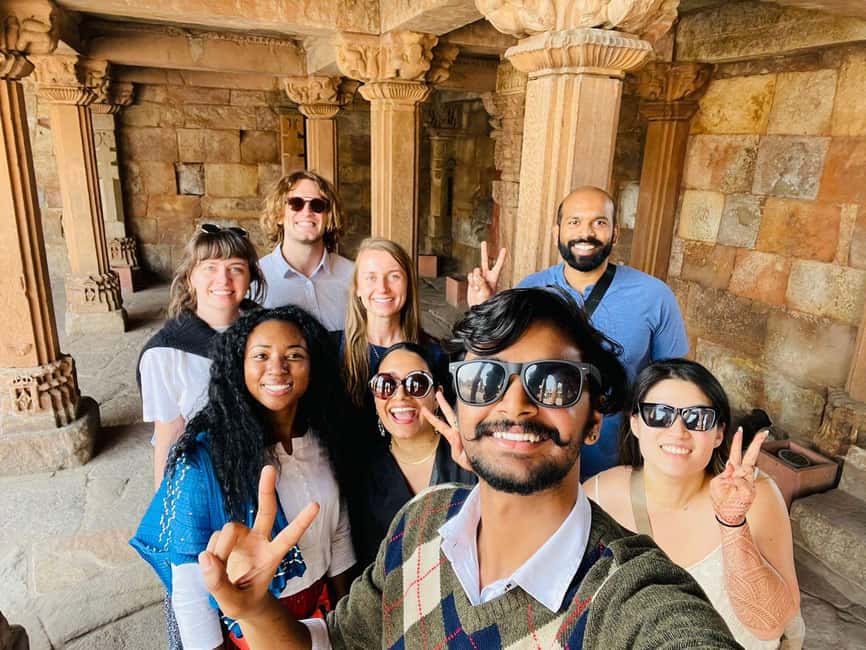
- Qutub Minar (part of the Qutb complex) for that instantly recognizable victory-tower vibe
- Lotus Temple for a calmer, modern-feeling contrast to the older stone sites
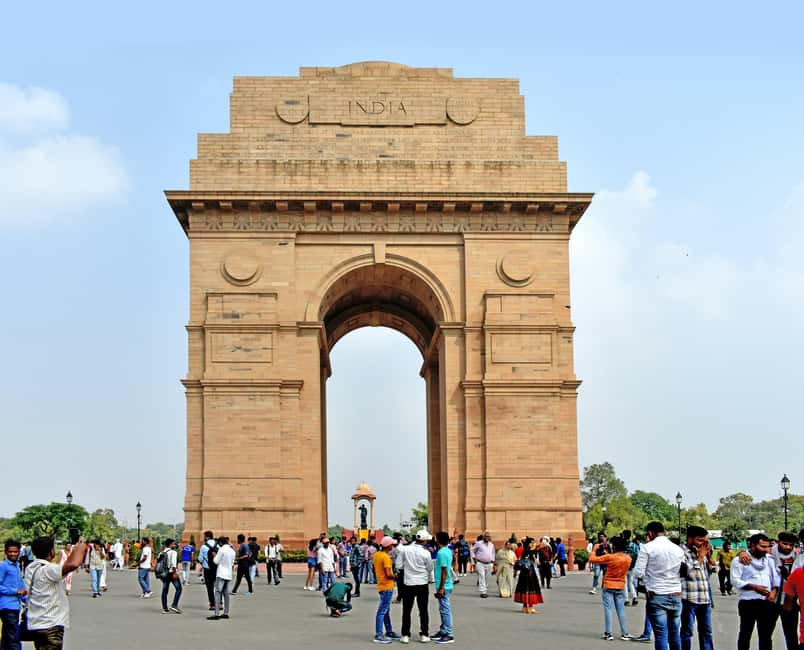
- India Gate for the city’s famous war memorial energy
- Agrasen ki Baoli (Step Well), which gives you a different angle on Delhi—more atmospheric, less postcard-y
You’ll also pass major government landmarks like Parliament House and Rashtrapati Bhavan from the road. That’s not the same as a visit, but it helps you place the city fast.
Then it’s straight to Agra. This is where the tour’s planning matters: you don’t want to arrive in Agra late and start negotiating transport while you’re tired. The driver and transfers keep you moving, and you end the day ready to sleep. Hotel options range from solid 3-star to higher-end 4- and 5-star properties, so you can match comfort to budget.
Day 2: Sunrise Taj Mahal plus Agra Fort, then on to Ranthambore
Day 2 is the payoff day. It starts with the Taj Mahal at sunrise, with a guided visit inside that takes about two hours. This timing isn’t just romantic branding—it’s practical. Early hours help you avoid the heaviest crowds and the worst midday heat, and it makes the whole monument feel quieter and more dimensional.
A guide like Rasheed is the kind of person you want with this stop: the descriptions include strong history context and very good photo help. The tour’s built around a guide staying with you during the experience, not just handing you a ticket and disappearing.
After the Taj, you return for breakfast, then check out. Next up is Agra Fort, where you’ll tour the fort’s apartments and take in the architecture. Agra Fort is different from the Taj in a good way: it’s more lived-in and more political, with less focus on a single masterpiece view.
Then you head toward Ranthambore, checking into your safari-area hotel. This is also when the hotel tier matters, because Ranthambore is about comfort in between early starts. Depending on your selected package, you may get options like Jaypee Palace or Courtyard by Marriott (for 5-star in Delhi/Agra), and Ranthambore resorts like Aamaghati Wildlife Resort or Jogi Mahal (in the higher tier list).
Ranthambore safari mornings: what the jeep/canter day feels like
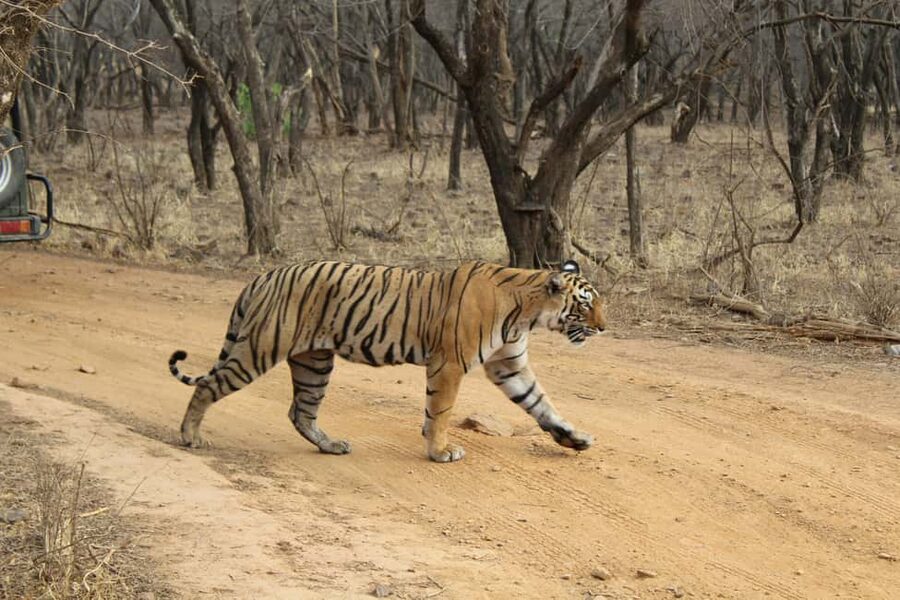
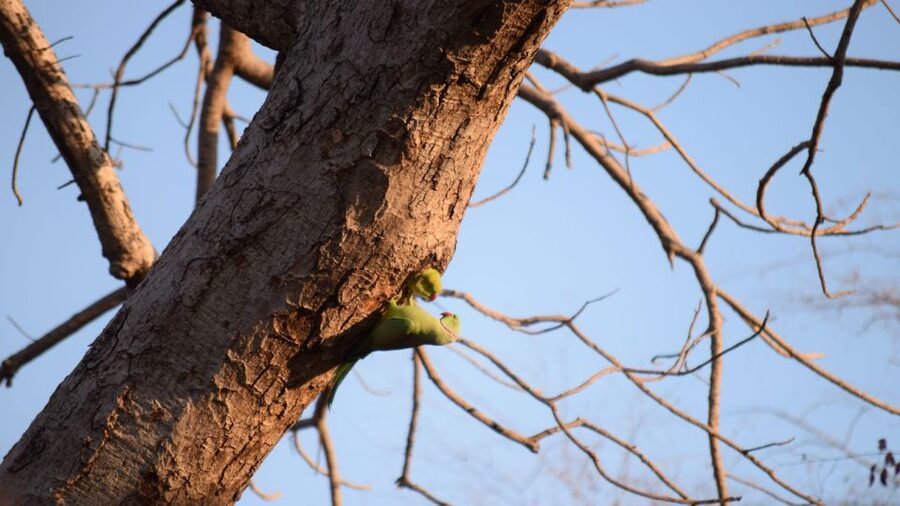
This is where most people come for hope—and where you should manage expectations with kindness to yourself. Ranthambore is famous, but tiger spotting depends on luck. Even with good guides and animals in the park (monkeys and peacocks are commonly seen), you might still not get a tiger sighting on every schedule.
You’ll wake up early and head into Ranthambore National Park for a morning safari on a shared Jeep or shared Canter. A trained naturalist joins the safari with English commentary. Then you return for breakfast at your hotel.
Two useful practical points:
- Shared rides mean you’ll be adjusting to how the group positions and moves, not controlling everything yourself.
- If the tiger is your top bucket-list item, consider building extra safari time if your travel style allows it. One recommendation from firsthand experience was to arrange a second safari day because the first one can be disappointing without a tiger.
There’s also a comfort nuance. One review suggested jeep rides feel more exclusive than canter vehicles. You can’t control which vehicle you’ll get from the provided info, but it’s worth knowing that the vehicle type changes the feel of the ride and sightlines a bit.
Jaipur day: Amber Fort, Jal Mahal, and the sights that stack well
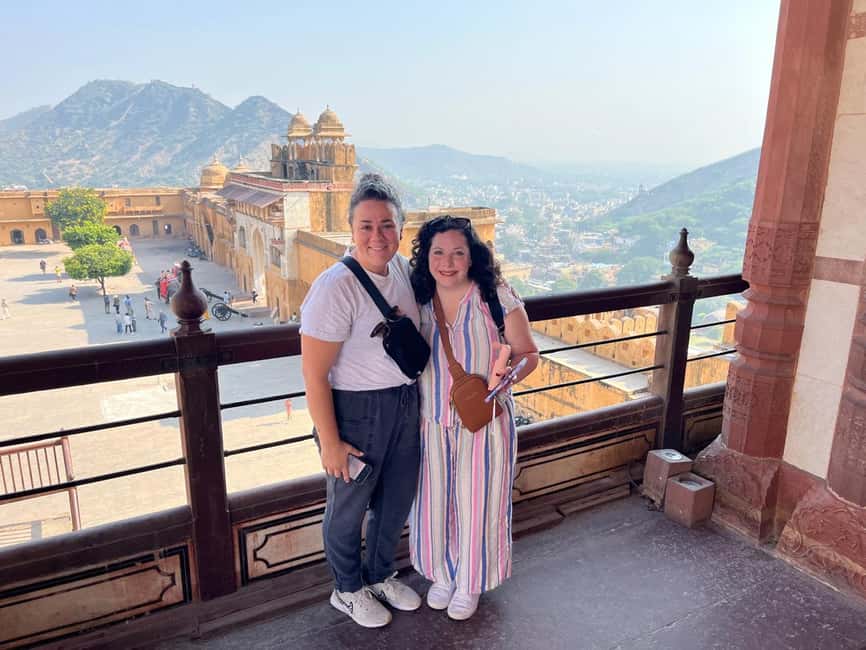
After Ranthambore, you move on to Jaipur, where the tour becomes a guided hits-day through the city’s best-known sights.
You’ll start with Panna Meena ka Kund (a stepped reservoir), then move into the major fort and palace area with:
- Amber Fort for the biggest “wow” moment early
- Jal Mahal, the palace sitting in the middle of Man Sagar Lake
- Hawa Mahal, the famous facade with lots of windows
- City Palace Museum for the royal-house connection
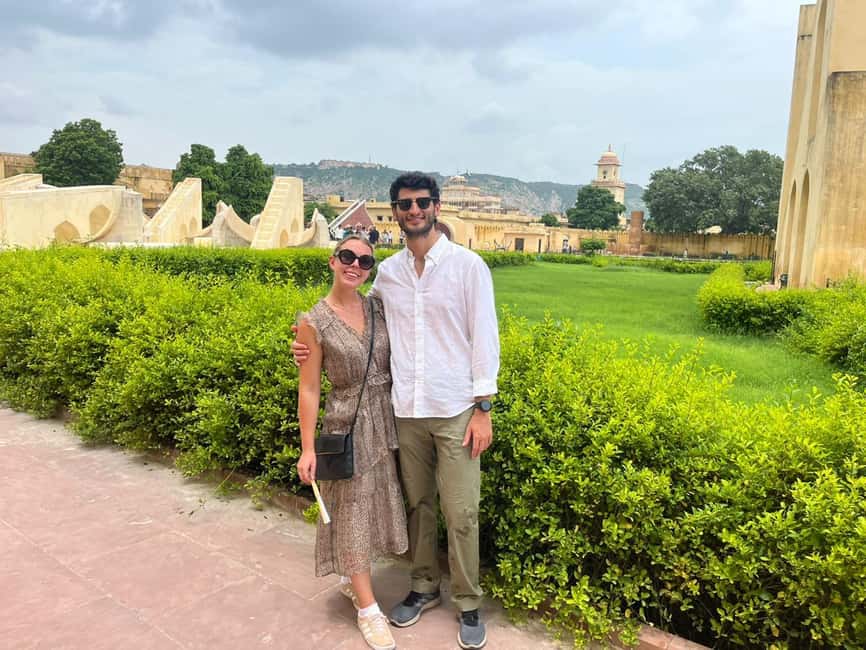
- Jantar Mantar for the astronomical instruments
- Gatore Ki Chhatriyan for the cenotaphs
What I like about this lineup is how well it balances visual variety. Amber Fort brings the fort-scale drama. Hawa Mahal and Jal Mahal give you the iconic Jaipur shapes and reflections. Jantar Mantar adds a different kind of wonder—less about buildings, more about measurement and design.
Your local guide in Jaipur—someone like Kamal is specifically mentioned—can make this day feel more than just walking from stop to stop. The best version of Jaipur tours is when you understand why each place looks the way it does.
After the sightseeing, you either travel back to Delhi (about five hours, with arrival around 9 pm in the standard flow) or get dropped at Jaipur airport if that fits your plan better. One small note: schedule flexibility is possible if you tell the organizer your preference for arrival time.






Hotels and transport: comfort, safety, and the reality of twin-sharing
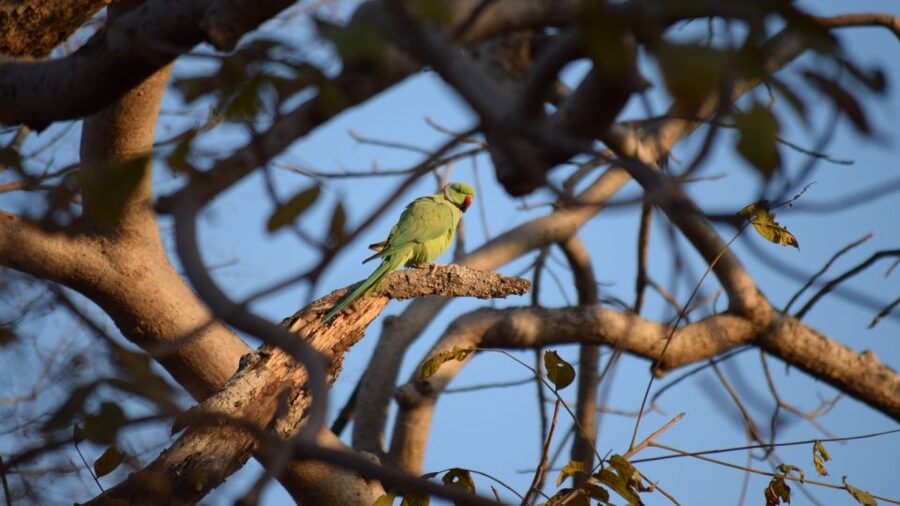
The tour includes hotel options across three levels: 3-star, 4-star, and 5-star. The idea is simple: you’re paying for comfort and fewer surprises. Multiple guests highlight that the hotels were very nice, especially at the higher tiers. Jaypee Palace is one standout mentioned, with peacocks on the property—small detail, but the kind of thing that makes a resort feel memorable at the end of a long day.
Transport is part of the deal. You’re not jumping between local drivers or rebooking rides every time you change cities. Instead, you’ll have private transfers with a driver who handles the car and timing. Guests mention being safe and cared for in the car, and some describe drivers having cold water ready and making sure things run on schedule.
Room logistics matter, especially if you travel as a group. Rooms are generally set up for twin-sharing. If you book for three people, rooms are typically triple-sharing by default. If you want two rooms instead, there may be an additional charge. If you like your own space, ask about room arrangement early so you’re not stuck renegotiating at check-in.
Guides, ticket help, and the Monday Lotus Temple curveball
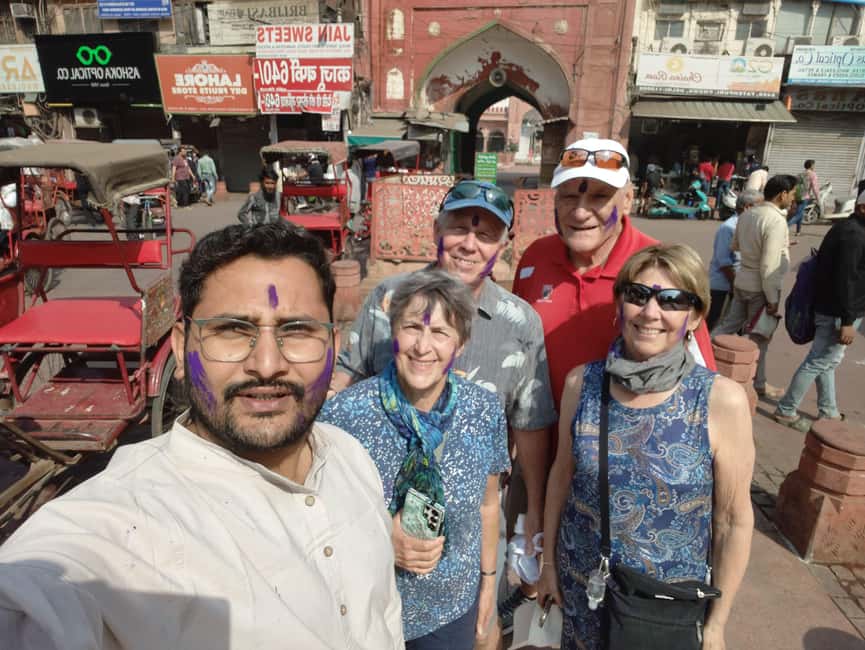
The guides are a major part of why this tour feels organized instead of chaotic. You get local guides in the cities, plus a naturalist during the safari. Languages supported include English, Spanish, French, German, and Russian, and the tour uses a live guide rather than self-guided stops.
One practical advantage: guides help you with entrance tickets at monuments and work to prevent queue time for ticket buying. That doesn’t remove security lines or the fact that big sites are busy, but it can cut down the frustrating ticket-stall part of sightseeing.
There’s also a small scheduling reality in Delhi: the Lotus Temple remains closed every Monday. If your dates land on a Monday, you’ll want to accept that the itinerary adjusts around that closure.
The price question: what you’re really paying for

At roughly $290 per person for 4 days, you’re paying for more than hotels and transportation. You’re paying for:
- guided sightseeing that compresses three cities worth of context into short time
- ticket handling so you don’t spend your vacation hunting for where to buy entries
- safari access and an English-speaking naturalist during the morning drive
- private transfers that reduce daily friction
Where you can get extra value is choosing the hotel tier that matches your comfort needs. One person explicitly noted that the move to 5-star stays was the best decision. Another called out Jaypee Palace as a favorite because the resort made downtime feel pleasant. If you’re the type who gets cranky when lodging is average, you’ll feel the upgrade fast.
Where you need to adjust expectations is Ranthambore. The tiger is the headline, but it’s not something anyone can promise. The tour can maximize your chance with timing and guidance, but it can’t force a tiger to show up.
Should you book this tour?
Book it if you want a structured, classic India route in a short window—Delhi, Agra, Jaipur, plus one wild-life day that isn’t just a zoo-style visit. I’d also book it if you value driver-and-guide coordination. People consistently highlight that the service feels professional, safe, and well-paced, and names like Surinder, Rajinder, Amit, Rishi, and Shobhit show up as guide-driver standouts.
Skip or rethink it if:
- you hate early mornings and long car days
- you’re emotionally fragile about not seeing a tiger (because luck rules Ranthambore)
- you’re traveling with 3 people and need non-triple room setups without extra cost—room arrangements may require an upgrade
One final practical note: you can usually cancel up to 24 hours in advance for a full refund, and some bookings let you reserve with pay later. That reduces risk while you decide.
If you’re willing to accept tiger unpredictability and you enjoy tight itineraries, this is a strong way to get a lot of India, fast, with less hassle than doing it solo.
FAQ
Where is pickup included?
Pickup is included from your hotel, the airport, the railway station, or another desired pickup location in Delhi, Noida, or Gurugram.
How long is the Taj Mahal visit and is it really at sunrise?
You’ll start early for sunrise, and the guided visit inside the Taj Mahal lasts about two hours.
What vehicle do you use for the Ranthambore safari?
Ranthambore safari rides are on a shared Jeep or a shared Canter.
Are tiger sightings guaranteed?
No. Spotting a tiger in Ranthambore National Park depends largely on luck.
Is the Lotus Temple always open in Delhi?
No. The Lotus Temple remains closed every Monday.
How are hotel rooms handled for 3 people?
Rooms are generally twin-sharing. For bookings of 3 people, rooms are provided on triple-sharing basis by default. If you prefer 2 rooms, an additional charge may apply.