REVIEW · NEW DELHI
8-Day Private Golden Triangle Tour with a Ranthambore Wildlife Safari From Delhi
Book on Viator →Operated by Memorable India - Tour Operator · Bookable on Viator
Eight days can feel like a rush.
This one stays smart by bundling the hard parts: airport help, private AC driving, and an English-speaking guide for the Delhi–Agra–Jaipur stretch, plus Ranthambore wildlife time built into the middle of the route. I also like that it includes daily breakfast and handles the between-city transfers, so you spend energy on sights instead of logistics.
The main drawback is simple: the schedule packs major monuments into each day, and most monument admission tickets are not included, so you should plan for extra costs on top of the package price.
If you want an efficient first trip to India that still feels personal, this plan can work well. It’s also private, so it’s just your group, not a free-for-all mix of strangers.
In This Review
- Key highlights worth getting excited about
- Why this Golden Triangle tour works when you’re short on time
- Delhi stops that actually make sense together
- A practical note for Delhi
- Agra: Taj Mahal plus Agra Fort without the guesswork
- Where the tour saves you effort in Agra
- Fatehpur Sikri and the move into Ranthambore tiger country
- Ranthambore safari days: two chances and one key mindset
- What I’d pay attention to
- Jaipur: Amber Fort and the palace circuit that keeps paying off
- A note on guide quality
- Getting back to Delhi on Day 8 without a scramble
- Price and value: what you’re really paying for
- One seasonal wrinkle
- Should you book this Golden Triangle with Ranthambore?
- FAQ
- How much does the tour cost, and how long is it?
- Is pickup offered, and are transfers included?
- Is this a private tour or a shared group tour?
- Are the Ranthambore safari rides included, and are they private?
- What meals are included?
- Are admission tickets for monuments included?
- What if my flight arrives before 8 AM?
- Can I cancel for a full refund?
Key highlights worth getting excited about
- Private vehicle and guide attention for Delhi, Agra, and Jaipur
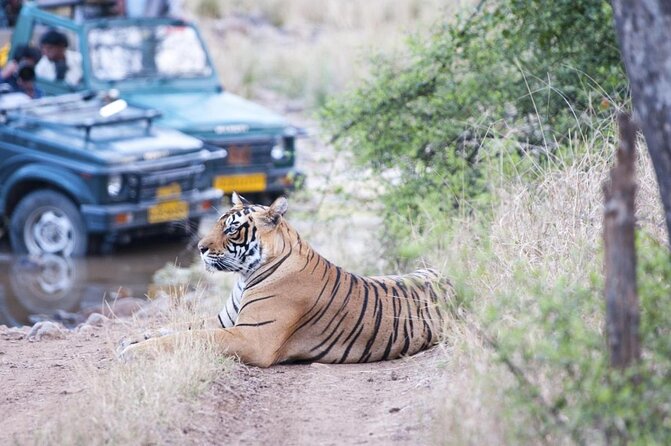
- Two Ranthambore safari rides in sharing jeeps/canters for tiger chances
- Golden Triangle efficiency with transfers and hotel stays included for 7 nights
- Major UNESCO stops across Delhi, Agra, and the Jaipur region
- A full Jaipur palace day plus an Amber Fort sound-and-light show option
Why this Golden Triangle tour works when you’re short on time
The Golden Triangle is famous for a reason, but it can also be a strain if you try to plan it all yourself. The big value here is that the trip is structured around the places you came for—Delhi, Agra, Jaipur, and then the wildlife detour to Ranthambore—while keeping the moving parts contained. You’re not bargaining for guides, piecing together cars, or wondering where you should be at 7 a.m.
You get a private AC vehicle for transfers and sightseeing, which matters in India where traffic and distances can be unpredictable. In practice, it means less guesswork and more time at the monuments themselves.
Another thing I like: the itinerary is timed in chunks. Delhi gets a full day of sights; Agra is handled with a morning drive and a concentrated afternoon/early evening; Jaipur layers the fort and palace highlights across two days. That rhythm helps you keep your bearings instead of trying to “catch everything” in one day.
You can also read our reviews of more tours and experiences in New Delhi.



Delhi stops that actually make sense together
Delhi day one is about arrival and getting settled. There’s airport help, transfer to the hotel, and time for check-in. If you land early enough, you may be able to squeeze in a quick visit to Akshardham temple. If not, no stress—the tour explicitly notes that day 1 has no scheduled activity in Delhi, so you’re not forced into a sprint right after a flight.
Day 2 is where Delhi earns its keep. You start with the Red Fort, a UNESCO site and former Mughal imperial residence. It’s not just a pretty photo stop. Seeing the scale and layout of the fort gives you a stronger sense of how Mughal power worked—walls, courtyards, and ceremony all tied together.
Next comes a walk tour around Chandni Chowk, with spice and jewel market browsing. This is one of those experiences that feels small on the schedule but huge in payoff, because it gets you out of the monument-only mode. You’ll get a guided walk through what people actually buy and sell there, including the kind of everyday “India in motion” that’s hard to replicate if you skip markets.
From there you move into two major religious landmarks: Jama Masjid (Shah Jahan’s 17th-century grand mosque) and Raj Ghat, the memorial site marking where Mahatma Gandhi was cremated after his assassination. The contrast is important. You go from Mughal architecture to a place of national remembrance—both are central to understanding how history shows up in modern life.
Then you hit Humayun’s Tomb and Qutub Minar. Humayun’s Tomb is especially useful for first-time visitors because it’s a clear step toward later Mughal monument design, with gardens and an ordered layout that’s easier to “read” when you have a guide. Qutub Minar gives you the tower-and-geometry fix: a 73-meter minaret, red sandstone and marble, part of the Qutb complex.
Finally, you close Delhi with India Gate and Parliament House by drive-by, then Lotus Temple. Lotus Temple is a neat endcap because it’s modern and calm in a city that can feel overwhelming. You get a change of pace before the trip’s pace ramps up again.
A practical note for Delhi
This day is packed with major sites, so you’ll want comfortable shoes and patience. Also, remember that many monument admissions are listed as not included, so you may be paying along the way.
Agra: Taj Mahal plus Agra Fort without the guesswork

Agra begins with a morning drive of about 4 hours after breakfast. That’s long enough to feel like a real day shift, but short enough that you still have energy for sightseeing when you arrive.
The big centerpiece is the Taj Mahal. You get a scheduled 3 hours there, which is a meaningful amount of time. It’s one of those monuments where rushing can leave you with a blur of white marble, while slowing down helps you notice the symmetry, the changing light, and the way the gardens frame the building.
After that, you visit Agra Fort, a fort with multiple notable buildings including Moti Masjid and Musamman Burj. This stop matters because it adds context. The Taj Mahal is romance and symbolism, while Agra Fort ties you back to political reality and shifting Mughal power.
Where the tour saves you effort in Agra
The value isn’t just that you go to the right places. It’s that your time is protected. You’re not trying to coordinate ticket lines, directions, or meeting points across a busy city while also managing jet lag.





Fatehpur Sikri and the move into Ranthambore tiger country
Day 4 is your handoff from cities to wildlife. You leave for Ranthambore National Park, check in on arrival, and take the edge off before the big safari days.
The itinerary also includes a stop at Fatehpur Sikri, a 16th-century Mughal site with clusters of red sandstone buildings around the central area. The scheduled time is short, but Fatehpur Sikri is the kind of place where even a brief visit gives you perspective on Mughal ambition beyond Delhi and Agra.
Then you’re off to Ranthambore. This transition is valuable because it prevents the wildlife segment from feeling disconnected. You’re not flying halfway across India and landing in tiger territory with no cultural context. You ease into it from imperial architecture and history.
Ranthambore safari days: two chances and one key mindset
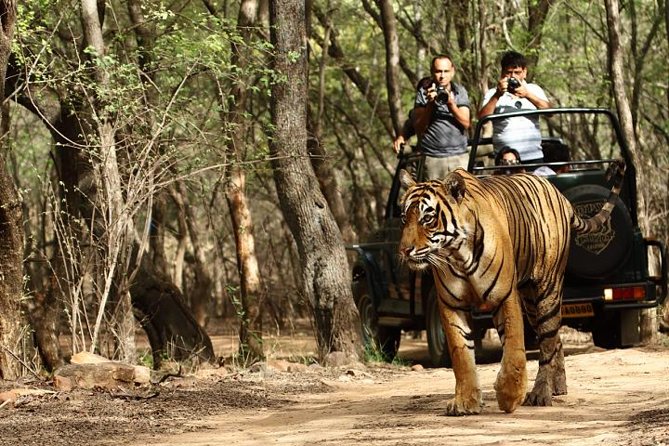
Ranthambore is the reason a lot of people add this detour, and the tour is built around that goal. It includes two Jeep/canter safari rides in Ranthambore on a sharing basis, and one of the safari days is scheduled as a long wildlife session (listed as 12 hours) with Ranthambore Fort later.
Here’s the reality check that’s also the reason safari tours work: wildlife viewing is never guaranteed. What you can control is how many shots you get and how efficiently you’re positioned. Two safari rides give you a better odds curve than a single run.
What I’d pay attention to
- Timing: safari days are early and long, and that’s why having transfers handled in advance helps.
- Group setup: since the jeeps/canters are sharing, you’ll be with other safari-goers, not alone in a private vehicle. That’s normal and often the most cost-effective way to do it.
- Energy planning: between the long drives and early safari hours, keep water handy and treat downtime as part of the experience.
After the wildlife day, there’s also time for Ranthambore Fort (scheduled for 30 minutes). Even if you’re laser-focused on tigers, this quick stop is a nice reminder that this area wasn’t always “just a park.” The fort’s presence gives you a sense of how rulers and locals related to the landscape.
Jaipur: Amber Fort and the palace circuit that keeps paying off
Jaipur is where the trip shifts from “big monuments” to “big layers.” Day 6 is travel from Ranthambore after breakfast, then check-in and rest of the day at leisure. That matters because your body has been through a lot—Delhi days, Agra, and a wildlife segment.
Then you add Galtaji Temple, also known as the Monkey Temple, for about 40 minutes. It’s a spiritual stop, but it’s also a cultural one: the mix of temples, sacred water tanks, and the lively vibe around the site makes it feel different from the major fort-and-palace agenda.
In the evening, you can do a sound and light show at Amber Fort (scheduled for 1 hour). I actually like this as a “recharge activity.” After a full day outdoors, sitting through a guided dramatization can help your brain switch gears. It’s not the same as walking the fort yourself, but it adds story.
Day 7 is your full Jaipur power day. You start with Amber Fort (with a jeep ride included at Amber Fort as part of the package). This helps you get up to the fort area without turning it into a leg-burning hike.
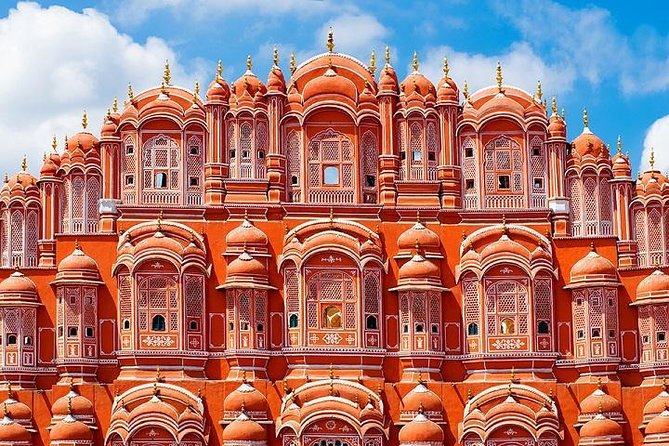
Then you visit Hawa Mahal (Palace of Wind). The idea behind the building is clever: royal women could look out over busy streets from behind the jharokhas. It’s the kind of design you appreciate more when you have context—so don’t skip the explanation.
Next comes City Palace, a museum today but once the seat of Jaipur’s Maharaja. You spend about 2 hours here, which gives enough time to understand what you’re seeing instead of just snapping a few images and leaving.
After that, Jantar Mantar takes your “history brain” and switches it to “science brain.” It’s the largest sundial in the world and a UNESCO site, and it makes you realize how rulers treated astronomy and measurement as prestige.
You also get Albert Hall Museum (about 1 hour), with Indo-Saracenic architecture, followed by Diwan-e-Khas Hall of Private Audience. This is a more specific, higher-detail stop, so it’s one of those moments where a guide helps you connect what a hall was for with what you’re looking at now.
The day isn’t only indoor. You also stop by Jal Mahal (Water Palace) for about 20 minutes, and then Birla Mandir for roughly 30 minutes. Those shorter stops are important because they break up the day and keep you from feeling like you’re constantly in “tour mode.”
A note on guide quality
The reviews I’ve seen for this kind of route often mention that guide ability can vary by city. The New Delhi portion has been praised for being very strong—well educated, able to answer questions, and genuinely informative. The practical takeaway for you: if you get a guide who’s slow on details, speak up. Ask what you should notice in each place. A private format is built for Q and A, not just following a script.
Getting back to Delhi on Day 8 without a scramble
Your last morning is in Jaipur. After breakfast, you drive back to Delhi (about 6 hours) and get dropped at your hotel or the airport you choose. This is a relief if you’re the type to hate last-minute negotiating in a new city.
It also gives a clean ending point. If you have flights the next day, you won’t be arriving home while still in “busy sightseeing mode.”
Price and value: what you’re really paying for

At $1,065 per person for 8 days, this is not a budget backpacking plan. But it also isn’t just paying for hotel beds and a driver for show. You’re paying for planning that usually costs time and money when you do it yourself.
Here’s what’s included, in practical terms:
- 7 nights accommodation on double/twin sharing
- Private AC transfers and sightseeing by vehicle
- English-speaking tour guide for Delhi, Agra, and Jaipur
- Ranthambore wildlife: two safari rides in sharing jeeps/canters
- Breakfast daily (7 breakfasts)
- Dinner included twice (listed as dinner for 2 evenings)
- Taxes and expenses related to the car/driver are included
What’s not included is also important:
- Monument admission tickets for many stops
- Personal expenses and anything outside the stated inclusions
So the value question becomes: would you otherwise pay for (1) hotel stays, (2) a private guide, (3) a private vehicle across multiple states, and (4) safari rides arranged in the right sequence? For most first-timers, that’s the expensive part of the Golden Triangle. This package is designed to bundle those costs so you don’t have to micromanage every line item.
One seasonal wrinkle
The tour notes that on Dec 24, 25, or 31, a Gala Dinner may be mandatory for most hotels, even though the gala dinner itself isn’t included in the product. If you’re booking around those dates, treat that as a possible extra cost.
Should you book this Golden Triangle with Ranthambore?
Book it if:
- You’re a first-time India visitor and you want a structured, time-efficient route.
- You prefer private vehicle driving and a guide instead of constantly negotiating logistics.
- Ranthambore is a must, and you want two safari rides rather than hoping for one lucky morning.
- You like a mix of Mughal-era architecture and cultural stops like Chandni Chowk.
Skip it or reconsider if:
- You hate packed schedules. Delhi and Jaipur, in particular, are heavy on major sights.
- You want everything included, end-to-end. Many monument admissions are not included, so you’ll budget for tickets.
- You’re extremely sensitive to guide variation. Reviews show New Delhi can be excellent, but other city guidance quality may not be uniform.
If you fit the first group, I think you’ll enjoy the way this tour balances “see the icons” with “keep moving without stress.” The safari component is the wildcard, and the best way to handle that wildcard is with two tries.
FAQ
How much does the tour cost, and how long is it?
The tour price is $1,065.00 per person and the duration is 8 days (approximately).
Is pickup offered, and are transfers included?
Yes. Pickup is offered, and transfers and sightseeing are included by private AC vehicle.
Is this a private tour or a shared group tour?
This is a private tour/activity. Only your group will participate.
Are the Ranthambore safari rides included, and are they private?
The tour includes 2 Jeep/canter safari in Ranthambore on a sharing basis.
What meals are included?
Daily breakfast is included (7 breakfasts). Dinner is included twice (2 dinners).
Are admission tickets for monuments included?
Admission tickets are not included for many monuments listed on the itinerary. Some items show admission tickets as not included, so you should expect to pay for tickets on site.
What if my flight arrives before 8 AM?
If your arrival flight is before 8 AM, rooms should be booked one night prior on an extra cost.
Can I cancel for a full refund?
Yes. You can cancel up to 3 days in advance for a full refund. If you cancel less than 3 full days before the start time, the amount paid will not be refunded.