REVIEW · NEW DELHI
Golden Triangle Tour With Ranthambore Tiger Safari
Book on Viator →Operated by 707 TOURS · Bookable on Viator
In This Review
- Delhi to Ranthambore without the hassle
- Key things that make this tour worth your time
- The real pitch: Golden Triangle sights plus tiger safari, in one clean run
- How the schedule flows: drives, early mornings, and two safari windows
- Day 1 in Delhi: arrival, transfer, and a no-pressure settling-in day
- Delhi Day 2: the Mughal-and-monument route you can cover in one go
- Agra Day: Taj Mahal and Agra Fort, timed for maximum impact
- Ranthambore National Park: two safaris and the pace shift you’ll feel immediately
- Jaipur Day: Amer Fort plus the city’s iconic façades
- What you’re paying for: $760 value, 4-star stays, and what’s not included
- Who this tour fits best (and who might want a different approach)
- Should you book Golden Triangle with Ranthambore Tiger Safari?
- FAQ
- How long is the tour?
- Does the price include tiger safari jeeps?
- What’s included for meals?
- Are monument entrance fees included?
- What kind of transport do you use between cities?
- Can I get a full refund if I cancel?
Delhi to Ranthambore without the hassle
This is a smart way to stitch together India’s most famous landmarks with real wildlife time. You get the Golden Triangle (Delhi, Agra, Jaipur) plus Ranthambore National Park, all run on a private car with guides in the key cities, so you spend less effort figuring things out and more time seeing things.
I really like that the schedule is built around efficiency: you’re not bouncing around using random transit. And the second thing I like a lot is that Ranthambore gets two jeep safari outings (morning and evening), so you’re not stuck hoping for one short window.
One thing to consider: “monument fees” aren’t included, and wildlife is wildlife—so you should treat tiger spotting as the goal, not a guaranteed outcome.
Key things that make this tour worth your time
- Private door-to-door chauffeuring across Delhi, Agra, Jaipur, and Ranthambore
- Two jeep safaris with a morning and an evening outing in Ranthambore
- Guides in Delhi, Agra, and Jaipur to help you understand what you’re looking at (and make it less stressful)
- 4-star hotels with breakfast on board for double sharing
- Six meals plus transfers included, so you’re not constantly hunting for food plans
- Mobile ticket and straightforward confirmations after booking
You can also read our reviews of more tours and experiences in New Delhi.



The real pitch: Golden Triangle sights plus tiger safari, in one clean run
Here’s what I think this tour does well: it removes the usual friction of doing India’s big routes solo. The Golden Triangle by itself is already a lot—Delhi’s monuments, Agra’s icons, then Jaipur’s palaces. Add Ranthambore and suddenly you’re balancing long drives, early starts, and park rules. This package turns that chaos into a clear sequence: car handles the movement, guides handle the storytelling, and your hotel beds are waiting when the day ends.
You’ll also notice something practical: the itinerary is designed so you’re not wasting hours “getting situated.” Day 1 is mostly arrival and reset. After that, each main day stacks major sights before you move on. That matters because India travel can be time-sensitive—sunrise light for monuments is a thing, traffic is real, and safari windows are non-negotiable.
Finally, the tour has a strong “support system” feel. In the feedback I’ve seen, the human layer is a huge part of what people enjoy. Names like Vipin (often praised in the Agra portion) and Deepak (also cited for Taj Mahal guidance) come up for being punctual and organized, with guides who explain clearly and help with photo spots. Even when the big landmarks do the heavy lifting, having someone who can keep you moving and orient you quickly makes the trip smoother.
How the schedule flows: drives, early mornings, and two safari windows
The shape of this tour is simple. You arrive in Delhi, tour Delhi the next day, then head to Agra. From Agra you continue to Ranthambore, and you do two jeep safaris across one full day. Then it’s on to Jaipur for a full day of forts and palaces, and you finish back in Delhi with airport transfer.
The driving time is a big deal, and it’s where the private vehicle earns its keep. Instead of piecing together rides between cities, you’re in one air-conditioned car. You also don’t have to manage different meeting points for every attraction—your plan follows a consistent rhythm.
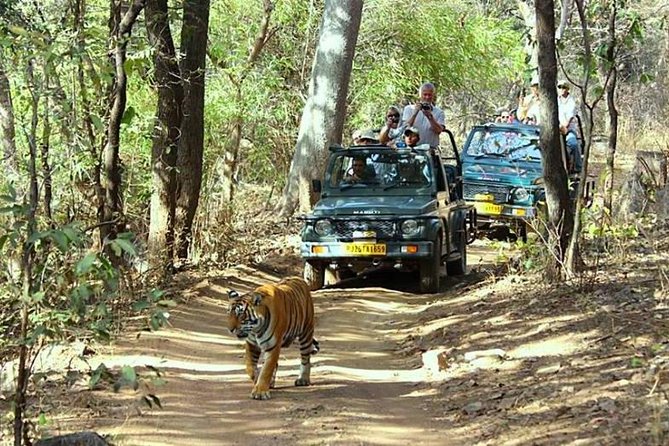
The safari timing is the other big anchor. Because Ranthambore offers morning and evening safaris, this tour intentionally gives you a full day where you can do both outings. That’s smart because animal activity patterns can shift through the day, and the park gives you two chances to be in the right place at the right time. It also means you’ll likely feel the day start earlier than you’d expect, especially on the morning jeep ride. Think “early start” more than “vacation at a lazy pace.”
Day 1 in Delhi: arrival, transfer, and a no-pressure settling-in day
Day 1 is straightforward: pickup after arrival and transfer to your hotel, then rest. In a week like this, I actually like having a buffer day. You land, you get your bearings, you sleep, and you’re not immediately thrown into a full schedule while jet lag is still arguing with your body.
If you’re arriving on your own, this first-day structure is valuable. It reduces decision fatigue. You don’t need to hunt for the right transport, find your hotel, or figure out where to charge your devices. You’re simply in “travel mode” for a few hours and then you’re done.
Also, since the rest of the trip moves quickly, use Day 1 to plan smartly for what comes next. Hydrate. Get comfortable clothes ready for Delhi sightseeing (light layers help). And if you’re the type who likes photos, make sure your camera battery and phone storage are ready. Delhi has that “walk-and-stop” energy, and you’ll want your gear usable fast.
Delhi Day 2: the Mughal-and-monument route you can cover in one go
Delhi Day 2 is packed, but it’s packed in a way that makes sense. After breakfast and checkout, you’ll visit major landmarks across different styles and eras—then drive through key government-area views and head toward Agra.
Here’s what your day gives you, stop by stop:
Humayun’s Tomb
This is a Mughal landmark with a garden-tomb setting, commissioned in 1569–70 for Emperor Humayun. It was ordered by Humayun’s first wife, Empress Bega Begum, and designed by Persian architects. I like this stop because it’s not just a pretty monument—it’s a way to understand the Mughal approach to symmetry, scale, and planning.
Qutub Minar (Qutb Minar)
You’ll see a tall tapering minaret forming part of the Qutb complex, a UNESCO site. It rises about 73 meters and is made famous by its layered design across five storeys. If you want one “wow” structure in Delhi beyond the Taj-style monuments, this is one of them.
Jama Masjid
This big congregational mosque (Shah Jahan built it between 1650 and 1656) is one of Delhi’s most important Islamic sites. It’s also a great reminder that the city’s monumental power often ties directly to religion and daily life—not just tourism.
India Gate, plus the government-area views
India Gate is a war memorial set along Rajpath. You’ll also pass or view monumental government buildings like Parliament House and Rashtrapati Bhavan (the presidential palace / former Viceroy’s House concept). The key value here is perspective: Delhi isn’t only old stone. It’s also the seat of modern governance, and the architecture carries its own story.
Lotus Temple (listed on the route)
Even without a long stop, it adds contrast—an eye-catching modern structure that breaks up the day’s heavier historical vibe.
Then you drive to Agra and check in. In terms of stress management, Day 2 is a good trade: you cover the big Delhi hits in one organized run, then you let Agra be tomorrow’s focus.






Agra Day: Taj Mahal and Agra Fort, timed for maximum impact
Agra is built into this itinerary as a “two-icon day.” After breakfast and checkout, you’ll visit Taj Mahal and Agra Fort, then continue onward to Ranthambore.
The Taj Mahal
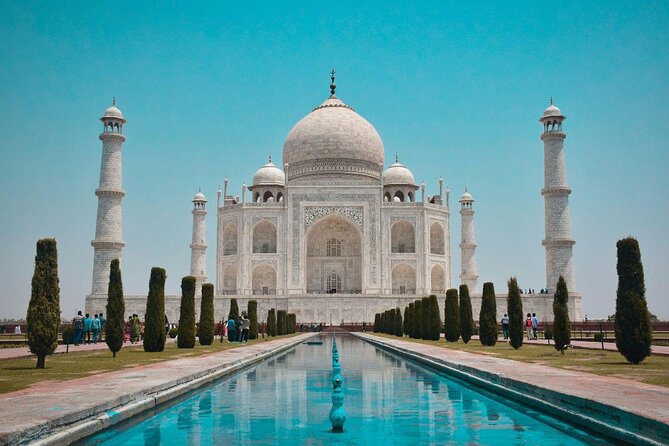
You get about two hours. It’s described as an ivory-white marble mausoleum on the Yamuna’s south bank, commissioned in 1632 by Shah Jahan for Mumtaz Mahal, and it also houses Shah Jahan’s tomb. Here’s why the guide part matters: when someone explains what you’re seeing—layout, symbolism, and the build story—you notice more than just the first photo. And yes, you’ll be tempted to stop every 30 seconds. That’s normal. Build time for it.
If your guide in Agra is someone like Vipin or Lucky (names that come up in the feedback), you’re likely to get more than dates. The praise often points to clear explanations, punctual timing, and help with photos—both for individuals and groups. That matters because the Taj experience can be crowded, and having someone who keeps you moving without rushing you is ideal.
Agra Fort
This fort served as the Mughal emperors’ main residence until 1638, when the capital shifted to Delhi. You’ll see about two hours here as well. I like that Agra Fort adds texture to your Taj day; it helps you connect the “romance masterpiece” feeling of the Taj to the power center and military-administrative side of the empire.
After sightseeing, you travel onward to Ranthambore and check in.
Ranthambore National Park: two safaris and the pace shift you’ll feel immediately
This is the heart of the tour—the place where the tone changes from monuments to wilderness. After arriving in Ranthambore and checking into your hotel, you have the setup day, then your safari day.
On safari days, plan for the reality of nature logistics. Jeep rides mean sitting, waiting, and scanning. You’ll likely feel the day more physically than Delhi sightseeing, even if you’re not walking much. And you’ll be doing it twice.
Morning jeep safari
This is your first shot. The tour includes morning and evening outings, and that structure matters because you’re not relying on one short window. You’ll return for breakfast and lunch back at the resort, so the rhythm is built for recovery.
Evening jeep safari
The second outing is where you can catch different behavior patterns. Even if you’re focused on tigers (understandable), you’ll often end up noticing other wildlife too. The big practical point: bring patience and a good sense of observation. When something moves in the brush, you want your eyes trained.
One more thing I appreciate: the itinerary includes time for meals at the resort area (breakfast, lunch, and then additional dinners as part of the package). That means your day is planned around safari windows instead of breaking for food in random places.
Jaipur Day: Amer Fort plus the city’s iconic façades
Jaipur comes after Ranthambore, so Day 5 is mostly travel and check-in. Then Day 6 is your full Jaipur sightseeing block.
Amer Fort (Amer Fort / Amer Palace complex)
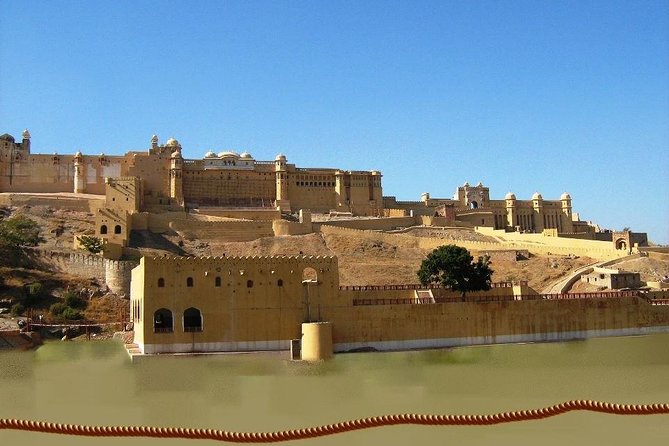
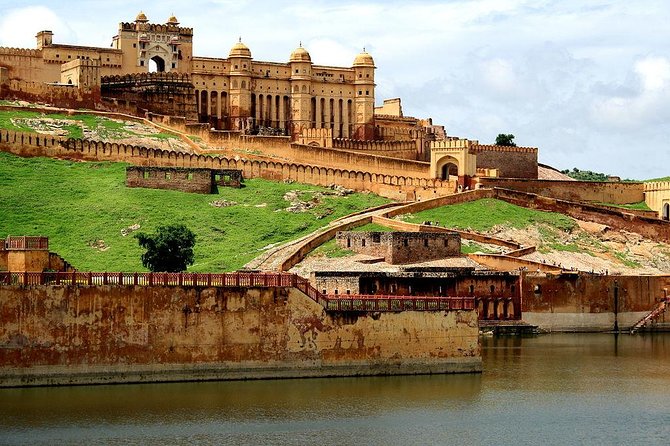
You get about two hours here. It’s located in Amer, roughly 11 kilometers from Jaipur city. This stop is a major reason Jaipur is on so many first-time itineraries: it’s a fort experience, not just a museum. If you love architecture and want to see how the region projected power, Amer delivers.
Hawa Mahal
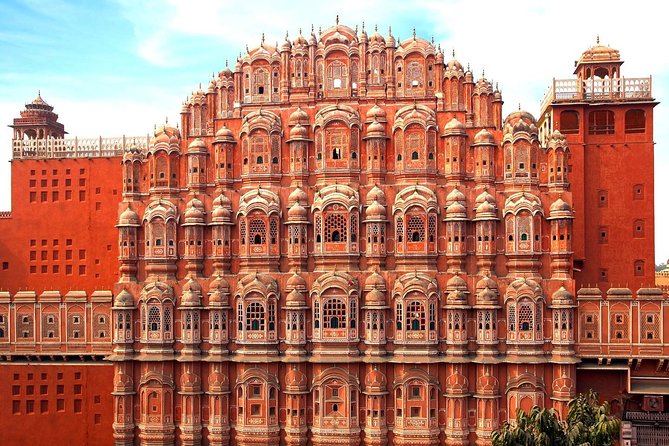
About an hour. This palace of wind is made from red and pink sandstone and sits on the edge of the City Palace. It’s built in 1799 and designed with the famous honeycomb-like window concept for airflow and observation. Even if you don’t go deep inside, it’s a classic Jaipur silhouette.
Jal Mahal
A shorter stop, around 30 minutes. Jal Mahal is the palace sitting in the Man Sagar Lake. The value here is contrast: you get fort power, then palace façade, then a calm-looking water setting.
City Palace of Jaipur
This gets around two hours. It was established when Maharaja Sawai Jai Singh moved his court to Jaipur from Amber in 1727. This stop helps you connect all those other Jaipur visuals into one coherent royal complex.
Jantar Mantar
About one hour. You’ll see the set of architectural astronomy instruments associated with Maharaja Jai Singh II. It’s a reminder that Jaipur wasn’t only about palaces and festivals. It was also a place where science and measurement had serious patronage.
One practical tip: Jaipur can be bright and hot, depending on when you go. Wear something comfortable for sun and plan breaks when the itinerary allows.
What you’re paying for: $760 value, 4-star stays, and what’s not included
At $760 per person, this tour isn’t “cheap,” but it’s also not pretending to be a budget scramble. You’re paying for the parts that are hardest to manage on your own: intercity logistics, guides at the key cultural stops, hotel coordination, and two Ranthambore safari outings.
From the package details, you get:
- an air-conditioned vehicle
- two jeep safaris (morning and evening)
- 4-star accommodation on double sharing with breakfast
- English-speaking guides for Delhi, Agra, and Jaipur
- six included breakfasts, plus two included dinners
- transfers door-to-door
- a mobile ticket
- pickup offered
What’s not included is important: monument fees. So you should budget extra for tickets and any entry costs you’ll encounter at the attractions. Also, while the safari concept is included, you should expect that tiger sightings aren’t something anyone can fully control. Your best “value” here is that you get two attempts in one organized framework, not one rushed ride.
One more value angle: in the feedback, people often highlight guide behavior—punctuality, clear explanations, and photo help. When guides like Vipin are assigned, or when the support person such as Sartaj is coordinating smoothly, the trip tends to feel like it has a human backbone. That’s part of what you’re paying for.
Who this tour fits best (and who might want a different approach)
This tour is ideal if you want a first-timer-friendly route that still feels meaningful. It suits:
- couples, families, and anyone who doesn’t want to manage logistics between cities
- people who want big sights (Taj Mahal, Amer Fort) with clear on-the-ground guidance
- wildlife lovers who want two safari chances instead of a single short outing
- anyone who values comfort between long travel segments (air-conditioned transfers, planned meal times, 4-star hotel stops)
It may not be the best fit if you want a slow, flexible travel style. The itinerary is structured, and you’ll be moving through major stops on a tight timeline. Also, if your priority is deep, unhurried exploration of one city, you’ll feel the “cover more ground” tradeoff.
My take: if your idea of a great trip is getting the iconic stuff done without the stress, and then finishing with real nature time, this is a strong match.
Should you book Golden Triangle with Ranthambore Tiger Safari?
If you want one trip that checks Delhi, Agra, Jaipur, and Ranthambore off your list in a well-run order, I’d book this style of itinerary. The big reasons are practical: the transport is handled, the sightseeing has guides in the right places, and the safaris aren’t an afterthought.
Before you hit confirm, do two things. First, check your budget for monument fees so it doesn’t surprise you later. Second, mentally plan for a packed week—this is not a do-nothing itinerary. If you can handle early safari energy and occasional time pressure at major monuments, you’ll come away feeling like you got a lot of India in one clean, guided sweep.
FAQ
How long is the tour?
The tour is listed as 7 days approximately, with 6 nights.
Does the price include tiger safari jeeps?
Yes. The tour includes morning and evening jeep safaris at Ranthambore National Park.
What’s included for meals?
Breakfast is included for 6 days, and dinner is included for 2 days.
Are monument entrance fees included?
No. Monument fees are listed as not included.
What kind of transport do you use between cities?
You’ll have an air-conditioned vehicle and door-to-door transfers throughout the itinerary.
Can I get a full refund if I cancel?
Yes. You can cancel up to 24 hours in advance for a full refund.