REVIEW · ARUSHA
4 days safari
Book on Viator →Operated by Making Memories In Africa · Bookable on Viator
Five parks. One unstoppable rhythm. I like the small group setup and the way this route feeds you properly with included breakfast, lunch, and dinners. The main heads-up is the pace: expect long drives and early starts, especially for Ngorongoro.
From Arusha, you’re picked up and set loose on Tanzania’s best “hits” with a circuit that makes geographic sense: Tarangire for water-holding wildlife, Serengeti for big numbers, then Ngorongoro Crater when animals are concentrated, and finally Lake Manyara. You’ll also get practical touches like a mobile ticket and admission tickets handled as part of the package.
The tour team behind this—often led by guides such as Joseph or Joel, with cooking credits like Chef Joachim/Joakim—comes up repeatedly for one reason: it’s not just driving around. Your best moments happen when someone knows where to look, how to read animal behavior, and when to push for the best viewing angle.
In This Review
- Key things that make this safari work
- Arusha to Tarangire: elephants, baobabs, and that year-round river
- Serengeti Central Seronera for two full game-drive days
- Ngorongoro Crater morning: the caldera where sightings get packed
- Lake Manyara and the Maasai village stop you might actually remember
- Camping nights, meals, and the real rhythm of the day
- Small-group safari with named guides and the value of a good team
- Price and value: what $1,300 covers and where the real trade-offs are
- What to bring (so the safari feels easier, not harder)
- Should you book this Arusha safari route?
- FAQ
- What is the duration of the safari?
- Where does the safari start in Arusha?
- Does the tour offer pickup?
- Which parks are included?
- Are park admission tickets included?
- What meals are included?
- Is a mobile ticket provided?
- What is the group size limit?
- What is not included in the price?
- What is the cancellation policy?
Key things that make this safari work
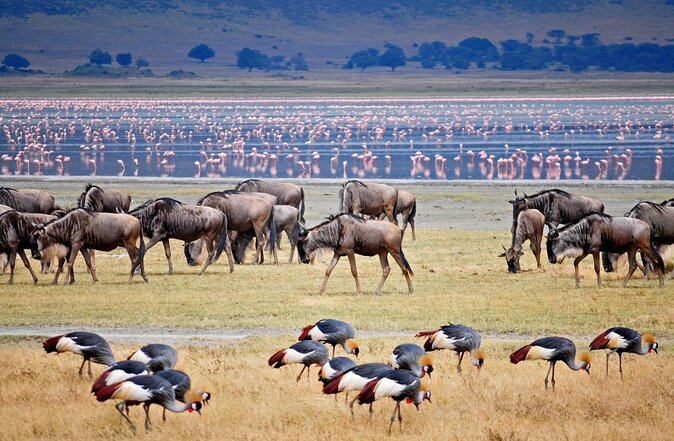
- Tarangire River year-round means wildlife stays active even when conditions dry out.
- Serengeti Central Seronera puts you in an area known for dense resident predators and prey.
- Ngorongoro at dawn helps you catch the crater when animals are most visible.
- Camping nights keep you closer to the action (and away from constant back-and-forth driving).
- Meals are mostly covered (4 breakfasts, 5 lunches, 4 dinners), so you spend less time hunting food.
- Max 6 travelers keeps the game drive feel like a shared experience, not a crowd.
Arusha to Tarangire: elephants, baobabs, and that year-round river
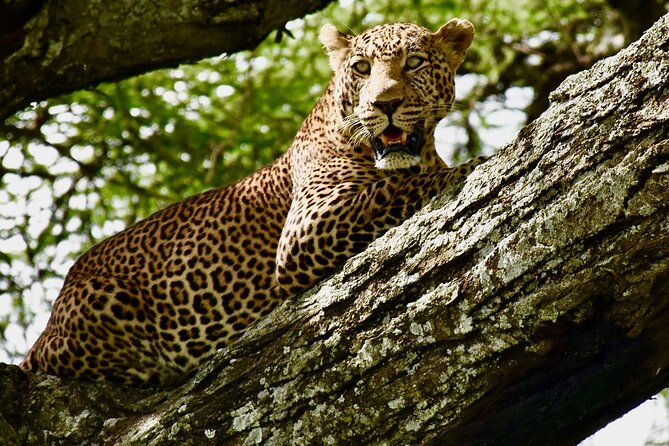
Day 1 starts with pickup from Shoppers Supermarket in Arusha, then the drive out to Tarangire National Park. Tarangire is one of Tanzania’s bigger parks, and the vibe is classic: dust in the air, wide-open sight lines, and wildlife that seems to know where the water is.
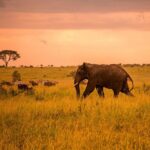
Tarangire’s signature draw is the Tarangire River, which flows year-round and becomes the key survival line for animals during dry seasons. That changes the game-drive feel. Instead of chasing sightings across endless distance, you often find yourself watching animals return to the same reliable places. Add in large herds of elephants and the park’s famous tree-climbing lions, plus the dramatic baobab trees (often called the Tree of Life), and Tarangire becomes an easy first-day win.
Practical note: you’ll want to manage expectations on Day 1. You’re arriving, getting oriented, and heading into an area where animals cluster around water. If your first morning view is quieter than you hoped, day two and the crater morning usually raise the odds again.
You can also read our reviews of more tours and experiences in Arusha.
Serengeti Central Seronera for two full game-drive days
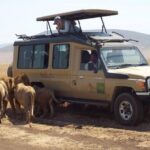
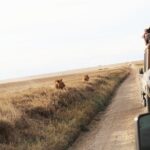
After breakfast, you drive into Serengeti National Park, specifically the Central Seronera area. This is where the safari reputation starts to feel real, fast. Serengeti is a UNESCO World Heritage Site, and Central Seronera is known for strong wildlife presence—especially resident predators like lions and leopards, plus the big herbivores that feed the whole system.
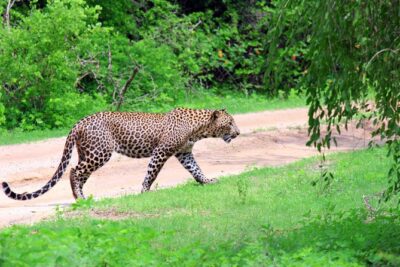
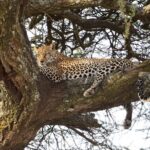
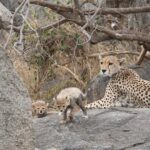
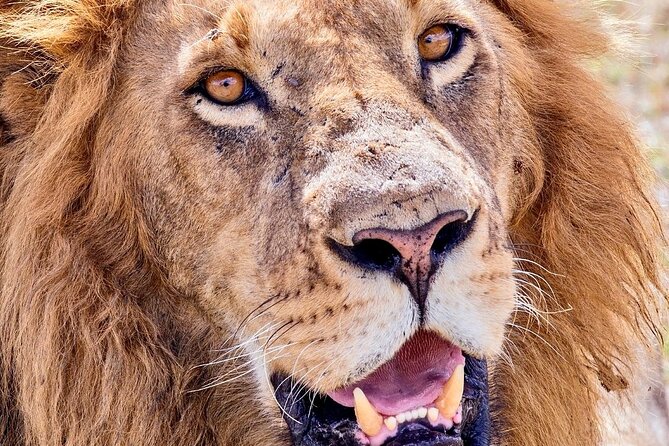
The “Big Five” framing matters here, but I’d look at it as a probability tool, not a trophy checklist. Lions are often a focus because the area is linked with a large lion population, supported by plentiful prey. Leopards are more secretive, yet they’re commonly seen in and around Seronera. And then you have elephants and buffalo in the mix, giving you variety in both sightings and behavior.
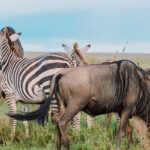
Serengeti is also about numbers. The park is linked with roughly 200,000 zebras and 300,000 Thomson’s gazelles, and the herds move through grazing rhythms. When you’re watching predators in action, this prey density is what keeps the system humming. You’ll spend time scanning for movement at the edges of herds and listening for how animals react when something is nearby.
You’ll do Serengeti across two days with camping-style overnights (including Budget Camping and then Simba Campsite). That extra night is more than a cost saver. It gives you more chances to hit different times of day, which is when animal behavior often changes. Morning viewing tends to feel more active; later in the day you’ll notice more relaxed grazing and sometimes more “sudden drama” when predators get attention.
Ngorongoro Crater morning: the caldera where sightings get packed
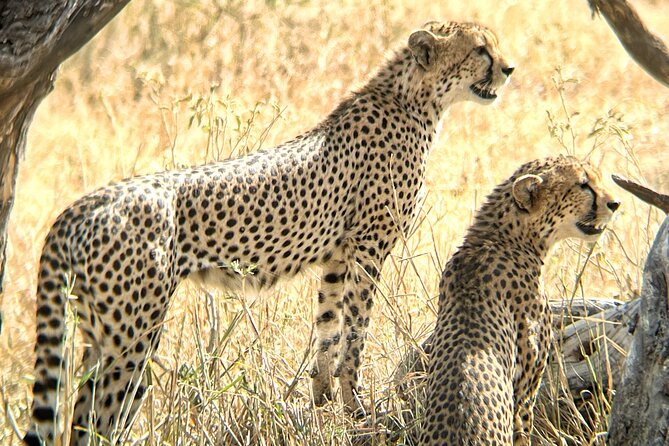
Day 4 targets Ngorongoro Conservation Area, with an early morning drive to Ngorongoro Crater. This is the UNESCO World Heritage Site piece of the route, and it’s famous for one simple reason: the crater’s scale supports an unusually high concentration of wildlife. The data here is specific—about 25,000 animals in the area.
The crater is described as the world’s largest caldera, and you feel that idea in how wildlife appears. When animals are concentrated, you don’t always need long-range guessing. You can spend more time watching behavior: feeding patterns, how groups hold space, and how predators move when prey is close by.
Early starts also matter because crater conditions change. You’re leaving before the day fully warms up, which can help visibility and animal activity. It’s a trade-off: you give up sleep for a better chance of high-quality viewing.
You’ll have B/L/D on this day, then overnight at Panorama Campsite. That full meal plan is helpful after a long, mentally focused morning drive. Once you’re down from the crater, you can switch gears from “scan and spot” to “digest and rest,” which is how these trips work best.
Lake Manyara and the Maasai village stop you might actually remember
Day 5 takes you toward Lake Manyara National Park, stopping along the way through a Maasai village. That stop can be a nice pace change after three big park days. It also helps you frame what you’re seeing in the parks as part of a bigger human-and-land story, not just wildlife in isolation.
Lake Manyara’s name is tied to the Maasai word Manyara, linked to the plant Euphorbia tirucalli. The tour info notes that the Maasai people use this plant to grow livestock stockades, since it produces a durable stockproof hedge. There’s even mention of a specimen of the plant at the entrance area. That’s the kind of detail that turns a normal park stop into something you can actually picture later.
The route also includes a quick Rift Valley explanation: the Great Rift Valley stretches about 8,000 kilometers and is described as visible from space during moon landings. Whether or not you care about the astronaut angle, the practical takeaway is this: Tanzania’s parks are connected by geology, and the terrain shapes where water and animals show up.
After the park time, you’re driven back to your hotel in the afternoon. The ending matters. You don’t want a final day that drags on forever after you’ve already spent days watching animals and tracking time by game-drive schedules.
Camping nights, meals, and the real rhythm of the day
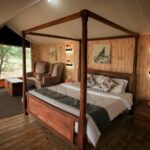
This is a camping-based safari with overnights at Budget Camping, Simba Campsite, and Panorama Campsite. Camping doesn’t automatically mean “rough,” but it does mean you should plan for more basic comfort than lodges. Pack for real outdoor life: layers, sun protection, and the mindset that “close to nature” often comes with trade-offs.
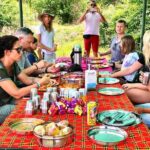
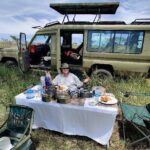
Meals are one of the strongest practical perks in the package. You get 4 breakfasts, 5 lunches, and 4 dinners, plus the tour includes all fees and taxes. For a safari, that reduces stress because you’re not timing your day around restaurant availability. It also means you’re more likely to stay fueled for early drives and long scanning sessions.
The itinerary shows lunch and dinner coverage on key days, including B/L/D on Ngorongoro day. That matters when you’re doing something demanding. If you’ve ever done an early start, you know the fastest way to feel miserable is to run out of energy.
One more scheduling detail that affects comfort: game drives are often longer than you expect. That’s not unique to this tour, but camping safaris often make you feel every hour. The upside is that, when the viewing is good, you get a whole day of it—not just a short snapshot before packing up again.
Small-group safari with named guides and the value of a good team
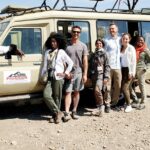
This safari caps at a maximum of 6 travelers, which is a big deal in safari terms. Fewer people means easier conversations, faster spot-sharing, and less “wait for the slowest photo moment” energy. Your guide can also adjust based on what the group is seeing, rather than rigidly following a crowd script.
The names that show up often in this safari’s orbit include guides like Joseph, Joel, and Jackson, with chef credits for Joachim/Joakim. What matters is what those roles do for you: a great guide helps you interpret behavior, not just point at animals. A great cook helps you recover so you can enjoy the next drive instead of feeling drained.
From the descriptions provided, your guide focus tends to be two things: where animals are likely to be and how they live. That shows up in how lions, leopards, elephants, and buffalo are discussed—not as random sightings, but as part of a system tied to prey, water, and territory.
Is a smaller group always perfect? Not necessarily. If you’re traveling with people who have different expectations (some want speed, others want photos), you’ll feel that more with fewer travelers. Still, in practice, a small group is usually where the safari spirit becomes personal fast.
Price and value: what $1,300 covers and where the real trade-offs are
At $1,300 per person, this isn’t a bargain-bin safari. But it also isn’t just a “transport and hope” package. The value angle here comes from what’s included and what you don’t have to chase on the ground.
The tour includes all fees and taxes, plus meals (4 breakfasts, 5 lunches, 4 dinners). It also lists admission tickets as free in the itinerary entries. Add in pickup offered and a mobile ticket, and you remove several common friction points that can add up in time and money.
Then there are the trade-offs you should price in. You’re doing camping-style nights, not lodge luxury. That can be totally worth it for the safari rhythm, but it’s a different travel style. You’ll also want to budget for the things the tour doesn’t include: tips/gratitude for the driver, guide, and cook, plus personal expenses and visas.
Cancellation is listed as free up to 24 hours before start time for a full refund, which reduces risk if your plans wobble. Still, if you’re the type who gets stuck when itineraries shift, keep a little flexibility in your schedule mindset.
What to bring (so the safari feels easier, not harder)
You’re doing multiple parks in days with early mornings. Since the overnights are campsite-based, you’ll be outside more than you might expect between drives and meal times.
Bring:
- Light rain protection and a few warm layers for early starts
- Sun protection (hat, sunscreen, sunglasses)
- Binoculars if you already own them (useful for leopard and distant herds)
- Reusable water bottle and basic snacks for long drives
- A small daypack so you can keep your essentials with you on game drives
- Cash for personal items, and plan for tips since they’re not included
The tour info doesn’t list specific gear or camp amenities, so you’re best off packing like you’ll be living outdoors for part of the day.
Should you book this Arusha safari route?
If you want a smart “greatest hits” route without wasting days, this works well. The combination of Tarangire, Serengeti Central Seronera, Ngorongoro Crater, and Lake Manyara gives you different ecosystems and different kinds of wildlife behavior. The small-group cap of 6 helps keep the experience personal, and the included meals make long days easier.
I’d skip this (or at least rethink it) if you’re chasing a relaxed, lodge-comfort vacation. Camping nights plus early mornings are part of the deal. Also, the pace is active, so if you get cranky from travel logistics, plan for downtime whenever you can.
My best-fit recommendation: couples, small groups of friends, and solo travelers who want a guide-led safari with strong wildlife odds, value practical comforts (meals and fees handled), and are happy swapping hotel luxury for being closer to the action.
FAQ
What is the duration of the safari?
The safari duration is listed as 5 days (approx.), with an itinerary running from Day 1 to Day 5.
Where does the safari start in Arusha?
The meeting point is Shoppers Supermarket, Arusha, Tanzania.
Does the tour offer pickup?
Yes, pickup is offered.
Which parks are included?
The itinerary includes Tarangire National Park, Serengeti National Park, Ngorongoro Conservation Area (Ngorongoro Crater), and Lake Manyara National Park.
Are park admission tickets included?
The itinerary shows Admission Ticket Free entries, and the package includes all fees and taxes.
What meals are included?
Breakfast is included for 4 days, lunch for 5 days, and dinner for 4 days.
Is a mobile ticket provided?
Yes, the tour includes a mobile ticket.
What is the group size limit?
The tour has a maximum of 6 travelers.
What is not included in the price?
Personal items, tips/gratitude for the driver, guide and safari cook, and visas are not included.
What is the cancellation policy?
Free cancellation is available up to 24 hours in advance for a full refund. Within 24 hours, the amount paid is not refunded.