REVIEW · ARUSHA
2 Days Group Joining Camping Safari Tarangire Park and Ngorongoro Crater
Book on Viator →Operated by Avocet Tanzania Safaris · Bookable on Viator
Two parks, two days, and real wildlife time. I love the open-roof 4×4 game drives, because they make wildlife spotting feel close and easy. I also like that camping and meals are built in, so you’re not doing guesswork on what’s extra. You’ll run through Tarangire National Park for elephants and those famous baobabs, then descend into Ngorongoro Crater for a full day of crater wildlife searching.
One thing to keep in mind: this is a campsite overnight, so your comfort level will be more basic than a lodge stay. The schedule is also tight, with long drives between parks, so it’s best if you’re the type who enjoys “on the move” days.
If you’re traveling on a time budget, this works well. It’s a max of 7 people, you get pickup, and you’ll receive a mobile ticket—small touches that help the day feel organized even when you’re bouncing across rural roads.
In This Review
- Key things to know before you go
- Tarangire National Park: elephants, baobabs, and a long game-drive morning
- How the game drives work: open-roof 4×4 comfort you’ll actually feel
- Camping at Kizumba Campsite: what “full board” really means for your budget
- Ngorongoro Crater day: the descent, the density, and why timing matters
- Price and value of $500 for two days across two icons
- Transfers, timing, and the one thing you should watch closely
- Who this safari suits best (and who might prefer something else)
- Should you book this 2-day camping safari?
- FAQ
- What time does the safari start?
- How many days is the safari?
- Which parks are included?
- What’s included in the price?
- Are park admissions included?
- Can I cancel for a full refund?
Key things to know before you go
- Open-roof 4×4 with all-window seats helps you spot animals and take photos without fighting for a view
- Tarangire + Ngorongoro in 2 days is a practical way to hit two Tanzania highlights fast
- Picnic lunch boxes twice keeps you out on safari longer instead of losing time to long breaks
- Camping at Kizumba Campsite (full board) means dinner and breakfast are handled
- All fees and taxes are included, with park admissions listed as covered for both days
- Small group (up to 7) keeps the drives more personal and less chaotic
Tarangire National Park: elephants, baobabs, and a long game-drive morning
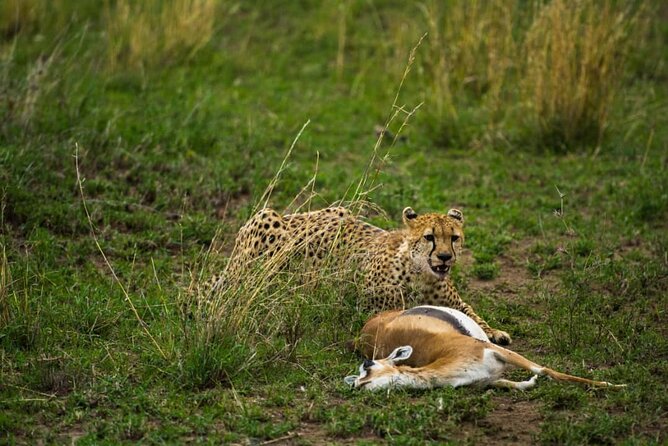
Your day starts with an early Arusha departure (around 8:30 am) and a drive into Tarangire National Park. The big win here is that you’re not just passing through—you’re given time for real game viewing with a picnic lunch later. In other words, you get the safari rhythm: track, stop, scan, repeat.
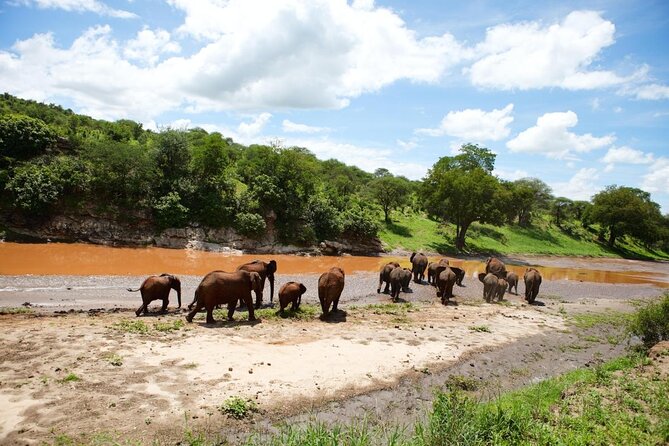
Tarangire is especially known for elephants, and the timing and habitat make it a strong place to look for them. You’ll also have a good chance to spot the legendary baobab trees—those thick-trunk giants that look like they were designed by something artistic and strange. Even when you don’t land on a perfect “hero sighting,” baobabs and elephant country give you a memorable mix of animals and scenery.
The way the park day is paced matters. You’ll be on safari during daylight hours, and you’ll keep momentum with lunch boxes on the road plan. That’s a practical setup for people who want wildlife time now, not later.
Practical note: day-one includes a listed admission ticket free amount and you’re already paying for the tour as a package. That’s one less “what am I supposed to pay at the gate?” moment, and it helps the day feel smoother.
You can also read our reviews of more tours and experiences in Arusha.


How the game drives work: open-roof 4×4 comfort you’ll actually feel
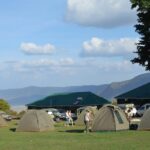
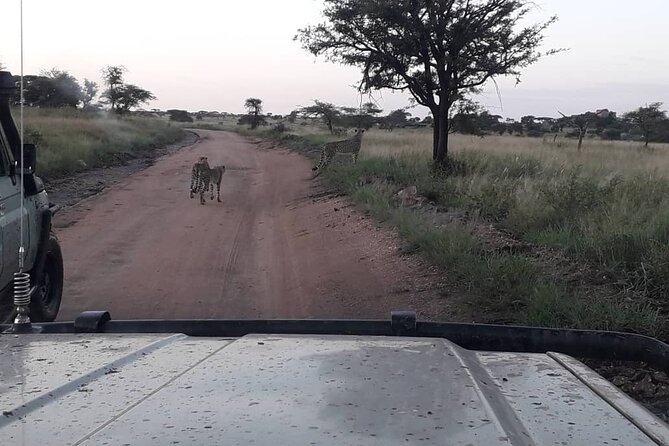
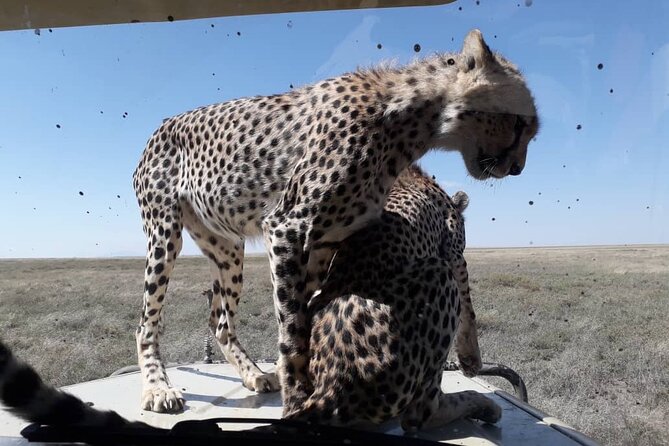
This safari uses a top open roof all-window 4×4 setup, which changes the whole feel of the drive. You can lean and look without that constant “is my window down?” stress. When animals step into view, you’re not stuck waiting for the perfect angle.
You also get professional safari guides, plus mineral water during the tour. Small, practical comforts add up on long drive days. I like that they include water—on safari, you’re usually out scanning and moving, and you want to stay alert.
There’s another detail that helps: socket changing in the car. That’s mainly about keeping your electronics usable (power situations can be annoying in parts of Africa). You shouldn’t treat it as a magic trick, but it’s the kind of thoughtful inclusion that makes the day feel more organized.
What you should bring matters, too: sunscreen, a hat, and a light layer. Open-roof vehicles can mean bright sun one minute and cooler air the next—especially around early morning and late afternoon driving.
Camping at Kizumba Campsite: what “full board” really means for your budget
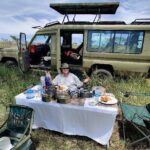
Night one is at Kizumba Campsite, and it’s full board, which is a budget-saver in plain terms. Dinner is included, and breakfast is included for day two. On top of that, your lunch is handled with picnic lunch boxes, so you’re not hunting for food in between parks.
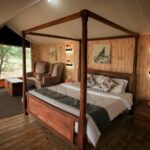
When people hear “camping,” they often picture rough conditions. This tour doesn’t spell out facility details, but you can safely assume it’s designed for safari logistics, not hotel-style comfort. If you’re the type who wants hot showers, quiet rooms, and plush beds every night, you may find the campsite setup less satisfying.
Still, for a two-day park sprint, the camping approach is a smart trade. It keeps the schedule efficient and helps you see two major Tanzania destinations without losing time or money to extra nights elsewhere.
Also, this is where group size helps. With no more than 7 travelers, you don’t end up stuck in a giant herd situation at meal time or during handoffs between activities.
Ngorongoro Crater day: the descent, the density, and why timing matters
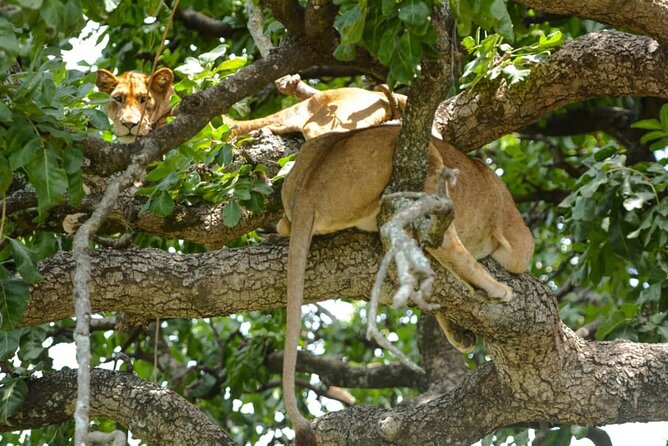
Day two shifts gears with the drive toward Ngorongoro Crater. The big moment is the descent into the crater for game drives with picnic lunch boxes again. Ngorongoro is famous for the dense concentration of wildlife in Africa, and that’s exactly why this stop is worth doing even if you’re short on time.
A crater day feels different from savanna drives. You’re in a bowl-like environment, and wildlife tends to gather where food and water are. That means you often get more frequent sightings without needing to chase as far as you would in some other parks.
The schedule also includes a later return—around 3:00 pm back toward Arusha town—with the safari experience ending after your drives. That’s not a huge “linger and relax” plan. It’s a focused day: descend, scan, drive, lunch, and drive again.
Park admission for day two is listed as included, which is another way this tour reduces friction. Less upfront payment stress means more time looking out the window for the next animal.
One more practical detail: you’ll again have mineral water and a guide. On crater days, your best “sightings strategy” is staying mentally sharp—watching edges, moving with the vehicle stops, and letting the guide’s positioning do the heavy lifting.
Price and value of $500 for two days across two icons
At $500 per person, this tour is aimed at travelers who want a fast, organized safari without constant add-ons. What makes it feel reasonable isn’t just that it covers two parks—it’s the inclusion list and the way it matches your likely biggest expenses.
Here’s what you’re getting coverage for, based on the package details:
- Accommodation on night one (at Kizumba Campsite)
- Meals: dinner + breakfast plus two lunch boxes
- Game driving and 4×4 transportation
- All fees and taxes
- Mineral water
- Camping gear is included
- Professional safari guiding
What’s not included is tips, which is normal for group safari pricing. So the real question is: would you spend less on your own? Often, two-park safaris become expensive when you add separate vehicles, separate lodging, and gate fees. This package bundles the main pieces, which can save time and reduce decision fatigue.
Also, the max group size of 7 travelers matters for value. You’re not paying for a tiny chance at a good experience—you’re paying for a setup that keeps the ride manageable and the day less crowded.



Transfers, timing, and the one thing you should watch closely
Pickup is offered and your day is built around a fixed start time of 8:30 am. That’s great when you want your schedule handled. The only downside is the one you can’t fully control: road travel.
In one account, the return transfer got messy and the person arrived late to their hotel. The lesson here isn’t to panic. It’s to plan smart:
- Confirm your pickup and drop-off location precisely.
- Keep your phone accessible on the safari days.
- If you have a tight onward connection after the tour ends, add a buffer. The tour return is around mid-afternoon, but road timing can swing.
If you’re staying in Arusha and you don’t need a perfectly timed next stop, you’ll likely feel fine. But if you’ve got flights, tours, or meetings right after, give yourself breathing room.
Who this safari suits best (and who might prefer something else)
This two-day Tarangire + Ngorongoro camping safari is a great fit if:
- you want a high-impact itinerary without burning a week
- you like group organization but still want a more personal feel (up to 7 people)
- you’re comfortable with camping logistics for one night
- you value included meals and fewer surprise costs
It may be less ideal if:
- you need lodge-level comfort for the overnight
- you dislike long driving days and fixed schedules
- you’re very sensitive to transfer timing and want total control over exact arrival moments
The sweet spot is travelers who like sunrise-to-sunset safari pacing and are happy to trade “extra comfort” for “extra wildlife time.”
Should you book this 2-day camping safari?
I think it’s a strong booking if your goal is speed with good structure. Two days is not enough time to become an expert on either park, but this itinerary gives you practical coverage: Tarangire for elephants and baobabs, then Ngorongoro for crater wildlife density. The open-roof 4×4, picnic lunch boxes, and full-board camping overnight make it feel like a real safari package, not a rushed checklist.
My main caution is the camping overnight and the reality of road timing. If you can handle basic accommodations for one night and you’re okay with a return time that lands around mid-afternoon, you’ll likely get exactly what you paid for: two iconic Tanzania experiences in one compact trip.
FAQ
What time does the safari start?
The experience starts at 8:30 am.
How many days is the safari?
It’s a 2-day safari experience.
Which parks are included?
You’ll visit Tarangire National Park and Ngorongoro Crater.
What’s included in the price?
The package includes all fees and taxes, game driving, professional safari guides, 4×4 transportation (top open roof all-window seats), mineral water, camping gear, accommodation, dinner, breakfast, and lunch (2).
Are park admissions included?
Yes. Tarangire is listed as admission ticket free, and Ngorongoro is listed as admission included.
Can I cancel for a full refund?
Yes. You can cancel for a full refund up to 24 hours before the experience’s start time.
—
If you tell me your travel month and whether you’re starting from a hotel in Arusha or near public transport, I can help you plan what to pack and how to build a safe buffer around the mid-afternoon return.