REVIEW · ARUSHA
8 Day Spectacular Migration Serengeti mid -Range Tanzania Safari
Book on Viator →Operated by Lion King Adventures · Bookable on Viator
A good safari is about timing, not luck. This 8-day Northern Circuit route is built for migration odds and classic Tanzania variety, without wasting days on logistics. You get a smooth flow of park-to-park travel, plus direct entry setup so you can spend more hours watching animals and less time standing in lines.
I also like the mid-range value here. Park fees, accommodations, and meals are included, so the price feels more like a package than a bundle of add-ons. And the trip’s reputation centers on guides who are quick, patient, and good at spotting wildlife, with names like Joseph, Salehe, Oswald, Benjamin, and Ozzie showing up again and again in praise.
One consideration: the migration is amazing, but it’s not a theater show with fixed seats. The animals move, and your best “watching plan” depends on where they are in the north Serengeti and Mara River area during your dates.
In This Review
- Quick takeaways before you book
- Northern Circuit in 8 Days: How the Route Works
- Day 1 in Arusha: Pickup, Ilboru Safari Lodge, and First-Day Calm
- Tarangire National Park on Day 2: Elephants by the River
- Day 3 Serengeti Entry via Ngorongoro Conservation Area: Open Grass, Big Chances
- Two Migration-Focused Days: Northern Serengeti to the Mara River
- Day 4: Targeting the Northern Serengeti
- Day 5: Mara River Crossing Energy
- Day 6 Central Serengeti Return: Another Set of Eyes on the Herds
- Day 7 Ngorongoro Crater Descent: The Caldera World Inside
- Day 8 Lake Manyara: Rift Views, Birds, and Forest Edges
- Price and Logistics Value at $4,257 Per Person
- What the Best Guides Do Differently (And Why You’ll Feel It)
- Who This Safari Is For (And Who Might Want to Rethink It)
- Should You Book This 8-Day Spectacular Migration Safari?
- FAQ
- What parks and key areas are included?
- Is this safari private?
- How does the tour handle migration viewing?
- What’s included in the price?
- What’s not included?
- What is the start time?
- How long is the safari?
- What does the itinerary include on Ngorongoro Crater?
- Can I cancel for a full refund?
Quick takeaways before you book
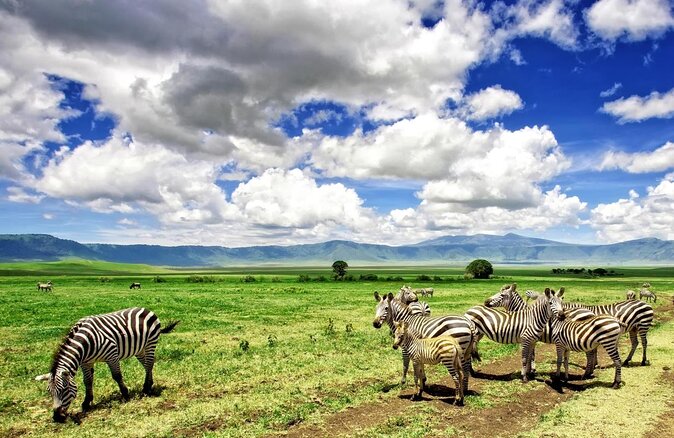
- Eight days, three park systems: Tarangire, Serengeti, Ngorongoro/Crater, plus Lake Manyara on the end.
- Two dedicated migration days: one focused on the northern Serengeti, one focused on the Mara River crossing.
- Big Five game drive potential: the safari is designed to hit the famous species across different habitats.
- Crater day + crater day before: you get an early chance to see Ngorongoro from the region, then a full crater descent later.
- Guide-forward experience: many praised guides are noted for calm driving and strong animal-spotting skills.
Northern Circuit in 8 Days: How the Route Works
This safari is designed for people who want the Northern Circuit highlights, but don’t want to squeeze it into a rushed schedule. You start in Arusha, then move in a logical loop: Tarangire for elephants and dry-season water drama, Serengeti for open-country action and the migration, then Ngorongoro Crater for the “inside-a-volcano” wildlife bowl, finishing at Lake Manyara for birds and forest animals.
The pacing matters. You’re not doing endless backtracking, and you’re not spending your energy on paperwork. The tour includes park fees and uses direct entry tickets, which helps you avoid long stop-and-go moments at gates.
It’s also structured around wildlife-changing habitat. Each park shifts the animal mix. Tarangire feels river-centered and dry-season focused. Serengeti is grassy and wide-open. Ngorongoro is enclosed and elevated. Lake Manyara mixes a shallow lake and forest edges. That variation is why you’re more likely to see different species over fewer days.
You can also read our reviews of more tours and experiences in Arusha.
Day 1 in Arusha: Pickup, Ilboru Safari Lodge, and First-Day Calm
Day 1 is about landing, breathing, and getting settled. You’ll be picked up from the airport by a Lion King representative and driven into Arusha to overnight at Ilboru Safari Lodge. That matters because early arrivals can feel chaotic. This at least gives you a proper landing rhythm: arrive, get to your lodge, sleep, and then start the safari with daylight.
If you’re nervous about “what happens next,” this is where the tour reduces stress. You’re not left trying to arrange transportation on your own. It’s also a gentle start mentally: no crater descents on day one, no long drives right after check-in.
Tarangire National Park on Day 2: Elephants by the River
Tarangire is named for the Tarangire River, and it truly shapes the animal story. During the dry season, it’s a key water source, and wildlife gathers there like it’s the only show in town. The safari route takes you from Arusha with a drive of about two and a half hours on good tarmac roads, so the morning transition is manageable.
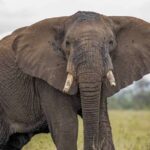
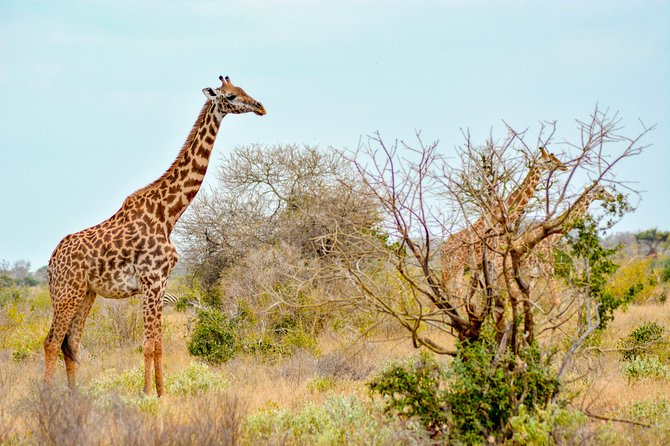
What you’re likely to love here is the mix of predictable and surprising sightings. Tarangire is known for elephant families that often congregate near the river. You can also look for giraffes and antelope types such as hartebeest, plus bushbuck. Predators follow along, so lions and leopards can be in the mix when the herbivores are active.
One practical note: you’ll want to pay attention to the light and timing. When animals move to water, sighting quality often improves. Even if the day doesn’t feel “full” in length, it can still deliver the kind of close-up behavior you remember later.
Day 3 Serengeti Entry via Ngorongoro Conservation Area: Open Grass, Big Chances
On Day 3, you’re heading into the Serengeti from the cooler Ngorongoro Conservation Area region. Before you fully enter the Serengeti, you have a chance to stop and see Ngorongoro Crater. That first look is useful even if you’re going deeper later. From above, the crater can feel like a world you’re about to enter, not just a place you’re driving past.
Once you’re in the Serengeti south, the experience shifts. The famous open grasslands make it easier to scan for animals at distance. Expect wildlife such as impalas, buffaloes, croc country near water, and hippos in the right areas. Predators are part of the equation too, with lions, cheetahs, and leopards possible depending on where the guide takes you.
This day is a good reminder that Serengeti success often comes down to route choices and patience. If you want the “wow” factor quickly, look for the long views, then let the day unfold rather than chasing every short moment.
Two Migration-Focused Days: Northern Serengeti to the Mara River
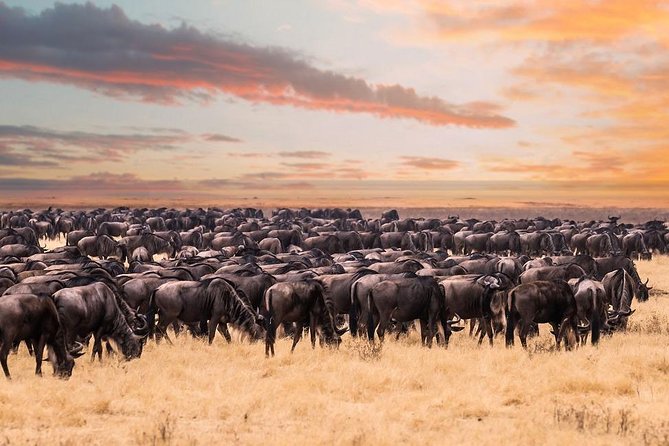
This is the core reason many people choose the tour: wildebeest migration timing. The tour is built around two separate days aimed at seeing it in different parts of Serengeti. That’s smart because the migration isn’t one fixed location all year.
Day 4: Targeting the Northern Serengeti
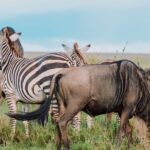
After breakfast, you drive through Serengeti toward the northern region. The goal is to align with where migration herds tend to be during your travel window. The important idea is this: the migration can be present in different areas depending on the month. So the guide’s knowledge of where to look is what turns a “might see it” day into a high-odds day.
Northern Serengeti is also a great reminder that migration doesn’t just mean animals moving in a line. It means herds continuously searching for fresh grazing, so activity can feel constant when you’re in the right area.
Day 5: Mara River Crossing Energy
Day 5 leans even harder into migration drama. You’ll be in an area defined by hills, riverine forests, plains, and rocky outcrops. The Mara River is the star here. When herds attempt the crossing, it can involve over two million wildebeest, with hundreds of thousands of zebra and antelope trying to make the same move.
And yes, predators are part of the story. Nile crocodiles add obvious tension in the river. On the far side and around edges, lions, hyenas, leopards, and cheetahs can be waiting with hungry timing.
Even if you’ve seen photos, the scale of the Mara River crossing hits different. The best mindset is to be present: scanning edges, watching how groups commit, and understanding that wildlife behavior can change quickly. This is also where a strong guide matters, since positioning affects what you can actually see.
Day 6 Central Serengeti Return: Another Set of Eyes on the Herds
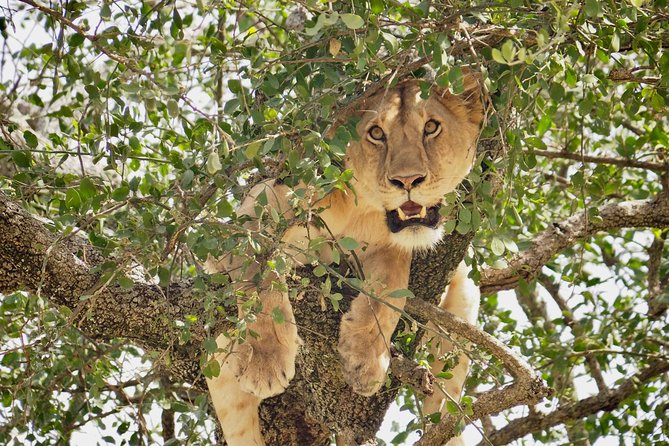
After the Mara day, Day 6 brings you back toward Central Serengeti at a slower pace, with en route game driving. This day is there for a reason. Migration sightings aren’t guaranteed, even with smart planning. Having an additional Serengeti day increases your odds of seeing action again in a different area.
Also, Serengeti doesn’t repeat. Even when the general animals are similar, the view angles, water sources, and predator movements shift day to day. If you felt that Day 5 was the peak, Day 6 can still surprise you with different behavior—animals feeding in new rhythms, predators relocating, and herds clustering where you didn’t expect.
Day 7 Ngorongoro Crater Descent: The Caldera World Inside
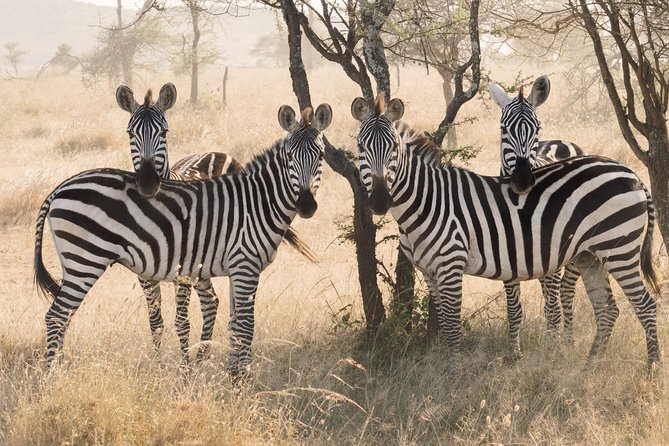
Ngorongoro Crater is one of the most visually unforgettable things in Northern Tanzania, and this day is structured to get you in at a meaningful time. You’ll head back through the Serengeti and the Ngorongoro Conservation Area and reach the crater by lunchtime. Then the driving down into the crater becomes part of the event, not just a transfer.
When you first see it from the viewpoint, Ngorongoro can look like a forgotten world: steep volcanic walls with savannah, pockets of acacia woodland, and lakes and swamps hidden inside. The crater formed when a volcano exploded and collapsed roughly two to three million years ago, and that age shows in how dramatically enclosed the area feels.
This is the one day where you should expect a bit more focus on pacing. The crater portion takes time, and it’s listed as about 8 hours total. The payoff is that you’re watching a concentrated habitat. Animals are more contained in space, so sighting can feel efficient once you’re inside.
Day 8 Lake Manyara: Rift Views, Birds, and Forest Edges
The end of the safari shifts again. Lake Manyara is smaller than some of the other parks, and that’s exactly why it can feel intense. You’ll drive from where you’re staying to Lake Manyara National Park, about 120 km west of Arusha, and then spend your final full day there.
Lake Manyara sits under the Great Rift Escarpment, which gives you dramatic vertical structure over the park. The centerpiece is a shallow salt lake. The lake expands and contracts with the seasons, and it draws birds in large numbers. The tour notes thousands of wading birds, including flamingos, plus over 500 other bird species. If birds interest you, this is a strong send-off day.
On land, the evergreen forest edges can bring baboons and elephants into the viewing mix. This is also where you may appreciate having already done Tarangire and Serengeti: you can compare habitats in your head, and that makes each “new” place feel more meaningful.
Price and Logistics Value at $4,257 Per Person
At $4,257 per person for about 8 days, this reads like a mid-range Tanzania safari price. The real question is what’s included versus what can silently inflate your budget.
Here, you’re getting a package that covers:
- All accommodation
- Park fees
- Professional driver/guide
- Taxes/VAT
- Meals (breakfast daily, plus listed lunches and dinners)
You’re not covering:
- International flights
- Extra accommodation before or at the end
- Tips
That matters because many safari quotes look cheap until you add park fees, guides, and meals. In this case, you’re paying for the full Northern Circuit flow rather than assembling it yourself. You’ll also start at 8:30 am and run an organized daily rhythm, which reduces the chance you lose prime animal hours to delays.
For value-minded travelers, this is the kind of deal that makes sense if you’re choosing comfort and time efficiency over “DIY adventure.”
What the Best Guides Do Differently (And Why You’ll Feel It)
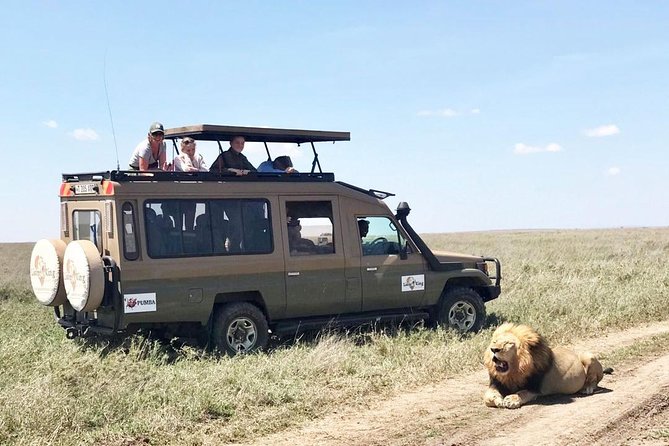
When people talk about Lion King Adventures, the praise is consistently guide-centered. In the feedback you’ll see guide names like Joseph, Salehe, Oswald, Benjamin, Jackson, Enock, Lucas, Ozzie, Hurum, and Geoffrey Wanka. What they have in common is not just friendliness. They’re credited with practical skills that change your experience day to day.
Look for the patterns:
- Prompt pickup and calm driving
- Patient explanations of the daily plan
- Flexibility when the day’s sightings require a change of route
- Strong spotting ability, including finding animals at surprising distances
One review detail that stands out for day-to-day comfort: guides were described as keeping the vehicle stocked with water and drinks during the day. That’s not the headline item, but it’s the kind of thing you’ll appreciate once you’re hours into a game drive and want to stay comfortable without asking.
Even better, multiple accounts describe guides as adapting dynamically when plans needed adjusting. In safari terms, that’s the difference between rigid “checklist” travel and an actual wildlife-focused day.
Who This Safari Is For (And Who Might Want to Rethink It)
This safari fits best if you:
- Want migration-focused days, not just one quick look
- Appreciate a mixed circuit rather than repeating the same habitat for eight days
- Like structure that removes the chore of booking logistics and park entries
- Prefer a guide-led approach for finding wildlife efficiently
Consider rethinking if you:
- Need absolute certainty for the exact moment of a Mara crossing. The itinerary targets key areas, but animal movement is still nature’s call.
- Hate long days of driving between parks. This route is efficient, but it is still “a lot of Tanzania roads.”
If you’re traveling as a couple or a small group, the private setup is also a plus. Your vehicle is for your group, which usually makes it easier to settle into routines.
Should You Book This 8-Day Spectacular Migration Safari?
My take: this is a strong choice if you want a best-of Northern Tanzania trip that doesn’t cut corners on the stuff that makes safari days work—park access, lodging, meals, and guide support. The migration element is built in with two specific Serengeti days, and the itinerary also doesn’t forget the “classic” Tanzania hits like Ngorongoro Crater and Lake Manyara’s birdlife.
Before you book, do two quick checks in your own head:
- Match your travel dates to your migration goal. The tour targets the northern Serengeti and the Mara River area, but where herds are can vary by month.
- Ask how the lodge level and room type fit your comfort needs. You’ll get all accommodation included, but the best fit depends on what you consider “mid-range” in real life.
If you want a well-run safari circuit with serious wildlife time, this one makes sense.
FAQ
What parks and key areas are included?
You’ll visit Tarangire National Park, Serengeti National Park (including migration-focused days), Ngorongoro Crater in the Ngorongoro Conservation Area, and Lake Manyara National Park.
Is this safari private?
Yes. It’s listed as private, with only your group participating.
How does the tour handle migration viewing?
The schedule targets the great migration by spending time in the northern Serengeti and then focusing on the Mara River crossing area. Migration can be present in different places depending on the month, so sightings depend on where the herds are during your dates.
What’s included in the price?
Park fees, all accommodation, a professional driver/guide, taxes/VAT, and meals are included (breakfast daily, plus listed lunches and dinners).
What’s not included?
International flights, additional accommodation before or at the end of the tour, and tips are not included.
What is the start time?
The listed start time is 8:30 am.
How long is the safari?
It’s about 8 days.
What does the itinerary include on Ngorongoro Crater?
You’ll have an early chance to see Ngorongoro Crater area on the way into Serengeti, then a dedicated Ngorongoro Crater day with a drive down into the crater.
Can I cancel for a full refund?
Yes. Free cancellation is available up to 24 hours in advance of the experience’s start time for a full refund.