REVIEW · MOSHI
4 Day Mid-range Serengeti Safari
Book on Viator →Operated by Serengeti African Tours · Bookable on Viator
Wild Africa in four days—possible. This mid-range safari strings together Tarangire, Serengeti, and the Ngorongoro Crater for some of Tanzania’s most consistent wildlife time. What makes it especially interesting is the mix of park ecosystems: elephants and baobabs first, wide-open Serengeti plains next, then a crater with year-round water and predators.
I really like that the trip is built around a pop-up roof 4×4 and a professional English-speaking guide. I also like the practical coverage: park fees, game drives, and most meals are included, so you’re not constantly doing math during the journey. One thing to consider is that this is a shared safari experience (max 50), so you might not be the first or last person out for every moment—still, the guiding and timing should keep you in the action.
In This Review
- Quick highlights worth caring about
- 4 days that stack three ecosystems
- Who this suits best
- The “mid-range” value: what $1,800 buys in real life
- Pickup, timing, and group size that actually matters
- Day 1: Tarangire National Park and the elephant–baobab combo
- Picnic lunch inside the park
- Overnight at Farm Dream Lodge
- Possible drawback to expect
- Day 2: Serengeti in Seronera time, not just Serengeti on paper
- Morning to lunch to afternoon driving
- Overnight at Domel Wilderness Tented
- What you can aim to see
- Day 3: Olduvai Gorge on the way, then Ngorongoro Wildlife Lodge
- Late afternoon transfer and crater-side lodging
- Day 4: The crater descent, Lake Magadi, and predator time
- Predators can show up, but your job is to look small
- Lake Magadi
- What feels different from Serengeti
- Wildlife odds: what you should realistically expect
- Lodges, tented camps, and meals that keep you on schedule
- The guides: spotting talent is half the safari
- Practical packing checklist for this route
- Should you book this 4-day safari?
- FAQ
- What parks are included on this 4-day safari?
- Do I need to pay national park fees?
- What vehicle do you use for game drives?
- Are meals included?
- Is accommodation included during the safari?
- Is Arusha accommodation included?
- Is pickup offered?
- Do I need a visa for Tanzania?
- Are tips included?
- What is the cancellation policy?
- What’s the maximum group size?
Quick highlights worth caring about
- Pop-up roof 4×4 for wildlife spotting: better angles for seeing close-up action on the plains.
- Tarangire’s elephants + baobabs: a classic combo, tied to big seasonal movement.
- Serengeti Seronera area: water from the Seronera River helps concentrate animals.
- Ngorongoro’s crater descent (over 600 meters): a totally different view and feel from the rim.
- Olduvai Gorge stop: human evolution sites along the way, not just animals.
- Fees and meals included: a cleaner, more predictable mid-range value.
4 days that stack three ecosystems
This safari is designed as a fast but not rushed sampler. Instead of doing only one park, you get three distinct wildlife settings: Tarangire National Park, Serengeti National Park, and Ngorongoro Conservation Area (including the crater). That matters because Tanzania’s wildlife isn’t one-size-fits-all. Different habitats pull different species into view, and your odds of seeing “wow” moments go up when you’re not relying on just one landscape.
The “mid-range” part is also practical. You’re not trying to go ultra-luxury, but you are getting core safari basics: a guided wildlife schedule, 4×4 transport, park fees included, and overnight stays in safari lodges or tented camps.
You can also read our reviews of more tours and experiences in Moshi.
Who this suits best
This fits you if you want a well-paced itinerary with real wildlife priorities and fewer add-on surprises. It also works well for couples and families who want comfort at night, but still want the best chance of seeing predators and big herbivores in daylight drives.
The “mid-range” value: what $1,800 buys in real life
At $1,800 per person (for a 4-day experience), the big value isn’t just the parks—it’s what’s included around the parks.
Here’s what you’re covered for:
- 4×4 pop-up roof safari vehicle with transport through the route
- Professional, English-speaking guide
- All national park fees
- Mineral water
- Meals (breakfast, lunch, dinner on the days listed)
- Overnight stays in safari lodges / tented camps
- Mobile ticket
And what you’ll handle separately:
- Alcohol and soft drinks
- Visa fees
- Tips
- Personal spending
This pricing makes sense for most people because Serengeti and Ngorongoro are not cheap parks to access. When park fees are included, it protects your budget. It also reduces friction once you’re already in Tanzania—less stop-and-pay, more drive-and-look.
Pickup, timing, and group size that actually matters
You’ll start from the Kilimanjaro Airport area (the meeting point is listed as Kilimanjaro Airport). Pickup is offered, which is a big deal if you’re landing tired and jet-lagged.
The tour runs as a group experience with a maximum of 50 travelers. That’s helpful because it’s large enough to run smoothly, but not so huge that you feel lost. The key for your planning: safaris are timed to animal activity and daylight. Even in a group, a good guide keeps you moving at the right times without making every game drive feel like a factory line.
One more practical note: the tour uses a mobile ticket, and confirmation is received at booking. That typically makes check-in easier when you’re traveling from abroad.
Day 1: Tarangire National Park and the elephant–baobab combo
You start with breakfast, then you’re on the move. There’s a stop in Arusha Town for any last-minute purchases, and then you head toward Tarangire National Park.
Tarangire is famous for two reasons:
- Large elephant numbers
- Baobab trees, which turn the park into something you can recognize even when the plain gets endless
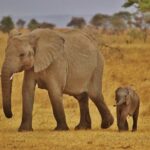
The itinerary highlights Tarangire’s annual migratory rhythm, with figures up to 3,000 elephants, plus wildebeest and zebra movement. Even if you don’t see exactly those totals on a single day, the point is that Tarangire has predictable animal activity and strong chances of encounters with herds moving through the same corridors.
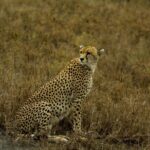
Picnic lunch inside the park
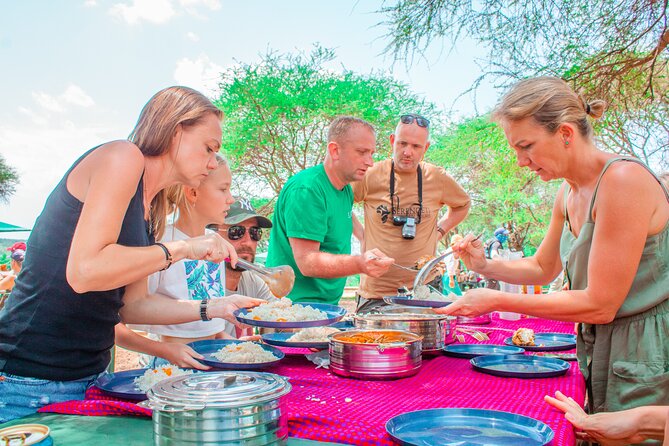
You’ll have a picnic lunch at the park, which helps you maximize drive time. For a first day, that’s a smart rhythm: you’re not rushing out for meals and then rushing back to the vehicle again.
Overnight at Farm Dream Lodge
Your first night is at Farm Dream Lodge. Lodges like this are usually chosen to balance comfort with being close enough to keep departure timing smooth the next morning.
Possible drawback to expect
Like many multi-park safaris, Day 1 can feel like a travel day as much as a game-drive day—because you’re moving into position. Still, Tarangire’s elephant concentration makes the effort feel worth it.
Day 2: Serengeti in Seronera time, not just Serengeti on paper
Day 2 is the big shift: you leave the highlands and descend into the heart of the Serengeti route. The itinerary travels via Karatu and the Ngorongoro Conservation Area, then targets the Seronera area for game drives.
Seronera matters because it’s connected to the Seronera River. Water creates gravity for wildlife. When the river is doing its job, animals don’t have to wander as much to find what they need. That’s one reason this area is often chosen for strong “variety in a day” viewing.
Morning to lunch to afternoon driving
You arrive in time for lunch and then you get an afternoon game drive. That’s a good balance because you’re still getting daylight prime time, without forcing you onto the road immediately at the start of the day.
Overnight at Domel Wilderness Tented
You sleep at Domel Wilderness Tented. Tented camps in the Serengeti region typically focus on atmosphere and proximity. Just remember: nights can feel cool, and sound carries in the open air. Pack layers.
What you can aim to see
In Serengeti, your day usually isn’t about one animal. It’s about patterns—predators tracking, herds moving, and constant scouting. If your guide spots tracks early, you can get a nice chain reaction of sightings.
Day 3: Olduvai Gorge on the way, then Ngorongoro Wildlife Lodge
Day 3 starts early with a game drive, then you head to Ngorongoro Conservation Area. Along the way, there’s a stopover at Olduvai Gorge.
Olduvai Gorge is a seriously different kind of stop from the usual safari rhythm. It’s tied to human evolution research, including discoveries by Drs. Lois and Mary Leakey of skulls nicknamed Nutcracker Man and Handy Man. If you’re the type who likes context—why this place is not just scenic but scientifically important—that stop lands well.
Late afternoon transfer and crater-side lodging
Later, you transfer to Ngorongoro Wildlife Lodge for dinner and overnight.
This matters because it sets you up for an early crater descent on Day 4. If you’re sleeping on the crater side, you don’t burn half the morning in traffic and positioning.
Day 4: The crater descent, Lake Magadi, and predator time
Day 4 is the headline act: after an early breakfast, you descend over 600 meters into the crater to view wildlife.
Ngorongoro works because it has built-in resources: a year-round supply of water and fodder. That supports a large mix of animals, including wildebeest, zebra, buffalo, eland, warthog, hippo, and giant African elephants.
Predators can show up, but your job is to look small
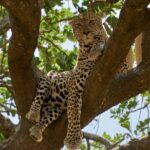
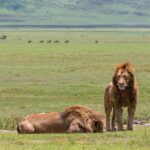
The itinerary also emphasizes predator density: lions, hyenas, jackals, cheetahs, and the ever-elusive leopard. Leopard sightings can depend on timing and patience, and they often require a trained eye to spot. This is where your guide earns their spot in your photos.
Lake Magadi
You’ll visit Lake Magadi, a large but shallow alkaline lake in the crater’s southwestern corner. The lake is a key feature inside the crater and helps attract wildlife moving through the area.
What feels different from Serengeti
In Serengeti, wildlife often feels like it’s spread across endless distance. In Ngorongoro, animals can feel more concentrated because you’re moving through a bowl-shaped system with reliable resources. That changes the viewing style: you spend more time scanning for movement right next to the road, and less time chasing far-away silhouettes.
Wildlife odds: what you should realistically expect
This safari is structured to maximize “variety in view.” By stacking Tarangire, Seronera, and Ngorongoro, you’re covering elephants, big plains ecosystems, and crater-based mixed herds.
Your sightings will still depend on season and animal movement, but the route is designed for consistency:
- Tarangire: strong elephant potential and baobab scenery
- Seronera: water-driven concentration of animals
- Ngorongoro: crater resources + predator possibility
A bunch of reviews also point to big cat luck and even multiple Big Five sightings. Guides are often mentioned by name, including David, Ombeni, Praise, Abbu, Godlisten, and support staff such as Lucas and Linah. That suggests you’ll usually have strong guidance for spotting and interpreting animal behavior—not just driving around until something happens.
Lodges, tented camps, and meals that keep you on schedule
Food is included: breakfasts, lunches, and dinners according to the plan, plus mineral water.
In practice, this helps you stay on schedule. Safaris run on daylight, and when meals are handled cleanly, you get more driving time and less waiting around. One review even called out a cook making tasty meals, which lines up with the way safari camps aim to keep guests fed without slowing the itinerary.
For sleep, you’re in a mix of lodge and tented camp settings:
- Farm Dream Lodge (Day 1)
- Domel Wilderness Tented (Day 2)
- Ngorongoro Wildlife Lodge (Day 3)
- Your Day 4 is mostly crater viewing, with meals already built in
If you’re sensitive to heat or cold, plan for variability. Safari tents often feel cooler at night than you’d expect.
The guides: spotting talent is half the safari
On safari, your best “equipment” is the person guiding the vehicle. This tour includes a professional, English-speaking guide, and multiple review names keep coming up: Praise, Abbu, Ombeni, Godlisten, and David.
Even without getting fancy about it, the practical value is obvious:
- You get help interpreting tracks and animal behavior
- You know where to look (and when)
- You spend more time with animals and less time guessing
If you like a safari with clear explanations, this is the sort of tour that tends to deliver. People also highlighted communication support through WhatsApp and quick responses from team members like Lucas and Linah, which can reduce stress before you even start driving.
Practical packing checklist for this route
Your biggest job on safari is staying comfortable while you’re searching. Here’s what you’ll want based on the kind of driving and parks you’ll do:
- Binoculars (optional, but often worth it)
- Light layers for morning and evening game drives
- Closed-toe shoes you can walk in during lodge breaks
- Sunscreen + hat for Serengeti and open plains sun
- A wind/rain layer because weather can change fast
- Small day bag for water, camera gear, and snacks if allowed
Also: keep your camera ready. The pop-up roof vehicle is great for shots from awkward angles, but you still need your gear accessible.
Should you book this 4-day safari?
If you want a classic northern Tanzania “starter stack” with Tarangire + Serengeti + Ngorongoro, this is a strong fit. The pricing feels fair because park fees, meals, and transport in a pop-up roof 4×4 are included, and you’re getting a full crater day with a major wildlife concentration.
I’d be a bit cautious if:
- You hate group travel and want total privacy (this is a group safari up to 50)
- You’re expecting a relaxed pace with long lodge mornings (early starts are part of the deal)
- You want alcohol included in the package (it isn’t)
Overall, if you’re aiming for value, strong guidance, and a route that gives you multiple chances at predators and big herbivores, I’d book this—especially if the idea of the Ngorongoro descent and Olduvai Gorge stops sounds like your kind of day.
FAQ
What parks are included on this 4-day safari?
The itinerary includes Tarangire National Park, Serengeti National Park, and Ngorongoro Conservation Area, including the crater. There’s also a stop at Olduvai Gorge on the way to Ngorongoro.
Do I need to pay national park fees?
No. All national park fees are included.
What vehicle do you use for game drives?
You’ll travel in a 4×4 pop-up roof safari vehicle.
Are meals included?
Yes. Breakfast, lunch, and dinner are included according to the travel plan, plus mineral water.
Is accommodation included during the safari?
Yes. You’ll have overnight stays in safari lodges / tented camps as part of the tour.
Is Arusha accommodation included?
No. Accommodation in Arusha can be arranged upon request, but it’s not included as part of the tour.
Is pickup offered?
Yes. Pickup offered is listed as a tour feature, and the meeting point is Kilimanjaro Airport.
Do I need a visa for Tanzania?
Visa fees are not included, so you’ll need to handle them separately.
Are tips included?
No. Tips are not included.
What is the cancellation policy?
Free cancellation is available up to 24 hours in advance for a full refund. Cancel less than 24 hours before the start time and the paid amount is not refunded.
What’s the maximum group size?
This tour has a maximum of 50 travelers.