REVIEW · MOSHI
8-Day Essence of Tanzania Safari – Luxury
Book on Viator →Operated by Gosheni Safaris (T) Limited · Bookable on Viator
Five parks, eight days, and real Big Five odds. This luxury safari strings together Tarangire, Serengeti, Ngorongoro, Lake Eyasi, and Lake Manyara from the Moshi/Arusha side, with game drives and meals built in. I like how much ground you cover without feeling rushed, and I really like the high-spotter, wildlife-first guiding style tied to names like Jovin Mbasa and Barik.
I also appreciate the balance: wildlife days, then cultural stops like Masai village time and a Hadzabe bushmen hunting experience. One possible drawback is that the schedule packs in a lot of driving, so you’ll spend plenty of hours in the safari vehicle and you’ll want patience on long travel legs.
In This Review
- Key highlights people will care about
- Price and what makes this Tanzania safari feel like value
- Where Moshi fits in: Kilimanjaro airport to Arusha to safari
- Day 1 Arusha overnight: a gateway night, not a throwaway
- Tarangire National Park: elephants, birds, and that less-traveled feel
- Lake Manyara: birds first, then tree-climbing lions and tusked elephants
- Olduvai Gorge en route to Serengeti: a rare detour with meaning
- Serengeti full days: resident lions, leopard odds, and sundowner cocktails
- Serengeti to Ngorongoro: more than a drive, a change in scenery
- Ngorongoro crater: a huge caldera and Lake Magadi waterbirds
- Lake Eyasi and the Hadzabe hunting experience: culture on the ground
- Guides and spotting power: why names keep coming up
- Logistics that affect your comfort: private time, long drives, and meal timing
- Who this safari fits best (and who should adjust expectations)
- Should you book 8-Day Essence of Tanzania Safari – Luxury?
- FAQ
- Which parks and areas are included in this 8-day Tanzania safari?
- Are park fees included?
- What meals are included?
- Where does the tour start and is pickup included?
- Do I need to arrange my own international flights?
- Is tipping expected?
- Can I cancel for free?
Key highlights people will care about
- Private, just your group: the tour is listed as private, so you’re not sharing wildlife time with strangers.
- Tarangire’s quieter vibe: it’s slightly off the main safari route, which helps with that authentic, less-rushed feeling.
- Manyara birding and tree-climbing lions: you’re set up for serious species watching, with acacia woodland as key habitat.
- Serengeti full-day drives plus sundowners: long time on the ground and a guided cocktail moment in prime viewing hours.
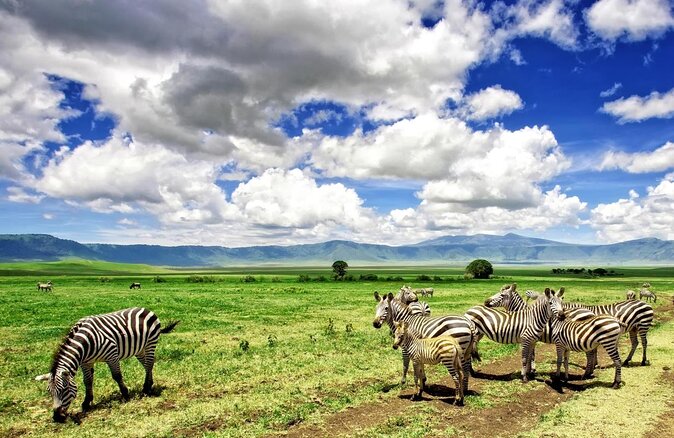
- Ngorongoro’s scale: the crater is described as about 20 km across and roughly 600 m deep, with Lake Magadi nearby for waterbirds.
- Lake Eyasi and Hadzabe hunting experience: a cultural stop that goes beyond photos and into lived tradition around the lake.
Price and what makes this Tanzania safari feel like value
At $6,785 per person, this is not a budget safari. But it’s priced like a true “luxury, high-touch” product, and the value comes from what’s included and what’s packed into the schedule.
You’re paying for a professional driver/guide and covered park fees for non-residents, plus most of your daily food: breakfasts, lunches, and six dinners are listed as included. In an 8-day loop across major northern parks, that matters because the biggest cost drivers in East Africa safaris are usually park access, vehicles, and guided time.
Also, the satisfaction rate is unusually strong for a tour of this type: it’s listed as 5 stars with a 100% recommend rating. That doesn’t guarantee you’ll see lions every hour, but it does suggest the operation runs smoothly and that guiding quality is a focus.
You can also read our reviews of more tours and experiences in Moshi.
Where Moshi fits in: Kilimanjaro airport to Arusha to safari
The experience starts at Kilimanjaro Airport. From there, you’ll transfer to a hotel in Arusha for your overnight stay on Day 1, with pickup offered.
Arusha is the gateway town for much of Tanzania’s northern safari circuit, and it sits at the base of volcanic Mt. Meru. It’s a smart first night because you get settled before the long park days begin.
One practical thing: the schedule also includes an early start style on the later days (especially Day 8), so I’d plan your body and energy for field time rather than heavy nightlife.
Day 1 Arusha overnight: a gateway night, not a throwaway
Day 1 is simple by design: arrive at Kilimanjaro International Airport, meet your guide, and drive into Arusha. You then sleep in Arusha and reset before Tarangire and the rest of the circuit.
What I like about this first-night approach is that it reduces friction. You’re not trying to go straight from landing into game drives on the same day, and you get time to get your basics sorted.
Also, the itinerary notes Admission Ticket Free for the Day 1 block, which is a small but helpful detail if you’re tracking what fees you might need to pay elsewhere.
Tarangire National Park: elephants, birds, and that less-traveled feel
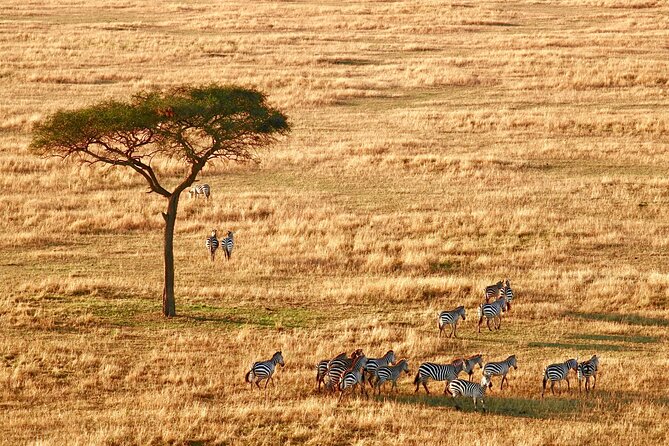
You’ll leave Arusha for Tarangire National Park for a full-day game drive, plus lunch, and then head to your lodge for sunset dinner.
Tarangire is described as slightly off the main safari route, and that matters. In practice, this often means you’re less likely to feel like you’re watching wildlife from a crowd line. The park’s reputation also leans heavily toward elephant migration and birding, with an “authentic safari atmosphere” called out in the tour notes.
If you’re the type who cares about more than just the Big Five, Tarangire is where the trip starts showing its range. Elephants, birds, and dense pockets of habitat can give you a steady stream of sightings even when a classic predator is not in the mood.
A small consideration: since the park is known for a calm rhythm, you’ll still want to trust the guide’s timing. Wildlife can be spread out, and the best sightings often come from staying patient at the right spots.
Lake Manyara: birds first, then tree-climbing lions and tusked elephants
Day 3 takes you to Lake Manyara National Park for a game drive and lunch, then another drive period in the afternoon/evening before dinner and overnight.
Manyara is the bird-lover stop. The tour notes mention that more than 400 bird species have been recorded, and even a first-time visitor can reasonably expect a big chunk of that in one day. You’re also looking at habitat where acacia woodland meets the floodplain edge, which is key to that famous lion behavior.
The standout detail here is the chance of tree-climbing lions—plus impressively tusked elephants in the same zone. Even if you don’t see a tree-climber that day, you’ll still get a lot of “life in the details” from the birding focus.
Because the park is smaller than Serengeti, you might think it would feel short. It doesn’t, though, when your schedule is built around multiple drive windows.
Olduvai Gorge en route to Serengeti: a rare detour with meaning
On Day 4, you drive from Manyara toward Serengeti National Park, including a stop at Olduvai Gorge. You get lunch with refreshments during the day, then continue into central Serengeti for game time.
Olduvai Gorge is included because this region does more than produce dramatic safari scenes. It’s part of a broader story about deep time and human history, and the stop breaks up what could otherwise feel like nonstop vehicle time.
For your planning, think of this day as a transition day. You’re leaving the “smaller-feeling parks” and moving into the big stages where predator action can be more spread out. A stop like Olduvai gives you a mental reset before Serengeti.
Serengeti full days: resident lions, leopard odds, and sundowner cocktails
Serengeti is where this tour earns its hype. Day 4 continues into central Serengeti after Olduvai, and Day 5 is your full-day Serengeti game drive.
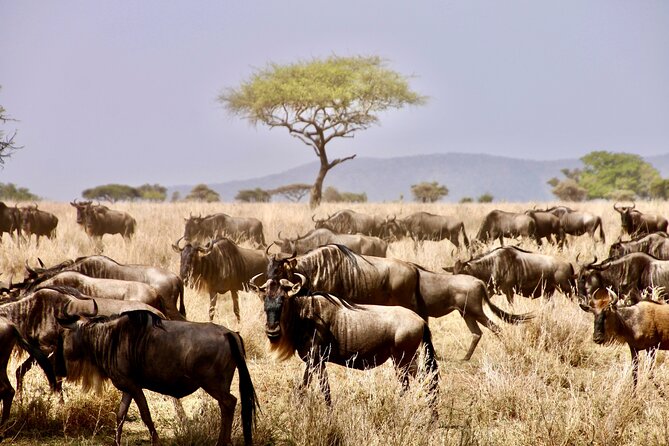
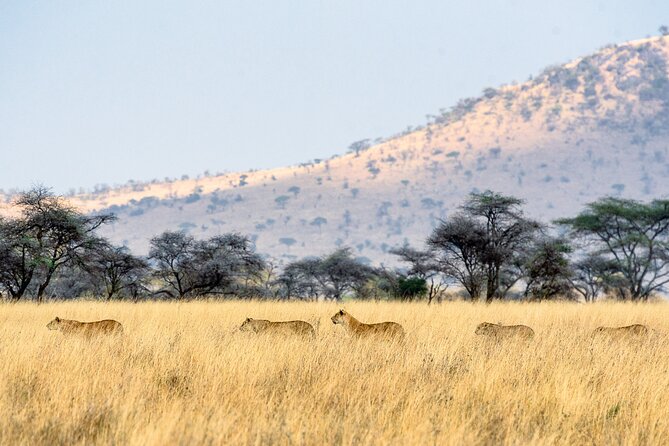
The tour notes highlight the largest population of lions in the ecosystem, driven by the prey base. It also points out that more than 3,000 lions live in this Serengeti system. You’re not just chasing movement; you’re in a place with strong resident numbers.
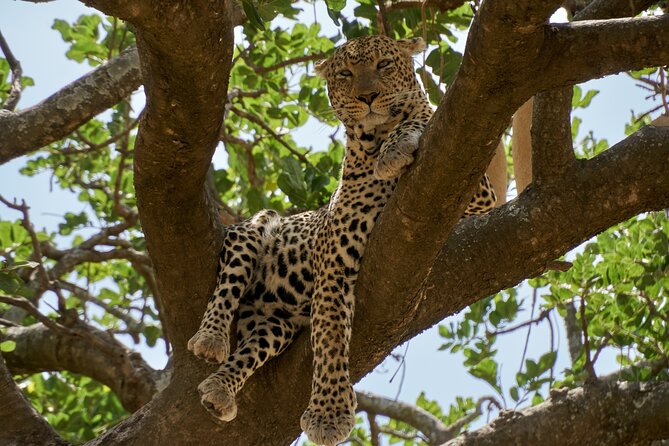
Leopards are described as reclusive but present, with a population estimate around 1,000, and the note says they’re commonly seen in the Seronera region. Translation: you want a guide who knows where to aim you, and who can read behavior fast, not just track distance.
Day 5 adds a very “this is why I’m doing a safari” moment: sundowner cocktails prepared by your safari guide before you head back to the lodge. It’s not just a drink stop. It’s a chance to slow down during that golden-hour window when animal activity often shifts.
If you care about photography, this kind of scheduled timing helps. You’re more likely to get good light and good positioning rather than rushing back for dusk logistics.
Serengeti to Ngorongoro: more than a drive, a change in scenery
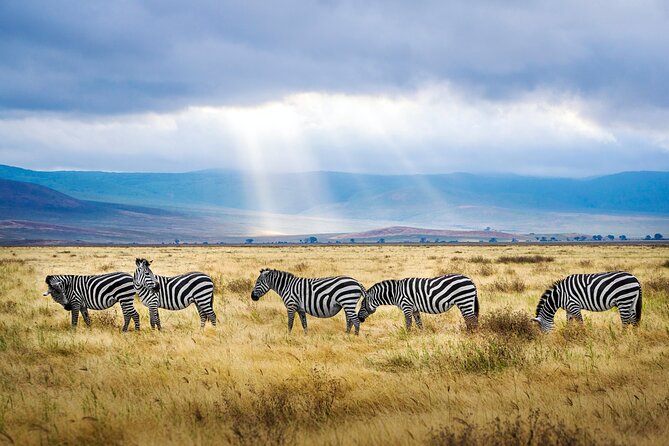
Day 6 starts with a game drive back in Serengeti, then lunch prepared by your guide. In the late afternoon, you drive to Ngorongoro and visit Masai villages, then check into camp for dinner and overnight.
This is a meaningful day because it changes the “feel” of the safari. Serengeti is big plains energy. Ngorongoro’s area is more about edges, viewpoints, and a crater system that changes how animals show up.
The Masai village visit is also part of the value. You’re not only doing wildlife; you’re getting at least a layer of human context that sits alongside the conservation and grazing landscape.
Ngorongoro crater: a huge caldera and Lake Magadi waterbirds
Your crater time is built into Day 7, described as a game drive toward the crater with hot lunch in the afternoon, then driving to Lake Eyasi for dinner and overnight.
The tour notes give you the scale: Ngorongoro is described as a deep, volcanic crater and the largest unflooded and unbroken caldera in the world, about 20 km across and about 600 m deep. That’s not trivia; it affects how you experience the animals. The crater acts like a natural bowl, concentrating life.
Lake Magadi is specifically mentioned as a large but shallow alkaline lake inside the crater system, with usual sightings of hippo and flamingo, plus other waterbirds. Even when predator sightings are slow in a given window, waterbird activity can keep the day full.
Then you shift again to Lake Eyasi, which is a different rhythm. You’re trading crater drama for a more grounded, community-and-ecosystem setting.
Lake Eyasi and the Hadzabe hunting experience: culture on the ground
Day 7 takes you to Lake Eyasi. Day 8 starts early with a “hunting experience with bushmen,” then you return for breakfast, drive back to Arusha with a lunch stop-over, and transfer to the airport.
The tour notes connect this directly to the Hadzabe community around Lake Eyasi. They mention that their language is similar to click languages of other bushmen groups further south, and that their population was threatened during the era of Julius Nyerere’s Ujuma policy.
One thing to consider: a hunting experience is not a theme park reenactment. It’s a cultural encounter framed around traditional practices, and it can feel intense or eye-opening depending on how you approach it. If you’re respectful and curious, it’s often one of the most memorable stops on safari.
Guides and spotting power: why names keep coming up
This kind of safari lives and dies by two skills: where to look and how to position the vehicle. The feedback around this tour repeatedly praises guides who can spot big cats and keep the group in the right viewing spots.
Names that show up in the guiding stories include Jovin Mbasa, highlighted for leopard and lion spotting; Edward Masaki for Serengeti wildlife, plants, and Maasai culture; and Barik, praised for spotting animals from far away and teaching guests about animal behavior. Other guide-driver names mentioned include Andrew Steven, Mati, Habibu, Samir, Calvin, Daudi, and Mwinyi.
So what does that mean for you? If your guide has that spotting style, your odds improve even when the animals are partly hidden. You get fewer wasted drives and more time watching behavior—especially with leopards, which are often about patience and precise location rather than constant action.
Logistics that affect your comfort: private time, long drives, and meal timing
This tour is listed as private, meaning only your group participates. That’s a big comfort win on safari because your guide can manage pacing, seating, and viewing without negotiating with other schedules.
The other comfort factor is how meals are structured. You’ll have breakfasts and lunches built into the day flow, plus six dinners included. That reduces decision fatigue and keeps you fueled for early mornings and late afternoons.
The main trade-off is driving time. The route moves from Arusha to Tarangire, then Manyara, then Serengeti, then Ngorongoro area, then Lake Eyasi, and back to Arusha. If you’re sensitive to long hours in a vehicle, consider that before booking.
Who this safari fits best (and who should adjust expectations)
This tour suits you if you want:
- A luxury safari that still feels practical and schedule-driven
- A mix of major parks: Tarangire, Lake Manyara, Serengeti, Ngorongoro
- A cultural layer: Masai village visit plus Hadzabe bushmen hunting experience
- A guide who can actively spot and place you for viewing
If your only goal is guaranteed Big Five sightings with zero cultural interaction, you might find the included cultural stops less aligned with your personal style. Wildlife is never factory predictable. But with strong guiding feedback and a multi-park plan, you’re setting yourself up for a high chance of memorable moments.
Should you book 8-Day Essence of Tanzania Safari – Luxury?
I’d book this if you want a serious northern circuit with a private feel, strong guiding attention, and a schedule that balances wildlife with cultural stops. The price is high, but the included park fees (for non-residents), guided driving, and most daily meals make it feel more coherent than many “luxury” label-only trips.
Before you decide, think about two things. First, are you good with long drive days and early starts as part of the safari math? Second, are you open to cultural encounters presented as lived practices rather than staged entertainment?
If you answered yes to both, this is the kind of Tanzania trip where the details keep paying off—from Tarangire’s elephants and Manyara birding to Serengeti lion potential, the crater scale at Ngorongoro, and Lake Eyasi’s Hadzabe experience.
FAQ
Which parks and areas are included in this 8-day Tanzania safari?
The route includes Arusha (arrival and overnight), Tarangire National Park, Lake Manyara National Park, Serengeti National Park, the Ngorongoro Conservation Area (including Masai village visit), and Lake Eyasi (including a Hadzabe bushmen hunting experience).
Are park fees included?
Yes. Park fees for non-residents are listed as included.
What meals are included?
The tour includes breakfast (7), lunch (7), and dinner (6) during the trip.
Where does the tour start and is pickup included?
The meeting point/start is Kilimanjaro Airport. Pickup is offered.
Do I need to arrange my own international flights?
Yes. International flights (from/to home) are not included.
Is tipping expected?
Tips are not included. The tipping guideline provided is US$10.00 per person per day.
Can I cancel for free?
Yes. There is free cancellation, and you can cancel up to 24 hours in advance of the experience start time for a full refund.