Calving season in Ndutu is intense. This 10-day wildebeest migration safari is built around the December–March window, when herds arrive in Southern Serengeti (Ndutu) and the drama shifts from travel to birth. You’ll track the movement as rain changes the grass, while staying in luxury lodges and tented camps with hot meals and game drives lined up every day.
I love the mix of big-moment wildlife and smart pacing: start with Tarangire and Manyara to warm up your eyes, then spend multiple days in the calving zone where predators hunt the chaos. I also like that it’s truly “all inclusive” in the way that matters on safari: meals are included, key park fees are covered for non-residents, and flights during the tour are part of the package. One drawback to consider is that this is a weather-dependent experience—where the herds are and whether you fly in the balloon can hinge on conditions.
In This Review
- Key highlights worth knowing before you go
- Ndutu calving season: why timing makes this safari different
- Arrival in Tanzania: Kilimanjaro airport, Arusha, and your first easy night
- Tarangire National Park: elephants and a quieter start than you’d expect
- A Tarangire walking safari with an armed ranger
- Manyara National Park: birding first, then lions in the trees
- Ngorongoro Crater: the big volcanic bowl and Lake Magadi
- Into Serengeti South (Ndutu): where calving chaos meets green grass
- Tracking wildebeest and watching calves enter the world
- Central Serengeti for big cats and Big Five searching
- Hot air balloon day: champagne landing and a different view of the plains
- Day 10: Seronera flight back, Arusha day room, and one last chance to see wildlife
- All-inclusive value: what you’re really paying for
- Guides and service: what the feedback consistently points to
- Who should book this safari, and who should think twice
- Should you book the 10-Day Wildebeest Migration Calving Safari?
- FAQ
- Where does the safari start and how do I get there?
- What is the total duration of the tour?
- Is the hot air balloon safari included?
- Are meals included in the price?
- Are park fees included?
- Are international flights included?
- Is tipping required?
- What happens if weather cancels the balloon?
Key highlights worth knowing before you go
- Hot air balloon safari included for a high, quiet view of the plains
- Ndutu calving focus gives you the best shot at seeing births and predator action during Dec–Mar
- Armed ranger walking safari adds a rare, close-up angle to the wildlife day
- Multi-park variety (Tarangire, Manyara, Ngorongoro, Serengeti) keeps the trip from feeling repetitive
- Picnic-style lunches with full hot-meal service instead of basic boxed food
- Private tour setup means you’re only traveling with your group
Ndutu calving season: why timing makes this safari different
This is not a generic Serengeti trip. The whole point is that you’re targeting the calving season (December through March), when wildebeest shift from “migration” to “survival.” In Ndutu, the grass and water patterns draw the herds in, and once calves hit the ground, everything changes fast—predators, pace, and even your viewing strategy.
Here’s the practical reality: even with a good guess where the wildebeest should be, nature still runs the schedule. Rain decides where the greener pasture appears, and the herds follow. So instead of pretending everything follows a map, this safari is designed for mobility—game drives in the Ndutu area over consecutive days, giving you more chances to match the herd’s location.
If you’re the type who wants that “this might happen any minute” feeling, Ndutu in these months is exactly that. If you prefer super-stable sightings every day, you’ll still see plenty—just don’t expect the calving action to stay in one exact spot for your entire stay.
You can also read our reviews of more tours and experiences in Moshi.
Arrival in Tanzania: Kilimanjaro airport, Arusha, and your first easy night
You start the trip at Kilimanjaro Airport, with a meet-and-greet service. One useful detail here is that the airport representative can help if you run into visa or passport-control issues. That may sound minor, but it can take the edge off travel stress when you’re tired from your flight.
After that, you transfer to Arusha for dinner and an overnight at a hotel. Arusha makes sense as a base: it’s a launch point for safari routes, and it’s located at the base of Mt. Meru. You’re not meant to “cram safari” on Day 1. Instead, you get your bearings, meet your guide, and reset.
Practical note: your first full safari day begins after your short briefing and breakfast. If you’re coming in on a long-haul itinerary, keep your first morning flexible.
Tarangire National Park: elephants and a quieter start than you’d expect
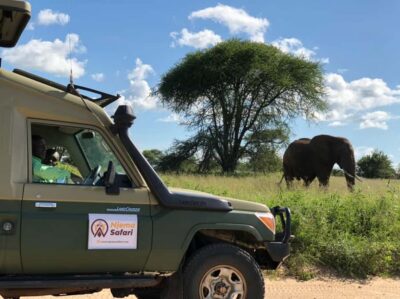
Day 2 takes you to Tarangire National Park, and I like that it’s scheduled as a full day right away. Tarangire sits slightly off the main safari route, so it has a reputation for being quieter than the parks that get rushed by tour buses. That matters. Less noise often means better focus when animals are spread out.
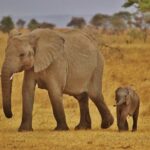
Tarangire is most famous for elephants and birdlife. You also get a full-day rhythm: morning game drive, then a proper lunch setup. The driver prepares a table under car shade, with a hot meal service—soup, bread rolls, main dish, and fruit salad—plus wine (where appropriate), tea, and coffee.
Then you continue driving until late afternoon, returning to your camp for dinner and overnight.
Why this first park is valuable: it builds your “spotting muscle.” By the time you get into Serengeti, you’ll already know how to read animal movement in different habitats—dry ground, riverbeds, and the edges where predators tend to wait.
A Tarangire walking safari with an armed ranger
Day 3 adds something you won’t get on most migration-focused tours: a morning walking safari with an armed ranger. Walking changes everything. Your eyes go from scanning huge spaces to watching the details—tracks, movement in scrub, and how animals react before they fully commit.
In the afternoon, you switch back to classic game driving and still get another full day’s wildlife time. You can even do a night game drive after dinner, depending on your schedule.
Also worth noting: Tarangire is tied to elephant behavior in a very direct way. The dry riverbeds can be rich in underground water, and herds can gather—one of the reasons you can see some surprisingly active elephant behavior outside of the Serengeti ecosystem.
Manyara National Park: birding first, then lions in the trees
Day 4 is Manyara National Park, and it’s a smart contrast to Tarangire. Manyara is famous for birdlife—more than 400 species recorded—and it’s one of the better places to sharpen your bird-spotting skills during a safari.
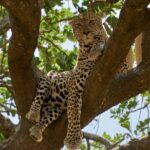
This park also has the chance for drama close to the road. You may find the park’s famous tree-climbing lions, along with impressively tusked elephants that use the woodland edges.
Again, the day follows a similar structure: a full-day game drive, lunch served under car shade, then additional driving until late afternoon. It ends with dinner and overnight at your lodge.
If you’re thinking about photos: Manyara can be great for quick, colorful bird sightings, and it often offers more variety in near-road action than the open plains do.
Ngorongoro Crater: the big volcanic bowl and Lake Magadi
Day 5 takes you to Ngorongoro Crater, and it’s one of those places where even first-time safari people get quiet. The crater is described as a massive, un-flooded volcanic caldera: about 20 km across, 600 m deep, and around 300 sq km in area. That scale changes how animals move—everything feels closer and more concentrated even when you’re not directly “next to” them.
You’ll enjoy a game drive in the crater during the day, with afternoon timing that still leaves you the chance to see wildlife before you head back out. Your route also references Lake Magadi, a large but shallow alkaline lake in the south. Lakes like this can attract birds and other animals depending on conditions.
What I like about adding Ngorongoro here: you’re not just chasing wildebeest. You’re getting a different kind of wildlife density and a different terrain. It helps when you later spend multiple days focused on the Serengeti migration.
Into Serengeti South (Ndutu): where calving chaos meets green grass
Day 6 moves you into Serengeti South, focused on the Ndutu area. This is the heart of the trip. Ndutu isn’t just “where wildebeest are.” It’s a mix of habitats—swamps, woodland edges, soda lakes, and the famous short grass plains that matter to the herds.
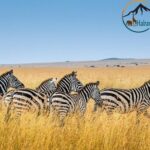
The plan is a full day game drive, with time to search for large herds of wildebeest and zebra. This is also when you’re meant to start seeing the migration become more eventful, especially as you get closer to the peak of births in the season.
You’ll spend time in the “right” type of country. The key is that grass quality and timing drive everything. If rain has landed recently, you’ll often find better feeding zones and higher predator interest nearby.
Important expectation-setting: you might not see births on your first day in Ndutu. That’s not a failure. It’s why the itinerary gives you consecutive days in this zone—more hours, more searching, more chances for the moment.
Tracking wildebeest and watching calves enter the world
Day 7 is where you go from “migration” to “calving story.” The schedule is built around exploring the Ndutu plains and woodland edges, tracking herds, and spending real time with what’s happening on the ground.
This is the day designed for witnessing new calves and seeing predators trailing the herd. The hunt doesn’t always look like a nature documentary. Sometimes it’s waiting. Sometimes it’s sudden movement. But in a calving zone, the rhythm is faster, and predator behavior can be easier to spot because the food source is close and predictable.
You’ll also get game time across morning through evening, returning for dinner and overnight.
If you want the best odds at newborn sightings: keep your stamina for long viewing windows. Calving events can be fleeting, and your best moments come from being patient rather than hopping spots too aggressively.
Central Serengeti for big cats and Big Five searching
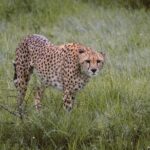
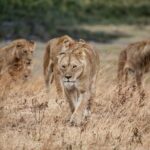
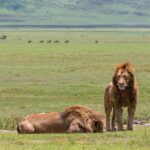
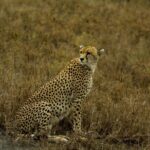
Day 8 and Day 9 both include game drives in Serengeti National Park, shifting from calving-focused work toward big cat and Big Five searching. This is where the trip broadens again. You’ll be in Serengeti for predators—lion, cheetah, hyena—plus the other large animals that share the ecosystem.
The schedule keeps you in the field during the day, with lunch service during driving, then moving toward your lodge for dinner and overnight. This is also a good time to check your priorities: if you’re mainly hunting for a specific animal (for example, lions on a kill), you’ll want your guide to focus on the conditions that make those sightings likely.
One reason I like this structure: it balances emotional payoff. You get the calving intensity first, then the broader predator and Big Five chase after.
Hot air balloon day: champagne landing and a different view of the plains
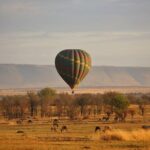
Day 9 is your hot air balloon safari day. It starts early with pickup to the launch area, then you float over the Serengeti at sunrise. After landing, the day includes a celebration with champagne and breakfast.
Then you’re back on the ground for more game driving in central Serengeti, searching for big cats and Big Five sightings. In the late afternoon, you get a sundowner picnic with drinks and snacks before heading back to camp.
Why balloon days are worth it here: in migration country, the scale is hard to grasp from the road. From the air, herds and animal paths often look like patterns—movement routes and grazing zones that connect the ground story.
Weather note: balloon flights are always subject to flying conditions. The tour notes that if weather cancels the experience, you’re offered a different date or a full refund. That’s the kind of safety net that makes it easier to book without stress.
Day 10: Seronera flight back, Arusha day room, and one last chance to see wildlife
On Day 10, you do a morning game drive in Serengeti en route to Seronera Airstrip for your flight back to Arusha. Once you land, you transfer to Arusha Coffee Lodge for a day room and lunch, then you head to Kilimanjaro Airport in the evening for your departure.
I like this final day structure because it gives you closure. You’re not rushing straight from your last safari drive into the airport. You still get a comfortable buffer with lunch and a day room.
All-inclusive value: what you’re really paying for
The listed price is $9,718 per person for a roughly 10-day safari. That’s a premium number, so let’s talk value in plain terms.
You’re paying for:
- Private guide/driver service and all transportation during the tour
- All flights during the tour
- Park fees for non-residents
- Hot air balloon safari
- Meals included across the safari days (the package lists 9 breakfasts, 9 lunches, and 9 dinners)
What you’re not paying for:
- International flights to and from home
- Tips (a guideline is $10 per person per day)
- Personal items and travel insurance
- Visa fees, depending on your nationality
The “gotcha” to watch for with any all-inclusive safari: sometimes the phrase all inclusive still means different levels of comfort. Here, the description is luxury lodges and tented camps, which suggests upgraded accommodations compared to basic tent camping. Still, you should confirm the exact property tier if you have strong preferences.
Also, you’ll want to plan your clothing. Even in calving season, mornings can feel cool, and you’ll be out for long drives. Light layers plus a rain layer usually make life easier.
Guides and service: what the feedback consistently points to
The strongest repeat theme in the provided feedback is that the guide matters. Names that show up again and again include Juma, Michael, Zadock, Samir, Bariki, Ombeni, and William. The common thread is professional driving, strong animal knowledge, and a calm, kind approach—especially when kids are along or when roads get messy.
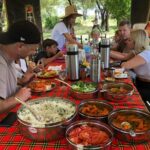
One practical service detail you can rely on: the driver organizes lunch in a proper way, not just a snack. Picnic lunches are described as really good, with full hot-meal service under car shade. That makes long game-drive days more bearable.
If you get rain, roads can be rough. One review highlights that a guide navigated expertly after rains. That’s a big deal on safari. It’s not about comfort only—it’s about timing and positioning for sightings.
Who should book this safari, and who should think twice
This trip fits you best if:
- You’re traveling during Dec–Mar and want the best odds of calving action in Ndutu
- You want a mix of parks, not just one long Serengeti road
- You care about comfort: luxury lodges and tented camps plus included meals
- You want the balloon experience as part of the package
Think twice if:
- You’re the type who hates weather uncertainty. Calving timing and balloon schedules can shift.
- You’re only interested in one animal. This itinerary is designed for migration context and predator searching, not a single-species guarantee.
- You prefer very short driving days. This safari is built around full game-drive blocks, which means long hours in the vehicle at times.
Should you book the 10-Day Wildebeest Migration Calving Safari?
I think you should book it if you’re traveling in the calving season window and you want a trip that takes the migration seriously—not just as a headline. The biggest reasons are the Ndutu focus over multiple days, the inclusion of a hot air balloon, and the fact that meals and key logistics are handled for you.
Before you pay, do two quick checks:
1) Make sure your travel dates truly land in your preferred part of Dec–Mar.
2) Confirm what you’re most excited about: births, big cats, Big Five searching, or the parks’ variety—and then ask your operator how they prioritize sightings based on where rains have just fallen.
If those boxes line up, this is the kind of safari that turns into a life memory, not just a checklist of animals.
FAQ
Where does the safari start and how do I get there?
The meeting point is Kilimanjaro Airport. You’ll have a meet-and-greet there, and then you’ll be transferred to Arusha for dinner and an overnight at a hotel.
What is the total duration of the tour?
The safari runs for 10 days (approximately).
Is the hot air balloon safari included?
Yes. A hot air balloon safari is included in the tour.
Are meals included in the price?
Yes. The package includes 9 breakfasts, 9 lunches, and 9 dinners during the safari days.
Are park fees included?
Park fees are included for non-residents.
Are international flights included?
No. International flights from and to home are not included, but flights during the tour are included.
Is tipping required?
Tips are not included. The provided tipping guideline is US$10 per person per day.
What happens if weather cancels the balloon?
The tour notes that this experience requires good weather. If it’s canceled due to poor weather, you’ll be offered a different date or a full refund.