REVIEW · MOSHI
4-day Tanzania Safari
Book on Viator →Operated by Altezza Travel · Bookable on Viator
Four parks, four days, big wildlife.
This fast Northern Tanzania circuit links Tarangire, Ngorongoro Crater, and Serengeti so you can pack in serious animal time without months of planning. You also get airport transfers and comfort touches that make long drives feel less like punishment.
I especially like the 3–4 star lodge setup in Serengeti paired with a real safari guide who helps you read the bush, not just drive past it. The Land Cruiser safari vehicle is built for game viewing, with a pop-up roof and on-board perks like bottled water, soft drinks, and hot drinks during drives.
One thing to think about: this is a compressed circuit. You’ll spend a lot of the day in the car, and the trip’s early starts and tight schedule mean you may not get the slow, lazy safari pace some people want.
In This Review
- Key highlights worth your attention
- From JRO to Arusha: how the trip starts with a real landing
- Tarangire National Park: why elephants gather where water is scarce
- Ngorongoro Crater: the 30-minute descent to animal density
- Serengeti around Seronera: balancing visitor breaks with golden-hour drives
- A second Serengeti day: increasing odds, not just adding time
- Vehicle comfort and included perks that make safari easier
- Price and value: what $3,296.40 covers in the real world
- The guides behind the drive: how to get better sightings
- Who this safari fits best, and who should look elsewhere
- Should you book this 4-day Northern circuit with Altezza?
- FAQ
- What airports does the tour use?
- How many safari days are included?
- Which national parks are visited?
- What type of accommodation do you stay in?
- Are park fees included?
- What drinks and meals are included on safari?
- What vehicle do you use during the safari?
- Is Wi-Fi included, and is it reliable?
- What is not included in the tour price?
Key highlights worth your attention
- 4 full safari days across Tarangire, Ngorongoro Conservation Area, and Serengeti
- Pop-up roof 4×4 Land Cruiser plus a fridge, power sockets, and comfort-focused seating
- Park fees included, so you’re not scrambling for add-ons at the gates
- Medical and evacuation support included, with AMREF Flying Doctors and a medical kit
- Safari drinks included in the jeep (bottled water, soft drinks, hot coffee and tea)
- Wi-Fi is limited (signal only in about 60–75% of areas you travel)
From JRO to Arusha: how the trip starts with a real landing
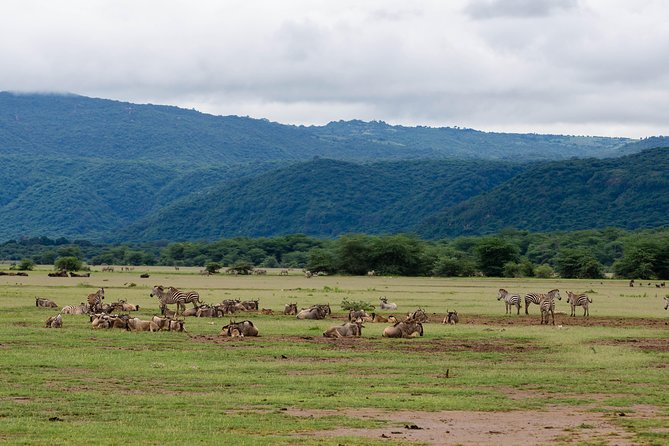
Most safari trips start in the air and end in exhaustion. This one starts by getting you safely down to ground level. After you fly into Kilimanjaro International Airport (JRO), you’re met and transferred to a hotel in Arusha, specifically Mount Meru Hotel for this program.
A couple practical notes matter here:
- Your hotel stay includes breakfast, and check-in starts at 2:00 PM.
- If you arrive early and want an earlier check-in, that’s possible for an extra cost if arranged ahead of time.
Why I like this setup for you: Arusha gives you a buffer before your safari days. Instead of jumping straight from the airport into the parks with no rest, you get a night to reset. It’s the kind of logistics detail that helps people enjoy the safari rather than just survive the first day.
Also, the tour lists a flexible pick-up location. If your plans are complex—late arrival, separate hotel night, or changing flights—this flexibility helps keep the start smooth.
You can also read our reviews of more tours and experiences in Moshi.
Tarangire National Park: why elephants gather where water is scarce
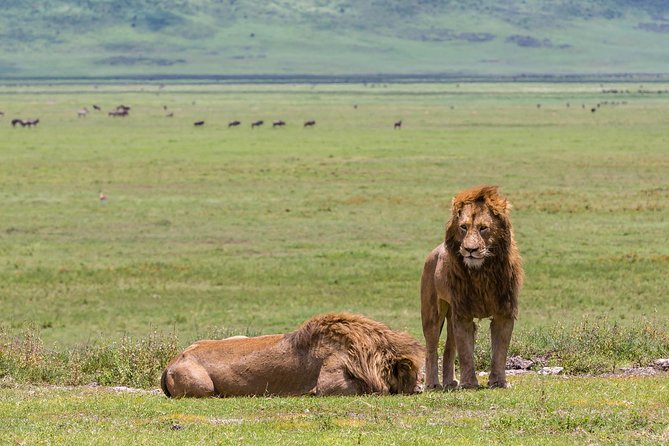
Tarangire is a strong first-safari choice, because the park has a talent for turning the dry season into high drama. After breakfast, your guide picks you up around the morning start time, and you reach Tarangire by late morning.
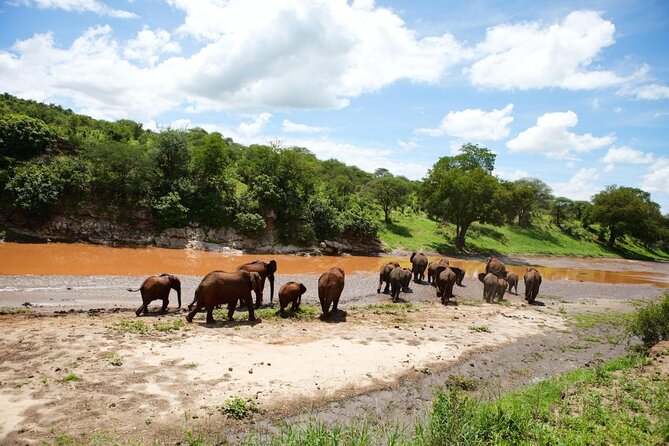
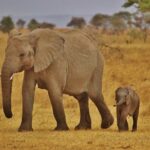
What makes Tarangire special is the Tarangire River. In dry periods, it becomes one of the key drinking sources across a wide area. That means large elephant herds concentrate here for long stretches of time—especially in the months noted for strong dry-season activity (June–October and December–March).
The elephant viewing here tends to be close. The program emphasizes that elephants are not intimidated by visitors and often come near vehicles. And here’s the reassuring part: it’s framed as safe because elephants have no natural enemies that visitors would be competing with in the park setting.
How you’ll experience it on safari: you’re not just hunting for animals in the dark. You’re meeting them as they move between feeding and water. Tarangire also suits people who like action—herds, crossings, and animals using the same corridors.
A realistic consideration: sightings aren’t guaranteed, and the elephant-heavy areas can still change day to day. Still, this park’s ecology gives you a built-in advantage for dry-season wildlife.
Ngorongoro Crater: the 30-minute descent to animal density
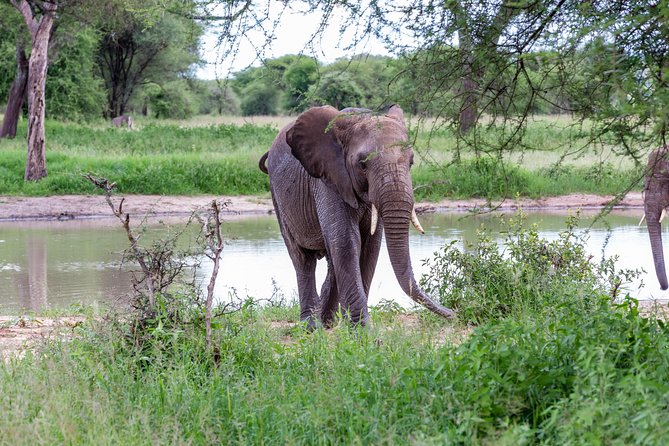
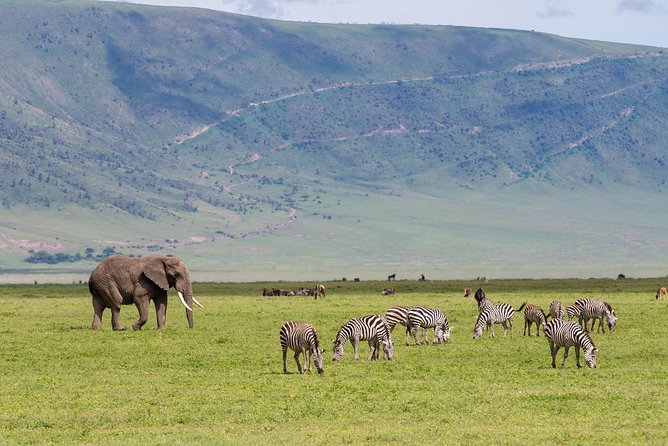
Then you go from river life to crater life. Ngorongoro Conservation Area is built on one big idea: the crater holds a huge number of animals in a relatively small space compared to what you might picture.
Your day begins with the drive toward the crater rim, then the actual descent. The program says the drive down takes about half an hour, and that road runs through lush forest before you reach the crater floor.
On the crater floor, the core value is proximity. The program highlights that the crater is home to an intense variety of wildlife per square meter—meaning you have a better chance of seeing multiple species close together. That matters if you only have a few safari days, because it reduces the need for long, fruitless searching.
Midday comfort comes with a planned break. You stop at the picnic area next to Lake Magadi for a snack and rest, which is a small thing that makes a big difference when you’re spending the day in vehicles and watching for movement.
One drawback to keep in mind: the crater is famous, so you should expect it to feel like a highlight day with lots happening. If you prefer wide-open solitude, you might find this day more structured and energetic than you’d like. But if you want animal density and classic crater scenery, this is the day for it.
Serengeti around Seronera: balancing visitor breaks with golden-hour drives
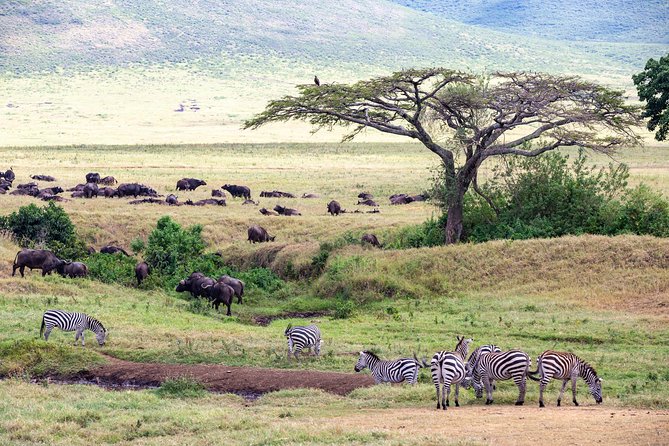
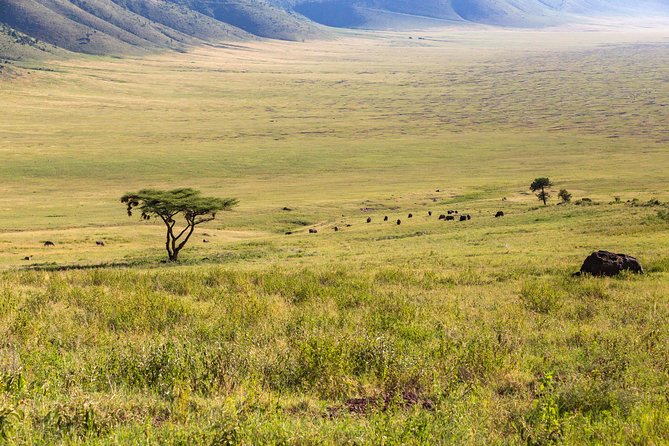
Serengeti is where your trip shifts from singular parks to a rolling, never-ending system. After breakfast, you’re transferred to the central Serengeti area known as Seronera.
From there, the game plan is simple: your driver tries to locate the animals you’re most interested in. That personal focus is where guides earn their keep—Serengeti isn’t a park where you can just pick one spot and hope. Movement and timing matter.
You also get a built-in break option at a practical place: the Serengeti Visitor Centre. The program notes that near lunchtime you can visit, grab a lunchbox, and learn more about the park’s animal populations and history. You can also spot hyraxes, which the program calls the elephant’s closest relatives. It’s a neat detail because it helps you link the dots across species you might otherwise treat as random small sightings.
Alternatively, you can return to camp for a quick lunch and nap, then head back out before sunset. This option matters if you like better viewing light. The program specifically points you toward restarting safari before the golden hours.
Why this matters for you: Serengeti viewing improves when your body is not running on fumes. A nap or a visitor-centre break reduces fatigue, and that can turn a tiring day into a day you actually remember clearly.
A second Serengeti day: increasing odds, not just adding time
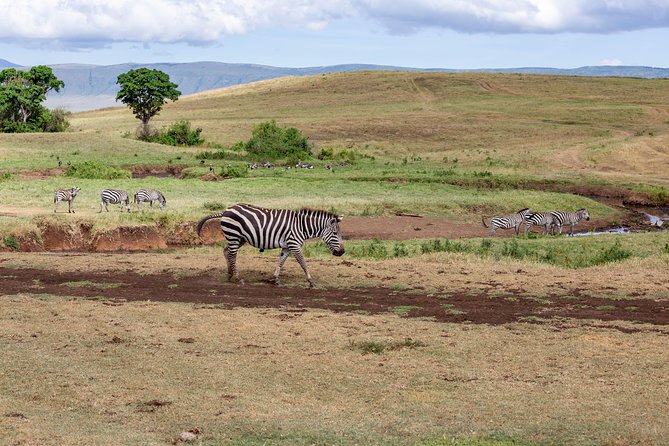
Day two in Serengeti is where the trip gets smarter. Instead of repeating the same route, the program sets up another day to show you different places and animals. It’s a good approach because Serengeti covers a lot of ground, and a single day can only scratch the surface.
This second Serengeti day also reinforces why the region stays on people’s bucket lists. The program points out Serengeti as a UNESCO World Heritage Site, chosen for its ecosystem, dense animal population, and the Great Migration. It even references Disney’s Lion King as cultural inspiration—but reminds you that the real life here is wild, not a cartoon.
At the end of the day, you reach Arusha again for dinner and your return to hotel life. That return matters. When you’ve got two Serengeti days, you’re giving yourself time to absorb what you saw without immediately rushing into another park.
Small note: the program says by dinner you’re back in Arusha. That’s a nice clean rhythm if you like your evenings to be predictable.
Vehicle comfort and included perks that make safari easier
Safari is physical. Dust, sun, long sits, and constant scanning can wear you down. This tour quietly reduces that strain with equipment and comfort details that you’ll feel right away.
You travel in a new Land Cruiser 4×4 (2016–2022) with:
- a pop-up roof for better viewing angles
- ergonomic seating
- a refrigerator
- power sockets
During safari drives, you get bottled water, soft drinks, and hot coffee and tea in the jeep. This is one of those inclusions that feels small until you hit midday heat and realize how often you’d otherwise be paying for drinks you don’t really want to negotiate for.
You also get binoculars (one per car), which is handy for spotting from a distance when animals are moving in brush edges or on far plains.
Wi-Fi is included, but realistic. The program says the signal will be available in only 60–75% of traveled territories. So think of it as a bonus, not something you can plan around.
And then there’s the safety layer: you get an on-hand medical kit and air ambulance service by AMREF Flying Doctors. That’s a big inclusion for peace of mind, especially when you’re far from hospitals.
One more detail: the tour offers 24/7 phone/email support. When something small goes wrong—schedule changes, a missed pickup moment—that kind of contact ability is worth its weight.
Price and value: what $3,296.40 covers in the real world
The price listed is $3,296.40 per person, and it’s not cheap on the surface. But safari pricing in Tanzania can be a maze of separate fees. This program is built to reduce that maze by including a lot of the heavy hitters.
Included value pillars:
- Airport pickup and drop-off at JRO
- Accommodations before and after safari
- Park fees for the entire tour (park entry and concession fees)
- A certified, experienced English-speaking safari guide
- Meals: breakfast (5), lunch (4), dinner (5)
- Safari jeep perks: bottled water, soft drinks, hot drinks while in the jeep
- A modern 4×4 designed for game viewing
- Binoculars
- AMREF air ambulance and a medical kit
What’s not included:
- Air tickets to Tanzania
- Travel insurance
- Tips to your safari guide
- Visa fee
- Alcoholic beverages at lodges and while on safari
- Tea/coffee/soft drinks at some lodges (you may need to pay for these depending on the property)
Here’s the practical way to judge value: if you were to DIY this circuit, you’d still pay for park access, a driver/guide, food, and vehicle time. Those are the parts that blow up budgets. This package keeps those costs bundled, which is a real advantage when you’re short on time and don’t want to run a spreadsheet in a foreign country.
So the price makes sense most if:
- you want the top Northern Tanzania parks in a tight window
- you value guide support and included logistics
- you prefer to show up and let the operation handle the moving parts
The guides behind the drive: how to get better sightings
This trip lives or dies on guiding. The program promises a professional experienced English-speaking safari guide, and the names that have come up in previous experiences include guides like Fidelis, Allan, Noel, Cathbert, Aaron, Harris, and Sophia.
Even with that range of personalities, the common theme in effective safari guiding is simple:
- spotting early signals (movement, feeding, tracks)
- repositioning before you miss the best window
- explaining what you’re seeing so the hour feels like more than scanning
You can help your guide do their best work by giving them two things at the start of each safari day:
- what you care about most (big cats, elephants, general variety)
- how you like to photograph (distant shots vs close action)
Also, pay attention to where you sit in the jeep. With the pop-up roof, you’ll often want a position that gives you the clearest sightline. And when you’re given binoculars, use them often. It makes the “in-between” sightings—smaller animals, birds, and hoofprints—feel less random.
Who this safari fits best, and who should look elsewhere
This circuit fits best if you:
- have limited vacation time but want the big Northern Tanzania hits
- want a mix of elephant-focused viewing, crater density, and Serengeti plains
- like a guide-led approach more than figuring everything out yourself
It may be less ideal if you:
- want a slow safari with lots of downtime and minimal driving
- plan to rely on stable Wi-Fi or constant mobile data (signal varies by area)
- dislike early starts or full days in the jeep
Also, a safari is always nature first. You can boost odds with the right itinerary and strong guide effort, but animals still follow their own schedules. Even when you do everything right, you might miss one specific Big Five sighting and still come home with unforgettable wildlife.
Should you book this 4-day Northern circuit with Altezza?
If you’re looking for a smart way to see Tarangire + Ngorongoro + Serengeti in a short span, this is a strong option. The value comes from the bundled structure: park fees, guide, meals, transfers, and vehicle comforts are all built into the price, which makes your experience feel cleaner and more predictable.
I’d say book it if you want:
- a high-density highlights plan
- an operation with clear included support and safety extras (including AMREF Flying Doctors)
- lodge comfort paired with full-time wildlife searching
I wouldn’t book it if you want a laid-back, low-drive trip or you’re counting on constant connectivity. For that style, you’d likely prefer a longer safari with fewer transfers.
If you want to maximize your odds and keep your trip stress low, this is the kind of safari route that does the job.
FAQ
What airports does the tour use?
The tour includes pickup from Kilimanjaro International Airport (JRO) and drop-off back to JRO after the safari.
How many safari days are included?
You get four full safari days: Tarangire, Ngorongoro Conservation Area, and Serengeti on two separate days.
Which national parks are visited?
The tour covers Tarangire National Park, Ngorongoro Conservation Area (for the Crater), and Serengeti National Park.
What type of accommodation do you stay in?
You stay in accommodations listed under the program, including comfortable 3–4 star lodges in Serengeti and a hotel in Arusha before and after the safari.
Are park fees included?
Yes. National park fees are included for the entire tour, covering park entry and concession fees.
What drinks and meals are included on safari?
Bottled water, soft drinks, hot coffee, and tea are included while you’re in the jeep on safari. Meals are included during the trip: breakfast (5), lunch (4), and dinner (5).
What vehicle do you use during the safari?
You travel in a Land Cruiser 4×4 with a pop-up roof, ergonomic seats, a refrigerator, and power sockets.
Is Wi-Fi included, and is it reliable?
Free Wi-Fi is included, but the signal is available in only about 60–75% of the areas you travel.
What is not included in the tour price?
Not included are air tickets, travel insurance, tips to your safari guide, visa fees, alcoholic beverages, and tea/coffee/soft drinks at some lodges.